Daniel Korski

A clenched fist no more?

From our UK edition

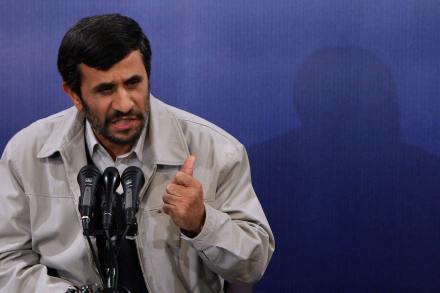
Last night, President Obama said he will be looking for "openings" in coming months that could lead to "face-to-face" talks with Tehran. "I think that there's the possibility, at least, of a relationship of mutual respect and progress". But despite Obama’s repeated offers of a new kind of relationship, Iran has usually responded with the same clenched fist that it has waved at successive US administrations. For the Tehran regime, anti-Americanism is a cornerstone of their survival strategy. If they unclench their fists, the Iranian government will no longer be able to blame foreigners for the country’s dire economic condition.
Why Karzai is worried

From our UK edition

The appointment of the hard-charging Richard Holbrooke as Afghan envoy has not been universally welcomed. One person who is particularly concerned about it is Hamid Karzai, the current Afghan president, who will probably win re-election later this year. Their first, secret meeting was apparently quite frosty. What has really riled Karzai is Holbrooke’s fraternization with Ashraf Ghani, a former finance minister and presumed presidential candidate. When I briefly advised Lord Ashdown in the run-up to his non-appointment as the UN’s special envoy in Kabul, Karzai was extremely paranoid that Ashdown and Ghani were somehow colluding or that the former was merely a tool for the latter’s leadership ambitions.

Needed: a new head of Nato

From our UK edition

The Nato Secretary-General Jaap de Hoop Scheffer will step down at Nato’s 60th anniversary summit in early April. The former Dutch foreign minister has had some successes during his time in office but his tenure has been dominated by trans-Atlantic rifts, Nato’s struggling Afghan mission, and a failure to work more corporately with the EU. Little of this has actually been his fault but nor has he been able to help chart a way out of trouble. NATO is no longer the place where Americans or Europeans go to talk about strategic questions. This is true not only for non-military topics such as the global financial crisis or climate change, but also for classic foreign policy problems such as the resurgence of Russia, the rise of China, and Iran’s nuclear programme.

Who’s afraid of Shirin?

From our UK edition

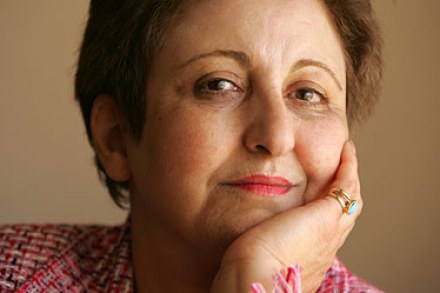
When people are asked who their heroes are, you can expect to find someone like Nelson Mandela or Aung San Suu Kyi topping of the final tally. Indeed, two years ago, 150 MPs voted the anti-apartheid campaigner as their biggest political hero. But the name Shirin Ebadi is usually absent from the equation. Yet today, Mrs. Ebadi, an Iranian lawyer, human rights activist and (the first female Muslim) Nobel laureate deserves to be high on anyone’s list. The Nobel committee singled Mrs Ebadi out for promoting human rights and democracy in Iran. It also paid tribute to her courage, noting that she had "never heeded the threat to her own safety". Both Mrs Ebadi and her daughter receive death threats regularly. Now, however, her life really seems to be in danger.

How to put the freeze on Russia’s energetic aggression 

From our UK edition

Rahm Emanual, Obama's chief of staff, says one should never let a serious crisis go to waste. So now that the Russians are once again blocking the supply of gas to Ukraine  – and, by extension, to Europe –Europe should act to protect itself. Russia remains the largest exporter of gas to the EU, with total annual exports of 130 bcm today. But since the early 1980s import growth from other countries has outpaced that from Russia. 80 percent of the growth in European gas imports now comes from Norway, Algeria, Nigeria and the Middle East. The gas markets of the EU’s eastern members are, however, highly dependent on Russia. Six of these  states import more than 80 percent of their gas supply from Russia.

Clegg plays to the gallery on Gaza

From our UK edition

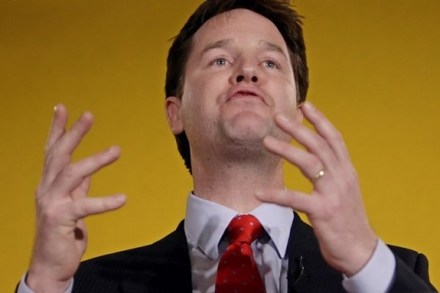
Nick Clegg wants Britain to push the EU to end trade with Israel. In a Guardian article, the Lib Dem leader vies for the left-wing, anti-Iraq vote and argues that the EU "must immediately suspend the proposed new cooperation agreement with Israel until things change in Gaza." If we overlook the article's factually incorrect claim that the EU suspended its "presence on the Egypt border in response to Hamas's election" -- on 10 November 2008, European foreign ministers extended the mandate of the EUBAM Rafah Mission until 24 November 2009 -- it proposes a return to the bad old days of EU-Israeli animosity, over-simplifies a complex situation, and is likely to make any future EU role in Middle East peace-making difficult. I have been very sceptical of Israel's Gaza strategy.

2009: an election year

From our UK edition

Next year will be an election year. Though it now looks unlikely that Gordon Brown will call a general election, both local and European elections are scheduled for June 2009. These will undoubtedly be important, as a test of both how people feel about the government’s handling of the economic crisis and their views on the Lisbon Treaty, which the Irish are likely to have voted on again. But a number of elections held overseas next year will have a much greater impact on Britain’s security and wellbeing than any of these polls. The most important election is that of a new Afghan president in late 2009. The poll will be the second vote for the presidency in Afghanistan's history. The first was in 2004, when Hamid Karzai won a five-year term.

Futility in Gaza

From our UK edition

Everyone expected the Israeli government and Hamas to honour a ceasefire; at least until Barack Obama’s inauguration, to allow the new U.S president time to get his feet under the desk. Rumours had been going around that one of Obama’s first acts would be to convene an Annapolis-style Mid East conference. Not to achieve peace, but to kickstart the kind of diplomatic process the region so sorely needs. But Hamas’ incessant shelling of southern Israel, its cancellation of a recent truce, and the pressures of the Israeli election –- which have seen the hawkish Likudnik Benjamin Netanyahu take a lead over Tzipi Livni, the pro-peace foreign minister, with Labour’s Ehud Barak struggling for attention –- forced the Israeli government’s hand.

How to deal with captured terrorists?

From our UK edition

One of President Elect Obama’s key challenges in 2009 is going to be how to deal with captured terrorists. During the campaign, Obama pledged to close Gitmo. But the recent guilty-plea of Khalid Sheikh Mohammed, the alleged mastermind of the 9/11 attacks means Obama will face a dilemma. By Inauguration Day, Khalid Sheikh Mohammed and five other defendants may have been sentenced. Any sentence will have to be signed off by the President. This means that Obama will either have to agree or disagree with the verdicts which could include death sentences. If Obama seeks to change the system, for example by having them retried in an ordinary U.

How to fight the pirates

From our UK edition

In the midst of an emerging West/East struggle, a security issue has come unexpectedly to the fore that everyone can unite around: the safety of the sea lanes.   The growth of global commerce in the past two decades has crowded the oceans with cargo vessels and supertankers loaded with every good imaginable. The world currently transports 80 per cent of all international freight by sea, a figure which will increase once energy prices start to rise again, and there are more than 10 million cargo containers moving across the world's oceans at any one time.   Both new and old powers use the sea lanes. More than 99 percent of Japanese trade and 90 percent of U.

An open letter to General Petraeus

From our UK edition

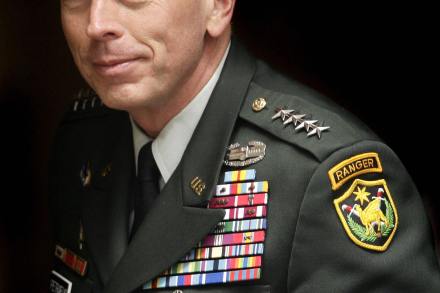
Last week I met with members of the 100-person team who are conducting a top-to-bottom assessment of Centcom’s area of responsibility on your behalf. I have to say I don’t envy them their task, or you your’s. The remit of your military operation, Central Command (Centcom) is expansive – ranging from Egypt to Pakistan – but the tools at your disposal seem fairly limited and traditional. And what must have started out as a repeat of your successful Iraq exercise will undoubtedly have been complicated by the many other on-going reviews, not to mention the need to await President Obama’s instructions, post-Inauguration. But as the Obama team knows very well, the U.

Britain should have Mugabe prosecuted

From our UK edition

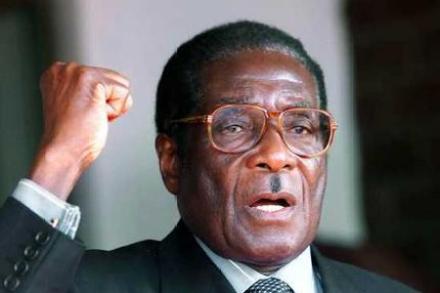
The charge sheet against Zimbabwe's Robert Mugabe is long and packed with crimes of both commission and omission. The World Food Program expects half the Zimbabwean population will soon need food aid. Official inflation was 231 million percent in July - the last time statistics were released. Unemployment is over 85 percent; poverty over 90 percent; and foreign reserves almost depleted. Since Mugabe took power, thousands have died at the hands of his goons. Operation Murambatsvina, in 2005, alone cost some 700,000 people their homes, livelihoods or both. Now an outbreak of cholera has claimed around 600 lives and, according to Medicins Sans Frontieres, threatens another 1.4 million people.

The unknown surge

From our UK edition

Everyone following developments in Afghanistan will know of the demand by military commanders on the ground for more international troops to be deployed. A former NATO commander said he needed at least 400,000 troops. Doctrinally, a 20:1,000 security force-to-population ratio is deemed necessary for counter-insurgency operations. That would mean putting at least 200,000 troops into the southern and eastern parts of the country, a figure well beyond NATO’s capability.

The Forbes prescription

From our UK edition

These days it can seem more popular to defend Morris dancing than free markets. In today’s recession-engulfed debate, failed ideas have come back from the dead. Capitalism is bad, intervention good. Financiers are evil, industrialists are good. Tax hikes are good, low-tax polices are bad. And so on. But if there is one person (beside Fraser Nelson, of course) who is willing to stand up for free-market capitalism it is Steve Forbes. The U.S publisher, flat-taxer and perennial presidential candidate has just published a punchy piece in his eponymous magazine – entitled “How Capitalism Will Save US” -- and at a breakfast meeting in London, he laid out his ideas. Forbes believes that U.

Tibet may be important – but so is the world economy

From our UK edition

Today China cancelled the long-planned EU-China summit because French President Nicolas Sarkozy was planning to meet the Dalai Lama later in the year. Such short-sightedness serves no one. Though it appears to be shielded from the financial tumult, China will eventually be hurt by the current crisis. China needs 9-10% growth if it is to absorb 24 million new labourers a year. To keep this rate of expansion, China’s economy relies on exports, real property growth and government spending. But US and European consumers can no longer consume at the debt-supported levels they have at the past. When exports market disappear, normal economies rely on domestic consumption. But China has no domestic consumption to speak of.

The real choices

From our UK edition

Have you ever watched two people argue for a while, trying to make up your mind who you thought was right, only to realise both were arguing around the real issues? That is how I feel, having listened to the Government and Opposition on how to deal with the current crisis. Gordon Brown has made the case for an expansionary fiscal policy – pushing money into the economy -– and paying for it later through taxes. David Cameron, on the other hand, has argued for a more long-term approach, demanding that no stimulus come back to haunt taxpayers. But both have, in a sense, become Keynesians, believing that some kind of stimulus is required to jump-start the economy or, at the very least, preventing it from tanking further.

Immigration drops

From our UK edition

Back in late summer, the ever-perspicacious Vince Cable, predicted that “if we get into a serious recession, immigration will become negative, as it has before.” According to the Office for National Statistics, this has now come to pass, with data showing that immigration into Britain fell by 8.9 percent to 577,000 last year. Separate Home Office figures show the number from the eight eastern European nations including Poland that joined the EU in 2004 dropped for a fourth consecutive quarter. At the same time, Eurostat - the EU’s statistical bureau - released immigration figures for 2006. These figures show a couple of interesting things. First, in 2006 about 3 million foreign immigrants settled in an EU country, with 1.2 million being from another EU country and 1.

The Watford System?

From our UK edition

Rarely has a summit been so hastily organised, hyped so much, yet achieved as little as last week’s G20 meeting called by President George W. Bush to deal with the world’s financial crisis. World leaders did agree on a confidence-boosting package of economic assistance, but put off sorting out any detailed plans on overhauling financial management and regulation, or revising the problematic global currency trade and settlement regime until their next summit, scheduled on April 30, when the United States will be steered by President Barack Obama. So what should happen between now and the April 30 meeting, which may take place in Watford (and make that pre-Roman trackway in Hertfordshire eponymous with world finance)?

Don’t do Durban

From our UK edition

There are many international conferences scheduled for 2009. Some, like the Climate Change conference in Copenhagen, are crucial. Others, like NATO’s 60th anniversary summit, important. Then there are some plain dull ones. I’m thinking of the International Congress on Medical Librarianship. But none of the international meetings scheduled for 2009 is as invidious as the so-called Durban II conference. Modelled on the 2001 Durban “anti-racism” conference, which famously turned into an anti-Israeli, anti-American spectacle, Durban II promises to continue where the last event left off.

The worst of the markets

From our UK edition

Ever wondered which of the world’s stock markets has fared the worst during the recent financial turmoil? Thanks to Stan Secrieru wonder no more. The winner is Russia (cue sounds of Russian national anthem). Helped by a brutal war, market-rattling commentary by Prime Minister Putin and a belligerent state-of-the-union address by President Medvedev, Russia’s RTS fell by 68 percent. A close second is China, whose dollar-packed treasury can do little to keep up China’s economic growth if Western demand slumps. Beijing’s leaders can take comfort in Hong Kong’s Hang Seng index, which “only” saw a 49% drop.