Daniel Korski

Tory government should be manoeuvrist government

From our UK edition

The greatest challenge facing a new government may be that Britain’s national security institutions are not fit for purpose. They were built for a different era and focused on a set of now obselete threats. Notwithstanding a few exceptions, like the Cuban Missile Crisis, the threats during the Cold War were slow-moving and predictable. Even in the immediate Cold War period, threats were nasty, but rarely novel.   Now, however, Britain faces all manner of fast-moving, asymmetric threats. Terrorists and insurgents can get inside our decision-making loop. In Helmand, the Taliban stage attacks around their media strategy, not the other way around as we do it. Countries like Russia and China can bring a range of assets to bear, many of which are not even governmental.
Is the world cooling or not – and what is to blame?

From our UK edition

The Financial Times supplement this weekend contained profiles of the world’s leading climate experts, including - the magazine promised - the world’s leading sceptic. I quickly leafed through the pages to see who had been picked as the whipping boy, expecting to see a Danish name. No, not that of Bjørn Lomborg, who became (in)famous for his book The Sceptical Environmentalist, but that of Professor Henrik Svensmark. In the end, it was Richard Lindzen. But it is Svensmark’s research that may prove the greatest challenge to the prevailing consensus on climate dynamics. The Danish scientist, author of The Chilling Stars, become noted because of his research into cosmic rays and their effect on cloud formation.

EU job picks are undemocratic – good

From our UK edition

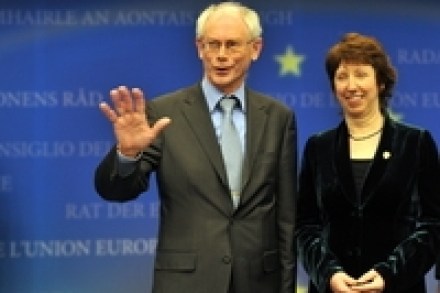
One of the main charges against the choice of Herman van Rompuy as the first permanent European Council President and Catherine Ashton as the EU’s foreign affairs supremo is the supposed “undemocratic” nature of the selection process. People who opposed the Lisbon Treaty have been particularly critical of the conclave-like decision-making. Daniel Hannan called it a “stitch-up that demeans democracy”. But it is hard to believe those critical voices, including on Coffee House, really want a democratic process as opposed to simply finding another thing to dislike about the EU (a fair position, but just not the same). Let us think through for a moment what a democratic election would mean.

The Baroness and the bore: right for the EU jobs

From our UK edition

Among a batch of unpopular blogposts, this is the one that will get Coffee Housers to grab their pitchforks and hunt me down. Because I think the appointments of Belgium’s Herman Van Rompuy, as president of the European Council, and Britain’s Catherine Ashton, as EU “high representative” for foreign affairs, are not bad at all. First, I have to eat my words. I thought Gordon Brown would fail to shoehorn a Briton into a top EU job. Credit goes to him and Britain’s diplomats, chiefly Kim Darroch, the UK’s Permanent Representative in Brussels. Diplomacy is the art of the possible. Brown did what he should have done: he pushed Blair but switched horses when necessary and secured a key job for Britain. So well done.

Afghanistan: air fares, not infantry needed

From our UK edition

The British government’s policy on Afghanistan has a spasmodic, yet regular kind of rhythm to it. The issue pops up at intervals, hovers menacingly over Brown’s premiership until the PM awakes from a period of inaction. He then goes into hyper-drive, promises all manner of things, and reverts to inactive type a few days later only to repeat the routine a some days/weeks/months [cross out as appropriate] afterwards.  This time is no different. While the government, along with our allies, wait around for the US president to make up his mind on an Afghanistan (and, by extension, how his first term will be remembered), the PM has been overflowing with schemes and speeches.

Kosovo held elections, the region held its breath

From our UK edition

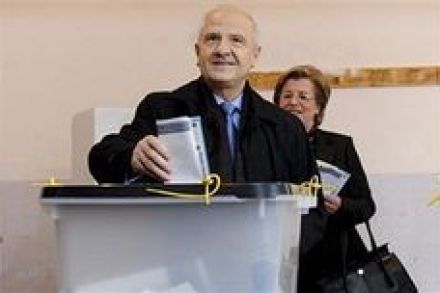
The people of Kosovo voted yesterday in the first local elections since the Albanian-majority region won independence from Serbia last year. More than 1.5 million people were eligible to cast their ballot and some 74 political parties, coalitions and independent candidates stood. The elections are a test of Kosovo's readiness to organize democratic elections on its own and to be taken seriously as an independent state. So far, 63 countries have recognized Kosovo, including the US and most countries in the EU. But Serbia still does not recognize Kosovo, and the influential Serbian Orthodox Church urged the 120,000 ethnic Serbs in Kosovo to boycott the polls.

Cutting MoD staff will not win wars

From our UK edition

Liam Fox has made clear that the Conservative Party is planning to slash the number of civilian posts at the Ministry of Defence as a way of balancing the military budget if they win the general election in 2010. "We have 99,000 people in the Army and 85,000 civilians in the MoD. Some things will have to change - and believe me, they will," Fox has said. But if the Conservatives thought they had stumbled across a sure-fire criticism of Labour’s way of war, in The Times, ex-soldier, author (and, I will wager, future MP) Patrick Hennessey asks the public not to lay off the “MoD desk-jockeys.” 'The MoD deploys civilian staff into operational theatres.

NATO’s future, your say

From our UK edition

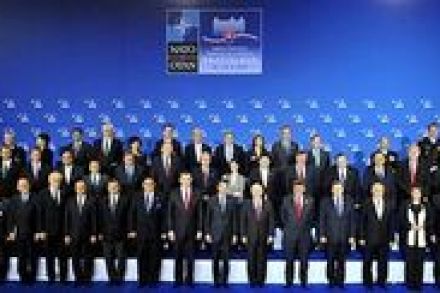
I'm in Slovenia, having joined the discussions chaired by Madeleine Albright on NATO's strategic concept, the alliance's blueprint. I have managed to grab a seat next President Obama's NATO envoy, Ivo Daalder, and we have all just listened to Anders Fogh Rasmussen and the Chairman of NATO's Military Committee.   This process is impressive and the who's who of the NATO community is here, as they were at the first event in Luxembourg a month ago. But there is still an unreal sense about the process. For while it is a great PR opportunity for NATO, it is hard to see how the NATO members will overcome the serious differences that now exist among them. To help Mrs Albright and her colleagues along, perhaps Coffee Houses could offer answers to the following questions: 1.

No Brits likely in top EU jobs

From our UK edition

The process to pick the two new EU jobs - that of Council President and High Representative - is nearing completion and Britain looks set to walk away empty-handed. Tony Blair's candidacy is unacceptable to many EU leaders - both because of his record, particularly over the Iraq War, and because of Britain's odd-man status in Europe. Last night at the Queen's Diplomatic Reception, a senior ambassador remarked to me that if Blair had really wanted the EU job, he should have started lobbying for it a few years ago - or at least shown a post-No 10 interest in European affairs. Blair, said the envoy, could have given a speech in Berlin, an interview in a French paper and so on. But he did not.

Helicopter reality

From our UK edition

There is something oddly comforting about discussing NATO’s Afghan mission in terms of kit, helicopters and troop numbers - or the lack thereof. These are tangible categories. You either have the right amount or you don't. And if you don't, then it is because somebody made the wrong decision or failed to make a timely one. Even Mrs Janes, grief-stricken after the killing of her son, seems to take some comfort in the question of equipment while Liam Fox has made much political capital of the Government’s failures. There are just two problems with this kind of approach to warfare. First, the stories in the press about helicopters take precedence over reality. Has the government cut the defense budget? Yes. Did it for a long time run on a peacetime budget and on SOPs? Yes.

In Afghanistan, more of the same won’t do

From our UK edition

Gordon Brown says Britain must not walk away from NATO’s Afghan mission. Yet 73 percent of Britons told YouGov that they want British troops withdrawn. Even more probably think they will fail even if they are allowed to stay on. Yet what to do if you believe, like I do, that the allies cannot simply withdraw without creating a catalytic effect on worldwide Islamist extremism and a regional vortex of violence, which will end in sectarian strife, refugee flows, President Karzai’s toppling, Pakistan’s further destabilisation and irreparable damage to NATO? One last heave, won’t do. Clever initiative, like my own idea of creating an ANA Army Corps of Engineers, will take too long to make an impact.

Must-have-elements under Karzai III: an Afghan Army Corps of Engineers

From our UK edition

Whatever happens in Kabul now, the next couple of months will be hard going. Hamid Karzai will form a new government, perhaps with Abdulllah Abdullah. But nobody expects the Karzai III government to be any better or less corrupt than versions I and II. Quite the opposite. In his bid for re-election, President Karzai surrounded himself with chequered figures who could bring him votes: warlords suspected of war crimes, corruption and drug trafficking. None is as influential as Marshal Fahim, his running mate, who has long been suspected of drug-running and other crimes. Expect to look back at the Afghan government’s past performance as a model of probity and efficiency.

The end of special relationships

From our UK edition

Today, two of my colleagues, former senior MoD official Nick Witney and US analyst Jeremy Shapiro, issued a hard-hitting report about transatlantic relationships. Their message is simple. Europe has the US president it wished for, but Barack Obama lacks the strong transatlantic partner he desired. With EU leaders heading to Washington for their transatlantic summit on 3 November, Shapiro and Witney caution European governments: an unsentimental President Obama has already lost patience with a Europe lacking coherence and purpose. In a post-American world, the United States knows it needs effective partners. And if Europe cannot step up, the US will look for other privileged partners to do business with. Unfortunately, many Europeans are in denial about how the world is changing.

Freedom of expression is Rose’s war

From our UK edition

Last week, Denmark discovered that two US-based men were plotting a terrorist attack against Jyllands-Posten, the Danish newspaper that outraged hard-line Muslims by publishing the infamous Muhammad cartoons in 2005. Allegedly, the two men planned to target cultural editor Flemming Rose and cartoonist Kurt Westergaard.  The mild-mannered Flemming Rose is back in the spotlight. Asked if he regretted publishing the cartoons, Rose insisted that bowing to such pressure would not yield less extremism, but more. He went further - the cartoons have not been re-issued, which amounts to the sort of self-censorship that moved him to commission the cartoons originally. Rose's target was neither Islam nor Muslims.

Even in Afghanistan, an election needs at least two candidates

From our UK edition

Just when the US administration thought it had turned a corner in Afghanistan by persuading Hamid Karzai to allow a run-off in the presidential elections, things look uncertain again. Having returned from a trip to India, President Karzai's election rival Abdullah Abdullah looks set to announce he will boycott next week's second round of voting. Such a decision could either be the prelude to a resolution of the crisis, or set the stage for political crisis. It is more likely going to be the latter.

Even under the Tories, President Blair will be our man in Brussels 

From our UK edition

In his column, James asks the key question about Tony Blair’s candidature for President of the European Council: what would it do for the Tories and Britain’s foreign policy. William Hague clearly thinks it would be a bad thing and has been lobbying against Blair’s candidacy.   The Shadow Foreign Secretary is letting his anti-EU, anti-Labour views cloud his judgement. Let me explain. If the Tories win, Labour will be in the doldrums, a shadow of its former self. The idea that the party will mount a challenge to a Conservative government by rallying around an EU-focused Tony Blair is unbelievable. Romani Prodi may have jumped from an EU job to the top of Italian politics, but Britain works differently. Peter Mandelson is the exception, Roy Jenkins the rule.

The Rabbi speaks

From our UK edition

Poland's Chief Rabbi, Michael Schudrich, told the Today programme that Michael Kaminski is, as far as he knows, not an anti-semite today - though the Jewish leader made clear he "could not read his heart", and thought Mr Kaminski's teenage views extremist. The rabbi's words will further fuel the spat between David Miliband and William Hague. Expect the Shadow Foreign Secretary to renew his calls today for an apology to be issued to Kaminski. Expect the Foreign Secretary to ignore this and find support, including from within the Jewish community, to his charges against Mr Kaminski and his accusation that the Tories mingle with madmen. Both parties think the fight is important. Miliband thinks he has stumbled upon political cryptonite to the Tories' electoral superpowers.

Can you be pro-British and pro-European?

From our UK edition

Last night in a speech at the IISS, David Milliband laid out the case against the Tories’ Europe policy. As he started off saying: "It is very strongly in the British national interest for the EU to develop a strong foreign policy; that to be frightened of European foreign policy is blinkered, fatalistic and wrong; that Britain should embrace it, shape it and lead it." In that one sentence lies the case for Britain’s role in shaping a liberal, open and outward-focused EU. It is probably also the line of attack that the Foreign Secretary will use against the Tories until election day and possibly beyond, if Miliband eventually assumes the Labour leadership. I have never made a secret of my support for the EU.

Karadzic may be in the dock, but his legacy lives on

From our UK edition

After 14 years on the run, Radovan Karadzic, the Bosnian Serb wartime leader, is finally being brought to justice. Today, prosecutors at the International Criminal Tribunal for the former Yugoslavia (ICTY) charged Karadzic with 11 counts of genocide, war crimes and crimes against humanity. According to the indictment, Karadzic was one of the authors of a plan to "permanently remove" Bosnian Muslims and Croats from Bosnian Serb-claimed territory. It details allegations of two counts of genocide, including for the July 1995 massacre of around 8,000 Muslim men and boys at Srebrenica.

Karzai the Envoy Slayer

From our UK edition

I have just returned from DC, where the talk of the town, or at least of the foreign policy community, is how long Richard Holbrooke has left in the Obama administration. A well-connected friend suggested The Bulldozer has, at most, two months left. Perhaps most telling has been Holbrooke's absence in the recent efforts to persuade Hamid Karzai to accept a second round of voting in the presidential election. The Economist hailed John Kerry's impromptu diplomacy, which secured Karzai's consent and gave Holbrooke the epithet "now-absent". Diplomats I have spoken to say President Karzai is currently refusing to see Holbrooke at all, possibly sensing a chance to divide and weaken the US players.