Daniel Korski

Do you know what your MEP is up to?

From our UK edition

One of the major forces driving the public’s reaction to the expenses scandal has been the feeling that we, the voters, simply don’t know what our elected representatives are up to. But this goes well beyond claims for moats, bathplugs and so on. We the electorate actually know very little about what our MPs do. If an MP isn’t in the front rank, their actions go pretty much unreported. Sure, the really determined can read Hansard to find out what their MP is doing. But it is still sometime hard to determine what precisely is going on in that house on the river. If the performance of Parliament and that of MPs is hard to ascertain in any detail, however, try figuring out what the European Parliament is up to.
Celebrating Marcel

From our UK edition

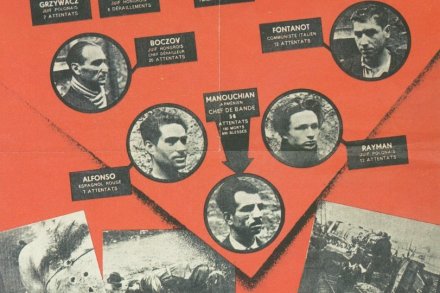
Around the world workers are celebrating 1st of May. I too will be celebrating, but for different reasons. Today Marcel Rayman – my first cousin twice removed – would have turned 86. Born in Warsaw, he moved to France aged eight. A studious boy, he finished his exams in record time and went to work with his parents as a tailor. By all accounts he showed great promised. Unfortunately, we will never know what things Marcel would have gone on to do for his life was cut short one February morning in 1944, when the Nazis executed him. For between the German invasion of France and early 1944, the young Marcel had became one of France’s most notorious resistance fighters.

Honouring the soldiers

From our UK edition

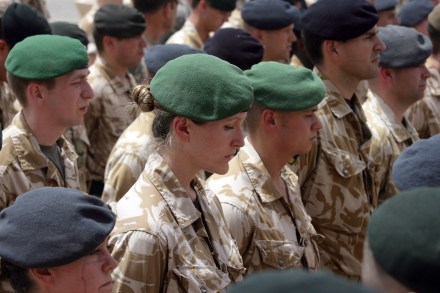
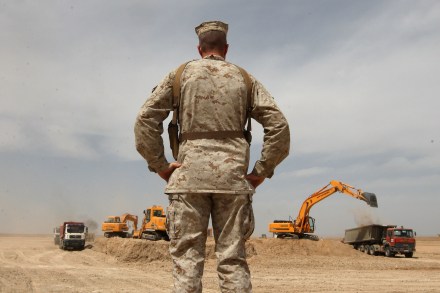
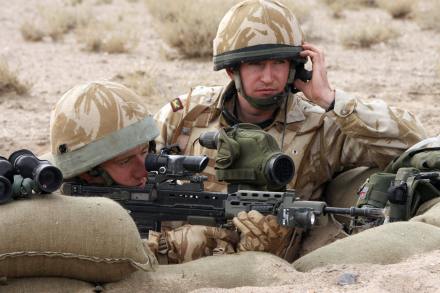
This morning, while most of London rushed to work, a few hundred soldiers stood silently in the scorching sun of the Iraqi desert, as the names of their fallen comrades were read out. All 234 of them; 179 British and 46 allied soldiers. The Reverend Paschal Hanrahan led the prayers and said something which I found profoundly moving. I haven’t been able to find the exact quote, but (from memory) it went something like: "It is to the solder to whom we owe the right to free trial, not the lawyer; it is the soldier, not the journalist, who guarantees the freedom of speech; and it is the soldier, who serves under the flag and whose coffin is draped in the flag, who gives us the right to protest, who gives even the right to protesters to burn that same flag.

Deputy Sheriff Brown Unveils AfPak strategy

From our UK edition

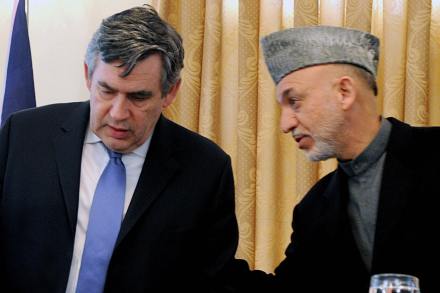
Yesterday Gordon Brown told the House about the UK’s new “AfPak” strategy, laying out what can best be seen as a companion piece to the US strategy unveiled by Barack Obama a few weeks ago. (Notice how the US took six pages to say what the UK needs 32 pages for). Britain will boost troop numbers in the run-up to the presidential elections and spend more money on both sides of the Afghan-Pakistan border. A lot of money. Between 2009 and 2013, the British development agency will spend £665 million in Pakistan. Over the same period, £510 million will go towards Afghanistan’s development. Despite this, the reaction has been critical.

Conway of Tehran

From our UK edition

Where do disgraced Tory politicians go? Neil Hamilton hit the pantomime circuit, starring as the rear end of a horse. After serving half of his sentence in HMP Hollesley Bay for perjury and perverting the course of justice, Jeffery Archer has returned to book-writing. Jonathan Aitken, the disgraced former Cabinet minister who served a prison term for perjury, is heading a policy review for the Centre for Social Justice. But what of Derek Conway, the latest Tory politician to be ejected from frontline politics? The MP for Old Bexley and Sidcup, who was sacked by David Cameron for employing his son (a full-time student) as a political researcher, has taken a job hosting a book review programme on Press TV, an English-language news channel funded by the Iranian government.

The West needs to stop being taken for a ride by China

From our UK edition

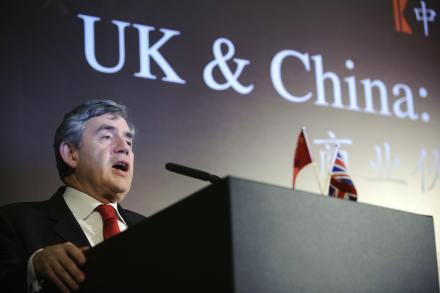
Over the last twenty years, Western leaders have believed that engaging China would help shape Beijing’s policies. When China cooperated, the West engaged. When China became obstructionist, the West engaged some more. This failure to push for genuinely reciprocal engagement has, as my think-tank colleagues John Fox and Francois Godement argue, allowed China to take the West for a ride. For example, why is a Communist dictatorship that spends £20 billion on hosting the Olympics, receiving £30-odd million in British development aid? European nations have exacerbated this problem by engaging in an unseemly contest to become China’s new best friend. The Chinese have ably exploited this.

Mitchell takes on the pirates

From our UK edition

One of the more frequent charges against the Tory frontbench is that it lacks depth and breadth. Once you have played your Cameron, Osborne, Hague and Gove there is not much left in the hand. Or so the argument goes. Yet, to my mind, this argument was always overdone and - as the Brown government begins to self-destruct - voters are taking a closer look at what the Tory frontbench has to offer. In many cases I think they will like what they see. Take, for instance, Andrew Mitchell, the Shadow Development Secretary, who put in a fine performance on the Today Programme this morning. Mitchell has not always been well-liked by the party rank-and-file (or, indeed, by the blogosphere), and, among the Tory’s foreign policy beasts, he has always been seen as the weaker animal.

NATO’s new man at the helm

From our UK edition

Danish PM Anders Fogh Rasmussen’s bid to succeed Dutchman Jaap de Hoop Scheffer as head of NATO finally succeeded at yesterday’s summit.  Up until the last minute, the Turks were refusing to sanction his appointment because of his refusal to apologise for a Danish newspaper publishing those Muhammad cartoons.   The Danish press is full of stories about the concession that had to be given before Ankara lifted its veto. These range from having a Turkish Deputy NATO Secretary-General (the post is currently held by an Italian) to the closure of a Kurdish TV station that broadcasts from Denmark to an extension of the deadline for easing travel by Greek Cypriots into Turkey.

Leaving behind an uncertain Afghanistan

From our UK edition

I am now leaving Afghanistan, heading towards the glitzy skyline of Dubai where many Afghan warlords have built holiday homes alongside their narcotecture in Kabul. I finished my trip with a visit to Afghan Defence Minister Wardak and US General Richard P. Formica, who heads something called CSTC-A, the US operation charged with building the Afghan security forces. (I visited President Karzai’s spokesman too, his cousin as well as his de facto campaign manager, but I’ll spare you the spin he served up). I asked Wardak, who used to be a Mujahedeen and worked with Jalaluddin Haqqani, one of the most ferocious insurgent commanders today, how the conflict would end.

The tragedy of Afghanistan is that the Taliban has a better co-ordinated political and military strategy than we do

From our UK edition

Two words that are repeated everywhere you go in Afghanistan are “comprehensive” and “integrated”. The thinking is that the international community must act in a comprehensive and integrated manner, ensuring that military and civilian activity work together. From the NATO commander’s intent down to every visitor’s presentation, these words are repeated ad nauseam. Even President Obama stuck them into his speech outlining his new strategy. But as with most things, they are easier said than done. Around Kabul where the French patrol, they talk about working with civilians, but the general in charge does not even have a development adviser on his staff.

How the Germans can makes themselves useful in Afghanistan

From our UK edition

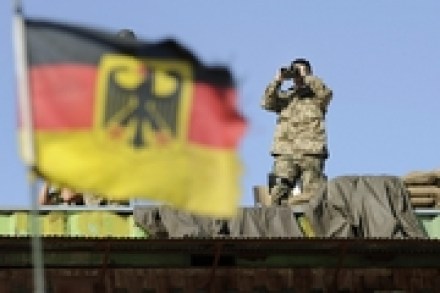
I am in the north of Afghanistan today, visiting the German troops stationed here. Their camp is the most immaculate headquarters I have seen in this dust-covered country. The German office in charge of ISAF’s northern flank, Brigadier Jurg Volmer is focused and knowledgeable. He is keen to impress upon his visitors how much his troops are doing and how their work has made his area of responsibility stable. Militarily, his troops run almost half of all ISAF air operations and guard ISAF’s northern supply route. But it is hard not to doubt Volmer’s claims. His 5,000 troops cover an area half the size of Germany. Out of these, only about 1,500 soldiers actually leave the headquarters.

Karzai is no longer part of the solution in Afghanistan

From our UK edition

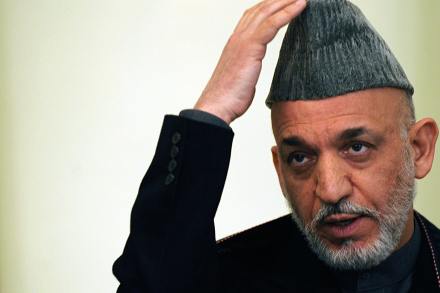
Kabul Hamid Karzai has been steadily losing international support. It started last year when the Afghan leader scuppered the appointment of Paddy Ashdown to head the UN operation in Afghanistan. Then came a few choice leaks from Richard Holbrooke, criticizing Karzai, while Vice-President Joe Biden is said to have stormed out of a meting with the Afghan president. Visibly shaken, Karzai became more erratic and paranoid. But the mood in Kabul today is now completely different. In a few weeks the wily Karzai has managed to turn the tables. He has outmanoeuvred the opposition, who had demanded his resignation when his mandate runs out (there is a gap between the end of his term and the elections).

The three Talibans

From our UK edition

Stereotyping the Taliban is easy. The toppled Taliban Emirate was misogynist and repressive. Then, like now, its leadership partnered with Al Qaeda and acquiesced to Osama Bin Laden’s murderous programme. Then, like now, it committed horrific crimes on and off the battlefield, including ethnic massacres and teenage-cide. Faced with this kind of medieval barbarism, stereotyping comes easy, even naturally. But it also misses things. In the words of the RAND Corporation’s Christine Fair, another one of my travel companions, the ‘militant architecture’ is complex and made up of at least three main groups (and that is not even counting criminals, drug-smugglers and government-affiliated warlords).

The problems with a larger Afghan security force

From our UK edition

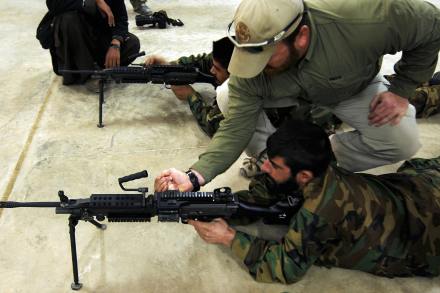
Kabul They look very impressive, marching around a rain-soaked square while their US-trained Master Sergeant sends a punishing salvo of parade instructions their way. These new recruits in the Afghan army represent Afghanistan’s proudest post-2001 achievement. I spoke to dozens of them from all of Afghanistan’s ethnic groups, saw their commander and watched several live-fire drills. Now, as the New York Times reports, President Obama is planning to double the security forces. From a projected troop strength of some 130,000 plan the plan is to create a force of about 400,000 Afghan troops and police officers. But, after today’s visit to the Afghan army, I am clear that such a policy will run into a number of problems.

Dealing with the drugs problem in Afghanistan

From our UK edition

Kabul It took two hours of briefing by a senior NATO commander in Kabul before the issue of drugs came up. And it only came up when I asked. The US officer immediately began talking about the links between the insurgency and the drugs trade. NATO estimates that between 150 and 400 million US dollars is funnelled through the drug trade annually and, since last year, soldiers can target drug-offenders with proven links to the insurgency. But, despite this, the NATO alliance is deeply divided about the drugs issue. The British want to tackle it head on with other European allies being more sceptical that military action can alter half of the country’s economy.

Paving the way for a civilian surge in Afghanistan

From our UK edition

Kabul After an adventurous journey from the Emirates—which seemed to include our pilot getting lost on the runway at Dubai airport—I have finally landed in Kabul. In Kabul, I attended briefings by General McKiernan, the commander of the almost 70,000 NATO troops now deployed, and his closest staff. Everyone here seemed to be saying the same thing: that the heterodox insurgency, particularly in the south, cannot be defeated by military means alone. Civilians are necessary. This view fits well with Obama’s reported plans for a civilian surge. But what should a civilian surge consist of and what should these extra civilians actually be doing? There are already some 18,000 civilians in Kabul.

Can you ever beat insurgents?

From our UK edition

Counter-insurgency is a complicated thing. It used to be easy to tell whether you were winning a war. Either the enemy was retreating or you were. In counter-insurgency, things are more blurred. Some say you are winning if the insurgents take on asymmetric techniques – road-side bombings, assassinations, suicide bombings. Others argue that counter-insurgency has no “victory”, only containment. Perhaps you win so long as domestic opposition to a war (a normal, perhaps even constant, phenomenon nowadays) does not translate into effective political action i.e. street violence, civil disobedience or just the rout of war-making governments.

Obama’s “mini surge”

From our UK edition

President Obama’s decision to deploy 12,000 more combat forces and 5,000 support personnel to the Afghan mission has drawn huge attention. USA Today’s front-page headline blares “Obama’s war: Deploying 17,000, the president raises the stakes in Afghanistan.” But the US soldiers were already planned to rotate into the theatre and, though the White House is keen to portray this as a Commander in Chief moment and the President making good on his campaign promises, it does not represent a new US Afghan policy. That policy is still being drawn up by Bruce Riedel, the former CIA analyst and Iran expert. In the end, more troops will be needed. But they won’t be enough. New tactics will also be required.

Learning the Basra lesson

From our UK edition

With a heavy heart, it may be time to acknowledge that the challenge in Helmand seems too hard for the British to carry alone. The UK might have great soldier there led by a fine commander, Brigadier Gordon Messenger, and as someone who worked out there I have huge respect for those deployed in the Helmand PRT, they are my friends, and former employees. But the UK does not seem to have the resources, will power, ministerial expertise, and bureaucratic arrangements for running an effective counter-insurgency. Britain should see the US surge as a strategic opportunity to place the UK military and civilian presence under the US command. Britain should then exert influence from the inside.

Who knows what Afghans think?

From our UK edition

The political class loves polls. They tell them — or at least they think they tell them — what the public think. The hunger for polling data has now spread to post-conflict situations. Want to know how things are going in Afghanistan? Commission a poll. So this week David Miliband has been hitting the airwaves to respond to a new poll of Afghan opinion. The poll, the fourth conducted by an international media consortium since 2005, showed falling support for President Hamid Karzai, and a sharp decline in the proportion of people who think the nation is heading in the right direction, from 77 percent in 2005 to 40 percent now.