Daniel Korski

Our allies need to build capabilities for counter-insurgency

From our UK edition

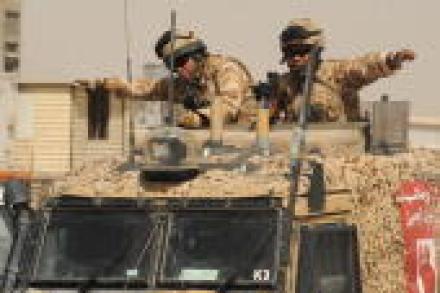
Counter-insurgency warfare is meant to be different from traditional war-fighting in one particular way: it recognises the military’s limitations. It accepts that soldiers may be able to fight off insurgents, but only reconstruction in, and outreach to, local communities can stave off renewed conflict. In that way, counter-insurgency is based on getting civilians to play an active role. But despite this new military orthodoxy, and some four years after the Taliban began its fight-back against NATO’s Afghan mission, the number of civilians deployed into theatre has been disappointingly low. Neither the US nor Europe have dispatched the hundreds of development specialists seen as crucial for success.
What would the Tories take back from Europe?

From our UK edition

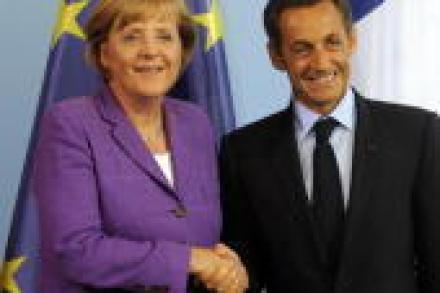
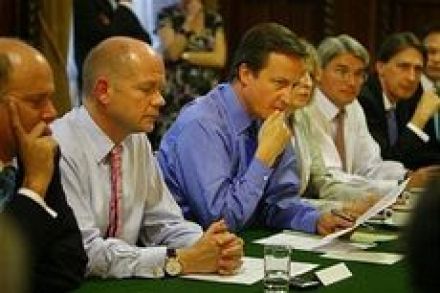
Assuming that the Lisbon Treaty is ratified, that the Conservative Party wins the next election and that Angela Merkel and Nicola Sarkozy want Britain to remain in the European Union, what “sovereignty package” will EU leaders come up with for Prime Minister Cameron, so that the Tory leadership can placate its eurosceptic base? The deal cannot be cosmetic, but make it too tough and other EU leaders will not want to compromise.

Defensive moves

From our UK edition

So, General Dannatt is to be a Tory Peer. This worries me greatly. On balance, General Dannatt did a good job as Army chief. Not a great job, but a good one. His interventions boosted the morale of frontline troops and his concern for the care of soldiers, especially the wounded, was important. Conversely, many defense analysts thought he was too cautious on military reform, blocking the Army’s transformation into an effective counter-insurgency force and opposing stop gap procurement in case it compromised future acquisition projects. But the real concerns over General Dannatt’s ennoblement are different. General Dannatt should have given his sucecssor a clear run at the job. He should have had the decency showed him by his predecessor, Mike Jackson.

Iran’s threshold power

From our UK edition

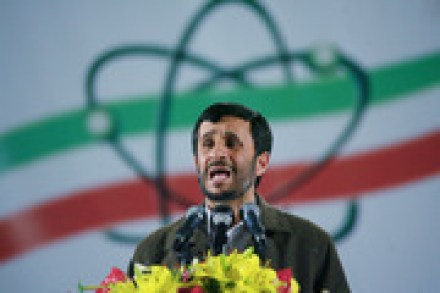
The discovery that Iran's regime has, yet again, deceived the international community and secretly built an additional nuclear facility has made world leaders re-focus on the issue. On Friday, the US, UK and France said the UN had to be given immediate access and urged tough new sanctions. Even Russia expressed concern. Today, the Iranian regime's  response came. According to Ali Akbar Salehi, who heads the Atomic Energy Organisation, Iran will keep its uranium enrichment level at up to five percent - much lower than bomb-grade. "We don't want to change the arrangement of five-percent enrichment merely to produce 150 to 300 kilos of 20-percent (enriched) fuel," ILNA news agency quoted the nuclear chief as saying.

The McChrystal plan

From our UK edition

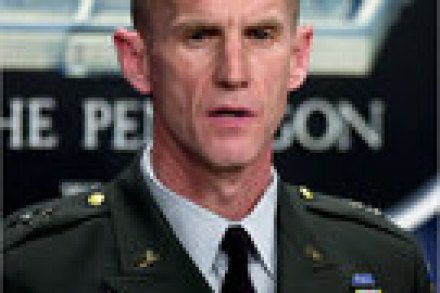
So, the report written by ISAF commander, Stanley McChrystal, to President Obama on NATO’s Afghan mission has been published. It does not contain a request for more US troops, but most analysts think it is only a matter of time before a request is sent from Kabul. In the recently-published report, McChrystal says: “While the situation is serious, success is still achievable.” But serious changes will be required. These will have to address what McChrystal calls “The weakness of state institutions, malign actions of power-brokers, widespread corruption and abuse of power by various officials.” The US general also admits “ISAF's own errors”. Bear in mind, though, that the report was written before the recent presidential elections went awry.

Petraeus’ lonely fight

From our UK edition

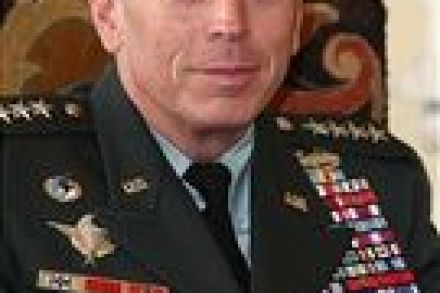
At last night’s Policy Exchange lecture, General David Petraeus said he had known the former CDS, Lord Guthrie of Craigiebank, since “he was simply Sir Charles.” I met Petraeus for the first time when he was simply a colonel, serving with NATO forces in Bosnia-Herzegovina. Even then he was thought of as a rising star. His leadership in Iraq, first in Mosul and then in Baghdad has only cemented his reputation. Now, however, the scholar-warrior faces his probably greatest task – helping to defeat Taliban insurgents on both sides of the Durand Line. An effort, he said upon assuming command of CENTCOM in 2008, which might turn out to be “the longest campaign of the long war.

Mr Obama, tear down these missile sites

From our UK edition

Today Barack Obama publicly tore down the missile installations that George W Bush put up in the Czech Republic and Poland. The system was ostensibly meant to counter threats from Iran, but given the swift creation of missile sites in Poland and the Czech Republic in the wake of Russian’s invasion of Georgia, Moscow’s elite never bought into this rationale – and perhaps rightly so. The strength of Russian feeling has always been clear. The latest Russian National Security Strategy states that the “ability to maintain global and regional stability is being significantly aggravated by the elements of the global missile defence system of the US”.

What happens next in Afghanistan?

From our UK edition

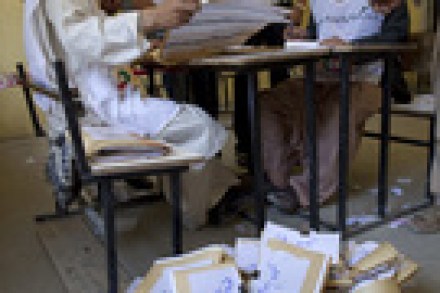
The latest results from Afghanistan's presidential election are showing that the incumbent President Hamid Karzai has garnered 54.1 percent of the vote after 92 percent of polling stations declared. Crucially, this puts him above the 50 percent threshold needed to avoid a run-off with rival Abdullah Abdullah. But the result has been greeted with derision by observers, while the Election Complaints Commission (ECC) has said a recount and inspection should be done for any polling station where 600 or more votes were cast, or where any single candidate got more than 95% of votes. So what happens next? First of all, expect a fight to develop between the Independent Election Commission and the Election Complaints Commission.

Why Britain needs to stay in Afghanistan

From our UK edition

With the resignation of Eric Joyce as PPS to the Defence Secretary Bob Ainsworth, the question of why Britain is part of the NATO-led Afghan mission has taken on new force. No doubt the Prime Minister will explain what he sees as the reasons when he speaks at IISS later today. But just because Gordon Brown supports a policy does not make it wrong. Here are the reasons why we should remain engaged: 1. To deny Al Qaeda a safe-haven from which to train and organise attacks on the West. Though terrorism can be organized in Oldham, Hamburg and Marseilles, Al Qaeda still believes it needs safe-havens in places like Afghanistan. 2. To prevent a new generation of terrorists and insurgencies of getting the mother of all propaganda coups by having routed NATO.

What are they smoking?

From our UK edition

In the midst of all the doom and gloom coming from Afghanistan, the UN has published a report saying that there had been a 22 percent decrease in poppy cultivation in the country and a 33 percent reduction in Helmand alone. The number of “poppy free” provinces has also increased from 18 to 20. The UN called this “undeniable progress” and a “dramatic turn. Desperate for good news, the FCO welcomed “this progress” and credited Helmand Governor Gulab Mangal for giving “people a real alternative to drugs and the Taliban.” No doubt Governor Mangal did his best, alongside Gul Agha Sherzai of Nangarhar province, which in the past used to be one of the country’s main opium hubs.

Can Cameron learn from Wilson?

From our UK edition

Few Tories will enjoy looking back on 1974, but they may find it useful to study the second Wilson government and its successor, the Callaghan government, when it comes to the question of Europe.  Back then, we had a government coming to power in the midst of a severe economic climate, and which sought to change the pro-European course that its predecessor had set, including by re-negotiating Britain’s relationship with the EU and by appealing to fraternal parties in France and Britain. However, it ultimately ran into blades of domestic discontent and international indifference. The question is: could this end up being the story of a Conservative government from the middle of next year? Sure, there are key differences between then and now.

Sarkozy revs up Franco-German motor, leaving Britain behind

From our UK edition

Last week, French President Sarkozy spoke to the annual gathering of his country’s ambassadors. Since he came to power, the French leader has used the annual event to welcome his countrymen back from their holidays and garner a few headlines. This year proved no different with an attack on the Iranian regime receiving the most attention. In a powerful line, the French president pointed out: "It is the same leaders in Iran who say that the nuclear programme is peaceful and that the elections were honest. Who can believe them?" He went on to say that he thought tougher sanctions would have to be discussed if Tehran does not change its position. But the speech was boilerplate Sarkozy – expansive, energetic, and ambitious.

Commemorating the victims and the survivors

From our UK edition

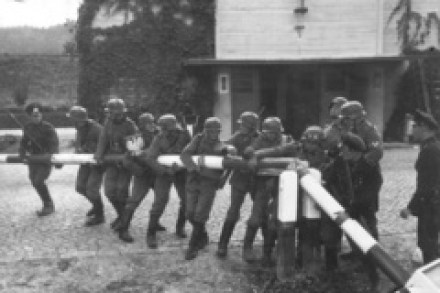
Seventy years ago today, and only a week after the Molotov–Ribbentrop Pact had been signed, a Nazi German battleship opened fire on a Polish fort on the Westerplatte peninsula outside Gdansk and began the Second World War. For my family living in Poland, the onslaught of war would change everything. Henrik and Karolina Finkel, having seen their parents and siblings wiped out not long after the German invasion, disguised themselves as Catholics and lived a make-belief life outside the Warsaw Ghetto.

Lisbon treaty moves closer, but Tories stay mum

From our UK edition

Sometimes if you fear something intensely or hate something very strongly, it can cloud your otherwise excellent judgement and analytical foresight. That seems to be happening to many euro-sceptics when they talk or think about the Lisbon Treaty and the forthcoming second Irish referendum. They do not like the treaty and so will find it almost unthinkable that the Irish will vote yes. But a 'yes' vote looks like the most likely scenario.  That will mean that the British Conservatives have to be less mealy-mouthed about their post-referendum strategy; if the treaty is ratified will they try to re-open the document if they win power or let sleeping dogs lie?

Diplomatic faux pas

From our UK edition

There is now much talk of the need to grow the army or build more ships, even in times of economic distress, lest Britain slip down the scales of international importance. Britain is – and will remain – a world power. Not a superpower, of course, but one of three major powers in Europe, and one of only two with a military and diplomatic reach to complement economic and ideological clout. Britain will need to have military capability, including a nuclear capability, to remain powerful. But the one thing Britain will need above all else, especially if defense expenditures are set to fall and our military is loosing esteem in the eyes of the US, is a world-beating diplomatic presence.

Nobody’s special

From our UK edition

In The Times today, Danny Finkelstein defended the most hated profession in contemporary politics – the Special Advisers, or SpAds. Booo, hissss. The case against was (again) laid out by a number of former senior officials, with ex-Cabinet Secretary Andrew Turnbull telling a Lords committee recently that he did not like  SpAds rising to become Cabinet ministers by the time they were 38 “without touching the sides of real life”. Booo. Hisssss. Boooo. But how many of the current Shadow Cabinet do you think have been SpAds in the past? Come on, what do you think? Half? A third? Out of the 28 members of the Shadow Cabinet, including David Cameron (who worked for Norman Lamont and Michael Howard) there are only four ex-SpAds. The others: Osborne, Clark and Willets.

Libyagate has its roots in Labour’s devolution

From our UK edition

One of the oddest parts of Libyagate is what it says about Gordon Brown’s notions of devolution. The Prime Minister does not want to comment on the affair because, we are told, he sees it as a matter for the Scottish government, not the British government. So, if the actions of a devolved but subordinate level of government go against the state’s interests, the leaders of that state should stay mum? That's certainly not the view taken by successive US administrations; they have often condemned state-level actions, even when the federal government has been legally powerless to do anything in practice. The UK has no written constitution as in the US, but a clear constitutional settlement nonetheless.

(Some) Afghans vote

From our UK edition

So the Afghans have now voted in their second-ever presidential elections. Well, some of them have. But with the extent of voting unclear, accusations of poll-rigging rife and violence claiming countless innocent lives, it is far too early to call the process a success. Today, the Elections Commission will likely release preliminary results, with a full tally expected in a month’s time. Wisely, key US and UK officials have been circumspect in their pronouncements. The EU Monitoring Mission has said the election was “mostly good and fair.”  But Afghan observers cited “some credible allegations of fraud and mistakes by elections officials.

The Swedish-Israeli War of Words

From our UK edition

I am just back from holidaying in Sweden. And while I dutifully kept away from blogging, I did follow the news and the developing Swedish-Israeli dispute, the implications of which may yet become global. For those of you who have yet to read up on this story, it all started last week. In an article for Aftonbladet, Donald Bostroem recounted Palestinian allegations that IDF soldiers killed Palestinians to harvest their organs, and implied a link to the recent arrest, in the US, of organ-trafficking suspects. Many of the suspects were Jewish. Having read the article, the Swedish Ambassador to Israel issued a strong condemnation, saying she found the article "as shocking and appalling to us Swedes as it is to Israeli citizens.

In Kosovo, progress is clear but work remains

From our UK edition

Today Anders Fogh Rasmussen, the new NATO secretary-general, is visiting Kosovo as part of his get-to-know-the-job tour. What is so remarkable about this particular visit is, well, that it's so unremarkable. That there is so little attention paid to the newly-independent country at all. Those, particularly on the Left, who railed against the war - and Kosovo's declaration of independence almost ten years after NATO's air campaign - have moved on. Their interest in Kosovo, let alone the Western Balkans, was instrumental. Those who predicted that the declaration of independence would spark another cycle of violence and the election of irredentist Serbs in Belgrade were wrong. Violence has been minimal and moderate parties have won the last two elections in Serbia.