Damian Thompson

Damian Thompson

Damian Thompson is an associate editor of The Spectator and presenter of The Spectator’s Holy Smoke podcast

How the Church of England patronises African Christians

17 min listen

In this episode of Holy Smoke, I'm joined by The Spectator's features editor William Moore, who asks in this week's issue of the magazine whether the Church of England is 'apologising for Christianity'. A report by the Oversight Group, set up by the Church Commissioners to make reparations for African slavery, not only wants to see unimaginable sums transferred to 'community groups' – its chair, the Bishop of Croydon, thinks a billion pounds would be appropriate – it also deplores the efforts of Christian missionaries to eradicate traditional religious practices. But, as Will's article points out, those traditional practices included – at their most extreme – idol-worship, twin infanticide and cannibalism.

Lang Lang’s wretched new album

Grade: F At the end of his life Sviatoslav Richter decided to try his hand at the Gershwin Piano Concerto. It was a ghastly experiment, but his admirers were used to his quirkiness, knew his powers were fading and so sensibly forgot about it. Now we have Lang Lang playing Saint-Saëns. It’s an even more wretched mismatch than Richter and Gershwin – but I learn from a Deutsche Grammophon press release that fans of the ‘Chinese superstar’ have pushed this horrible album to the top of the UK classical charts. The liner notes are beyond parody. I counted ten photos of the superstar, in which he’s clutching a flower, playing air piano or resting his head on the keyboard. ‘In the Orient, music is sometimes just an idea, a mood, or a smell,’ he explains.

How much did Pope Francis know about Fr Marko Rupnik?

16 min listen

At a press conference in Rome last week, an ex-nun claiming to have suffered ritual sex abuse at the hands of Fr Marko Rupnik turned the heat on Pope Francis. How much did he know about the stomach-turning charges levelled at the Slovenian mosaic artist, who was a Jesuit until he was thrown out of the order? And, more important, when did he know? Why is Rupnik still a priest? The Pope's allies in the media are desperate for this story to go away. But, as this episode of Holy Smoke argues, the scandal is growing and threatens to engulf Francis himself.

A thrilling new recording of Messiaen’s Turangalila-Symphonie

Grade: A Pierre Boulez once called Messiaen’s giant Turangalila-Symphonie ‘brothel music’. That was mean-spirited but you knew what he meant: a typical performance comes in at just under 80 minutes, much of it consisting of the B-movie sound of an ondes Martenot wailing over lush harmonies. There’s a constant zig-zag of polyrhythms, plus great towers of brass that represent ‘the heavy, terrifying brutality of old Mexican monuments’ – but, yes, it can hang around like cheap scent. But not in this recording by the Toronto Symphony Orchestra under its music director Gustavo Gimeno, who lingers only where he has to. The effect is not hurried but bouncy and clean-limbed, allowing us to hear the intricacy of the rythmic argument.

How liberal bishops are squeezing the life out of the Church of England

28 min listen

Can the Church of England escape from the deadly grip of bishops and bureaucrats who spend their entire time genuflecting to the metropolitan Left? Why does Archbishop Justin Welby wade obsessively into secular political battles when his churches are emptying? And do worshippers realise that eye-watering sums of money are being siphoned off from their parishes in order to fund worthless exercises in social engineering? In this episode of Holy Smoke, the Rev Marcus Walker, Rector of St Bartholomew the Great in the City of London, reveals the scale of the crisis facing the Established Church. His analysis is devastating.

Top oratorio-mongering: Elijah, at the Barbican, reviewed

As a young music critic, Bernard Shaw poked fun at anyone who thought Mendelssohn was a genius. Shaw conceded that Mendelssohn was capable of touching tenderness and refinement and sometimes ‘nobility and pure fire’, but his music was marred by kid-glove gentility, conventional sentimentality and – worst of all – ‘despicable oratorio-mongering’. Shaw’s pet hate was St Paul, with its ‘Sunday-school sentimentalities and its music-school ornamentalities’. He was only slightly less catty about Mendelssohn’s other oratorio, Elijah. Although he acknowledged its ‘exquisite prettiness’, he concluded that its composer was ‘a wonder whilst he is flying; but when his wings fail him, he walks like a parrot’.

Does Trump have evangelical Christians to thank for his second coming?

23 min listen

Donald Trump now seems certain to be the Republican presidential candidate in this year's US presidential elections. That's a prospect that horrifies liberal America and quite a few other Americans besides. The former president secured overwhelming support from evangelical Christians in Iowa and New Hampshire and some commentators are speculating that we're seeing a resurgence of the so-called 'religious right'. Does he have born-again Christians to thank for his astonishing progress so far? In this episode of Holy Smoke my guest is Ryan Burge, the American political scientist whose Graphs on Religion substack is an authoritative guide to religious allegiance and voting patterns. You may be surprised by what he has to say.

Gay blessings and theological porn: why leading cardinals are distancing themselves from Pope Francis

22 min listen

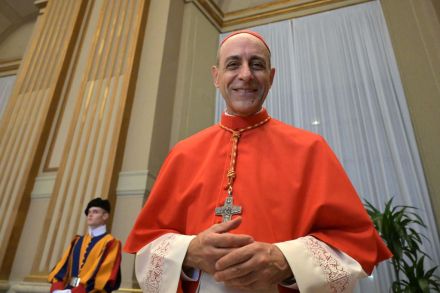
Just before Christmas, the Vatican's new doctrinal chief Cardinal Victor ‘Tucho’ Fernandez unveiled a new style of blessing designed to make gay couples feel at home in church without changing the Church's teaching on marriage. The Argentinian Tucho has for years been Pope Francis's protégé – but for how much longer? The new gay blessings, supposedly blessing the couple but not their union, have been decisively rejected by all the Catholic bishops of Africa, forcing Francis to backtrack and say they could ignore Fernandez’s decree. Then, last week, it was revealed that in 1998 Tucho published a book on, of all things, the theology of orgasms.

The wonder of Jon Pertwee and his frilly shirt

 When a friend asked if I wanted anything for Christmas I took a deep breath and replied: ‘Well, maybe I finally need to watch this.’ I handed him a video cassette retrieved from my sister’s attic and he took it to a place that digitises such things. On Christmas Day I nervously plugged in the memory stick. There we were: Carmel and I, aged about seven and nine, bathed in late-1960s sunshine in the garden of our mock-Tudor house in Woodmansterne Road, Carshalton Beeches, Surrey. (I emphasise ‘Surrey’, because in those days Carshaltonions were in Margo Leadbetter-style denial over new local government boundaries that landed them in – shudder – south London.

Raymond Arroyo on the joys of a Sinatra-style Christmas

22 min listen

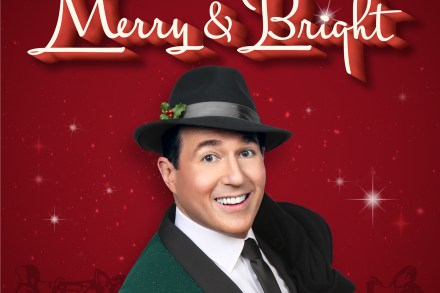
In this festive episode of Holy Smoke, we're taken back to the Christmasses of the 1950s and 60s by Raymond Arroyo, Fox News and EWTN presenter, whose enemies in the Vatican have been trying to silence him for years.  They've failed, thankfully – and now silencing him is even harder. Raymond, who trained in musical theatre, has produced an album entitled Christmas Merry and Bright in which he sings well-loved Christmas songs and carols in spectacular big-band arrangements inspired by one of his musical heroes, Frank Sinatra. And in one track, 'Feliz Navidad', he's joined by its composer – his friend the legendary José Feliciano. I hope you enjoy this conversation as much as I did.

The strange appeal of Integralism

28 min listen

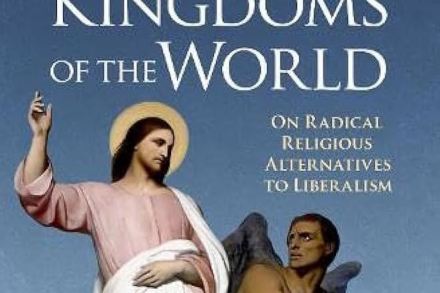
You might imagine that a political project to place modern nation states under the supreme authority of the Catholic Church would stand zero chance of success anywhere in the world, including in traditionally Catholic countries. And you'd be right. Even so, a movement known as Integralism – whose 20th-century incarnations were closely related to fascism – has gripped the imaginations of ultra-conservative Catholics in America, and especially on campuses. The Eastern Orthodox political philosopher Kevin Vallier has written a book, All the Kingdoms of the World, about this bizarre development. It's thoughtful and fair-minded – but Integralists have not taken kindly to his analysis and Vallier has found himself drawn into some unnerving exchanges on social media.

A marvel – how did Bradley Cooper pull it off? Maestro reviewed

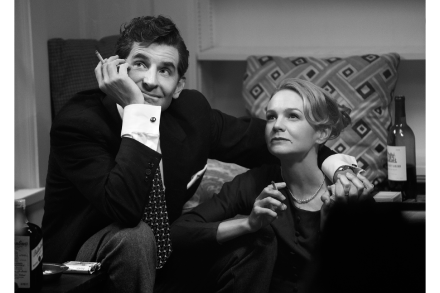
As the overture to Candide blazed away during the ovation for Maestro at the Venice Film Festival, three members of the audience flung their arms around in an imitation of Leonard Bernstein’s conducting style. They were his children, Jamie, Alexander and Nina, and their reaction said it all. Bradley Cooper, the film’s star and director, had pulled off a piece of cinematic chutzpah worthy of Lenny himself. His secret? The last quality you associate with the most embarrassingly flamboyant genius in American musical history: understatement. It’s easy to imagine the ghastly three-hour biopic Cooper didn’t make. West Side Story goes from near-catastrophe to wild triumph.

How light filled the first Roman Churches: a conversation with Dr Elizabeth Lev

15 min listen

When I was in Rome last month, I watched the 'synod on synodality' fizzle out while the Marko Rupnik sex scandal took another sinister turn (and various Catholic journalists shamefully tried to suppress the story). But don't worry: this episode of Holy Smoke is devoted to more uplifting matters. I visited the ancient little church of Saints Cosmas and Damian on the edge of the Forum, which incorporates the remains of a pagan temple and a secular Roman basilica or meeting place. The contrast between the darkness of one and the light of the other had powerful theological significance for those Roman Christians who were encouraged to build their first official churches by Constantine.

What do sugar and cocaine have in common?

Stephen Fry is a national treasure whom half the nation can’t stand. He drops his façade of loveability mid-chortle as soon as Brexit is mentioned. He threw a spectacularly pompous Remainer wobbly a few weeks ago and I remember thinking: is he determined to make the people he disdains actively hate him? If so, it’s working. Last weekend Fry was on John Cleese’s GB News chat show, talking about his former cocaine habit and its connection to his adolescent consumption of sugar. He mentioned the sweets in the shape of cigarettes that were sold at his school tuck shop. As he put it: ‘When I was a teenager, I had this vast empty hole in me that said, “Feed me, I need this sugar, I need it.

How not to talk to builders

It’s week eight of the installation of a cheap Ikea kitchen in my flat, and an Albanian builder is slumped in an armchair in my sitting room. He’s shielding his face with his hand, Princess Diana-style, to hide the fact that he’s weeping. My kitchen sink drama began when I rang a firm of local builders and they sent round a chap called Dave with a twinkle in his eye and a plan to rip off his employers. ‘Here’s what you do,’ he said. ‘Hire me for a day, tell the boss you’ve changed your mind and sack me. Then I’ll come round after work, charge you half the original quote and we’re all laughing.’ I did sack him – but after five weeks, not one day, and there were no merry chuckles when I screamed down the phone that I wanted him out of my life, for ever.

The Goldberg crown has settled on a new head: Vikingur Olafsson’s Golberg Variations reviewed

Grade: A+ In 2018, the Icelandic pianist Vikingur Olafsson released a solo Bach album. It bounced along unforgettably. Olafsson’s subsequent albums for Deutsche Grammophon were all lovely, but like many ‘intellectual’ pianists blessed with a pearly touch he could sound a bit precious. I missed the playfulness of his Bach, and so when he announced he was recording the Goldberg Variations I was excited. Could he sprinkle the magic of his original album over this famous Aria and its 30 tightly argued variations, at a time when there are more than 200 rival recordings on piano floating around – and roughly the same number on harpsichord? (When Glenn Gould cut his sensational Goldberg Variations in 1956, the only competition was a forgotten disc from Claudio Arrau.

The Pope, gay blessings and the Rupnik scandal

13 min listen

Pope Francis's much-hyped 'synod on synodality' began in Rome this week and to say that it has got off to a rocky start is putting it mildly. On Monday, five leading conservative cardinals bounced Francis into making a highly ambiguous statement apparently opening the door to gay blessings. Meanwhile, and this subject is being played down by certain media outlets, allegations of sexual abuse surrounds one of the Pope's friends. The world-renowned mosaic artist Fr Marko Rupnik has been expelled from the Jesuits after women claimed he sexually abused them – but he remains a priest and for some reason Pope Francis has yet to allow him to be prosecuted canonically.

Rejoice that Hyperion’s impeccable back catalogue is finally available to stream 

At the beginning of the 1980s a former ice-cream salesman called Ted Perry drove a London minicab to raise money for his dream project: the world’s most smartly curated classical record label. For the first time these magnificent recordings are arriving on Spotify, Apple Music and other platforms He called it Hyperion, after the Greek sun god, and by the time he died in 2003 it had acquired its own mythology.

So which Naomi do you think I am? The saga of Klein vs Wolf

Maureen O’Hara, the flame-haired ‘Queen of Technicolor’ celebrated for her on-screen chemistry with John Wayne, hated to be confused with Maureen O’Sullivan, who was Jane to Johnny Weissmuller’s Tarzan. But they were both Irish-born Hollywood actresses called Maureen, so it kept happening. I once heard John Sessions describe the time he met the octogenarian O’Hara. He prepared for the encounter by repeating to himself: ‘Don’t call her Maureen O’Sullivan.’ They got on famously until, inevitably, the wrong name slipped out. She took it ‘as badly as you can possibly imagine’.

Genghis Khan and the Pope’s summer of madness

21 min listen

Earlier this week, the Rome correspondent of the Times found himself mugging up on the history of Genghis Khan's Mongol Empire, and this is what he reported:  While the empire brought stability, it was created through the large-scale massacre of anyone who refused to submit to Mongol rule, leading to the death of millions. Mongol troops triggered famine in Iran by destroying ancient irrigation systems and catapulted diseased corpses into towns they besieged, a technique which reportedly introduced the Black Death into Europe. Why were the media suddenly writing about blood-crazed 13th-century warriors?