Clarissa Tan

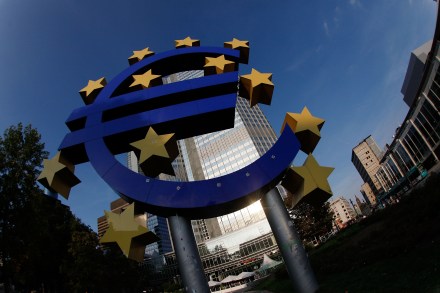
Eurozone v Facebook — which is the economic model of our time?

Even as our attention is gripped by a crumbling eurozone, another huge economic entity is emerging in the marketplace — Facebook, which has just upsized its number of IPO shares by a quarter before its $100 billion flotation tomorrow. Providing the crisis in Europe does not blow out into a huge political standoff (and just stays the gigantic economic mess it currently is), which entity would future historians regard as the defining business model of our age? Both the eurozone and Facebook, in a way, try to deal with the problems of geography — how to connect people from different places and cultures.

Metaphorical Merv

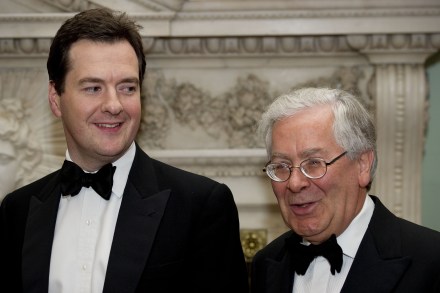
Mervyn King unfurled a mast of metaphors this morning. ‘We are navigating through turbulent waters, with the risk of a storm heading our way from the continent,’ he said. ‘We don't know when the storm clouds will move away.’ The eurozone, he said, is ‘tearing itself apart’.   So poetic was his language — a rare gift in a central banker — that it almost made one forget the painfully prosaic nature of his facts and figures. Inflation, already at target-busting levels, will be much stronger than the Bank initially envisaged, remaining above 2.5 per cent for the rest of the year. That’s almost a whole percentage point higher than its February forecast. The Bank also slashed its growth forecast to 0.

Basel III and the EU’s strange desire not to compete

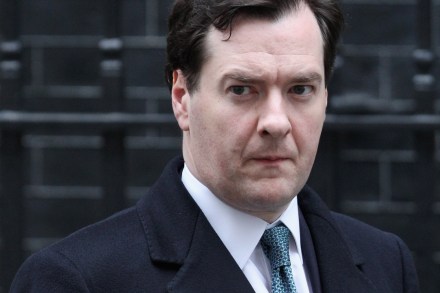
Greece is the centre of European attention, but as George Osborne met with other EU finance ministers today there was another issue bubbling in the background — Basel III. This had been brewing for a while and is yet one of those matters that threatened to isolate Britain from the rest of the EU (though some would argue this is a good place to be). The Chancellor this morning appears to have agreed to the Basel III accord, which stipulates the amount and quality of capital that banks are required to keep. But this was after much haggling — and an Osborne outburst where he said signing on to the original banking capital rules would make him look ‘like an idiot’ — saw amendments being added.

Mervyn’s mini mea culpa

The newspapers and internet today are full of headlines about Mervyn King admitting the Bank of England was ‘late to the game’, and that central bankers should have ‘shouted from the rooftops’ regarding the financial blow-up. It’s true, the BoE governor did make these ‘mea culpa’ remarks — but they came rather half-heartedly, and couched within a radio lecture that seemed to point even more fingers at other parties.   King was giving the Today Programme Lecture 2012, which he addressed to a Radio 4 theatre audience yesterday evening. Early in the half-hour speech, he gave an anecdote from 1997, in which then-governor Eddie George and him, Merv, celebrated Gordon Brown’s proposal for Bank independence.

May Day, May Day

There was a sense of urgency, even emergency, in many countries on May 1 this year. The goings-on in the UK were muted in comparison: France Presidential incumbent Nicolas Sarkozy staged a rally in front of the Eiffel Tower called ‘The Feast of Real Work’, to counter the traditional show of heft by the left. ‘Put down the red flag and serve France!’ he shouted to the unions. His campaign claims a turnout of 200,000. The left was irritated by Sarkozy’s hijack of their celebration, and his insinuation that they don’t understand what work is. The far right, led by a scornful Marine Le Pen fresh from rejecting an overture from Sarkozy, made their usual walk to the statue of Joan of Arc.

Boris has the greatest global clout

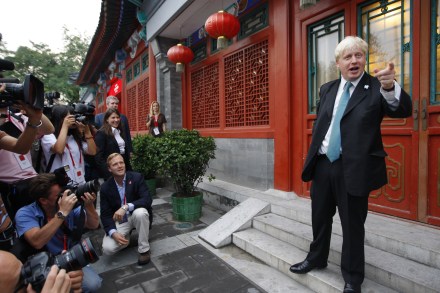
Ni hao. In recent days, Boris, Ken and Brian have all leapt headlong onto Weibo, China’s highly popular version of Twitter. It's an obvious effort to win the votes of Chinese-speakers living in London. Boris was the first — which, I suppose, says all you want to know about his sense of initiative, brio, élan, and whatever the Chinese word is for ‘mojo’. Ken and Brian both jumped in about two weeks later, around April 21.   Inevitably, because the vast majority of Weibo users live in China, our three London mandarins have ended up attracting followers based in the Middle Kingdom. A look at the mayoral candidates’ individual Weibo accounts gives a pretty accurate picture of the recognition and popularity they hold abroad.

QE is a government hijack, says King

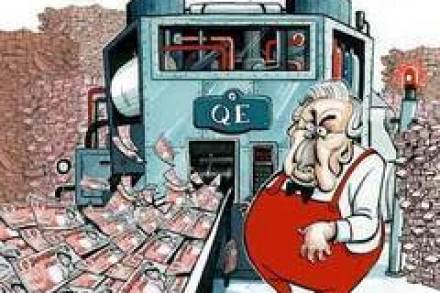
While Mervyn continues to inflate our universe via Quantitative Easing, another Mr King — Stephen, the chief economist of HSBC — has issued a report saying QE is a way for governments to ‘hijack the credit system’. ‘The financial system is being rigged via acts of financial repression as governments look for new ways of funding excessive debts,’ says King in his bluntly worded report. While he doesn’t cite the UK or Sir Merv by name, it’s clear that reference is being made to QEs I and II, the government’s preferred means of stimulating lending through lowering borrowing costs.

Burma’s startling Spring

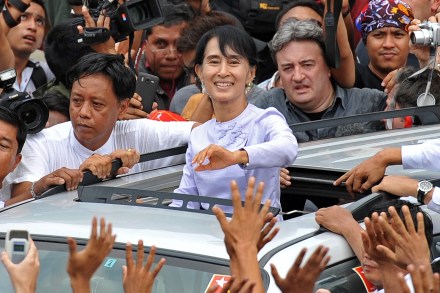
Of all the Springs we’ve seen, perhaps the Burmese one is the most astonishing. It’s because the person aligned on the side of oppressive leadership — President Thein Sein, formerly of the junta — in a sense participated in the Spring himself. Aung San Suu Kyi has claimed a staggering by-election victory — her National League of Democracy party looks set to win 44 of 45 constituencies contested — after last year finally agreeing to end the NLD’s boycott of Burma’s 'democratic' system. This was after she’d found common ground with Sein, who had unexpectedly unveiled an array of political reforms.

Baby economics

How – and why – ten-year-olds are being taught to run a business There’s an excited buzz in the Year 6 class of Yeading Junior School, in outer London. The ten-year-olds recently set up a polytunnel in the school grounds, and now they’re deciding which vegetables to plant in the new polythene greenhouse. Their teacher, Mrs Taylor, is cheerful but firm: ‘When the vegetables are grown, we’ll sell them for profit. Let’s work out how much we should charge for different vegetables. What should we consider?’ Hands shoot up. Bespectacled Alan notes that the more seeds we sow, the more money we make. Mansoor points out we’ll have to calculate the price of each seed, as seeds are sold in packets of hundreds.

Chinese whispers | 21 March 2012

China’s rumour mill, hyperactive even in the calmest of times, has been in overdrive in the past two days. Monday evening and early Tuesday in Beijing, the country’s Twitter-like microblogs were abuzz with speculation there could have been a military coup, possibly linked with the recent demotion of Communist official Bo Xilai. There hasn’t been a coup, nor is there likely to be. Crazy rumours swirl in China every day (though not always of this level of seriousness). It’s said that authorities are now banning the word ‘coup’ on microblogs.   The bigger issue for China is that its policy of controlling information, while trying to catapult itself into the big league of global economies, is breaking at the seams.

Will bankers turn against bankers?

Today brings the news, distressing to some quarters, that HSBC is paying its chief executive Stuart Gulliver £7.2 million — making him the highest-paid banker in the UK for the financial year so far. The remuneration comes on the back of a 28 per cent jump in full-year profits, which means HSBC has bucked the dismal trend of other British banks.   Still, as you might expect, it’s the buoyant figures denoting Gulliver’s pay — and those of the top 170 members of staff — that are making the headlines, with calls for HSBC to explain itself. This is part of the regular drumbeat against financial ‘fat cats’ that’s been going on for months, so in that sense it’s nothing new.

The hurdles facing Greece

Greece’s problems are far from over. As Pete said this morning, the €130 billion bailout hardly means the country is out of the woods, or that it won’t still be ejected from the eurozone. Standard Chartered have released a handy guide to the many obstacles Greece faces. Here are some highlights: 1. The first hurdle is the private-sector debt swap due to take place March 8-11. This is when private creditors are supposed to swoop in and save the day. But, to be enticed to do so, Greek bonds will likely have to come with collective action clauses (CACs). Here’s where it gets technical — if these CACs are invoked, payouts on credit default swaps will be triggered and the impact on financial markets is highly uncertain.

My first snowfall – Clarissa Tan’s diary

To everything there is a season, says the Bible. And, as I have been discovering, to every season there are certain things. To autumn belongs the wet shiny streets, the brollies and the macs, the brightly coloured soups, the quiet squares where both trees and grass are emblazoned with gold leaves. Then, as autumn moves to winter, there are the fleecy collars and fluffy hats, the steamy breaths, the ferrous skies. Perhaps before the season is over, I’ll get to see windowpanes with actual snow on them, instead of cotton wool. ••• I have spent all my life, until now, in the tropics, where there are no seasons.

Happy New Year from world leaders

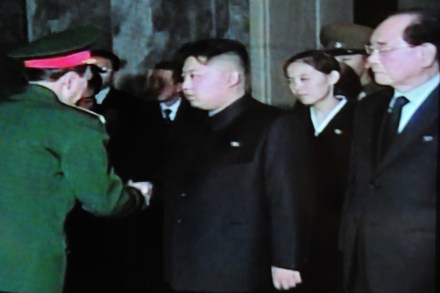
It’s the New Year — a time when politicians all over the globe get on their soapboxes and preach to their people. From Merkel’s pledge to do everything for the euro, to North Korea’s vow to defend their new leader unto death, to Putin’s speech laden with sexual innuendo, here’s a selection of this year's messages from world leaders: Barack Obama: ‘I promise to do everything I can to make America a place where hard work and responsibility are rewarded, one where everyone has a fair shot and everyone does their fair share. That's the America I believe in.’ Angela Merkel: ‘Today, you can trust that I will do everything to strengthen the euro. This will only succeed if Europe learns from the mistakes of the past.

What happens to QE without an AAA?

It’s not very festive, but we have to wander into acronym territory again. Moody’s last night warned that the UK’s AAA credit rating is at risk if economic growth continues to slow. At the same time, minutes from the Bank of England’s meeting early this month, released today, show that its committee members were unanimous in backing Quantitative Easing, and several of them feel more QE can be justified. But how potent can QE be if Britain loses its AAA? It’s clear that George Osborne, who’s claimed that the UK has retained its top debt rating so far due to his deficit-cutting and austerity measures, won’t have a happy new year if Britain loses its AAA. But it’s going to be a big headache for Mervyn King too.

Spectators of Christmas Past

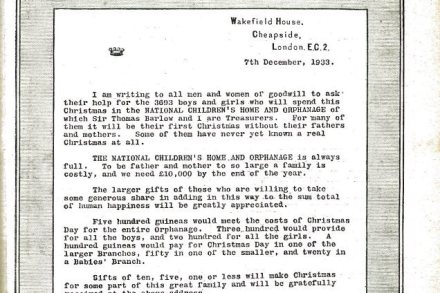
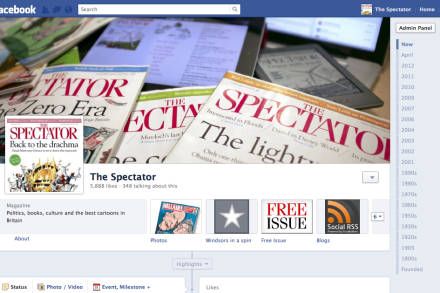
One December in the 1930s, with Britain reeling from the Depression, Lord Wakefield of Wakefield House took out a full-page announcement on the cover of The Spectator. It was an appeal to ‘all men and women of goodwill’ to help 3,693 boys and girls in the National Children’s Home and Orphanage.  ‘For many of them it will be their first Christmas without their fathers and mothers,’ wrote Lord Wakefield. ‘Five hundred guineas would meet the costs of Christmas Day for the entire orphanage.’   That was our Christmas cover of 1933, and it's just one of the Spectators of Christmas Past that we're featuring on our new Facebook page this week, which you can view here.

Is King pushing behind the EU scenes?

Mervyn King's words today, in the Financial Stability Report, are probably more important to the UK economy than George Osborne's on Tuesday. As James points out in the magazine this week, Osborne's plans could well turn out to be irrelevant if the eurozone collapses, flattening whatever is left of Britain's growth prospects. Basically, King feels that, thanks to the euro crisis, we're all headed for a credit crunch. This echoes Downing Street's sentiments yesterday. He says UK banks are well capitalised but should still boost their reserves – not by withholding loans to businesses, but by cutting dividends and bonuses.

Should the top-rate tax be less than 40 per cent?

Britain will soon be a leaking ship – it'll lose £1 billion per year by 2015, if George Osborne stubbornly sticks to the 50 per cent top tax rate. As other countries have moved to attract the wealthy, the UK has actually taken a step backwards, according to a new report. And there are losses that are harder to quantify – dampers on productivity and entrepreneurship, and deterrents to high earners from coming here. So what's the optimum tax rate? Less than 40 per cent, says the Centre for Economics and Business Research. The 50 per cent rate for people earning over £150,000, introduced by Alistair Darling, was meant to fatten Britain's coffers by up to £3 billion. Instead, it's destined to lose money.

Angela we have heard on high

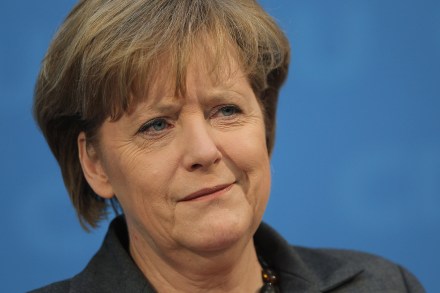
As Italy and Greece implode, and the pressure increases for Germany to do something, anything, Angela Merkel has made a call for 'structural changes' in the EU. In other words, in what's bound to get eurosceptics' hackles up, she's pressing for Treaty change and an even more tightly-knit union. At a conference known as Falling Walls, which commemorates the end of the Berlin Wall, she said: 'This is the time for a breakthrough to a new Europe. This is a time for a change toward more sustainability. That is the problem we have to contend with in Europe. And that means it is about more than declarations of intent but rather implementing structural changes.

Who will bail out the EU bailout fund?

While all eyes are fixed on Italy's ever-increasing borrowing rates, a far larger problem may well be emerging. The EU bailout fund, set up to help countries who can't borrow, may itself have trouble borrowing very soon. A sale this morning of 10-year bonds by the European Financial Stability Facility (EFSF) had a very muted response, barely bringing in the €3 billion it was meant to. This despite the fact that the offer was priced at a much more enticing yield, some 90 basis points (or 0.9 percentage points in non-market lingo) above a previous sale. Mind you, that's better than last week's sale, which had to be postponed due to lack of interest. The EFSF was set up as a fund that lends to eurozone companies that are finding it hard to raise money.