Chilton Williamson, Jr.

The rise of the celebrity politician

From our US edition

The instinct to admire and celebrate is as basic to the human psyche as the instinct to worship, to which it is related. In monarchical and aristocratical ages fame came from status and power; the most admired people in society were kings and queens, other royals and military heroes. In the bourgeois-republican age they were statesman of high rank, military men, political authors, poets, popular novelists, the prime donne and primi uomini of the theatrical and operatic stages, and prominent figures in high society. In the modern democratic age they are liberal politicians, best-selling novelists, pop singers, film and television stars, and fashion models: a downward progression that traces the steady descent in the public appreciation of human value and quality.

Celebrity

Whatever happened to the heroes?

From our US edition

Thomas Carlyle, in ‘Heroes, Hero-worship and the Heroic in History,’ divided heroes into six categories in order of human greatness as he conceived it: the hero as divinity, as prophet, as poet, as priest, as man of letters and as king, the heroic ruler of men who in Carlyle’s own description is the actual philosopher-king. In the modern world, kings have been replaced by prime ministers, presidents, strongmen and dictators; that is to say, by politicians of one sort or another. No one with the qualifying virtues of such a man would descend to the moral level of a tyrant, while no mere politician is endowed with the wisdom, gifts and virtues either of a kingly philosopher or a philosophic king, whom no democratic electorate would elevate to the office anyway.

heroes

Ever the Twain

From our US edition

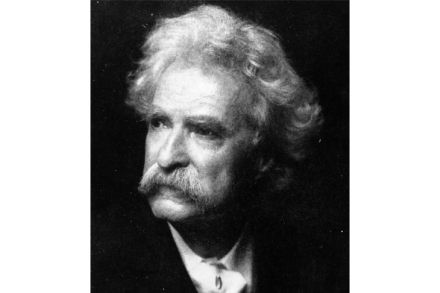
Mark Twain’s work contains in itself pretty much all of 19th-century America. This is America as she was when still, geographically and socially, more a frontier society than not; before she became heavily industrialized, urbanized and suburbanized: increasingly convergent upon the European societies from which she was descended. Twain’s America is, in short, America when she remained a unique place; even as she was evolving with lightning speed from her earlier self into something approaching her present one. Mark Twain made an international reputation for himself with the publication in 1869 of The Innocents Abroad, a travelogue that recounts a trip of many months through Europe and the Middle East.

twain

The New American Language

From our US edition

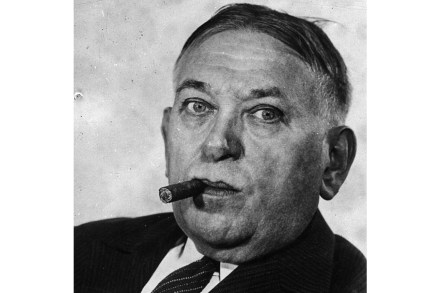
I suspect that were Mencken alive today having attained the respectable age of 140 years, he would be busy preparing The American Language: Fifth Edition and contemplating titling the book ‘The New American Language’ in recognition of the media-speak developed over the past couple of decades by news broadcasters and commentators, chiefly those belonging to the television industry. Each trade has its specialized lingo, due to the functional need for the terminology required to describe its unique operations. The electronic commentariat is no exception to this tendency of particular occupations to invent a vocabulary and idiom all their own. Where it does differ from a great many of them has to do with its reasons for doing so.

language

The wonder of Wagner

From our US edition

Laramie, Wyoming Nearly all the famous artistic controversies in the aesthetic history of the western world — the Battle of the Ancients and the Moderns in France and the contest between the rococo and neoclassical schools across Europe in the middle of the 18th century; the subsequent rivalry between the Classicists and the Romantics and the contretemps in the late-19th century between the Realists and the Impressionists — are as dead, irrelevant and forgotten today as the wars between the Guelphs and the Ghibellines.

wagner

The trouble with America’s ‘systemic racism’

From our US edition

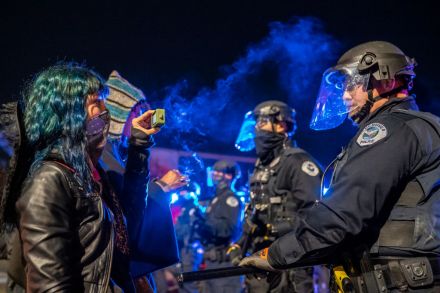
Laramie, Wyoming The refuge of a scoundrel is always the profession — in spades — of whatever a particular society prizes above everything else. In the United States from 1776 until the 1960s, that was patriotism. Since then it has been racial equality, succeeded in recent decades by crude and unapologetic racism of the anti-white variety whose virulence appears to contradict Newton’s Third Law, which states that for every action there is an equal and opposite reaction. This is why the death of George Floyd in the custody of the Minneapolis Police Department last May was accepted by the left as proof that race relations in America have worsened in recent years to attain critical mass.

systemic racism

The author in full: Tom Wolfe

From our US edition

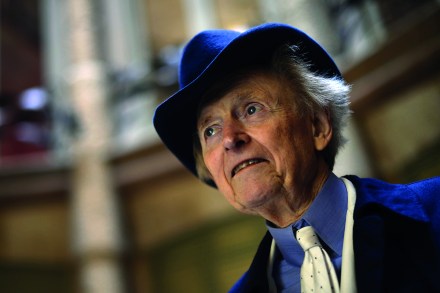
I was introduced to Tom Wolfe in the late 1970s, a year or two after I had begun my journalistic career as the literary editor at National Review, by Timothy Dickinson — an Oxford man working for Lewis Lapham, then editor of Harper’s — who was (as he doubtless remains) the sole ambulatory compendium of the British Museum. As Wolfe was fond of Middle Eastern cuisine, we met for lunch at a Lebanese place in Manhattan’s Garment District. While saying goodbye on the sidewalk out front of the restaurant after the meal, Timothy dropped his walking stick which was headless; only the screw that had once fastened the missing head in place protruding from the top of the shaft.

tom wolfe

The future of populist conservatism

From our US edition

Laramie, Wyoming William Kristol, a Grand Poobah of neoconservatism, is leaving the Republican party to join the donkeys of the Democratic one. As Dorothy Parker remarked on being told that Calvin Coolidge had died, ‘How could they tell?’ Mr Kristol, of course, was never a Republican to begin with, only a conservative Democrat. Still, it is true that with Donald Trump’s election and ascendance to the Oval Office, the Republican party has changed considerably, at least for now. So has American conservatism. Whether or not the GOP remains the party of Trump after he steps down from the White House or is dragged out of it by his gilded forelock, conservatism in this country will continue to be Trumpist, and probably for a very long time.

populist

Cormac McCarthy, brutal but brilliant

From our US edition

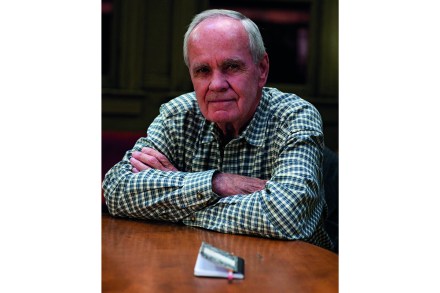
Cormac McCarthy of all living American novelists has realized most fully the potential grandeur of his métier by revealing the spiritual condition of our time in the old epic language. In this sense, he is the most serious American novelist of the post-war era. McCarthy’s work is magnificently oblivious to modern industrial and technological society and to the post-urban and suburban culture of consumerism, triviality and superficiality that are its fruits: the penalty a decadent civilization pays for its self-alienation from nature, humanity and metaphysical reality, and its embrace of an artificial world in which what is real and human withers and dries up, and art becomes well-nigh impossible.

cormac mccarthy

Professing virtues

From our US edition

Laramie, Wyoming For a good part of the 20th century, the college professor was an object of fun in American popular culture: a long-hair in the 1920s, an egghead in the Thirties, and in the Fifties an absent-minded intellectual at best, at worst a Comsimp suspected of being a sworn agent of Comrade Stalin and the Politburo. In the revolutionary Sixties, he was publicly imagined as a hirsute hippy in jeans and sandals waving the Cuban or Chinese flag, indistinguishable from students made up like Che Guevara. Americans have always been ambivalent about the pedagogue and his intellectual and social contribution to the Republic.

professors

No one in Jefferson’s day suspected the contradiction between commerce and education

From our US edition

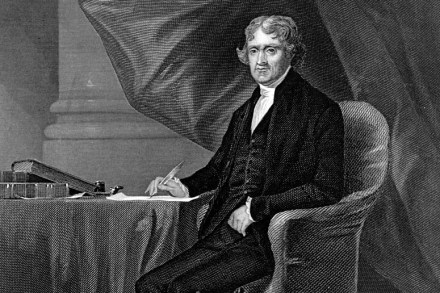
Laramie, Wyoming Historians of democracy know that the phenomenon was built upon two principal social structures: bourgeois commerce and popular education. The first developed during the Middle Ages and grew until eventually it replaced war as the means by which states and individuals acquired wealth; the feudal class gave way to the bourgeoisie. The second developed in the late 18th and early 19th centuries in North America, the United States in particular. The two institutions were widely regarded as socially, morally, economically and politically complementary; necessary to the growth of a solid middle class, of capitalism and of republican government.

jefferson education

The prophetic Raymond Chandler

From our US edition

This article is in The Spectator’s February 2020 US edition. Subscribe here.Laramie, Wyoming In an age of extreme individualism complicated by racial sensitivity and class resentment, ancestry is an uncomfortable subject. But it remains a fact that a man’s ancestors are never irrelevant to who and what he is, though of course they determine neither. Raymond Chandler (1888–1959) said that he was conceived here in Laramie, before being delivered in Chicago following the usual interval of nine months. His American father deserted the family and his Anglo-Irish mother took her son to England, to be educated at Dulwich College.

raymond chandler

Novel inspirations: H.L. Mencken, the bad boy of Baltimore

From our US edition

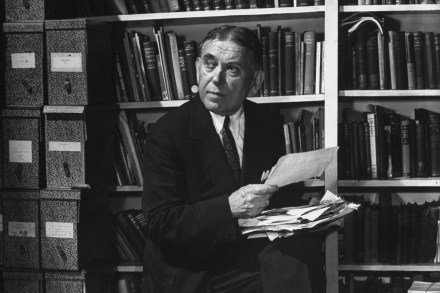
This article is in The Spectator’s January 2020 US edition. Subscribe here. In this age of dim digitized media in which E.J. Dionne and David Brooks are honored as distinguished columnists, the byline Henry Louis Mencken is virtually forgotten. Mencken, who died in his sleep 64 years ago this week after listening to Die Meistersinger on the Saturday afternoon broadcast from the Metropolitan Opera, is unlikely to be remembered by the mediacrats who abhor everything the man stood for. Yet Mencken in the 1920s was one of the most celebrated figures in America, and even the western world.

mencken

All modern art is quite useless

From our US edition

This article is in The Spectator’s January 2020 US edition. Subscribe here.Laramie, Wyoming ‘It’s pretty, but is it art?’ Rudyard Kipling asked in 1890. In those days the modernist movement across the Beaux Arts was gaining a grip on the western world that it maintains in the 21st century and is likely to hold into the 22nd, if there is one. One hundred and thirty years later, Kipling’s question calls for a plain response: ‘If it’s ugly, it has to be art.’ Aquinas defined art as ‘right reason in action’; reason in making. Right reason depends upon a man’s knowing what he ought to believe, desire and do. The modern artist is ignorant of all of these things.

art

American English must be the most carelessly spoken and written dialect on Earth

From our US edition

This article is in The Spectator’s December 2019 US edition. Subscribe here. Kemmerer, Wyoming Before 1965, when immigrants to the American Republic came almost exclusively from Europe, the largest white ethnic group in this country was of German stock. It may still be so, though I am unaware of recent statistics that demonstrate the fact. Certainly, a linguistically sophisticated visitor arriving here today from Europe might easily arrive at that conclusion. The now ubiquitous ‘Yah!’ is phonetically indistinguishable from ‘Ja!’, and while ‘Yah-wohl!’ has yet to be widely heard in American streets, connoisseurs of the American language in the 21st century would hardly be surprised should it crop up there.

american english ‘OK, here it is, “Brexit” … Apparently it means “Brexit”…’