Chilton Williamson, Jr.

Transhumanism is the most dangerous idea in circulation today

From our US edition

When asked at a 2004 Foreign Affairs symposium to identify the most dangerous of all contemporary ideas, Francis Fukuyama — no doubt to the editor’s surprise — did not cite the heretical view, held by many of his critics, that the end of history is not yet, nor indeed is anywhere in sight. Instead, he chose the concept called transhumanism for that honorable nomination. Whether or not transhumanism is the most dangerous of all current mental constructions, it is certainly among the silliest, demonstrating the degree of intellectual insanity to which the fear of mortality is capable of driving educated people who ought to know better.

transhumanism

Democracy by numbers

From our US edition

The world of 2023, which scarcely speaks for the intelligence, the competence, or the success of the human race, does revive the age-old question of whether the individual is wiser than the species. One answer, stated in its simplest form, is the old saw that two heads are better than one. But is that true? And if so, are three heads better than two, und so weiter? Where do we come to the end of this? The key to the conundrum relates to government. Does oligarchy provide wiser rule than monarchy, aristocracy than oligarchy, and democracy than aristocracy? Consider the history of Britain and British government over the past centuries. Has democracy, in progressively greater measure, improved the management of British affairs since the eighteenth century?

democracy numbers

The left’s politics of catastrophe

From our US edition

Having a close, lifelong acquaintance with the animal kingdom, from small reptiles and farm animals to dogs and cats of the large and domestic varieties, I disagree with G.K. Chesterton’s casual statement that the more one gets to know animals, the greater the distance between them and human beings appears. My own experience suggests the opposite. Chesterton had obviously not considered herd animals such as cattle, with their keen instinct for panic that Homo sapiens, taken as a species, so often exhibits. Humanity’s current panic — of global extent, though demonstrated in exaggerated form in the West — touched off by the phenomenon of “climate change” is only the latest historical manifestation of an endemic human trait.

iowa

The grievance games of the left

From our US edition

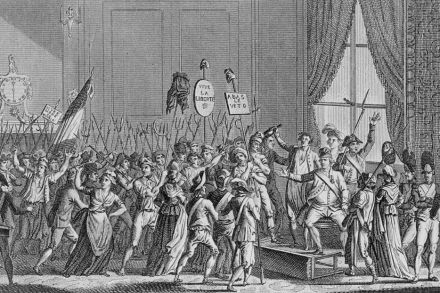
In the first week of October 2022, Jean-Luc Mélenchon, France’s perennial man of the Marxist left, former leader of La France insoumise and present chief of Nupes (Nouvelle Union populaire écologique et social), an alliance of hard-left, left and green parties, invoked the jours d’octobre that commenced on October 5, 1789 with the Women’s March from the Parisian marketplaces to Versailles and ended with the more or less forced departure of the royal family for the capital city in the early morning hours next day after several members of the Palace guard had been decapitated and their heads impaled on pikes. It is unclear what that revolutionary year, and the events of October 5-7, have to do with twenty-first-century France.

revenge

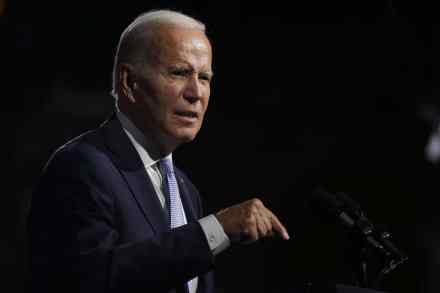
Joe Biden is the phantom of the Potomac

From our US edition

The day after the election last week, Roger Kimball posted a column here at The Spectator World acknowledging that he had no explanation for the failure of the vaunted red wave to sweep in from the sea. I had no explanation either, and still don’t after six days of ruminating on the question. Nevertheless I am forming a couple of tentative theories, in however provisional a way. Early this morning, I received a post from one Sasha Stone — a Substack writer previously unknown to me — titled “Joe Biden: The Man Who Wasn’t There.

The brilliance of British civilization

From our US edition

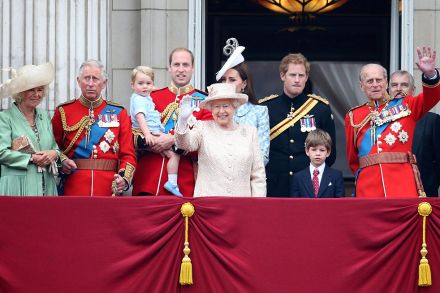
The day after the death of Queen Elizabeth II, I received a note from a friend in the Midwest asking whether I thought the British monarchy would survive her by more than a decade. I replied that of all British institutions the monarchy is the strongest — and that I expect it to last as long as Britain herself. Everything I witnessed in the week after the Queen died seems to me to justify this judgment, in particular the conduct of King Charles III, about whom my friend was skeptical. The events also confirmed my lifelong opinion that British civilization is the finest the world has ever seen; so fine, indeed, that I suspect that the citizens of most countries today are unable to appreciate the nature of its greatness, and how it came to be great; Americans, perhaps, especially.

british

The slumber of the Anglosphere

From our US edition

The countries we call Anglo-Saxon (Great Britain, the Commonwealth and the United States) have been known for centuries for their ability to govern themselves democratically, peacefully and efficiently. In the twenty-first century they have been doing less well. Britain and America are both in dreadful straits politically, economically and socially. The implosion of Boris Johnson and the search for a satisfactory successor have revealed the leadership of the Tory Party as a hapless and embarrassing collection of mediocrities devoid of coherent ideas. Across the Atlantic, one of the two major parties is a gerontocracy at the top and a gang of urban guerrillas with Molotov cocktails at its base.

anglosphere

Vladimir Putin is simply mad

From our US edition

Vladimir Putin is mad: not in the cognitive but in the emotional sense of the word. He is an odd mixture of the cold, the plotting, the calculating, and the bloodless; the emotional, the impulsive, the hotblooded, and the sentimental. He is mad, in other words, in precisely the way that Adolf Hitler was mad. And like Hitler, Putin is disconnected from the world of fact but not of logic. This is a fundamental truth about the man that I think the West had never experienced before February. His condition became apparent in the diatribe against the West that he gave on Friday, which corresponded almost exactly to Hitler’s customary rants.

nuclear tactical putin war

Liz Cheney’s GOP has gone extinct

From our US edition

You have to wonder what Liz Cheney feels her relationship to the Republican Party to be today. Having spent years denouncing Donald Trump as a faux Republican and a disgrace to the party, much of the past year implicitly accusing him of treason as vice-chair of the January 6 Committee and the two months since her defeat in the Wyoming primary characterizing half (at least) of the GOP as “very sick,” she is co-sponsoring a bill with Representative Zoe Lofgren, a California Democrat, to reform the Electoral Count Act in order to “protect the rule of law and ensure that future efforts to attack the integrity of presidential elections can’t succeed.” Representative Lofgren was one of seven impeachment managers in President Trump’s trial for his first impeachment in 2020.

liz cheney

The Trinity School gets its anti-woke comeuppance

From our US edition

The Trinity School in New York City was founded in 1709 by William Huddleston to instruct the children of poor parishioners of Trinity Church, located at the top of Wall Street. The school ceased its affiliation with the Episcopal Church 1968, though it still has an Episcopal priest, salaried by the Church, to conduct its weekly chapel services. Trinity is the fifth oldest school in the United States and the oldest in New York in terms of continuous operation. I myself was enrolled at Trinity in all twelve grades. I received a top-flight education at Trinity in the 1950s and '60s from a superb faculty most of whom I recall with respect and in many cases real affection, as I do the school itself.

Politicians are not ‘just like us’

From our US edition

Kenneth Minogue, the political philosopher from Down Under, devoted a career to the wholesale destruction of liberalism as a political, intellectual and moral system without liberals having ever noticed the fact. A decade ago, he observed that we now refer to our democratic rulers by their Christian names — Bill, Hillary, Barack, Joe, Boris and so on — as casually as we do baseball players, television anchors and rock stars. The casualness of the age is not a wholly sufficient explanation of the practice. Democratic politicians, American ones especially, have had nicknames attached to them by their constituents for at least two centuries: Little Jemmy, Old Hickory, His Accidency, Uncle Abe or the Tycoon, Old Rough-and-Ready, His Fraudulency and Amtrak Joe among numerous others.

politicians

Liz Cheney: the end of the affair

From our US edition

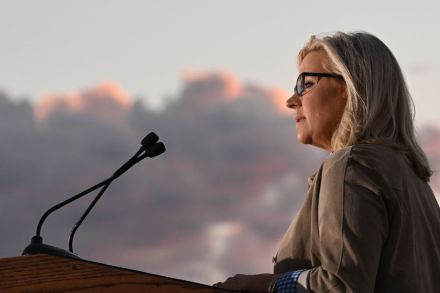
Laramie, Wyoming Liz Cheney’s concession speech, delivered from the Mead Ranch near Jackson before a small group of subdued supporters last night, was a thundering anti-climax that shook what remained of the glaciers free from the granitic steeps of the Grand Tetons. The quiet, almost matter-of-fact tone of the address differed strikingly from the modestly grandiloquent substance, which was “Now, the real work begins;” an implicit acknowledgement that, for its defeated representative-at-large, Wyoming and its interests have been of small importance in her ascent to greater things.

liz cheney

The last-ditch attempt to rescue Liz Cheney

From our US edition

Liz Cheney, who sounds and looks increasingly like Hillary Clinton, has effectively consigned the 70 percent of Wyoming citizens who voted for Donald Trump two years ago to the category of “deplorables.” Less than a week out from the open Republican primary, she was reported by the New York Times to be reconciled to losing her bid for a fourth term as Wyoming’s sole congressional representative. As Emerson said on learning that Margaret Fuller, the American journalist and Transcendentalist, had decided to accept the universe, “She’d better.” Still, La Cheney continues to fight hard for something; the question is what.

liz cheney

From modernism to totalitarianism

From our US edition

The modernist movement in the arts got underway around the start of the last century, encouraged by Ezra Pound’s exuberant exhortation to “Make it new!” Somewhat less attention was paid to making it good, as if what was new was inevitably good — better, indeed, than everything that had come before it. Barrels of printers’ ink were expended on the subject in the so-called “little magazines” of the period on both sides of the Atlantic, not all of it wasted; much of the relevant critical commentary was very intelligent and interesting indeed. Modernism as a concept and an aesthetic was less successful in music, painting, the plastic arts and architecture than in literature — though again, some of the work it inspired was very good.

modernism

Conservatives and culture

From our US edition

"The liberal conception of society,” the political philosopher Kenneth L. Minogue wrote in The Liberal Mind, “is... determined by the moral and political policies of modern liberalism. It has only a tenuous connection with sociological description.” As well as, we must add, the political realities of the nation state in the twenty-first century. (Minogue’s book was first published in 1963.) Today, liberal policies are the emotional expression, translated into political terms, of liberals’ utopian aspirations toward the complete “inclusion” of every one of society’s “communities” on precisely equal terms. Liberals will not recognize that this goal can never be achieved, and that a multicultural nation is a plain contradiction in terms.

culture

Liz Cheney is the GOP’s worst enemy

From our US edition

Liz Cheney made two interesting moves last week. One, she was among the fourteen House Republican who voted to pass the Bipartisan Safer Communities Act that her Wyoming colleagues in the Senate, John Barrasso and Cynthia Lummis, refused to support. Two, she offered publicly to instruct her Democratic constituents in the state of Wyoming how to register to vote in the Republican primary election on August 16, thus allowing them to support her against Harriet Hageman, her Trump-endorsed opponent. For decades Wyoming Democrats have taken advantage of the Wyoming Republican Party’s idiotic policy of allowing cross-over voting in the primaries, thus virtually guaranteeing that the most conservative candidate will be eliminated at the beginning of any electoral proceeding.

liz cheney

Fall of the godless

From our US edition

No religious season passes without it being insulted by the kind of person who lives in fear that somewhere some believer is not having his faith offended by someone to whom faith itself is offensive. This Eastertide was no exception. On Good Friday, which coincided with the first night of Passover, the New York Times printed an essay by a former yeshiva student proposing that in this year of violence and suffering it would be best to “pass over” God, adding, “Killing gods is an idea I can get behind.” This sort of village-atheist raspberry — which largely disappeared during the twentieth century along with American villages themselves — has enjoyed something of a revival early in the twenty-first century with the appearance of the so-called New Atheists.

atheists
babbitt

Falling in line with Sinclair Lewis

From our US edition

In 1920 Warren G. Harding was elected president of the United States, after campaigning on a promise to the American electorate to return the country to what he called “normalcy.” Exactly one hundred years later, Joe Biden assumed the same office having offered the same thing, in different language. In July 1922 Sinclair Lewis published Babbitt, a bestselling novel about a normal middle-class American businessman living in a normal small-sized Midwestern city: the quintessential personification of “normalcy.” Around the middle of the same decade, H.L. Mencken, a good (if necessarily patient) friend of Lewis’s, predicted that America would “blow up” in a hundred years. 2022 is Babbitt’s centennial year.

The march of the ‘experts’

From our US edition

Historically Americans have had little, if any, respect for college and university professors, for whom they felt a mild though distant and tolerant contempt. As more and more members of the professoriat have been recognized as “experts” in their respective fields, or at least at the edges of them, since World War Two, they have naturally presented themselves to the public under the guise of “specialist,” a vast improvement over their previous reputation as absent-minded eggheads barely able to afford the Ford Motor Company’s cheapest product and a shabby house on the wrong side of the railroad tracks.

experts

Time to invoke the 25th Amendment against Biden?

From our US edition

President Biden’s senile verbal blunders over the past few days have prompted renewed speculation over his mental competency. It's even been suggested that now is the time to consider invoking and activating the 25th Amendment. The Wall Street Journal recently printed a short sharp edit on the subject, noting that should the president go, he would be replaced by the vice-president, thus rescuing the government from the nursing home and delivering it into the hands of the idiotic. The Journal’s editors prefer the status quo. They are probably right to do so.