Chilton Williamson, Jr.

Judge Jackson’s refusal to define a woman was disqualifying

From our US edition

Asked by Senator Marsha Blackburn during the Senate Judiciary Committee’s recent hearings whether she could define the word “woman,” Judge Katanji Brown Jackson replied, “Can I provide a definition? No, I can’t. I’m not a biologist.” That's an interesting standard. Can Judge Jackson define a human being? Can she affirm that she is one? Apparently not. Only a biologist could do that — or a woke progressive liberal, and zie would be wrong. The Judge may possess certain credentials that would make her a worthy addition to the Court. Yet intellectual honesty, common sense, independence, and moral courage do not seem to be among them. A few members of the press took notice of her idiotic response, as did a sizable number of the Twitterati.

The ultimate human futility of sports

From our US edition

If it were true that civilization progresses inexorably according to the laws of some teleological principle, public — in modern times, professional and commercialized — sports would not have survived Classical Greece and the Roman Empire, thus sparing the modern world such obscene extravagances as the Super Bowl in the United States, the World Cup in Europe and the international Olympic Games. Mass man at play in his leisure hours is not a pleasant and encouraging sight in any circumstances, but gathered with his fellows in massive sports stadia one views him at his absolute worst.

sports

Russia is the West’s great tragedy

From our US edition

The books written about the tragedy of the Russo-Ukrainian War will be legion. In the meantime, there's another book that ought to have been written 20 years ago about a previous tragedy concerning Russia: how, following the collapse of the Soviet Union in 1991 and with it the demise of the communist regime, Russia and the West failed to “converge” in some way. Why did the two did not come to embrace each other politically, economically, and culturally? The rivalry between East and West has since 1917 been fundamentally an ideological and not a nationalist one. Historically, before the Bolshevik Revolution, Washington had been on cordial terms with Moscow, from which it had purchased the Russian territory of Alaska in 1867.

us-russia

Liberalism and existential insecurity

From our US edition

After 1789, conservatism was the party of insecurity, pessimism and fear, liberalism the party of confidence, optimism and eager anticipation, down to the early years of the twenty-first century when the mood of hubristic triumph that followed the collapse of the Soviet Union deflated almost overnight, in the United States especially, where liberal democrats have come to resemble the “normal American of the pure-blooded type” whom Mencken described as going “to rest every night with an uneasy feeling that there is a burglar under the bed, and... [getting] up with a sickening fear that his underwear has been stolen.

liberalism

The death of literature

From our US edition

The greatest men make the greatest mistakes. One thinks of the late John Lukacs, the Hungarian-American historian who claimed that the age of the book is at an end. That is far from being the case, the electronic book having failed to drive the print version to extinction as enthusiasts had predicted. Indeed, the continuing flood of printed and bound books remains among the greatest threat to books today — good books, that is, books worth an intelligent man’s time.

literature

The exhortative tradition in America

From our US edition

G.K. Chesterton observed after his return to England from a lecture tour in the United States that America is a nation with the soul of a church. That is hardly surprising, the northernmost of the original thirteen colonies having been established by a fervently religious sect. All religions are exhortative by nature, none more so than the sectarian ones which have a solid history of being noisier in this respect than the established churches, partly, I suppose, because one encourages the burning of witches in louder tones than one solicits a bigger collection plate for the relief of the victims of territorial rebellion in Ethiopia. It is true that the first generation of Puritans in Massachusetts were a more dignified lot than many of their successors.

exhortation

Does Liz Cheney want to be a Republican?

From our US edition

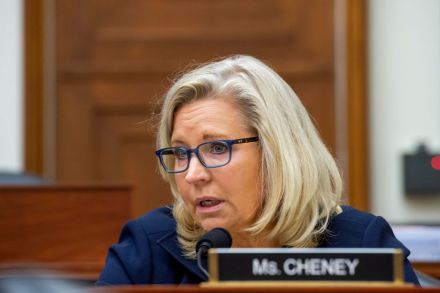
Last weekend, the Wyoming GOP Central Committee voted not to recognize Liz Cheney as a member of the Republican Party by a margin of 31-29, a vote that was much closer than those taken in some county committees, a number of which made the unanimous decision to disavow her. The action does nothing to reduce Cheney’s power and position as Wyoming’s sole congressional representative, and in any case it seems increasing likely that the lady no longer cares what her constituency Way out West thinks of her. Last weekend Cheney, together with Representative Jim Clyburn, the House Majority Whip, and Chris Wallace of Fox News, each accepted a Jefferson-Lincoln Award bestowed by the Panetta Institute for Public Policy on Dr. Wallace’s Sunday show.

cheney

The foremost challenge facing Western democracies

From our US edition

A few philosophers since ancient Greece have been wise, scarcely any humble. None at all, to my knowledge, has had the hubris — or maybe courage — to tackle the foremost challenge in political philosophy facing Western democracies today: how to achieve a demotic political system with an elite culture resting on top of the popular one, and the subordinate problem of how to prevent bad culture from driving out good, or making it impossible. Not even Tocqueville addressed the problem, which shows what a wise man the aristocratic Frenchman truly was.

class

Liz Cheney, pioneer girl

From our US edition

Cowboy State Daily reports that Liz Cheney’s House campaign has so far hauled in $5 million in donations this year, some millions more than in Cheney’s previous run to keep her seat in 2020. According to CSD, 6 percent of itemized individual donations were made by people listing Wyoming addresses, compared with nearly 27 percent in the previous cycle. Since Wyomingites have so far contributed nearly $177,000 so far this year to Cheney, as compared with $134,850 at the same point in the campaign as a year ago, it seems that either past Republican donors in the state are giving more, or that anti-Trump Democrats are contributing this time round, or both.

liz cheney

The peculiarly American attitude toward change

From our US edition

Future historians will marvel, if history is not abolished and historians themselves canceled — or worse — before then, how so many Americans at the end of the 20th century and the beginning of the 21st came so suddenly and with apparent certainty to believe in such human and scientific impossibilities as homosexual marriage and the multiplication of the two biological sexes into a unlimited number of them; the ability as if by magic to transform a man into a woman and a woman into a man, and for a man to give birth to a baby; the possibility for Homo sapiens to exert direct control over the terrestrial climate, as if the earth were a suite in a luxury hotel; and other manifest absurdities.

change
waugh

Why we should venerate Evelyn Waugh

From our US edition

Evelyn Waugh is popularly known today as a comic author, despite the fact that Brideshead Revisited, made famous by the eponymous 1981 television series, is certainly not a comedy. Not everyone agrees. Years ago, a well-read friend of mine remarked to me that he was not fond of Waugh’s work. When I asked why, he replied, ‘Because I don’t think he’s that funny.’ I answered that the way to appreciate the exquisite wit of Evelyn Waugh is to approach him in the expectation of something other than humor, in which case the absurd incongruities, outrageous juxtapositions and ludicrous extremes that occur throughout the novels are in fact supremely funny. Waugh never set out to write comedic stories in the manner of P.G.

Liz Cheney is running scared in Wyoming

From our US edition

Last Wednesday, Rep. Liz Cheney seized the opportunity during a House Armed Services Committee hearing to apologize to Gen. Mark Milley. She went on to assail the 'despicable' questioning of her Republican colleagues, who wanted information about phone calls Milley had made to a Chinese official last fall, in which the general had assured him that, were President Trump to launch a nuclear attack against China (presumably out of sheer frustration, or perhaps idle curiosity to learn what the result would be), he would tip him ahead of the fact. This, of course, was a direct affront to the 70 percent of Wyoming citizens for had voted for Trump in 2020. Several days before that, Cheney had confessed to 60 Minutes that she had been wrong to oppose gay marriage in the past.

cheney

A Cheney imperiled

From our US edition

Kemmerer, Wyoming Rep. Liz Cheney has the political brain of a sucked egg, as her egregiously self-destructive decision to join her Democratic colleagues in voting to impeach President Trump following the events at the US Capitol on January 6 showed. In terms of personability and charm, Cheney is the Republican equivalent of Hillary Clinton. And in a state with a population of 581,024 people spread across 97,914 square miles where politics has always been something like a family affair, she is very much an outsider, even a stranger. Born in Madison, Wisconsin, she lived in the Cowboy State for only a year or so when she was a sixth- and seventh-grade student in the 1970s.

cheney wyoming

Modern English

From our US edition

The English language as written today is often nearly incomprehensible on first reading, and as spoken almost unintelligible and unpleasant to the point where the civilized listener disengages himself in frustration and disgust from the speaker and his speech. The problem in the first instance is the readiness of people who know better to embrace demotic usage in semi-formal literary venues, such as respectable journalism; the second, the bizarre combination of pretension and illiteracy and its results, the jargon and barbarisms ubiquitous in the 21st century.

English

The importance of formality

From our US edition

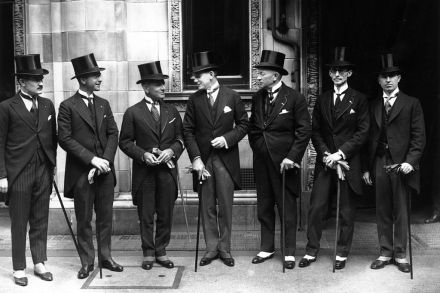
Over the past six decades Homo sapiens occidens has grown progressively more informal in matters of clothes, language, speech, manners and social behavior to the point where, having lost any form whatever, it has devolved into Homo slobus, and democracy into slobocracy. This departure from formality has occurred across every class of society and every occupational and social category — politics, corporate business and finance largely excepted — including what remains of high society, private schools and clubs, and the churches. The lockdowns that followed from the pandemic contributed immeasurably to an already precipitous momentum.

formality

Perry Mason was America’s Sherlock Holmes

From our US edition

I was well into my thirties when my parents acquired a television set, for no good reason that I could discern after they’d gone so many years without one without obvious damage to their health or intellects. Growing up in the Fifties and Sixties, my sister and I were permitted to watch two television shows while visiting with relatives. One was Topper. The other was Perry Mason, which they occasionally joined us for: a small family grouping that was the closest thing the Williamsons ever came to resembling a painting by Norman Rockwell. Over the past year and a half, I have been re-watching episodes of the original show starring Raymond Burr as Mason, Barbara Hale as Della Street, William Hopper as Paul Drake, Ray Collins as Lieutenant Tragg and William Talman as Hamilton Burger.

mason

The straitened situation of conservatism

From our US edition

For the past seven and a half decades Western politicians have been exhorting voters to ‘believe’ or ‘have faith’ in democracy. They should have been addressing themselves instead. The unpleasant truth is that 20th- and 21st-century politicians on the right have never believed that constitutional democracy based roughly on the American model could ever satisfy the masses by giving them the material loot and freedom they expect, while those on the left have always thought it does not go far enough in granting themselves the power and authority they require.

conservatism

The error of idealism

From our US edition

‘He who is not a republican at 20 compels one to doubt the generosity of his heart; but he who, after 30, persists, compels one to doubt the soundness of his mind.’ Thus spake M. Anselme Polycarpe Batbie, a 19th-century French academic jurist whose sentiments, variously phrased, have also been attributed to John Adams, François Guizot and Georges Clemenceau. A generous heart and the ability to learn from experience are very good things, certainly. An even better one is common sense: a native attribute that age does not diminish. Mencken claimed that he had never changed his mind on any matter of importance. Donald Trump said in regard to John McCain that he preferred war heroes who didn’t get captured. Myself, I like thinkers who were right from the beginning —and stayed that way.

idealism

The problem with progressives

From our US edition

An incident recalled from the days when I still counted out my age in coffee spoons has to do with a political conversation between my parents and two elderly Bostonian spinsters in the days when Republicans, even those of the female persuasion, were not unheard of in the Commonwealth of Massachusetts. The subject was the second Eisenhower-Stevenson set-to, which from the perspective of the 21st century looks as reserved as a difference of opinion between two members of the New York Yacht Club over a bottle of Evian and cigars. In those days my parents were still-recovering members of the FORWARD WITH ROOSEVELT set, and therefore MADLY FOR ADLAI in the campaigns of 1952 and 1956.

progressives

The soul of Flannery O’Connor

From our US edition

Since the racial riots last summer, Flannery O’Connor has been scrutinized by literary critics and activists for reasons wholly unrelated to her literary artistry and her formidable oeuvre, whose size, though not large, is remarkable for a writer who died at the age of 39 after having been diagnosed in her mid-20s with lupus. The abruptly renewed interest in Miss O’Connor could be said almost to amount to an O’Connor revival were it not focused on a single question: ‘Was Flannery O’Connor a racist, or was she not?’ Attempts to answer it have involved an evaluation of her character based on her novels, stories and voluminous correspondence, and led in one instance to the critical conclusion that she was ‘not a saint’.

O'Connor