Charlie Gammell

Charlie Gammell is a historian and former diplomat who was on the Iran desk at the Foreign Office. He is the author of The Pearl of Khorasan

What will Iran do next?

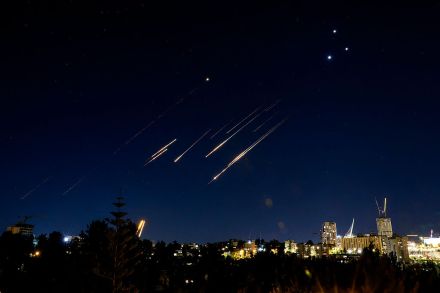
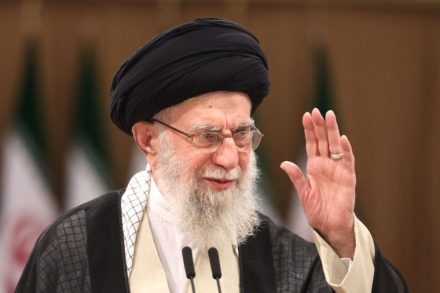
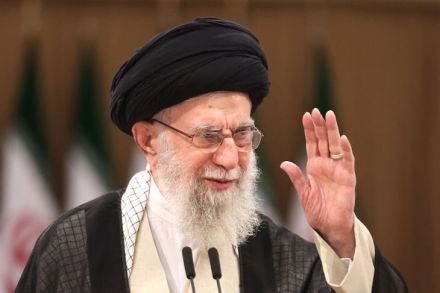
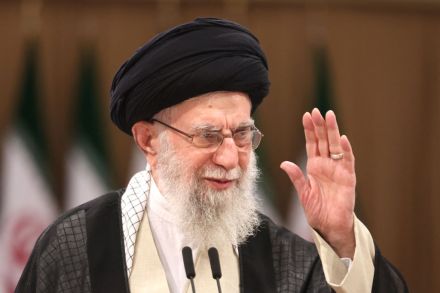
‘They are scared. You can hear it in their voices,’ someone wrote to me on Friday from Tehran. And in this case the ‘they’ is what’s left of the Iranian military and intelligence commanders. And perhaps Khamenei, too (strikingly absent from the air waves since a speech on Friday morning). Israel’s strikes, yet another show of tactical brilliance from the ever-resourceful Mossad, stunned the Islamic Republic in a brutal display of military and intelligence superiority. Iran is quite simply reeling, and the only question now is how far will Israel go, and to what end? Who, if anyone, will pick up the pieces of a broken Islamic Republic?

Will Iran take the nuclear win?

From our US edition

To enrich or not enrich? This seems to have been the question dividing Iranian and American negotiators, and there are swelling choruses in Tehran and Washington who hold strong views on the matter. In a report leaked to Axios, it appears that during the last round of talks, the US gave Iran a proposal that would allow limited low-level uranium enrichment for a specified period. The proposal suggested that Iran would be forbidden from building new enrichment facilities and must dismantle “critical infrastructure for conversion and processing of uranium,” adding that research and development on centrifuges would also have to stop. Sanctions relief will only come once Iran is demonstrably adhering to the terms of the deal and has clearly paused its underground enrichment activities.

Iran

Iran is feeling emboldened

From our US edition

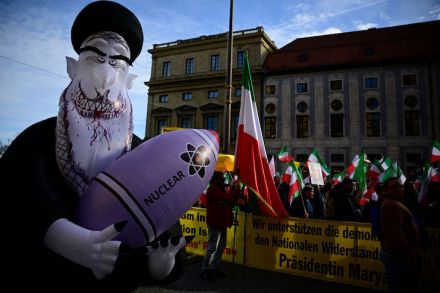
After the cautious optimism of the early rounds of US-Iran talks, and Donald Trump’s Gulf roadshow, the US government has claimed that Israel is preparing for a possible strike on Iranian nuclear facilities, a parallel piece of political theatre to the ongoing talks between US and Iranian negotiators.  This is nothing new. B-52 bombers and Israeli fighter jets have been rehearsing this for the past few months, and many years before that. This is some very public cold water being poured on the talks, just as they set to advance to the complicated bit. Aware that there is every chance the talks may not progress beyond these thorny rounds, both sides are preparing the ground for that failure.

Mullahs

What is Trump doing in the Middle East?

29 min listen

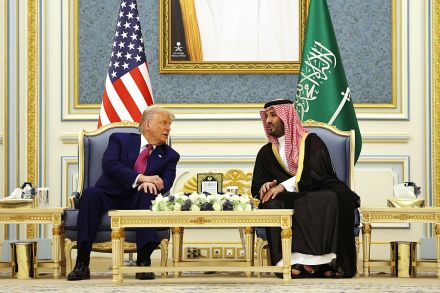
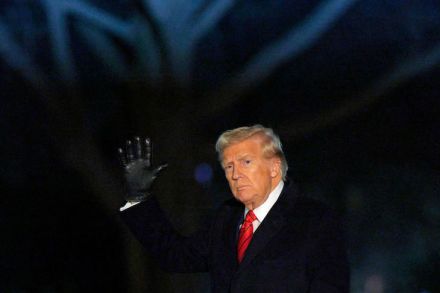
President Trump is an America Firster, but he has an undeniable affinity for the Arab world. He would have made a good sheik: he doesn’t drink, he loves developing flashy properties to show off his power and wealth, and he’s brutally realistic about the role of oil (and other commodities) in world politics. On his tour of the Middle East, he signed an enormous arms deal with Saudi Arabia and announced all US sanctions on Syria would be lifted. Historian and former diplomat Charlie Gammell joins Freddy Gray to discuss what Trump really wants in the Middle East.

What can we really expect from the US-Iran talks?

This weekend in Muscat, US and Iranian diplomats held a fourth round of talks, continuing their efforts to find a way through an impasse that has bedevilled US-Iran relations since 1979. By all accounts, the negotiations so far have been a mixed bag. The overall picture remains slightly confused, particularly around the issue of uranium enrichment. Some hardliners in Tehran are getting cold feet, and old entrenched narratives on both sides of the divide are beginning to resurface as the going gets tough. Sources close to the talks have indicated that the US might agree to Iranian domestic uranium enrichment – either frozen state or limited – while, in return, Iran has shown willingness to accept a more rigorous verification process of its facilities.

Is Putin preparing to abandon Iran?

As the world reels from the chaos of a geopolitical order turned upside down, and as we wait to see if America really will invade Canada, spare a thought for Tehran. Losing one ally in the space of 12 months (Hezbollah) is bad enough. But losing two (Syria) is downright terrible. And then add to the mix the prosect of losing a third (Russia) as Moscow contemplates sacrificing the Islamic Republic on the altar of Putin’s pivot towards Donald Trump, and you have a really, really bad few months. Tehran can’t work out which way is up. Recently, the regime fired two senior politicians, who would have been likely to negotiate with Donald Trump’s team on the ever thorny issue of Iran’s nuclear programme. When in doubt, the regime reverts to type – mistrusting the West.

Iran’s Donald Trump dilemma

To talk or not to talk? This is the slogan that’s doing the rounds among the Islamic Republic of Iran’s politicians, hardliner and reformist. Donald Trump has made it clear he hopes that Iran might abandon their nuclear programme through a deal with Washington. This will, the President said, lessen the need for Israeli bombs to achieve the same end. Yet for all the attention on Trump’s appointees to Pentagon, State Department and White House roles, perhaps when it comes to Iran, we can infer more by looking at those left out in the cold: Mike Pompeo, John Bolton and former Trump 1.0 Iran Envoy, Brian Hook, all of whom were Iran hawks to their bones, who sought to pressure Trump into adopting a particular policy when it came to Tehran. They have paid a price for their stridency.

Will the Syrian Civil War create another ISIS?

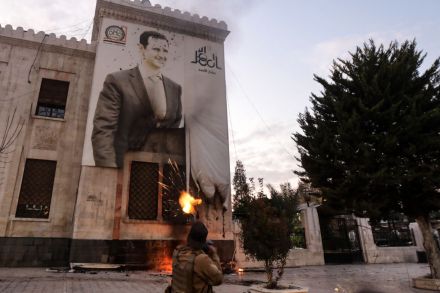
There are unintended consequences, and then there are unintended consequences. What we are seeing in Syria, as Aleppo and Hama fall (and Homs braces itself) to a coalition of anti-regime forces whose DNA is to be found in al-Qaeda et al, is an unintended consequence of Israel’s bombardment in Syria of Iran-funded pro-Assad groups, and the pulverising of Hezbollah in Lebanon. An unintended consequence of the weakening of Iran and its Axis of Resistance. For the three pillars on which Bashar al-Assad props up (for the time being) his murderous kleptocratic narco-state – Iran, Hezbollah and Russia – are, respectively, on their ‘best’ behaviour in the hope of talks with the US, broken, or extremely distracted.

The winds of change are blowing in Iran

The mood music from Tehran regarding Donald Trump’s election victory was a mixture of ‘don’t care,’ and ‘very much do care.’ Regime insiders remember only too well the toll Trump’s last four years took on their state; Islamic Revolutionary Guard Corps (IRGC) Commander Qassem Soleimani killed; economy shattered; regionally isolated due to Israeli-Arab normalisation. Trump is not a popular figure in the Khamenei household. But others reacted with a shrug; we’ve dealt with him before and survived. Why not now? Many ordinary Iranians welcomed the pressure he’d bring to bear on the regime, hoping it may prove decisive.

Regime change in Iran is a bad idea

In 2012, as the Islamic Republic showed signs of buckling under the weight of US and EU sanctions, Senator John Kerry spearheaded a series of backchannel meetings with his Iranian counterparts to begin exploring the deal that became the Joint Comprehensive Plan of Action (JCPOA), an arms reduction agreement between Iran and western nations in which Iran would receive sanctions relief in exchange for caps on uranium enrichment. The US and its allies sought to strike a bargain with an Islamic Republic desperate for foreign investment, eager to accept terms.

War in Lebanon could end up creating Isis 3.0

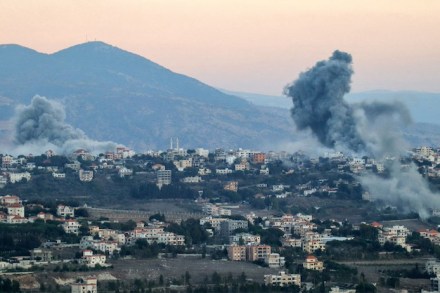
As Israeli troops make incursions into southern Lebanon, in the wake of recent successful aerial and covert campaigns against Hezbollah, Tel Aviv appears ascendant. Iran, by contrast, seems on the back foot, at odds with its proxies and divided internally as to the way forward.  Israel’s response to Iran’s missile strikes, and the West’s ability to check Israel’s actions to prevent all-out war, will determine how the next 48 hours pan out. Iran has strongly signalled that it is relying on the US to curb Israel’s response to its missile strikes last night, a statement that carried with it a whiff of desperation.  Israel still can’t answer the crucial question that has hovered over this entire conflict: how does it end?

Why a major war in the Middle East feels inevitable

Sun Tzu, the Chinese military strategist writing roughly 2,500 years ago, said that ‘Strategy without tactics is the slowest route to victory. Tactics without strategy is the noise before defeat.’ As we stand on the precipice of a truly frightening regional conflict, which pits a technologically advanced Israel and its allies against Iran and its allies in a war of asymmetry, this tension between strategy and tactics will be a crucial determinant of whether this war ever ends.  We are in an escalatory spiral of tactical exchanges, with both sides aiming for that elusive sweet spot of striking a blow so forceful that it deters the other side from further action, but not so forceful that it provokes a regional war.

Why the death of Ebrahim Raisi both matters, and doesn’t

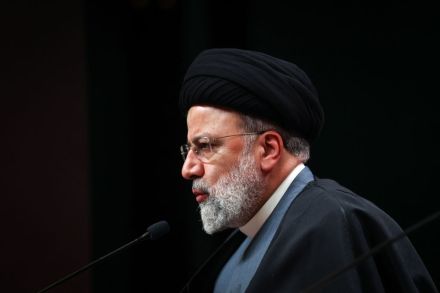
Not only does the death of Iranian President Ebrahim Raisi, in a helicopter crash in the fog and mountains in northern Iran, necessitate an election within 50 days, it has also removed the likely front-runner to replace Iran’s Supreme Leader, Ayatollah Khamenei.  Anyone hoping for a revolution will probably be disappointed Raisi was an attractive candidate because, as much as Khamenei himself was thrust into the role in 1989 due to his supposed weakness, a lack of a power base and a generally malleable profile, Raisi presented similarly: a loyal yes man unlikely to rock the boat and inclined to do as told. In a power transition from Khamenei to post-Khamenei, watched over by the all-powerful Islamic Revolutionary Guard Corps (IRGC), these were good qualities.

Iran is dangerous – but rational

We’ve been here before. Iran has been here before. In 2020 its most senior IRGC commander, Qassem Soleimani, was killed in a US air strike on his convoy as they drove out of Baghdad airport. Soleimani was a much mythologised figure across the Middle East, famed for his ability to direct Iran’s regional proxies to do Tehran’s bidding. The world held its breath in anticipation of a terrifying response, a global war, commensurate with the purple prose coming out of Tehran’s military and political organs. And yet not a huge amount happened, save for a few desultory missiles being shot into the middle distance of northern Iraq. And the shooting down of an Iranian passenger plane by the IRGC.