Charles Moore

Charles Moore

Charles Moore is The Spectator’s chairman.

He is a former editor of the magazine, as well as the Sunday Telegraph and the Daily Telegraph. He became a non-affiliated peer in July 2020.

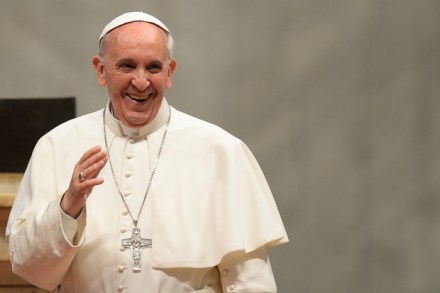
The Pope’s brilliant PR

‘Show, don’t tell’ is the mantra of PR advisers when telling public figures how to communicate. Pope Francis’s technique does both at once. By confessing his sins to what the media call ‘an ordinary priest’ in St Peter’s basilica without entering the confessional box, he seemed almost to be boasting that he is, like everyone, a sinner. I hope he does not take it into his head to make public the content as well as the fact of his confession. That would be what the Twitter generation calls TMI. But the gesture of openness worked.
The Spectator’s Notes: In defence of Maria Miller

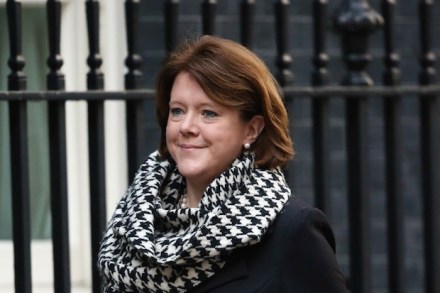
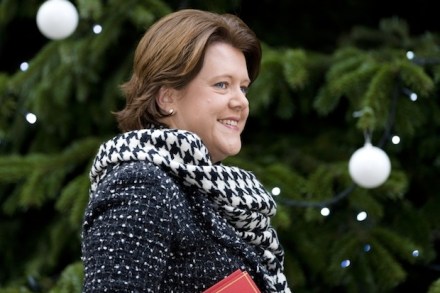
[audioplayer src="http://traffic.libsyn.com/spectator/TheViewFrom22_10_April_2014_v4.mp3" title="James Forsyth and Isabel Hardman discuss Maria Miller's resignation" startat=1057] Listen [/audioplayer]Maria Miller’s forced resignation is a disgrace. No iniquity was proved against her. Over her expenses, I suspect her motive was innocent: she was trying to work out childcare with her parents in a way compatible with the weird rules, rather than plotting larceny. The parliamentary committee probably understood the circumstances fairly. The press anger was confected because of our (justified) dislike of the post-Leveson Royal Charter.

Why Maria Miller should not have resigned

Maria Miller’s forced resignation is a disgrace. No iniquity was proved against her. Over her expenses, I suspect her motive was innocent: she was trying to work out childcare with her parents in a way compatible with the weird rules, rather than plotting larceny. The parliamentary committee probably understood the circumstances fairly. The press anger was confected because of our (justified) dislike of the post-Leveson Royal Charter. We keep complaining that MPs are ‘marking their own homework’, forgetting that this is exactly what we have done ourselves — incredibly indulgently — for all these years, whenever people have complained about our behaviour. Besides, it is constitutionally wrong for MPs not to mark their own homework. We elect them.

The EU is eroding Swiss exceptionalism

Even in Switzerland, the elites are sold on the European Union, though it remains outside. It has a virtually irresistible draw in all European countries for the people that Mr Gladstone disparaged as ‘the Upper Ten Thousand’ (who today probably add up to the Upper One Million). As a result, Switzerland is gradually allowing its exceptionalism — in tax and banking, for example — to be eroded. On the other hand, the Swiss people are stoutly sceptical and have become more so. In February, they voted for a referendum limiting the free movement of EU citizens into their country, and so their EU relationship is now in flux. In this remarkable country, only 5 per cent know the name of their president.

The Spectator’s Notes: Politicians and bankers both treat their most loyal backers like dirt

The Daily Telegraph’s revelation last Friday that the Financial Conduct Authority was going to arraign companies for 30 years of mis-selling pensions and other products ‘wiped’, as papers like to say, £4 billion off insurance stocks. George Osborne is putting pressure on the chief executive Martin Wheatley to go. The leak was highly embarrassing for the FCA, but the issue itself matters more. It is about how such companies treat longstanding customers. The way they work is through sellers, who hook someone for life in one go, and so the companies do not know or care about their customers. This is a parable of a much wider problem in society, which is that being loyal is considered stupid. It applies strongly to political parties.

The Spectator’s Notes: If Putin can have a referendum, so can Boris

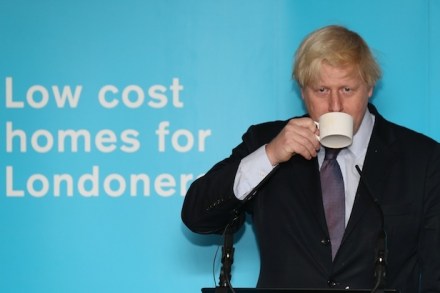
Everyone can see that the West has no idea what to do about Russian power in the Ukraine. Britain, in particular, is at the margins. It is time for the Mayor of London to fulfil his historic role of stealing a march on more conventional politicians. Boris should take a leaf out of President Putin’s book and call a referendum of Londoners. He should ask them whether they would like all Russian housing in London to be seized, and be inhabited, instead, by British families. I predict a Yes vote whose percentage would exceed even that of the recent Crimean plebiscite. Obviously the Mayor, unlike Putin, has no military forces to implement such a measure (which is just as well), but the vote would make us feel a bit better.

Boris should call a referendum

Everyone can see that the West has no idea what to do about Russian power in the Ukraine. Britain, in particular, is at the margins. It is time for the Mayor of London to fulfil his historic role of stealing a march on more conventional politicians. Boris should take a leaf out of President Putin’s book and call a referendum of Londoners. He should ask them whether they would like all Russian housing in London to be seized, and be inhabited, instead, by British families. I predict a Yes vote whose percentage would exceed even that of the recent Crimean plebiscite. Obviously the Mayor, unlike Putin, has no military forces to implement such a measure (which is just as well), but the vote would make us feel a bit better.

How I became editor of The Spectator (aged 27)

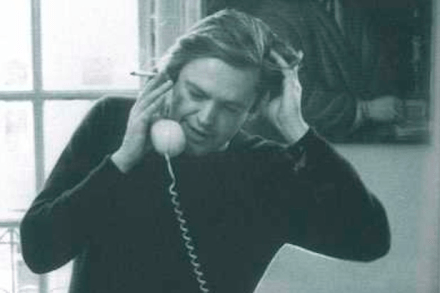
Thirty years ago this weekend, I became editor of The Spectator. In the same month, the miners’ strike began, Anthony Wedgwood Benn (as the right-wing press still insisted on calling him) won the Chesterfield by-election, the FT index rose above 900 for the first time and the mortgage rate fell to 10.5 per cent. Mark Thatcher was reported to be leaving the country to sell Lotus cars in America for £45,000 a year. Although she now tells me she has no memory of it, Wendy Cope wrote a poem entitled ‘The Editor of The Spectator is 27 Years Old’. Because I was young, the events are vivid in my mind, but in fact a greater gap separates then and now than separated then from the Suez crisis.

How I became editor of The Spectator – aged 27

Thirty years ago this Saturday, I became editor of this magazine. In the same month, the miners’ strike began, Anthony Wedgwood Benn (as the right-wing press still insisted on calling him) won the Chesterfield by-election, the FT index rose above 900 for the first time and the mortgage rate fell to 10.5 per cent. Mark Thatcher was reported to be leaving the country to sell Lotus cars in America for £45,000 a year. Although she now tells me she has no memory of it, Wendy Cope wrote a poem entitled ‘The Editor of The Spectator is 27 Years Old’. Because I was young, the events are vivid in my mind, but in fact a greater gap separates then and now than separated then from the Suez crisis.

Why are links with violence-justifying Republicans something to be proud of?

Last week, John Downey, the former IRA man, avoided trial for the Hyde Park bombings of 1982. One who stood bail for him was Roy Greenslade, the media pundit of the Guardian. Since Mr Downey has not been proved guilty, we must presume him innocent, but isn’t it extraordinary that Greenslade can cosy up to such a man without suffering in reputation? Suppose I were to stand bail for, say, Nick Griffin of the BNP (who, so far as I know, has never been accused of a terrorist crime), or for some loyalist oaf. I would rightly be shunned in my trade. Yet a link with extreme, violence-justifying, anti-British republicans is worn with pride. This is an extract from Charles Moore's Notes in this week's Spectator.

The Spectator’s Notes: In the radical 1970s, logic was on the side of the Paedophile Information Exchange

People seem bewildered that the National Council for Civil Liberties in the late 1970s gave house-room to the Paedophile Information Exchange (PIE). It is certainly embarrassing for Harriet Harman and Patricia Hewitt that they held leading posts in the NCCL then, but the fact that this was going on should not be so surprising. I remember the row about PIE at the time. PIE’s argument was part of the wider doctrine about sexual liberation, which was that the only problem about sex was the repression imposed by society’s taboos. Virtually all sexual behaviour was seen as good and the exercise of sexual desire as an absolute right. The only qualification that liberationists grudgingly acknowledged was the need for consent.

The danger of victimhood

It is 15 years since the publication of the Macpherson Report into the investigation of the death of Stephen Lawrence. The report may have done some good by making the police take crime against black people more seriously, but its main legacy is bad. Macpherson promulgated the doctrine that ‘A racist incident is any incident which is perceived to be racist by the victim or any other person.’ If the incident is thus defined then there is literally no end to racist incidents; and if the (self-defining) victims — or anyone else — can define a racist incident thus then the person alleged by them to be guilty is automatically convicted. This principle that victimhood is self-chosen and cannot be questioned is now being applied more widely.

The Spectator’s Notes: What’s the difference between the Sachs case and sexual harassment?

It is 15 years since the publication of the Macpherson Report into the investigation of the death of Stephen Lawrence. The report may have done some good by making the police take crime against black people more seriously, but its main legacy is bad. Macpherson promulgated the doctrine that ‘A racist incident is any incident which is perceived to be racist by the victim or any other person.’ If the incident is thus defined then there is literally no end to racist incidents; and if the (self-defining) victims — or anyone else — can define a racist incident thus then the person alleged by them to be guilty is automatically convicted. This principle that victimhood is self-chosen and cannot be questioned is now being applied more widely.

The Spectator’s Notes: When all three parties agree, something must be wrong

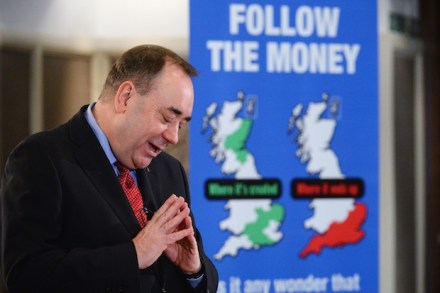
Those of us who want a referendum on the European Union need to be cautious in our approach to the Scottish one. What is sauce for Alex Salmond’s goose may prove sauce for the European gander. We should not assume, for example, that José Manuel Barroso, the European Commission president, is telling the truth. Or take the argument that business is opposed to Scottish independence. The CBI and suchlike always favour the current arrangements and fear uncertainty. They will oppose British independence even more surely than Scottish. They are not always wrong, but their view should not be credulously accepted. Mr Salmond is right that the threats made by the powers that be in a campaign are very different from what they say after a clear result.

Is there a difference between voting to get out of the UK and voting to get out of the EU?

Those of us who want a referendum on the European Union need to be cautious in our approach to the Scottish one. What is sauce for Alex Salmond’s goose may prove sauce for the European gander. We should not assume, for example, that José Manuel Barroso, the European Commission president, is telling the truth. Or take the argument that business is opposed to Scottish independence. The CBI and suchlike always favour the current arrangements and fear uncertainty. They will oppose British independence even more surely than Scottish. They are not always wrong, but their view should not be credulously accepted. Mr Salmond is right that the threats made by the powers that be in a campaign are very different from what they say after a clear result.

How the media has it both ways over the ‘Jesus and Mo’ cartoons

A reader sends me a card for sale in Scribblers in the King’s Road, Chelsea. It depicts two slices of cheese standing vertically on their thinner ends. On both, black beards and eyes are crudely superimposed, and above them two gold rings form haloes. The caption says ‘Cheeses of Nazareth’. The joke is pathetically bad, not least because, in order to achieve the cheese/Jesus pun, you have to have two cheeses, whereas there was only one Jesus. But my correspondent’s point is that the equivalent gag about Mohammed would provoke a storm, not only from some Muslims, but from much of the media. I recently watched an interesting example of this on Channel 4 News.

The Spectator’s notes: What shall we call the Country Formerly Known as Britain?

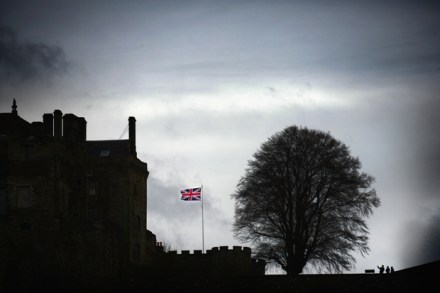
Last week, David Cameron said that we have ‘seven months to save the most extraordinary country in history’. He meant the United Kingdom. It was a powerful speech, part of a welcome and overdue campaign to make us all think about what is at stake in the referendum on Scottish independence. It seems strange to argue that the loss of less than 10 per cent of the population would bring this country to an end, and yet I do really suspect it might be so. Mr Cameron did not touch on the question of what the nation, minus Scotland, might be called, perhaps because he does not know and is fearful of making plans for such an eventuality. But the difficulty of getting the right name is a fascinating emblem of the depth of the problem.

If Scotland leaves, what name should we give to the remaining nation?

Last week, David Cameron said that we have ‘seven months to save the most extraordinary country in history’. He meant the United Kingdom. It was a powerful speech, part of a welcome and overdue campaign to make us all think about what is at stake in the referendum on Scottish independence. It seems strange to argue that the loss of less than 10 per cent of the population would bring this country to an end, and yet I do really suspect it might be so. Mr Cameron did not touch on the question of what the nation, minus Scotland, might be called, perhaps because he does not know and is fearful of making plans for such an eventuality. But the difficulty of getting the right name is a fascinating emblem of the depth of the problem.

The Spectator’s Notes: Quangos – a world of perfect hypocrisy

The accusation that the Tories have been installing their people in public appointments should evoke only a hollow laugh. They have been comatose on the subject. One of the greatest skills of New Labour was putting its allies in positions of control across the public sector. A great many are still there, and yet the Tories wonder why their efforts at reform are frustrated. Maggie Atkinson, for example, was imposed by Ed Balls, when in office, as Children’s Commissioner, against the recommendation of the relevant selection committee. She lingers on in her useless post. Lord Smith, the former Labour cabinet minister who has been flooding the Somerset levels, is still at the Environment Agency.

The Tories haven’t been installing their people in quangos – but they should have

The accusation that the Tories have been installing their people in public appointments should evoke only a hollow laugh. They have been comatose on the subject. One of the greatest skills of New Labour was putting its allies in positions of control across the public sector. A great many are still there, and yet the Tories wonder why their efforts at reform are frustrated. Maggie Atkinson, for example, was imposed by Ed Balls, when in office, as Children’s Commissioner, against the recommendation of the relevant selection committee. She lingers on in her useless post. Lord Smith, the former Labour cabinet minister who has been flooding the Somerset levels, is still at the Environment Agency.