Charles Moore

Charles Moore

Charles Moore is The Spectator’s chairman.

He is a former editor of the magazine, as well as the Sunday Telegraph and the Daily Telegraph. He became a non-affiliated peer in July 2020.

The Spectator’s Notes: When all three parties agree, something must be wrong

From our UK edition

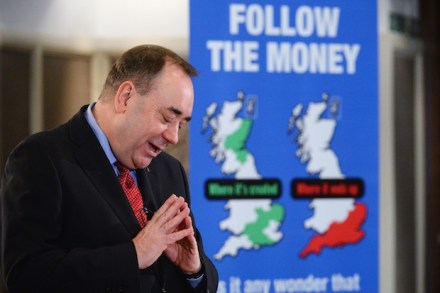
Those of us who want a referendum on the European Union need to be cautious in our approach to the Scottish one. What is sauce for Alex Salmond’s goose may prove sauce for the European gander. We should not assume, for example, that José Manuel Barroso, the European Commission president, is telling the truth. Or take the argument that business is opposed to Scottish independence. The CBI and suchlike always favour the current arrangements and fear uncertainty. They will oppose British independence even more surely than Scottish. They are not always wrong, but their view should not be credulously accepted. Mr Salmond is right that the threats made by the powers that be in a campaign are very different from what they say after a clear result.

Is there a difference between voting to get out of the UK and voting to get out of the EU?

From our UK edition

Those of us who want a referendum on the European Union need to be cautious in our approach to the Scottish one. What is sauce for Alex Salmond’s goose may prove sauce for the European gander. We should not assume, for example, that José Manuel Barroso, the European Commission president, is telling the truth. Or take the argument that business is opposed to Scottish independence. The CBI and suchlike always favour the current arrangements and fear uncertainty. They will oppose British independence even more surely than Scottish. They are not always wrong, but their view should not be credulously accepted. Mr Salmond is right that the threats made by the powers that be in a campaign are very different from what they say after a clear result.

How the media has it both ways over the ‘Jesus and Mo’ cartoons

From our UK edition

A reader sends me a card for sale in Scribblers in the King’s Road, Chelsea. It depicts two slices of cheese standing vertically on their thinner ends. On both, black beards and eyes are crudely superimposed, and above them two gold rings form haloes. The caption says ‘Cheeses of Nazareth’. The joke is pathetically bad, not least because, in order to achieve the cheese/Jesus pun, you have to have two cheeses, whereas there was only one Jesus. But my correspondent’s point is that the equivalent gag about Mohammed would provoke a storm, not only from some Muslims, but from much of the media. I recently watched an interesting example of this on Channel 4 News.

The Spectator’s notes: What shall we call the Country Formerly Known as Britain?

From our UK edition

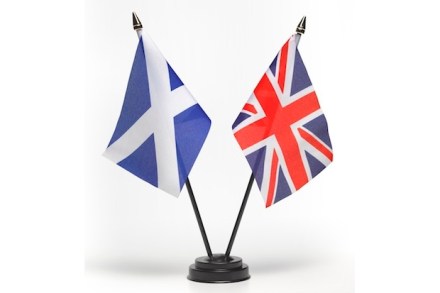
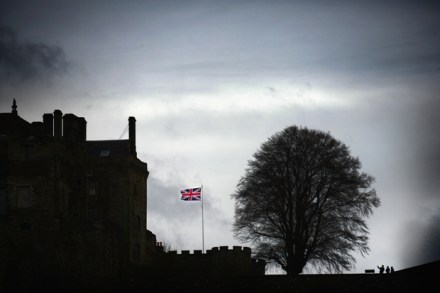
Last week, David Cameron said that we have ‘seven months to save the most extraordinary country in history’. He meant the United Kingdom. It was a powerful speech, part of a welcome and overdue campaign to make us all think about what is at stake in the referendum on Scottish independence. It seems strange to argue that the loss of less than 10 per cent of the population would bring this country to an end, and yet I do really suspect it might be so. Mr Cameron did not touch on the question of what the nation, minus Scotland, might be called, perhaps because he does not know and is fearful of making plans for such an eventuality. But the difficulty of getting the right name is a fascinating emblem of the depth of the problem.

If Scotland leaves, what name should we give to the remaining nation?

From our UK edition

Last week, David Cameron said that we have ‘seven months to save the most extraordinary country in history’. He meant the United Kingdom. It was a powerful speech, part of a welcome and overdue campaign to make us all think about what is at stake in the referendum on Scottish independence. It seems strange to argue that the loss of less than 10 per cent of the population would bring this country to an end, and yet I do really suspect it might be so. Mr Cameron did not touch on the question of what the nation, minus Scotland, might be called, perhaps because he does not know and is fearful of making plans for such an eventuality. But the difficulty of getting the right name is a fascinating emblem of the depth of the problem.

The Spectator’s Notes: Quangos – a world of perfect hypocrisy

From our UK edition

The accusation that the Tories have been installing their people in public appointments should evoke only a hollow laugh. They have been comatose on the subject. One of the greatest skills of New Labour was putting its allies in positions of control across the public sector. A great many are still there, and yet the Tories wonder why their efforts at reform are frustrated. Maggie Atkinson, for example, was imposed by Ed Balls, when in office, as Children’s Commissioner, against the recommendation of the relevant selection committee. She lingers on in her useless post. Lord Smith, the former Labour cabinet minister who has been flooding the Somerset levels, is still at the Environment Agency.

The Tories haven’t been installing their people in quangos – but they should have

From our UK edition

The accusation that the Tories have been installing their people in public appointments should evoke only a hollow laugh. They have been comatose on the subject. One of the greatest skills of New Labour was putting its allies in positions of control across the public sector. A great many are still there, and yet the Tories wonder why their efforts at reform are frustrated. Maggie Atkinson, for example, was imposed by Ed Balls, when in office, as Children’s Commissioner, against the recommendation of the relevant selection committee. She lingers on in her useless post. Lord Smith, the former Labour cabinet minister who has been flooding the Somerset levels, is still at the Environment Agency.

Medieval farmers could stop flooding – so why won’t the Environment Agency?

From our UK edition

Our neighbour Philip Merricks is a farmer on Romney Marsh, 90 per cent of whose land is below sea level. The marsh would not exist without the medieval ingenuity which ‘inned’ it from the sea. Phil is therefore well placed to understand the interests of farmers on the Somerset Levels who have now been inundated for a month. But he is also a conservationist, owning and running two bird reserves, so is pro-farming and pro-wildlife, which too few are. Last week, he went to the Somerset Levels as chairman of the Hawk and Owl Trust, which has a reserve down there. He tells me that while the usual winter waterlogging is good for wildlife, what is happening in Somerset now is as terrible for wildlife as it is for farmers — too deep, too widespread, too prolonged.

What medieval farmers knew – and the Environment Agency doesn’t

From our UK edition

Our neighbour Philip Merricks is a farmer on Romney Marsh, 90 per cent of whose land is below sea level. The marsh would not exist without the medieval ingenuity which ‘inned’ it from the sea. Phil is therefore well placed to understand the interests of farmers on the Somerset Levels who have now been inundated for a month. But he is also a conservationist, owning and running two bird reserves, so is pro-farming and pro-wildlife, which too few are. Last week, he went to the Somerset Levels as chairman of the Hawk and Owl Trust, which has a reserve down there. He tells me that while the usual winter waterlogging is good for wildlife, what is happening in Somerset now is as terrible for wildlife as it is for farmers — too deep, too widespread, too prolonged.

The Spectator’s Notes: George Osborne’s personal recovery

From our UK edition

Now that the economic statistics are looking better, people are beginning to rediscover the once-fashionable thought that George Osborne is a great strategist. Things are coming together before the 2015 election in a way which makes life uncomfortable for Labour. I am not sure that ‘strategist’ is the right word, but I do think Mr Osborne deserves praise for something else. If you compare this government with the last, you will see that it is not dysfunctional in its internal relations. The coalition has constant frictions, but these are, as it were, built into the system. After nearly four years, there is no serious split or even known personal hatred at the top of the government.

The top level of government isn’t riddled with personal hatred – thanks to Osborne

From our UK edition

Now that the economic statistics are looking better, people are beginning to rediscover the once-fashionable thought that George Osborne is a great strategist. Things are coming together before the 2015 election in a way which makes life uncomfortable for Labour. I am not sure that ‘strategist’ is the right word, but I do think Mr Osborne deserves praise for something else. If you compare this government with the last, you will see that it is not dysfunctional in its internal relations. The coalition has constant frictions, but these are, as it were, built into the system. After nearly four years, there is no serious split or even known personal hatred at the top of the government.

The Spectator’s Notes: French presidents used to have a touch of the monarch. Not any more

From our UK edition

When I interviewed Valéry Giscard d’Estaing, the former president of France, for my biography of Margaret Thatcher, I asked him why, when she lunched with him at the Elysée Palace for the first time, he had been served before her: she had been offended. M. Giscard explained that no slight had been intended. It was a matter of protocol — the president is the head of state, the British prime minister only the head of government. ‘You must remember,’ he added, ‘that the president is in the line of sovereigns.’ I recalled these words when reading about President Hollande and his amorous adventures in his helmet. To the British, it is a puzzle that French presidents are protected from the media scrutiny we inflict on our own leaders.

Gordon Brown’s Chang Song-Thaek-style plot

From our UK edition

Before Chang Song-Thaek was executed in North Korea last month for being a ‘wicked political careerist, trickster and traitor for all ages’, he allegedly confessed to his crimes. ‘I didn’t fix a definite time for the coup,’ he said, ‘But it was my intention to concentrate … all economic organs on the cabinet and become premier when the economy goes totally bankrupt and the state is on the verge of collapse …I thought that if I solve the problem of people’s living …by spending an enormous amount of funds …after becoming premier, the people will shout “hurrah” for me and I will succeed in a smooth way.’ Luckily, North Korea is well enough run to have stopped this terrible chain of events.

Mugabe envy in Scotland

From our UK edition

Who owns Scotland? The people who most commonly ask this question believe that the land has been wrested from ordinary Scots by evil lairds and rich foreigners (by which they chiefly mean the English). Now the Scottish government is bringing out a report on how to correct this alleged injustice. It may recommend extending community ‘right to buy’ powers and allowing tenants to buy their holdings even if the owners do not want to sell.  This would have the unintended effect of ending all new tenancies. But the SNP’s misunderstanding of the situation is even more radical than that. It believes that big Scottish landowners are rich because they own the land. For a long time now, it has been the other way round. They own the land because they are rich.

How is Alex Salmond like Robert Mugabe?

From our UK edition

Who owns Scotland? The people who most commonly ask this question believe that the land has been wrested from ordinary Scots by evil lairds and rich foreigners (by which they chiefly mean the English). Now the Scottish government is bringing out a report on how to correct this alleged injustice. It may recommend extending community ‘right to buy’ powers and allowing tenants to buy their holdings even if the owners do not want to sell.  This would have the unintended effect of ending all new tenancies. But the SNP’s misunderstanding of the situation is even more radical than that. It believes that big Scottish landowners are rich because they own the land. For a long time now, it has been the other way round. They own the land because they are rich.

Charles Moore’s notes: Why Ireland fears Scottish independence

From our UK edition

In Dublin, where I am writing this column, people are watching the Scottish referendum campaign more closely than in London. Despite the polls, they almost expect a Yes vote, but most do not want one. People fear that Yes would weaken the UK and therefore make it a less useful ally for Ireland in the EU. They also think that an independent Scotland might overtake Ireland as a cute little place for foreign investors who like the combination of kilts, bagpipes and general Celtic carry-on with tax breaks and commercial access to the Anglosphere. Finally, they worry that Scottish independence would reopen the Irish question. At present, the Republic enjoys the fact that the settlement in the North has driven the call for a United Ireland into the background.

The Irish are fearful of Scottish independence

From our UK edition

In Dublin, where I am writing this, people are watching the Scottish referendum campaign more closely than in London. Despite the polls, they almost expect a Yes vote, but most do not want one. People fear that Yes would weaken the UK and therefore make it a less useful ally for Ireland in the EU. They also think that an independent Scotland might overtake Ireland as a cute little place for foreign investors who like the combination of kilts, bagpipes and general Celtic carry-on with tax breaks and commercial access to the Anglosphere. Finally, they worry that Scottish independence would reopen the Irish question. At present, the Republic enjoys the fact that the settlement in the North has driven the call for a United Ireland into the background.

If Scotland leaves, will we be left with FUK?

From our UK edition

In Whitehall, there is a phrase for the entity which would be left if Scotland were to vote Yes to independence next year. The acronym is rUK, which stands for ‘the rest of the United Kingdom’. This device of referring to a country’s altered state in its name has a precedent. After Macedonia broke away from Yugoslavia in 1991, it could only prevent Greece from blocking its UN entry by being admitted as the Former Yugoslav Republic of Macedonia (FYROM). Obviously, it would be embarrassing for the Former UK (FUK) to highlight its initials, but the nomenclature is a real problem.

Boris’s stand on equality prepares him for leadership

From our UK edition

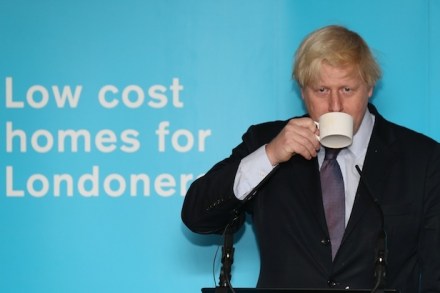
Boris Johnson’s Margaret Thatcher Lecture to the Centre for Policy Studies attracted attention for its remarks about IQ, but the media ignored its central thesis. The speech is against equality, eloquently so. I date the mental collapse of the Conservatives from the moment in 1995 when Labour’s newish leader, Tony Blair, jumped up in Parliament and asked the Prime Minister, John Major, whether he accepted it ‘as a responsibility of government to reduce inequality’. Mr Major’s simple answer was ‘Yes’. It shut Mr Blair up that afternoon, but it gave him the advantage ever after. If both parties say government must create equality then the one which promotes more state spending and interference will always look the more convincing.

Charles Moore: What would we call what’s left of the country if Scotland leaves? Obviously Former UK (FUK) won’t do…

From our UK edition

Boris Johnson’s Margaret Thatcher Lecture to the Centre for Policy Studies attracted attention for its remarks about IQ, but the media ignored its central thesis. The speech is against equality, eloquently so. I date the mental collapse of the Conservatives from the moment in 1995 when Labour’s newish leader, Tony Blair, jumped up in Parliament and asked the Prime Minister, John Major, whether he accepted it ‘as a responsibility of government to reduce inequality’. Mr Major’s simple answer was ‘Yes’. It shut Mr Blair up that afternoon, but it gave him the advantage ever after. If both parties say government must create equality then the one which promotes more state spending and interference will always look the more convincing.