Charles Moore

Charles Moore

Charles Moore is The Spectator’s chairman.

He is a former editor of the magazine, as well as the Sunday Telegraph and the Daily Telegraph. He became a non-affiliated peer in July 2020.

One way to persuade me to vote Ukip

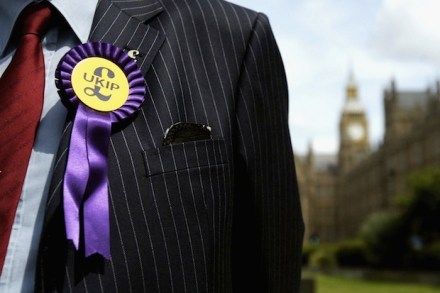
So far, I am disinclined to vote for Ukip in the forthcoming Euro-elections. Our area has been represented for many years by the great Daniel Hannan, the leading practising Eurosceptic of our times, so I have resisted the Faragiste temptation. But I felt a bit wobbly after reading an interview with Nigel Farage in the Guardian. According to its author, Decca Aitkenhead, Ukip supporters — though not the libertarian Nigel himself — want to make dressing up for the theatre compulsory. They are so right. It is now almost compulsory not to dress up for the theatre, even in the West End. This has had the predictable result that theatre-goers pay less attention, eat and send texts all through the performance.

Max Clifford’s conviction vindicates the jury system

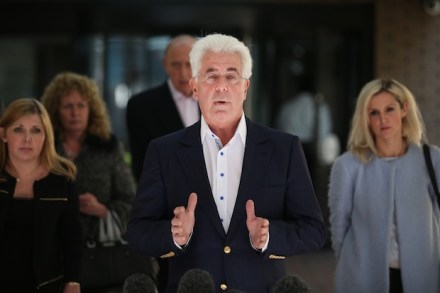
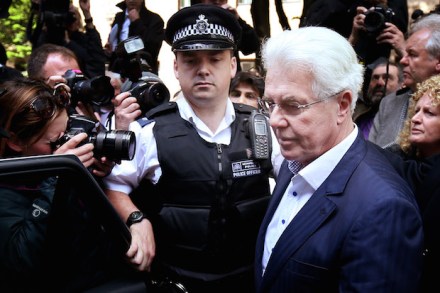
The conviction of Max Clifford for indecent assaults feels like a vindication of the jury system, as did the acquittal of the many other showbiz characters charged under Operation Yewtree. One reason I keep raising questions of justice about the current obsession with paedophilia is out of suspicion that those most zealous in their accusations are unhealthily interested in the subject. This was the case with Clifford himself and, of course, with the newspapers with which he did business. Celebrity culture is, in essence, a form of pornography which incites powerful people to exploit unpowerful people. It acquires an extra twist of perversion when it turns on those it has incited. It should not be allowed that escape route.

Was I abused by Jimmy Savile? | 25 April 2014

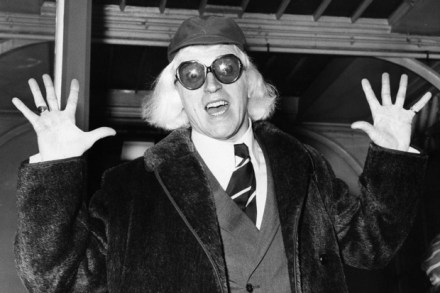
Adverts go out inviting people who think they were sexually abused by the late Sir James Savile to claim compensation. On the BBC, Alison Millar, a lawyer at the firm Leigh Day, explained that, to be paid: ‘You will need some evidence to show that you were in a situation where Savile will have had the opportunity to abuse you.’ If that is all you need, I reckon I am in with a chance. I met Savile only once, at the director-general’s BBC election night party in 1987, when I was the vulnerable 30-year-old editor of this magazine. Obviously, others were in the room, but we have heard from many accounts that Jimmy was resourceful in getting his way.

Was I abused by Jimmy Savile?

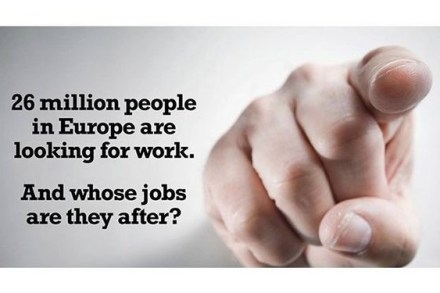
‘Twenty-six million people in Europe are looking for work. And whose jobs are they after?’ asks the Ukip poster for the euro-elections, beside a Lord Kitchener-style pointing finger. Obviously, Ukip thinks the answer is ‘Ours’. But this isn’t true. Twenty-six million people are not looking for British jobs, but for jobs in general. And even those who do want jobs in Britain are not trying to take jobs from people who have them (though this might sometimes be the effect): they just want jobs. If Ukip is opposed to unrestricted EU immigration, it should direct its anger at the politicians who support this policy, not at the blameless people who, like most of us, want work.

Ukip’s poster campaign misses the point about the job market

‘Twenty-six million people in Europe are looking for work. And whose jobs are they after?’ asks the Ukip poster for the euro-elections, beside a Lord Kitchener-style pointing finger. Obviously, Ukip thinks the answer is ‘Ours’. But this isn’t true. Twenty-six million people are not looking for British jobs, but for jobs in general. And even those who do want jobs in Britain are not trying to take jobs from people who have them (though this might sometimes be the effect): they just want jobs. If Ukip is opposed to unrestricted EU immigration, it should direct its anger at the politicians who support this policy, not at the blameless people who, like most of us, want work.

When politicians were more than mere politicians

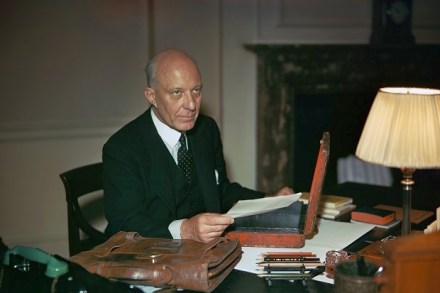
A friend has sent me a copy of a memo sent by the Financial Secretary to the Treasury (William Glenvil Hall) to the Chancellor of the Exchequer (Hugh Dalton) on 19 September 1945. It discusses the salaries and expenses of MPs and ministers. At that time, MPs received £600 a year (roughly £22,000 today). The memo recommends no increase. It argues, however, that free travel facilities should be extended to allow Members to travel between London and their homes (generally assumed not to be in their constituencies), and that ‘consideration should be given’ to ‘providing a secretarial service to Members at reasonable rates’. It points out that legitimate parliamentary expenses can be set off by MPs against income tax.

Who is the Stonegate fare-dodger?

Much speculation where we live about the identity of the Stonegate fare-dodger, one stop up our railway line. He recently paid £43,000 to Southeastern, the franchise holder, to escape criminal charges after five years of constant cheating on his daily commute to London. Obviously no suspicion falls on such fine local citizens as my fellow former editor of this paper, Dominic Lawson, who uses the station, or the great writer Adam Nicolson, or the distinguished actor Robert Bathurst. It would be appalling lèse-majesté if aspersions were to be cast on Paul Dacre, the editor of the Daily Mail, who lives nearby. The guilty man is reported to be a hedge-fund manager. There is anger that he has bought anonymity by paying up in full when caught.

The Pope’s brilliant PR

‘Show, don’t tell’ is the mantra of PR advisers when telling public figures how to communicate. Pope Francis’s technique does both at once. By confessing his sins to what the media call ‘an ordinary priest’ in St Peter’s basilica without entering the confessional box, he seemed almost to be boasting that he is, like everyone, a sinner. I hope he does not take it into his head to make public the content as well as the fact of his confession. That would be what the Twitter generation calls TMI. But the gesture of openness worked.

The Spectator’s Notes: In defence of Maria Miller

[audioplayer src="http://traffic.libsyn.com/spectator/TheViewFrom22_10_April_2014_v4.mp3" title="James Forsyth and Isabel Hardman discuss Maria Miller's resignation" startat=1057] Listen [/audioplayer]Maria Miller’s forced resignation is a disgrace. No iniquity was proved against her. Over her expenses, I suspect her motive was innocent: she was trying to work out childcare with her parents in a way compatible with the weird rules, rather than plotting larceny. The parliamentary committee probably understood the circumstances fairly. The press anger was confected because of our (justified) dislike of the post-Leveson Royal Charter.

Why Maria Miller should not have resigned

Maria Miller’s forced resignation is a disgrace. No iniquity was proved against her. Over her expenses, I suspect her motive was innocent: she was trying to work out childcare with her parents in a way compatible with the weird rules, rather than plotting larceny. The parliamentary committee probably understood the circumstances fairly. The press anger was confected because of our (justified) dislike of the post-Leveson Royal Charter. We keep complaining that MPs are ‘marking their own homework’, forgetting that this is exactly what we have done ourselves — incredibly indulgently — for all these years, whenever people have complained about our behaviour. Besides, it is constitutionally wrong for MPs not to mark their own homework. We elect them.

The EU is eroding Swiss exceptionalism

Even in Switzerland, the elites are sold on the European Union, though it remains outside. It has a virtually irresistible draw in all European countries for the people that Mr Gladstone disparaged as ‘the Upper Ten Thousand’ (who today probably add up to the Upper One Million). As a result, Switzerland is gradually allowing its exceptionalism — in tax and banking, for example — to be eroded. On the other hand, the Swiss people are stoutly sceptical and have become more so. In February, they voted for a referendum limiting the free movement of EU citizens into their country, and so their EU relationship is now in flux. In this remarkable country, only 5 per cent know the name of their president.

The Spectator’s Notes: Politicians and bankers both treat their most loyal backers like dirt

The Daily Telegraph’s revelation last Friday that the Financial Conduct Authority was going to arraign companies for 30 years of mis-selling pensions and other products ‘wiped’, as papers like to say, £4 billion off insurance stocks. George Osborne is putting pressure on the chief executive Martin Wheatley to go. The leak was highly embarrassing for the FCA, but the issue itself matters more. It is about how such companies treat longstanding customers. The way they work is through sellers, who hook someone for life in one go, and so the companies do not know or care about their customers. This is a parable of a much wider problem in society, which is that being loyal is considered stupid. It applies strongly to political parties.

The Spectator’s Notes: If Putin can have a referendum, so can Boris

Everyone can see that the West has no idea what to do about Russian power in the Ukraine. Britain, in particular, is at the margins. It is time for the Mayor of London to fulfil his historic role of stealing a march on more conventional politicians. Boris should take a leaf out of President Putin’s book and call a referendum of Londoners. He should ask them whether they would like all Russian housing in London to be seized, and be inhabited, instead, by British families. I predict a Yes vote whose percentage would exceed even that of the recent Crimean plebiscite. Obviously the Mayor, unlike Putin, has no military forces to implement such a measure (which is just as well), but the vote would make us feel a bit better.

Boris should call a referendum

Everyone can see that the West has no idea what to do about Russian power in the Ukraine. Britain, in particular, is at the margins. It is time for the Mayor of London to fulfil his historic role of stealing a march on more conventional politicians. Boris should take a leaf out of President Putin’s book and call a referendum of Londoners. He should ask them whether they would like all Russian housing in London to be seized, and be inhabited, instead, by British families. I predict a Yes vote whose percentage would exceed even that of the recent Crimean plebiscite. Obviously the Mayor, unlike Putin, has no military forces to implement such a measure (which is just as well), but the vote would make us feel a bit better.

How I became editor of The Spectator (aged 27)

Thirty years ago this weekend, I became editor of The Spectator. In the same month, the miners’ strike began, Anthony Wedgwood Benn (as the right-wing press still insisted on calling him) won the Chesterfield by-election, the FT index rose above 900 for the first time and the mortgage rate fell to 10.5 per cent. Mark Thatcher was reported to be leaving the country to sell Lotus cars in America for £45,000 a year. Although she now tells me she has no memory of it, Wendy Cope wrote a poem entitled ‘The Editor of The Spectator is 27 Years Old’. Because I was young, the events are vivid in my mind, but in fact a greater gap separates then and now than separated then from the Suez crisis.

How I became editor of The Spectator – aged 27

Thirty years ago this Saturday, I became editor of this magazine. In the same month, the miners’ strike began, Anthony Wedgwood Benn (as the right-wing press still insisted on calling him) won the Chesterfield by-election, the FT index rose above 900 for the first time and the mortgage rate fell to 10.5 per cent. Mark Thatcher was reported to be leaving the country to sell Lotus cars in America for £45,000 a year. Although she now tells me she has no memory of it, Wendy Cope wrote a poem entitled ‘The Editor of The Spectator is 27 Years Old’. Because I was young, the events are vivid in my mind, but in fact a greater gap separates then and now than separated then from the Suez crisis.

Why are links with violence-justifying Republicans something to be proud of?

Last week, John Downey, the former IRA man, avoided trial for the Hyde Park bombings of 1982. One who stood bail for him was Roy Greenslade, the media pundit of the Guardian. Since Mr Downey has not been proved guilty, we must presume him innocent, but isn’t it extraordinary that Greenslade can cosy up to such a man without suffering in reputation? Suppose I were to stand bail for, say, Nick Griffin of the BNP (who, so far as I know, has never been accused of a terrorist crime), or for some loyalist oaf. I would rightly be shunned in my trade. Yet a link with extreme, violence-justifying, anti-British republicans is worn with pride. This is an extract from Charles Moore's Notes in this week's Spectator.

The Spectator’s Notes: In the radical 1970s, logic was on the side of the Paedophile Information Exchange

People seem bewildered that the National Council for Civil Liberties in the late 1970s gave house-room to the Paedophile Information Exchange (PIE). It is certainly embarrassing for Harriet Harman and Patricia Hewitt that they held leading posts in the NCCL then, but the fact that this was going on should not be so surprising. I remember the row about PIE at the time. PIE’s argument was part of the wider doctrine about sexual liberation, which was that the only problem about sex was the repression imposed by society’s taboos. Virtually all sexual behaviour was seen as good and the exercise of sexual desire as an absolute right. The only qualification that liberationists grudgingly acknowledged was the need for consent.

The danger of victimhood

It is 15 years since the publication of the Macpherson Report into the investigation of the death of Stephen Lawrence. The report may have done some good by making the police take crime against black people more seriously, but its main legacy is bad. Macpherson promulgated the doctrine that ‘A racist incident is any incident which is perceived to be racist by the victim or any other person.’ If the incident is thus defined then there is literally no end to racist incidents; and if the (self-defining) victims — or anyone else — can define a racist incident thus then the person alleged by them to be guilty is automatically convicted. This principle that victimhood is self-chosen and cannot be questioned is now being applied more widely.

The Spectator’s Notes: What’s the difference between the Sachs case and sexual harassment?

It is 15 years since the publication of the Macpherson Report into the investigation of the death of Stephen Lawrence. The report may have done some good by making the police take crime against black people more seriously, but its main legacy is bad. Macpherson promulgated the doctrine that ‘A racist incident is any incident which is perceived to be racist by the victim or any other person.’ If the incident is thus defined then there is literally no end to racist incidents; and if the (self-defining) victims — or anyone else — can define a racist incident thus then the person alleged by them to be guilty is automatically convicted. This principle that victimhood is self-chosen and cannot be questioned is now being applied more widely.