Charles Moore

Charles Moore

Charles Moore is The Spectator’s chairman.

He is a former editor of the magazine, as well as the Sunday Telegraph and the Daily Telegraph. He became a non-affiliated peer in July 2020.

A fitting exit for the self-publicising Lady Warsi

[audioplayer src="http://traffic.libsyn.com/spectator/TheViewFrom22_07_August_2014_v4.mp3" title="Douglas Murray and Tim Stanley discuss Baroness Warsi's resignation" startat=462] Listen [/audioplayer]At the impressive Westminster Abbey vigil to mark the centenary of the first world war on Monday night, there was one big candle for each quarter of the Abbey, and one dignitary assigned to each candle. At different points in the service, each dignitary would extinguish his or her candle. Then the rest of us in the relevant area, all equipped with candles, would follow suit. The lamps went out, as it were, all over Europe. One thing niggled. I was in the South Transept, and our big-candle snuffer was Lady Warsi, Minister of State at the Foreign Office.

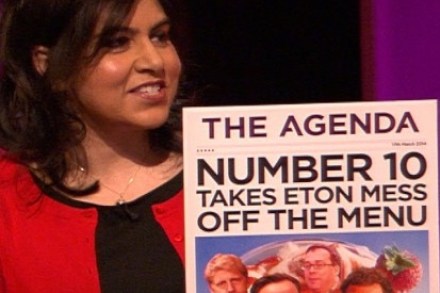
How long before self-publicising Baroness Warsi pops up in another party?

At the impressive Westminster Abbey vigil to mark the centenary of the first world war on Monday night, there was one big candle for each quarter of the Abbey, and one dignitary assigned to each candle. At different points in the service, each dignitary would extinguish his or her candle. Then the rest of us in the relevant area, all equipped with candles, would follow suit. The lamps went out, as it were, all over Europe. One thing niggled. I was in the South Transept, and our big-candle snuffer was Lady Warsi, Minister of State at the Foreign Office. I complained to friends that her prominence fell below the level of events. She was always a self-publicising minister — an Asian Edwina Currie — and she is notably sectarian.
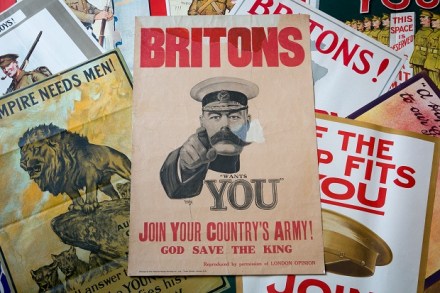
4th August 1914 – my grandfather and his brother, aged 20, go to war

This is the second part of Charles Moore's notes. You can read the first part here. On Tuesday 4 August, NM rang his London house: ‘Roberta our house-maid said that “Master Gilla had got a commission in the Army & Master Alan was to be appointed a surgeon in the navy”.’ Gilla sent a telegram saying ‘sorry cannot return shove off this evening’. NM read and admired the Commons speeches of the Foreign Secretary Sir Edward Grey and the moderate Irish nationalist leader John Redmond in the Times. Ethel Portal wired: ‘Ultimatum sent to Germany respect Belgian Neutrality or we declare war at midnight.’ ‘Milicent & I dined,’ wrote NM, ‘a large bright moon visible through the glass door into the tennis lawn.

2nd August 1914 – my grandfather prepares for war

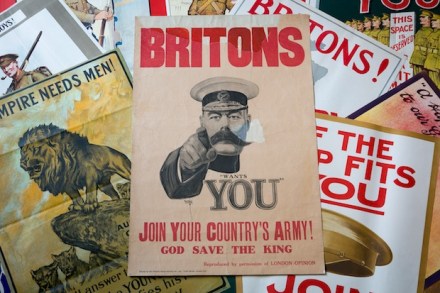
This week’s issue is dated 2 August. On that date 100 years ago, my great-grandfather, Norman Moore (always known as ‘NM’), went to Sunday Mass. ‘Father Ryan,’ he noted in his diary, ‘seemed hardly to have thought of the war… I told [him] I felt uncertain whether August would be a good time for a mission to Protestants but I gave him the £5 I had promised.’ Later, he and his wife Milicent went to tea with their Sussex neighbours, Lord and Lady Ashton, who ‘seemed very little informed of the gravity of the situation’. Back at home, a telegram arrived from NM’s friend, Ethel Portal: ‘Germany occupied Luxembourg Reported repulse of Germans by French near Nancy unofficial.

The Spectator’s Notes: My grandfather’s dire omen on the eve of war

This week’s issue is dated 2 August. On that date 100 years ago, my great-grandfather, Norman Moore (always known as ‘NM’), went to Sunday Mass. ‘Father Ryan,’ he noted in his diary, ‘seemed hardly to have thought of the war... I told [him] I felt uncertain whether August would be a good time for a mission to Protestants but I gave him the £5 I had promised.’ Later, he and his wife Milicent went to tea with their Sussex neighbours, Lord and Lady Ashton, who ‘seemed very little informed of the gravity of the situation’. Back at home, a telegram arrived from NM’s friend, Ethel Portal: ‘Germany occupied Luxembourg Reported repulse of Germans by French near Nancy unofficial.

Our spies have stopped chasing subversives. That’s why we’re in so much trouble

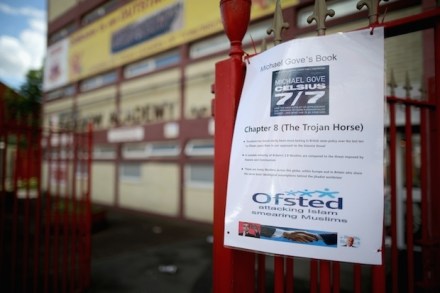
Peter Clarke’s powerful report on the Trojan Horse affair in Birmingham schools is confirmation of the weakness of David Cameron in demoting Michael Gove. When Mr Gove appointed Mr Clarke to conduct the inquiry, there was execration — even from the local police chief — about how wickedly provocative it was to put a policeman with counter-terrorism experience into the role. But Mr Clarke was just the man and his inquiry has swiftly and efficiently uncovered serious problems of Islamist bullying and infiltration. Too late to reap a political reward, Mr Gove is vindicated. The next time this problem arises — and there undoubtedly will be a next time in another British city — what minister will have the courage to do what he did?

The Trojan Horse affair is about subversion, and only Gove understood this

Peter Clarke’s powerful report on the Trojan Horse affair in Birmingham schools is confirmation of the weakness of David Cameron in demoting Michael Gove. When Mr Gove appointed Mr Clarke to conduct the inquiry, there was execration — even from the local police chief — about how wickedly provocative it was to put a policeman with counter-terrorism experience into the role. But Mr Clarke was just the man and his inquiry has swiftly and efficiently uncovered serious problems of Islamist bullying and infiltration. Too late to reap a political reward, Mr Gove is vindicated.

Forget about Assisted Dying: what about Assisted Living?

By the time most readers see this, the House of Lords will have formed a view about Assisted Dying. Some Anglican bishops have got wonderfully on-the-one-hand/on-the-other about it. They seem to want dying assisted, but only a little bit. The Bishop of Carlisle feels that judges, rather than doctors, should decide whether someone has the right to be helped to take his or her own life. Thus do the most enlightened persons inadvertently advocate the return of the death penalty. I hope that when the bishop’s judges perform this task, they will be made to wear the traditional black cap. If I were in the House of Lords, I would bring in an Assisted Living Bill.

The Spectator’s Notes: this is the worst reshuffle since 1989

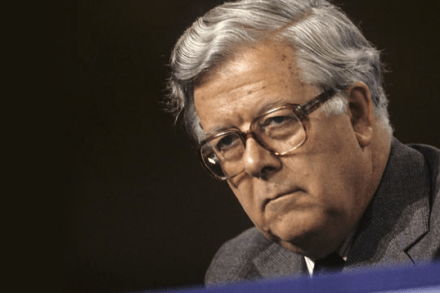
[audioplayer src="http://traffic.libsyn.com/spectator/TheViewFrom22_17_July_2014_v4.mp3" title="Charles Moore and Fraser Nelson discuss the reshuffle" startat=851] Listen [/audioplayer]This must be the worst reshuffle since Mrs Thatcher demoted Geoffrey Howe in 1989. Unlike that one, its errors are unforced. This year, David Cameron had established a surprisingly strong position as the leader whose unpopular but necessary policies were starting to work. He and his team seemed steadier and more able than their opponents. Now he has thrown that away with changes so large that he looks as if he disrespects what he has achieved.

Video: Charles Moore – we’ve just seen the worst reshuffle in 25 years

This must be the worst reshuffle since Mrs Thatcher demoted Geoffrey Howe in 1989. Unlike that one, its errors are unforced. This year, David Cameron had established a surprisingly strong position as the leader whose unpopular but necessary policies were starting to work. He and his team seemed steadier and more able than their opponents. Now he has thrown that away with changes so large that he looks as if he disrespects what he has achieved. He has singled out for punishment those ministers who were brave and active — most notably Michael Gove and Owen Paterson, demoting the first and sacking the second.

The real scandal is that government files are ‘lost’ all the time

Like almost everyone else, I have no idea whether the accusations about paedophilia in Parliament in the 1980s are true. One thing I do feel quite confident about, though, is the business of the lost ‘dossiers’. The suggestion is that the disappearance of the file containing Geoffrey Dickens’s accusations of about 30 years ago and of 114 other files proves a cover-up. It does not. Literally tens of thousands of government files are destroyed every year, without much inspection. I believe, for example, that the overwhelming majority of the files from the offices of Chief Whip, the Leader of the House and Lord President of the Council from the 1980s were thrown out. And it is commonplace for departments to destroy files from the private offices of ministers.

Jailing old celebrities is not a challenge to our current culture

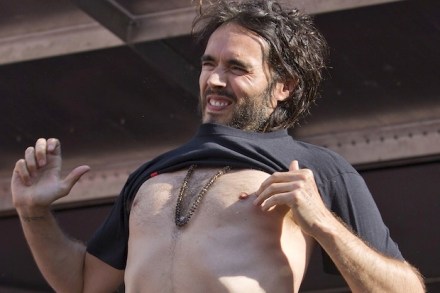
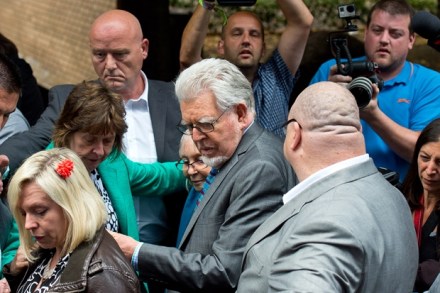
‘A culture changes by example and a licentious old man being found guilty will help do that,’ says a leader in the Times. Perhaps, but I would be much more impressed if it were a licentious younger man. We can all moralise away in retrospect about what the BBC and others allowed Rolf Harris CBE or Sir James Savile to get away with. It is easy to attack them when they are old or dead. You still very rarely hear of sex charges against current performers. I would not dream of suggesting that Russell Brand is a sex criminal, but we know, from his own account, that he has slept with a great many women.

The Spectator’s Notes: Hunting down dirty old men is not a challenge to the current culture

‘A culture changes by example and a licentious old man being found guilty will help do that,’ says a leader in the Times. Perhaps, but I would be much more impressed if it were a licentious younger man. We can all moralise away in retrospect about what the BBC and others allowed Rolf Harris CBE or Sir James Savile to get away with. It is easy to attack them when they are old or dead. You still very rarely hear of sex charges against current performers. I would not dream of suggesting that Russell Brand is a sex criminal, but we know, from his own account, that he has slept with a great many women. He even, with Jonathan Ross, telephoned the elderly actor Andrew Sachs, and they left a message on his answering machine boasting of how Brand had slept with his granddaughter.

Radek Sikorski: a Spectator foreign correspondent made good

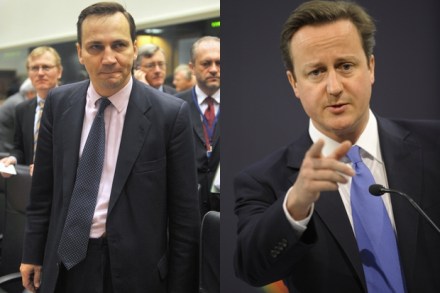
Radek Sikorski, the Polish foreign minister, is undoubtedly one of the most dashing figures on the world stage. I first met him in the mid-1980s, possibly when I was a guest of the Oxford Union and Radek who, I seem to remember, was wearing white tie and tails, was on the standing committee. At that time, he was a refugee from communist Poland, having helped organise resistance to martial law, and — though I did not know it then — a member of that nursery of world rulers, the Bullingdon Club. I made him The Spectator’s Afghanistan correspondent and he filed brave and fascinating reports from within the ranks of the mujahedin. In his mind, the Soviets’ retreat from Afghanistan was a dummy run for getting them out of eastern Europe.

If I were Polish, I’d side with Radek Sikorski — not David Cameron

In his Spectator Notes this week, Charles Moore discusses Radek Sikorski, the Polish foreign minister and former Spectator contributor, who made some disobliging comments about David Cameron this week. Here is a preview of his column... Radek Sikorski, the Polish foreign minister, is undoubtedly one of the most dashing figures on the world stage. I first met him in the mid-1980s, possibly when I was a guest of the Oxford Union and Radek who, I seem to remember, was wearing white tie and tails, was on the standing committee. At that time, he was a refugee from communist Poland, having helped organise resistance to martial law, and — though I did not know it then — a member of that nursery of world rulers, the Bullingdon Club.

The Spectator’s notes: Diana’s bed, Boris’s dirty trick and Prince Philip’s mystery tie

On Friday night, I went to Althorp, childhood home of Diana, Princess of Wales, to speak at its literary festival. My first duty was to appear on the panel of the BBC’s Any Questions? in a tent there. It was 30 years to the month that I had first been on the programme. Then it was at Uppingham School, presented by David Jacobs, and the panel included Roy Hattersley and Esther Rantzen. This time, it was presented by Jonathan Dimbleby, and the panel was George Galloway, Nigel Evans (the Tory MP who did not rape any men), and a beautiful woman called Rushanara Ali, the Labour MP for Bethnal Green and Bow. She was nine years old when I put in my first appearance. In all that time, the show has changed very little.

Jean-Claude Juncker is stale, grey and likes his booze. That’s why Cameron should back him

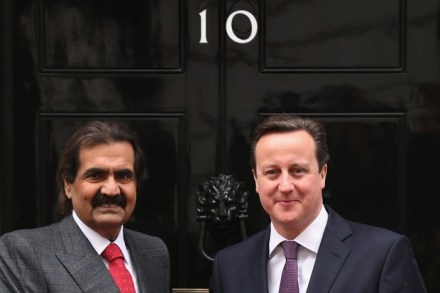
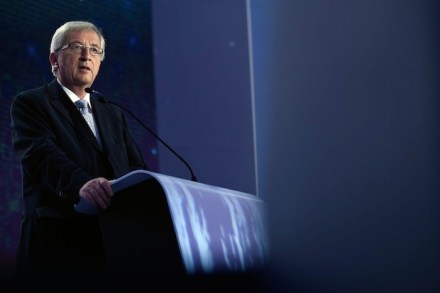
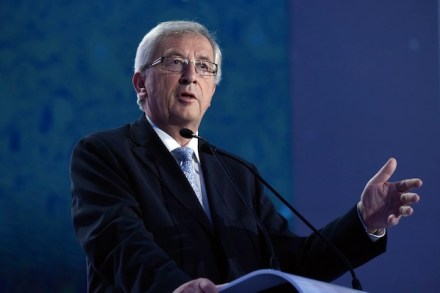
David Cameron is surely right to think that Jean-Claude Juncker is not the man to relieve the European Union’s woes, but I wonder if it is worth a fight. It reminds me of a similar battle by John Major, in 1994, to prevent a fat Belgian called Jean-Luc Dehaene from getting the job, on the grounds that he was too federalist. The post then duly went to Jacques Santer — like M. Juncker, a Luxembourgeois with an alleged fondness for alcohol (he was known as ‘Sancerre’). M. Santer was no better, from the British point of view, than M. Dehaene, and some European diplomatic chips were pointlessly used up.

What’s the fuss about Juncker? Better a drunken, useless federalist than an effective, sober one

David Cameron is surely right to think that Jean-Claude Juncker is not the man to relieve the European Union’s woes, but I wonder if it is worth a fight. It reminds me of a similar battle by John Major, in 1994, to prevent a fat Belgian called Jean-Luc Dehaene from getting the job, on the grounds that he was too federalist. The post then duly went to Jacques Santer — like M. Juncker, a Luxembourgeois with an alleged fondness for alcohol (he was known as ‘Sancerre’). M. Santer was no better, from the British point of view, than M. Dehaene, and some European diplomatic chips were pointlessly used up.

Does Tony Blair want to be President of the European Commission?

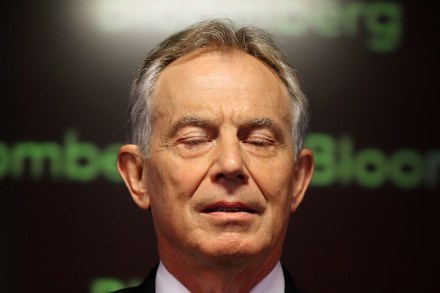
Tony Blair appeared on the Today programme on Tuesday morning to talk about Europe. The televised version showed him against the backdrop of the Brandenburg Gate. He said somewhat predictable things about Ukip being bad and a reformed Europe being good. The mystery was ‘Why?’ Why was he intervening at this point? It took me several hours to puzzle out a possible answer. It lies, I suggest, in his statement that the European project used to be ‘about peace’ and now it is ‘about power’. He was speaking at the beginning of the week when the contest for the presidency of the European Commission comes to a head. Mr Blair emphasised that the socialists in the parliament had done better in the elections than the conservatives.

What is Tony Blair after now? I fear I know…

Tony Blair appeared on the Today programme on Tuesday morning to talk about Europe. The televised version showed him against the backdrop of the Brandenburg Gate. He said somewhat predictable things about Ukip being bad and a reformed Europe being good. The mystery was ‘Why?’ Why was he intervening at this point? It took me several hours to puzzle out a possible answer. It lies, I suggest, in his statement that the European project used to be ‘about peace’ and now it is ‘about power’. He was speaking at the beginning of the week when the contest for the presidency of the European Commission comes to a head. Mr Blair emphasised that the socialists in the parliament had done better in the elections than the conservatives.