Charles Moore

Charles Moore

Charles Moore is The Spectator’s chairman.

He is a former editor of the magazine, as well as the Sunday Telegraph and the Daily Telegraph. He became a non-affiliated peer in July 2020.

The emotional appeal of Tony Benn’s apostle

When the history of Corbynism comes to be written, many will assume that his form of leftism arose as a protest against the Thatcher era. This is not so. It predated her. There really was a belief in the 1970s that capitalism would ‘collapse under the weight of its own contradictions’. The formative experience of the Corbyn generation was not Thatcher but the crisis of 1976, when a Labour government was forced to bring in the IMF. It was then that the campaigns against ‘the cuts’, which have been going on ever since — and the hard-left infiltration connected with them — really took off. (Indeed the Jim Callaghan/Denis Healey cuts were much more severe than any imposed by Mrs Thatcher.

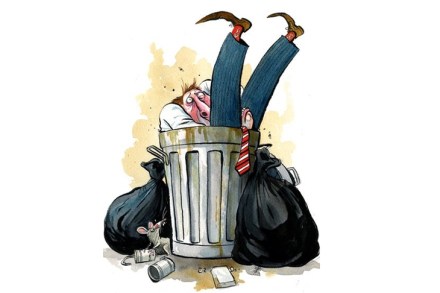
Manhole covers are not gender neutral. Does this bother Jeremy Corbyn?

Mr Corbyn’s hobby is manhole covers, on which he is an expert. I was about thoughtlessly to mock this leisure activity when I was prevented by the learned Christopher Howse. He speaks as a connoisseur of a distinct, but related genre — coal plates, which cover coalholes, and are often neglected. In the 19th century, a man called Shephard Taylor sketched 150 coal plates, and these were published as a book called Opercula: London Coal Plates, in 1929. Christopher has now photographed 1,019 coal plates on his mobile phone and tweeted them (#opercula). Despite his preference for coal plates, Christopher is generous about students of manhole covers or (with which they must not be confused) drain covers.

The Spectator’s notes | 17 September 2015

When the Labour party began, its purpose was the representation of labour (i.e. workers) in the House of Commons. Indeed, its name was the Labour Representation Committee. Its goal was gradually achieved, and then, from the 1980s, gradually annihilated. With the victory of Jeremy Corbyn, the Labour leader is supported by only 10 per cent of the party’s MPs, and yet it is imagined, at least by his backers, that he will eventually be able to get into government with them. It is an impossible situation. What is needed today is the opposite of how it all started — a Parliamentary Representation Committee in the Labour party. When the history of Corbynism comes to be written, many will assume that his form of leftism arose as a protest against the Thatcher era. This is not so.

Assisted dying treats people like animals

Arguing for assisted dying of the very ill, people often say, ‘I wouldn’t let my dog live like that.’ This sounds a powerful point, but is it? As someone complicit in the euthanasia of our much-loved dog a few years ago, I can confirm that it was traumatic; and although we still think it was the right decision, it evoked feelings of guilt which are hard to shake off. In assisting the death of a person one loves, such feelings would be infinitely more disturbing, because a person is profoundly different from a dog. It may sound perverse, but it is precisely because we see human autonomy as being of a different order from the autonomy of an animal that we think it right to tolerate higher levels of human suffering.

The Spectator’s notes | 10 September 2015

Presumably Britain has some sort of policy on immigration, asylum and refugees, but instead of struggling to understand it, you can save time by following its media presentation, since that is what seems to concern the government most. Essentially, the line is that Labour lets them all in and the Tories don’t and won’t (‘No ifs, no buts’). When, as at the last election, it turns out that net immigration has been rising under David Cameron, he apologises shyly and sounds tough again. He was sounding very tough until last week, when the photograph of the dead boy on the Turkish beach suddenly turned him all soft.

Can you answer Charles Moore’s slang quiz?

An American friend who has just read volume one of my biography of Margaret Thatcher asks for elucidation of three terms of what he calls English ‘slang’ in it. My answers are — ‘privileges granted to labour unions excusing them from legal suits against secondary picketing etc’, ‘T bills’, and ‘French kissing’. See if you can guess the original phrases. This is an extract from Charles Moore's notes. The full article—and the answers—can be read here.

The Tories’ adoption of the Living Wage is entirely bogus

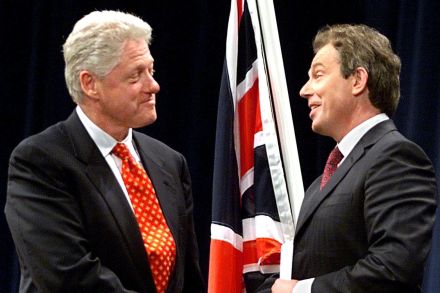
Was there ever a more unilluminating political idea — for voters rather than practitioners — than triangulation? For those readers so pure and high-minded that they have not followed politics for 20 years, I should explain that triangulation came from Bill Clinton, was imported by Tony Blair, and is now practised by David Cameron. Clinton’s adviser, Dick Morris, put it thus: ‘The President needed to take a position that not only blended the best of each party’s views but also transcended them to constitute a third force in the debate.’ The Tories’ adoption of the Living Wage is the latest example.

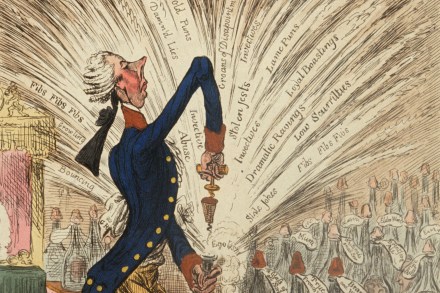
When will the paedophile witch-hunt reach Pitt the Younger?

The more one thinks about the current witch-hunt against alleged paedophiles in the establishment, the more beyond satire it seems. What mordant novelist could have imagined, even ten years ago, that the police would be devoting massive amounts of their time to investigating famous people who were a) suspected on no actual evidence and b) dead and therefore beyond the reach of the law? Yet it has happened. It just goes to show that even a society which self-consciously prides itself on its tolerance will always contain those who are desperately searching for people to ruin and then to scream at those who suggest they might be wrong, and — which is worse — that the authorities will cave in to their menaces.

Spectator’s Notes | 3 September 2015

Was there ever a more unilluminating political idea — for voters rather than practitioners — than triangulation? For those readers so pure and high-minded that they have not followed politics for 20 years, I should explain that triangulation came from Bill Clinton, was imported by Tony Blair, and is now practised by David Cameron. Clinton’s adviser, Dick Morris, put it thus: ‘The President needed to take a position that not only blended the best of each party’s views but also transcended them to constitute a third force in the debate.’ The Tories’ adoption of the Living Wage is the latest example.

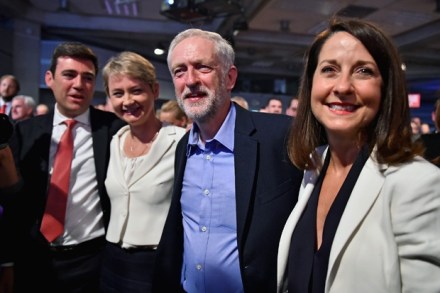
Do Yvette Cooper and Liz Kendall look like leaders?

A hidden reason for Mrs Thatcher’s victory in 1975 was that lots of older Tory backbenchers fancied her. She was 49 and made the best of it without obvious strain. She was not disturbingly sexy, and she behaved with absolute propriety throughout, thus preventing any filthy old wretch from taking liberties, but she appealed to the chivalrous instincts of the knights of the shires. If today’s Labour selectorate knows the meaning of the word chivalry at all, it is only to denounce it. On the other hand, there is an understanding that no leader — especially, despite the age of equality, a woman — can look grotesque on television and win a general election. So what are the right looks?

If Jeremy Corbyn joins the No to EU campaign, he’ll drive voters to Cameron

If the man with the dull beard does win, where will Labour stand in the European Union referendum? Jeremy Corbyn, being a hard leftist, is theoretically against the EU, but eurosceptic Labour friends tell me that he is not to be relied on when the going gets tough. I expect he will adopt the conventional ‘anti-austerity’ position, which is to assail the European elites while not doing anything which might risk the loss of the subsidies they provide and the regulations they pour forth. If so, that will, on balance, be good for the ‘get out’ side. A Corbyn-led campaign for a No vote would drive lots of Tory waverers right back to David Cameron. This is an extract from Charles Moore's notes. The full article can be read here.

The Spectator’s notes | 20 August 2015

Watching the very pleasant Liz Kendall on television this week, I was struck by how extraordinary it is that more than 40 years have now passed since the Conservatives selected a woman leader and still the Labour party cannot bring itself to do so. (Although, come to think of it, it took Labour 142 years to catch up with the Conservatives in selecting a Jew, so perhaps we have another century to wait.) I am not necessarily saying that Ms Kendall is the answer — she seems able, but inexperienced — but there does appear to be a serious barrier to women at the very top of the Labour party. I suspect this is due less to old-fashioned misogyny than to the sexual politics which feature so largely in the ideology of the left.

The Spectator’s notes | 13 August 2015

Our son, William, celebrated his marriage on Saturday. You would expect me to say that it was wonderful, sunny occasion. I do, and it was. I have been trying to work out why. The most important factor is something which parents can, fortunately, affect very little. Will was marrying a beautiful, kind and thoughtful woman, whom he loves; and she loves him. This mutuality, rather than any doctrine, is the main thing. Marriage occurs naturally in organised society and is not invented by religion. Religions only annex and defend it. Although my wife and I are believers — and so are Will and Hannah — I do not think religion is essential to the concept of marriage. It makes a heaven of a difference, however.

The Spectator’s Notes | 6 August 2015

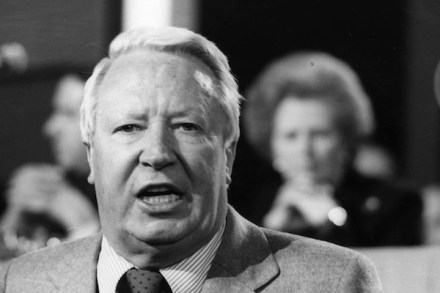
As someone who has rarely written a sentence in praise of the late Sir Edward Heath, I hope I can escape charges of ‘cover-up’: I don’t believe the accusations against him. Even the word ‘accusations’ is an exaggeration, actually, since the story so far seems to be Chinese whispers with nothing amounting to evidence, put out by the frightened police. When this fashion for airing unsupported claims of child abuse has finally run its course, we shall be collectively ashamed of it, and people like Tom Watson MP will be seen for the McCarthys they are. (This is true, by the way, even if some of the things Mr Watson alleges turn out to be the case: the same applied to McCarthy.) One should explain the culture of the period now under scrutiny.

Remembering Robert Conquest, 1917 – 2015

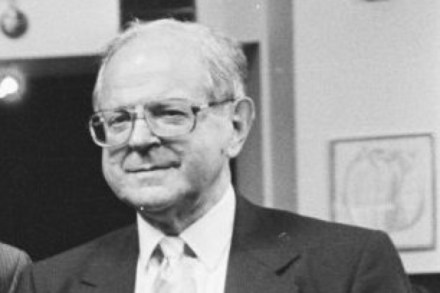
Last month, in Stanford, California, I had lunch with Robert Conquest, poet, historian, literary editor of this paper in the early 1960s, exposer of Soviet totalitarianism. After Conquest’s book The Great Terror (1968), it became impossible for all but the most crazed fanatic or fool to deny that Stalin had arranged the greatest system of mass murder in history (Hitler being at least his equal in iniquity, but a bit lower on the numbers). Bob turned 98 a week after I saw him. He was born just before the Bolsheviks he exposed came to power. His writing, and his advice to Margaret Thatcher, helped bring about the collapse of their horrible regime. On Monday, Bob died, cared for to the end by his wonderful wife Liddie (his fourth, and the one who lasted).

There’s nothing hip about Jeremy Corbyn’s beard

Mr Corbyn has a beard. If he becomes leader, he will be the first bearded leader of any main party since Keir Hardie. The beard as a fashion item is now back, generally in shaped and even waxed form. But Mr Corbyn’s one owes nothing to fashion. It is a 1960s political beard, already obsolete when he first brought it into the House of Commons in 1983. Like Lord Hailsham who, as Mrs Thatcher’s Lord Chancellor, continued to wear a bowler hat long after it had disappeared from everything but hunt puppy shows, Orange parades and A Clockwork Orange, Mr Corbyn is undaunted by the passage of time. I must try not to get sentimental about him. This is an extract from this week's Spectator. Subscribe here.

The Spectator’s Notes | 30 July 2015

Obviously when one attends what the papers call ‘cocaine-fuelled orgies’, one expects to find several members of the peerage present, but I must confess that until all this trouble, I had not heard of Lord Sewel, beyond a vague apprehension that he was a misprint rather than a person. I now discover that he is a Blair peer — a specially ignominious category, rather like Lloyd George’s creations. But I still worry that he has ‘resigned’ from the House of Lords. If we continue to think that our second chamber should be unelected, it should be all but impossible to get rid of a peer once appointed.

Can my secretary marry her sister?

Virginia Utley, my secretary when I edited this paper, has written to Prime Minister and Chancellor, jointly. She asks, ‘Please could you tell me what a family is?’ Nowadays, she goes on, you teach us that a family can be made up of men who love men or women who love women, who must therefore be equally entitled to marry one another. ‘Now,’ she continues, her sister and she ‘both think boys are very nice but neither of us met one we quite liked enough to marry… So my sister and I have bought a house together and have lived happily there for years and years and years.’ So, ‘Please can my sister and I get married?

Euclid’s theorem of the Irish

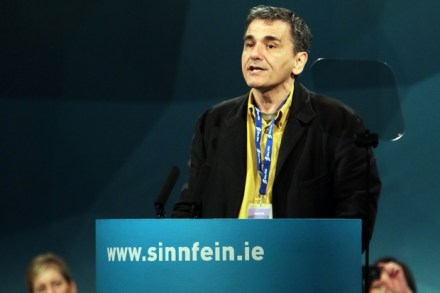
The excellently named Euclid Tsakalotos has become the Greek finance minister after the sacking (tsaking?) of Varoufakis. He was educated at St Paul’s in the 1970s, and went on to Oxford. This atrocious suffering made him, even at the time, a supporter of Irish republicanism. In March this year, he popped up at a Sinn Fein conference and began his speech by apologising for his English accent, adding that ‘in mitigating circumstances, I am married to a Celt’. Euclid’s theorem is that the Irish are ‘honorary southerners’, now forming an arc of leftist insurrection which runs from Dublin, through Podemos in Spain, to Athens. Given the horrors inflicted on these countries by the eurozone, one almost wishes it well.

The Spectator’s notes | 9 July 2015

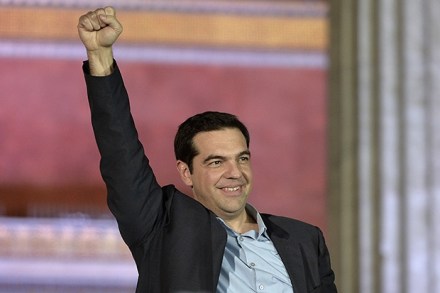
Even if everything goes wronger still, the Greek No vote is a great victory for the left. Until now, the left has not mounted a serious challenge to the claims of the EU. It is extraordinary how it has been cowed. The single currency, especially a single currency without a ‘social dimension’ and political union, is the classic ‘bankers’ ramp’ against which the left always used to inveigh. It is a huge collective device to put banks before workers, if necessary reducing the latter to poverty. Greece is an almost perfect example of this, with the rescue designed to save European banks, not Greek people.