Caroline Moore

Lurid & Cute is too true to its title

One of the duties of a reviewer is to alert potential readers to the flavour and content of a book, particularly if it comes into the category of ‘not a suitable present for your great-aunt’. I always dislike this duty, since it spoils surprises, which are the essence of enjoyment in reading; but Adam Thirlwell’s first novel, Politics, did perhaps require a few alerts. The title gave no clue that it was about a sexual threesome, and would have introduced the putative great-aunt to rimming, undinism, and an exhausting range of esoteric practices. The flavour of Thirlwell’s third novel, however, Lurid & Cute, is blazoned on the cover. You can’t fault this one on the Trade Descriptions Act.

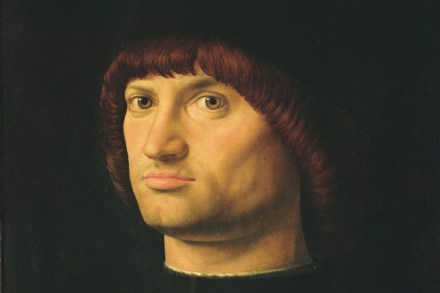
Which great French novelist was also a crossword-setter?

One could have endless fun setting quiz questions about Georges Perec. Which French novelist had a scientific paper, ‘Experimental demonstration of the Tomatotropic organisation in the Soprano (Cantatrix sopranico L)’ included in a scientific festschrift at the Centre National de la Recherche Scientifique? (The article charted the ‘yelling reaction’ — YR —of singers pelted with ‘Tomato rungisia vulgaris’.) And which French novelist wrote the world’s longest palindrome (5,566 letters)? Perec would have enjoyed being the subject of a quiz, though, to do him full justice, the questions ought to have been cryptic: he was a crossword-setter as well as a novelist.

An escape from New South Wales

Thomas Keneally has constructed his latest novel around a framework of true events: the mass break-out of Japanese PoWs from a camp in New South Wales. This intrinsically thrilling incident, triggered by a fascinating clash between mutually uncomprehending cultures, is an obvious gift to a writer. There may be some who claim that any novelist could therefore have produced an interesting fictional version of it; but this is like saying that anyone could have made a landscape out of the fine park at Blenheim. Keneally spotted both the tale and its possibilities, which in itself is a truly enviable talent. His imagination is fired by the incongruities of the camp in the small town of Cowra, here fictionalised as Gawell.

The Roth of tenderness and of rage

In the autumn of 2012, Philip Roth told a French magazine that his latest book, Nemesis, would be his last. The storm of interest this created was surprising, given that he was 78. His creative spurt in his seventies (inexplicable, according to Roth: ‘my breakfast cereal stayed the same’) had given fans the illusion that, in the words of his fictional alter-ego Nathan Zuckerman, ‘one’s story is not a skin to be shed….You go on pumping it out till you die, the story veined with the themes of your life.’ Roth, however, has now shed the skin of fiction; he is ‘unbound’ because he is no longer ‘chained to his talent’. (In one interview, he extols the sheer joy of taking naps.

Multiples, edited by Adam Thirlwell – review

There is a hoary Cold War joke about a newly invented translating machine. On a test run, the CIA scientists feed in ‘The spirit is willing, but the flesh is weak’, press the button to translate it into Russian, and then re-translate it into English. It emerges as ‘The vodka is passable, but the meat is putrid.’ Our modern translating machine is Google Translate. It takes more than one transmutation to scramble the Biblical quotation: however, if you shift it through Russian, Azerbaijani, Chinese, Hungarian, Tamil and Haitian Creole into French, you can get ‘J’aime la chair, elle était faible.’ Since the original is usually quoted by dieters reaching for a fourth cream bun, this, paradoxically, might in practice be accurate enough.

‘The City of Devi’, by Manil Suri – review

Manil Suri’s novel is like a ‘masala movie’ — a Bombay mix of genres, spicy, often subtle, often corny, and distinctly addictive. It is difficult to pin down its overriding flavour. A reviewer on the back cover notes that ‘Manil Suri has been likened to Narayan, Coetzee, Chekhov and Flaubert’; but there are twinkly sprinklings of Armistead Maupin and Frank L. Baum, and a strong dash of apocalyptic thriller. The City of Devi is the third and most flamboyant of a trilogy, each volume named after a Hindu deity. After The Death of Vishnu and The Age of Shiva, readers who know the Hindu trimurti might have expected Brahma the Creator to complete the trinity.

Entry to the sacred grove

Some readers may wonder if we need this book. Surely, the argument might go, one can summon up potted ‘lives’ on the internet, while serious biographies take book form. And how can even 294 lives of novelists offer, as the cover to this book claims, ‘a comprehensive history of the English novel’? Reason not the need: this book celebrates enjoyment. And it is itself hugely enjoyable. Few, if any, of those Wikipedia entries are well written, let alone witty; most current literary biographies weigh in at around 800 pages: Sutherland’s brief lives display the soul of wit — whose essence is to encompass the unexpected. There is a difficult balancing act, here. Sutherland’s potentially fatal Cleopatra is the donnish joke.

The gentle touch

My main disappointment with this collection of stories was that I had already read six of them, in publications ranging from the New Yorker to the Guardian. This, however, only goes to prove the eagerness with which I seize upon Julian Barnes’ intelligent and subtle writing wherever it may first appear. Barnes’ two previous collections of short stories were loosely linked by a theme, though this was never overbearing: Cross Channel explored Anglo-French relationships, while The Lemon Table circled bleakly around old age. The stories in Pulse are more tenuously linked — except in so far as this is a collection about the tenuousness of links within human relationships.

Dark Satanic thrills

If you have not yet gone on holiday, do pack The Anatomy of Ghosts. It is excellent airport reading; and this is no trivial recommendation. Airports are where one needs fiction most desperately — and nowhere more so than in Kabul, where I had to work through no fewer than seven queues for incompetent security checks, inching up a modern version of Purgatory. Even in these testing conditions, Andrew Taylor’s book beguiled. The Anatomy of Ghosts is, like Taylor’s best-known previous novel, The American Boy, historical crime fiction.

Stuff and nonsense

Yann Martel’s second novel, The Life of Pi, a fable with animals, won the Man Booker Prize in 2002 and was translated into 38 languages. Yann Martel’s second novel, The Life of Pi, a fable with animals, won the Man Booker Prize in 2002 and was translated into 38 languages. The narrator of Beatrice and Virgil, who lives, like Martel, in Canada, hit the literary jackpot with his second novel, a fable with animals. A self-referential layer can be assumed. Since his success, the narrator, Henry, has tried to write a ‘flip book’ about the Holocaust: two back-to-back books in one volume, which can be read either from the front or the back, part fiction and part an historical essay.

The old Adam

Final Demands is the third volume in Frederic Raphael’s trilogy, which began with the publication of The Glittering Prizes in 1976. Final Demands is the third volume in Frederic Raphael’s trilogy, which began with the publication of The Glittering Prizes in 1976. The second in the series, Fame and Fortune, did not follow until 2007; and showed a distinct shift in mood — a silting up of bitterness and disdain. In The Glittering Prizes, Raphael was more tenderly ambiguous towards the ambitions of his characters. Perhaps this is because their obvious faults (and particularly those of his central character, Adam Morris) are so forgivable in the young.

RC v CofE

Charles Moore I wish the Pope’s new offer to Anglicans had been available when I became a Catholic 15 years ago. It would have helped avoid many misunderstandings. In modern times, most Anglicans converting to Roman Catholicism are not trying to repudiate their existing beliefs. Instead, they are recognising that the logic of those beliefs leads them to become Catholics. Unfortunately, it can be difficult for those close to them to see this. They can feel rejected. Conversion, a word now frowned on by the authorities, sounds sudden and absolute, when in fact the process is neither. The old phrase about ‘the parting of friends’ has a baleful ring.

Joking apart

Free association underpins the comedy of Lorrie Moore’s writing — or perhaps the verb should be ‘unpins’, since her prose spins off in tangential, apparently affectless riffs. Free association underpins the comedy of Lorrie Moore’s writing — or perhaps the verb should be ‘unpins’, since her prose spins off in tangential, apparently affectless riffs. Even the title of A Gate at the Stairs tugs in different directions. It is a baby-gate; since this novel starts as a comedy — of sorts — about adoption. (But, as the adopting mother says, while mashing flower bulbs into a poisonous puree, the French ‘have jokes that end “And then the baby fell down the stairs.” ’).

Ticking the boxes

How do you describe novels written by a Fellow of All Souls, laced with extreme post-modern self-consciousness and lavish with cultural references, but revolving almost entirely around graphic permutations of the sexual act? As a genre, it can surely only be called clever-dick-lit. This is Adam Thirlwell’s second foray into this exclusive terrain. His first work, Politics, hit the news when he was included as the youngest writer in Granta’s 2003 list of Best Young British Writers before the novel was even published, which may or may not have affected the reviews. A sour note of envy was certainly struck by some.

An irresistible highbrow

The Children’s Book, by A. S. Byatt I should declare an interest. Nineteen years ago, I believe that A. S. Byatt saved the lives of my unborn twins. When I went into premature labour at 22 weeks, I was rushed into hospital, put on a drip, and told it was absolutely vital Not to Panic. Useless advice. So I took to fiction, as narcotics for the unquiet heart and brain. On that first long night, day and night, I read Possession, at a single sitting, or rather lying; and it worked, magnificently. The twins were not born until eight weeks later, and survived. The point of this confession is to remind readers that Byatt’s novels, at their best, are tremendous page-turners. Few other modern novelists could have absorbed me in such circumstances.

Plagued by plagiarism

And Then There Was No One, by Gilbert Adair And Then There Was No One is a metaphysical murder mystery, a deconstructionist detective story, a post-modern puzzle — all of which could, very, very easily, become as arch and wearisome as persistent alliteration. But Gilbert Adair — though fantastically clever-clever, and horribly addicted not only to alliteration but also to puns and to literary in-jokes so self-referential that he is perpetually disappearing up his own recto (oh dear, his style is catching) — has created a hugely enjoyable entertainment. And Then There Was No One is billed as the third in Gilbert Adair’s ‘Evadne Mount Trilogy’.

Hungry for love

Love All, by Elizabeth Jane Howard Love All is a dreadful title — sounds like the memoirs of a lesbian tennis player — for an elegantly old-fashioned novel. It is set in the late 1960s; but there is little to anchor it to this period: the occasional references to the Beatles, or to Mary Quant, give a temporal specificity so at odds as to seem perversely anachronistic. This is not because Elizabeth Jane Howard’s settings lack physical specificity. Love All is set partly in Maida Vale (indeed, in the very house, with its marble-floored conservatory, where Howard lived with Kingsley Amis in the Sixties) and partly in a village in the West Country: details of interiors, landscapes, food, clothing, gardens, cats, are as ever evoked with intimate and loving detail.

Rekindling life in a dead frame

Why re-write Frankenstein or The Modern Prometheus as The Casebook of Victor Frankenstein? The rewriting of well-known novels generally depends upon two techniques. The first involves recasting the narrator: telling the tale from a different point of view, usually that of the historical underdog (women, servants, woodworm, etc). The second is to update the novel, reinventing it in modern dress. Peter Ackroyd’s narrator, however, is exactly the same as Mary Shelley’s (give or take the now forgot framing device): Victor Frankenstein’s narration is interspersed, just as in the original, with long interludes from a monster endowed with preternatural Romantic magniloquence, though Ackroyd’s monster learned his English from Robinson Crusoe rather than Paradise Lost.

The irritation of Jean

The title of Isabel Fonseca’s first novel is promisingly witty: an ‘attachment’ is both a supplement to an e-mail, and a bond of human intimacy; and the main plot of the novel revolves around how the first may destroy the second. Jean Hubbard is a freelance health correspondent, living on a tropical island, from which she files 1,150 words every other Wednesday. Her husband, Mark, runs ‘one of the most innovative ad agencies in London’ (he is certainly innovative in doing so from St Jacques without a computer in the house).

More down than up

In one of the stories in this collection, a woman whose sister has died of anorexia remembers ‘an incident when she was maybe eight and I was twelve’ when the little girls encountered a flasher: . . . it sort of jumped out and curled up, in a way that I now might recognise. At the time it looked like giblets, the same colour of subdued blood, dark and cooked, like that piece of the turkey our parents liked and called ‘the pope’s nose’. Is this a reminiscence, conscious or otherwise, of the metaphor in The Bell Jar, when the boyfriend of Sylvia Plath’s heroine offers to let her ‘see’ him? Then he just stood there in front of me and I kept on staring at him.