Camilla Swift

Camilla Swift

Camilla Swift is the supplements editor of The Spectator.

The sad tale of the White-throated Needletail and the Outer Hebridean wind turbine

From our UK edition

Yesterday morning, driving along the main road back to Tarbert in the Outer Hebrides, we came across a large group of people parked up by the roadside, accompanied by their cameras and waterproofs. Perhaps they’ve spotted the Sea Eagle, we thought, and went to find out. But no, it was the White-throated Needletail. This bird, which winters in Australia and had only been spotted in the UK eight times before, is a type of Swift and the world’s fastest-flying bird. We stayed for a while to catch a glimpse, with many others pitching up too. It was quite a scene.

Spectator Play: The highs and the lows of what’s going on in arts this week | 21 June 2013

From our UK edition

In this week’s lead feature in the Arts section, Tom Rosenthal explains just why he thinks the Lowry retrospective at Tate Britain is so long overdue. Lowry is one of our most popular artists – and it is exactly this that has been his downfall. ‘Can one disapprove of someone merely because he popular? Clearly one can’, writes Rosenthal. The lack of Lowry in London only highlights ‘the fashionable dislike of Lowry’s art’. But, finally, Lowry has made it to the walls of Tate Britain. Should his work be there? Andrew Lambirth will be reviewing the exhibition in a future issue of The Spectator, but for now you can make your own minds up.

Spectator Play: The highs and the lows of what’s going on in arts this week | 14 June 2013

From our UK edition

Sir Alfred Munnings lived his life in true bohemian style, ‘carousing with gypsies and horse-trainers, living rough and constantly on the road’. Summer in February is based on his early life living in Cornwall, with Munnings played by Dominic Cooper: ‘Irrepressible as an electric eel, and twice as dangerous’. But does the film live up to Munnings’ art – and, of course, to the hype? The problem with films about artists is, says Andrew Lambirth, the art. But Summer in February is ‘as vivid and visually complex as a Munnings masterpiece’ – in fact, almost as good as the book.

Spectator Play: The highs and the lows of what’s going on in arts this week

From our UK edition

Coronation Day across the Globe was first broadcast in 1953, by the Home Service, and until last Sunday, it wasn’t broadcast again. In order to celebrate the 60th anniversary of the cororation, the BBC decided to delve into their archives and re-broadcast it. It might have been the first televised coronation, but the BBC’s radio team were ‘determined to show off what they alone could do’, writes Kate Chisholm in her radio review this week.  This determination resulted in messages of goodwill to the Queen sent from places ranging from the Australian outback to the top of Ben Nevis. In 2012, however, the programme seems ‘weirdly outdated’.

100 years on from Emily Davison’s death, her battle is not yet won

From our UK edition

In April’s local elections, only one in three of those eligible to vote actually did so. What proportion of those voters were women? It’s difficult to get an exact percentage, but in most UK elections, women account for just under half of the turnout. In general elections, female turnout is just over 60 percent. Bearing that in mind, it might seem incredible that 100 years ago today, one woman died so that the rest of us could vote. On the day of the Epsom Derby - 4th June 1913 - Emily Wilding Davison ran out in front of the King’s Horse, a three-year-old gelding named Anmer, and died four days later from her injuries. Many of Emily’s critics – both then and now – dismissed her actions by claiming they were the work of a madwoman.

Spectator Play: The highs and the lows of what’s going on in arts this week

From our UK edition

Christopher Purves began his musical career playing doo-wop and rock and roll with the band Harvey and the Wallbangers . These days however, the stages of Glyndebourne and La Scala are his new stomping ground. In this week’s magazine, Julian Flanagan chats to the baritone about his transition from pop to opera, the pivotal events of his opera career, and the ambitions he has yet to fulfil. In his latest role, Purves plays Walt Disney in Philip Glass’s The Perfect American at the ENO, which has proved to be a physical challenge for the singer. But ‘I’ve never gone for the easy life’, he tells us. His career path so far certainly corroborates that statement.

Spectator Play: what’s worth watching, listening to or going to this weekend | 24 May 2013

From our UK edition

This Saturday’s Eurovision contest was never going to be a triumph for the UK, that much was for certain. What was slightly surprising, however, was the Danish victory with their song Only Teardrops The song might have been one of the favourites to win, but the triumph of what Fraser Nelson described as a collaboration between ‘one of Scotland’s world class folk musicians’ and ‘the voice of a rising star of the Danish folk scene’. In this week’s arts lead Emma Hartley interviewed Eurovision winner Emmelie de Forest’s mentor, Fraser Neill, about the making of a very Scottish performer. Here’s a video of the two of them performing Anne Boleyn was, allegedly, one of Henry VIII’s favourite wives; so why did he behead her?

Spectator Play: what’s worth watching, listening to or going to this weekend | 17 May 2013

From our UK edition

It feels like the only film anyone’s been talking about recently is The Great Gatsby. Given that even the release of the films’ multiple trailers created international news stories, it seemed inevitable that not everyone was going to love it. So, what does Deborah Ross say to the film’s critics? ‘You can tell them to go hang’. Gatsby, she says, is ‘fantastically enjoyable, and a blast. It is wild and rampant and thrilling.’ So there you go – listen to our critic, not anyone else's. Desert Island Discs is one of Radio 4’s crowd-pullers but, as Kate Chisholm points out in this week’s radio review, the format ‘ is not best designed for conversational revelations or deep-seated insights’.

Never accept meat from strangers

From our UK edition

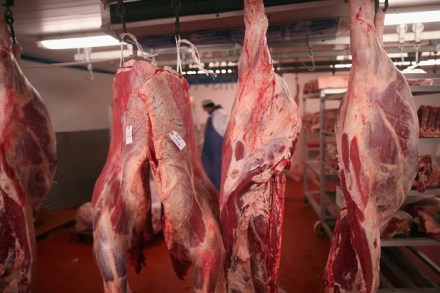
Never accept meat from strangers. That seems to be the lesson of the horsemeat scandal – at least for the ex-commercial director of Freeza Meats. In September 2012, an Environment Health Officer arrived to inspect their meat stores. Discovering a large block of meat in one of their freezers, the officer decided to quarantine it. When the meat was tested for equine DNA, the meat was discovered to be 80% horse. And thus the mysterious case of the frozen horsemeat began. James Fairbairn, the commercial director at the time, appeared in front of the Efra select committee yesterday in a bid to explain things. In August, so his story goes, a meat trader named Martin McAdam, who owned McAdam Foods, tried to sell Freeza a ‘consignment of beef’, which they declined.

Spectator Play: what’s worth – or not worth – watching, listening to or going to this weekend

From our UK edition

Mark Millar appears to be the typical Spectator reader until you discover – as Peter Hoskin did when he interviewed him for this week’s magazine - that he ‘spends most of his time on bizarre world in distant corners of the multiverse… surrounded by assassins dipped in blood’. Why? Because he’s a comic-book writer – and a comic-book writer who Hollywood loves. The first film adaptation of his work, Kick-Ass, made $100 million at the box office, and its sequel Kick-Ass 2 - which comes out in July and the trailer to which is below - is expected to do just as well. Not bad for a man whose first experience of shame was losing an inter-school debating competition to Michael Gove.

Spectator Play: what’s worth – or not worth – watching, listening to or going to this weekend

From our UK edition

I’m So Excited is the latest offering from Pedro Almodóvar who, Deborah Ross says, she would usually love. But is I’m So Excited quite so, well, exciting? The trailer, which promises singing gay flight attendants, The Pointer Sisters, and plenty of booze, is below. And Deborah’s verdict? You can read it for yourself here. Do you have a favourite opera? In this week’s Spectator, Simon Courtauld declares his love for Verdi’s Don Carlos. It’s not about the structure, or the production, or all the little things that opera critics often criticise, he argues, but more about ‘the glorious music and the drama of the royal court in 16th century Spain.

Is vaccination a workable alternative to a badger cull?

From our UK edition

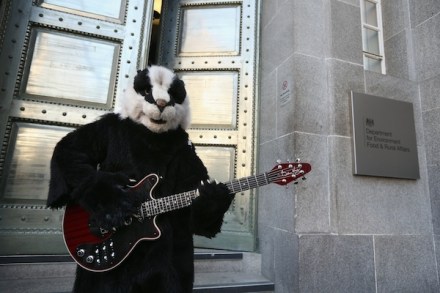
Brian May dressed in a badger suit, singing a specially-composed ‘badger song’? That’s what we were promised on Wednesday morning, but alas, the stunt never pulled through. We did, however, see a flashmob of fifty ‘dancing badgers’ outside Defra HQ, protesting about this summer’s planned badger cull. So what, exactly, were they protesting about? Bovine Tuberculosis (bTB) is currently the greatest threat to British cattle farmers, as the number of affected cattle has risen drastically in the UK over the last 25 years. According to Defra: ‘The number of new cases has doubled every nine years. Last year TB led to the slaughter of 26,000 cattle in England at a cost of nearly £100 million.

Can you really give back your pensioner perks?

From our UK edition

This weekend, Iain Duncan Smith sparked a furore when a Sunday Telegraph interview quoted him as saying he would ‘encourage everybody who reads the Telegraph and doesn’t need [their winter fuel allowance], to hand it back’. This morning, however, he appears to have offered a retraction, telling the Today programme that ‘I’m neither encouraging nor discouraging anybody to hand their money back’, adding that if pensioners are eligible, ‘it’s wholly their money to take if they wish.’ And his colleague Ken Clarke claimed there wasn't even a mechanism for doing this. So, if you normally spend your winter fuel payment on your family's Christmas presents or on restocking your wine supplies, can you hand it back to the government? And how?

Spectator Play: what’s worth watching, listening to or going to this weekend | 26 April 2013

From our UK edition

Perched at number 3 in The Times' ‘30 Richest under 30’ list this week were Fawn and India Rose James, aged just 27 and 21 respectively and with an estimated fortune of £329 million. Who are they, and how did they get on the list? Their grandfather, Paul Raymond, was dubbed the ‘King of Soho’ for buying up swathes of the area, and was infamous for his Raymond Revue Bar strip club and his adult magazine empire. The Look of Love is his biopic and, says Deborah Ross in this week’s film review, is ‘visually fantastic, with more retro kitsch than you can shake a stick at’. The trailer’s below, and you can read what Deborah made of it here.

Spectator Play: what’s worth watching, listening to or going to this weekend

From our UK edition

In a week where the news has been filled with stories about a certain ‘strong woman’, Kate Chisholm has found another strong woman to write about. In this week’s radio column, she argues that the radio presenter Sue MacGregor managed to be the only female presenter on the Today programme without the need to deepen her voice or worry about power dressing or pussy-bow blouses. Like Thatcher however, MacGregor ‘has always done things her way’, and her radio programme The Reunion is a prime example of this.

Do racing correspondents really have an anti jump racing agenda?

From our UK edition

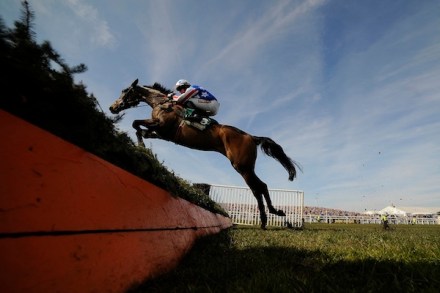
This year’s Grand National meeting attracted an exceptional amount of press attention, much of it due to a number of changes which were introduced in a bid to make the race safer. As a reaction to calls from animal welfare charities such as the RSPCA and Animal Aid – the latter of whom run a ‘racehorse death-watch’ website – Aintree organisers changed the cores of the fences from wood to flexible plastic, levelled out a number of the landings on jumps, and moved the start of the race away from the crowds. So did the changes make a difference to the race? Saturday’s Grand National race was for many an unqualified success, and fortunately no horses died -which indicates that the race was indeed safer than in previous years.

Spectator Play: what’s worth watching, listening to or going to this weekend

From our UK edition

When Lara Pulver hit our screens brandishing a whip and wearing little more than a pair of high heels in the BBC’s Sherlock Holmes-influenced drama Sherlock, she became something of a viral hit, with that episode becoming one of the most-watched items on the BBC website. Now she’s back, this time in Da Vinci’s Demons, a big-budget American TV series looking at Da Vinci’s ‘lost years’, and we sent Will Gore along to meet her. Here’s what she had to say on Benedict Cumberbatch, Renaissance rulers and James Bond. From a beautiful woman to beautiful men. This week’s film review stars both Ryan Gosling and Bradley Cooper – which makes Deborah Ross very pleased indeed.

After the bute revelation, what’s the government doing to prevent another horsemeat scandal?

From our UK edition

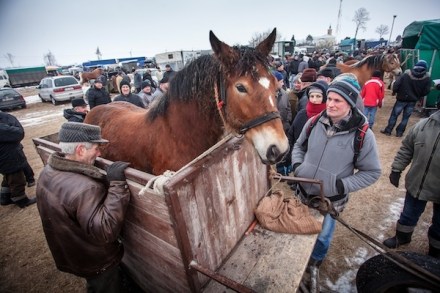
When shadow Defra minister, Mary Creagh, first raised the possibility four months ago that the veterinary drug phenylbutazone – aka bute – might be found in horsemeat in supermarket products labelled as ‘beef’, both the Food Standards Agency (FSA) and the agriculture minister David Heath were quick to rubbish her statement. Heath placed his trust in the FSA and their testing procedures, safe in the knowledge that the FSA ensured that all meat was fit for human consumption, with tests for bute carried out regularly, and any positive results thoroughly invested. But then, in February, it was discovered that British horsemeat containing the drug had been exported to Europe and had entered the food chain there.

Spectator Play: Audio and video for what we’ve reviewed this week

From our UK edition

If you succumbed to Downton fever, then the BBC’s latest period-drama, The Village, might have attracted your attention. But if it was Downton Revisited that you were after, you might have been sorely disappointed, says James Delingpole in his Television column. Set in 1914 Derbyshire, The Village is everything that Downton is not: ‘taut, spare, grown-up, accomplished, dark, strange and poetic, according to the critics’, and according to James, both clichéd and clunky. Here’s a clip from the first episode: Classical quartets seem to be all the rage in Hollywood at the moment, as this week’s Cinema review – Clarissa Tan on ‘A Late Quartet’ – illustrates.

Introducing Spectator Play: Audio and video for what we’ve reviewed this week

From our UK edition

Did you catch Dr Who over the weekend? Clarissa Tan, who wrote our latest TV column, was surprised that the Dr had to contend with ‘something in the wi-fi’. How’s wi-fi for a thoroughly modern enemy? Here’s the prequel to this week’s episode, The Bells of Saint John: Clarissa also watched Rachel Johnson learning to be a Lady. It might sound like a bit of a drag, but ‘what could have turned out to be a rather prissy affair turns out to be a fun watch’. Johnson tries to master riding side-saddle, and ponders why etiquette lessons are becoming more and more popular.