Camilla Swift

Camilla Swift

Camilla Swift is the supplements editor of The Spectator.

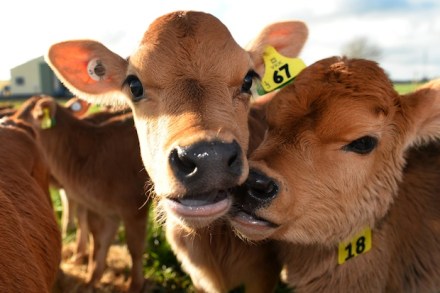
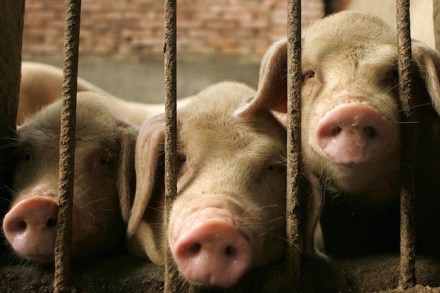
If this picture puts your toddler off his lunch, he should consider vegetarianism

From our UK edition

How can we encourage children to be closer to nature, when 80% of Britons live in urban areas? This is the question that Michael Gove attempts to answer in his contribution to a recent pamphlet entitled ‘What the Environment means to Conservatives’. He writes, ‘One way we all interact with the natural world is through the food we eat.' As a result, he wants to apply this thinking to education. He has already made cooking compulsory in schools for all children up to the age of 14 from next September. And his ‘School Food Plan’ aims both to improve the standard of school food, and to teach pupils about where ingredients come from, and how seasons affect food supplies.

Podcast: Cameron’s Northern Alliance, Christianity and the left, and the end of two-party politics

From our UK edition

Is David Cameron's new gameplan to look to the northern states for allies? Fraser Nelson is joined on the podcast by Stephen Booth of Open Europe, to discuss the influence that people such as the Dutch PM Mark Rutte – who has a clear and impressive reform plan – and Angela Merkel are having on our PM. Could Cameron really be serious about making Britain an honorary member of Scandinavia? And could this strategy really be enough to pull him through the next election? Ed West and Andrew Brown of The Guardian also discuss the church's left-wing bias. Ed has written frequently about this issue in the Catholic church. But is this, in fact, an ecumenical matter? And if so, why is this?

Gavin Grant steps down. What now for the RSPCA?

From our UK edition

Gavin Grant, the CEO of the RSPCA, is stepping down from his role after just over two years in the job because there are 'concerns about his health', the charity announced today. The announcement will be met with a mixture of delight and dismay; delight from those who believed that his influence was shifting the RSPCA's purpose from animal welfare to animal rights and, of course, dismay from his loyal supporters in the animal rights brigade. It's hard to reject the view that he was a driving force behind the many incendiary headlines written about the RSPCA since he started his job. While Grant was in charge, the increase in the number of private prosecutions – with defence costs in failed prosecutions being covered by the taxpayer – was just one complaint.

The Environment Agency is not funny

From our UK edition

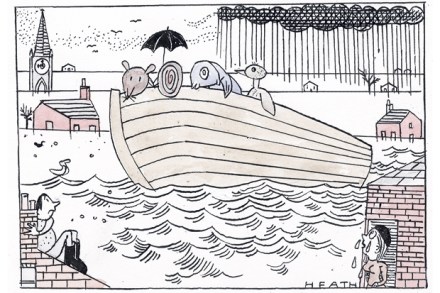
‘Kool-Aid conservationists’ are on the rise, and they’re part of the reason why Britain is still covered in water. So says Melissa Kite in this week’s Spectator, as she highlights all of the weird and wonderful creatures whose existence prevented the Environment Agency from improving flood defences. As Melissa puts it: ‘The river Thames was left undredged to prevent the disturbance of a rare mollusc called the depressed river mussel. Seriously, this is not funny. It would only be funny if it were not happening. But it is. The species known as the depressed taxpayer doesn’t seem to be on any priority list.’ And it’s not just the depressed river mussel.

Is the curling still on…?

From our UK edition

The Winter Olympics have been going on for over a week now, and we’ve been treated to a good ten hours of winter sports per day by the BBC. But they have a very odd way of choosing what we’re allowed to watch; mainly, it seems, curling and skating. Brits have every reason to be proud of their curling teams, and of course they want to follow their progress. But why are there no other choices on offer? When Wimbledon’s on, we often have eight different courts to choose from via the ‘red button’, and for London 2012 the situation was the same. Hurrah, sports galore! No such luck in Sochi. Great Britain doesn’t have the best reputation when it comes to the Winter Olympics, and no wonder.

Will China kill all of Africa’s elephants?

From our UK edition

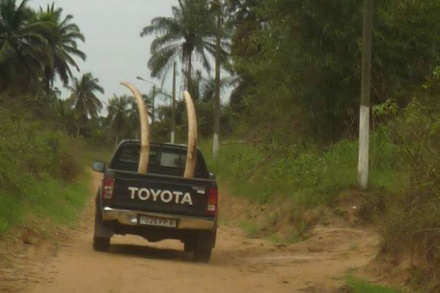
In 2010, Aidan Hartley, our ‘Wild Life’ columnist and Unreported World presenter, asked in his feature below: 'Will China kill all Africa’s elephants?' And, as I type, politicians from over 50 countries are discussing this very issue at the London Conference on the Illegal Wildlife Trade. Meanwhile, David Beckham, Prince William, and the Chinese basketball player Yao Ming have made a video highlighting the plight of the rhino. William Hague – hosting the summit – said at a reception last night that ‘we are on the brink of a crucial global turning point in the struggle against wildlife trafficking’, adding that the British government ‘has a responsibility to push for an international action plan to urgently tackle this trade’.

Could beavers really solve our flooding crisis?

From our UK edition

All this talk about dredging is well and good; but could the humble beaver in fact be the solution to the nation’s floods? Well, as far as the Mammal Society are concerned, yes. The animal has been extinct in the UK since the sixteenth century, but in recent years people have been pushing for its reintroduction. There are already two separate wild beaver colonies in Scotland, which have elicited a mixture of good and bad reactions from locals. But could they really help with the flooding? The Mammal Society’s argument is that beavers - 'the master river engineer' - create 'impoundments' with their damming, which help to keep water upland by holding it back in ponds and small streams.

Memo to the Environment Agency: humans have needs too

From our UK edition

It is not surprising that the Environment Agency (EA) have come under attack for the flooding in South West England. What is surprising is how long it took people to catch on to the fact that if anyone was to blame, it was the EA, not Owen Paterson.  As this week’s  leading article in The Spectator says,  ‘the unprecedented scale of this mess is not just due to nature. It is a disaster that has resulted from a deliberate policy followed by the Environment Agency since, 18 years ago, it was given overall responsibility for river management and flood defences throughout England.’ The agency decided – perhaps mistakenly – that wildlife is more important than humans, and their livelihoods.

The mutant meat industry

From our UK edition

When it emerged that there was horsemeat in cheap burgers, some people thought it might spark a revolution in the British meat industry. Now that the public are more aware of the ins and outs of it all – the complicated and murky supply chains, the potential drug contamination, the images of badly-wrapped frozen meat – perhaps cheap meat would lose its attraction. But it doesn't seem to have done so. Despite the stories about sales of game meat soaring and of people going back to basics and cooking from scratch, sales of processed meats such as sausages and burgers are still booming – both in the UK and abroad. Perhaps a book called Farmageddon will do what previous meat 'scandals' have failed to do.

Let them eat whale

From our UK edition

If the Faroe Islanders want to eat whale, let them. So says Tim Ecott in today’s Spectator. He argues that the Faroese – who live on dramatic and remote islands in the North Atlantic – shouldn’t be victimised for killing less than 0.1% of the pilot whale population annually for food. There are far more pressing marine issues that we should be concerned about - for example the 100 million sharks slaughtered for shark fin soup, or how the EU has allowed tuna stocks to be decimated. The problem is, many people don’t agree with him. We’ve all heard that whales are highly intelligent, social and family orientated creatures, and that severing their spines isn’t very nice. The Faroese must, therefore, be stopped.

A racing tip for the future

From our UK edition

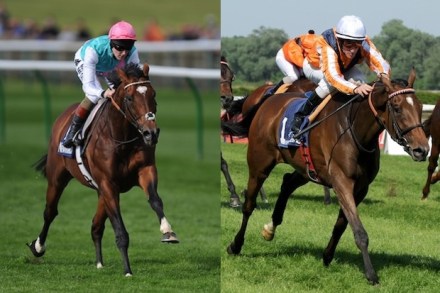
Here’s a tip for the gamblers among you, albeit one that you’ll have to sit on for a while. Danedream, winner of the 2011 Prix de l'Arc de Triomphe, has given birth to a filly foal sired by Frankel, the legendary hero of flat racing. With lineage like that, the filly already has a fair bit of weight upon her shoulders. Last week, her half sibling (the first filly foal of Frankel’s) made the front pages as she gambolled in her field days after her birth. But although the mare, Song, is well bred, she has never raced and therefore doesn’t have the same prestige as Danedream. The only other Frankel foal to have been born so far has been a colt, born on 11th January to Chrysanthemum, both of whom have been kept hidden away in Ireland.

Will Britain ever see George Monbiot’s sheep-free fantasy?

From our UK edition

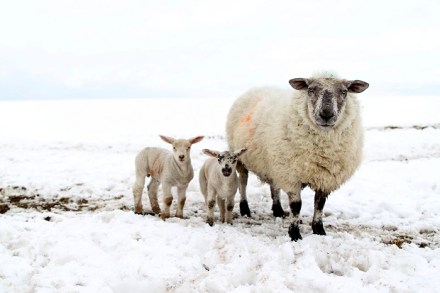
Would England be the same without the sight of sheep grazing on its 'green and pleasant land'? Most likely not; but, then again, that might not be a bad thing. That is George Monbiot’s view. Spectator readers will already know what Monbiot thinks of the humble sheep. Last summer he wrote about how we ‘pay billions to service a national obsession with sheep, in return for which the woolly maggots kindly trash the countryside’. ‘Britain’, he wrote, ‘is being shagged by sheep’. BBC Countryfile took up the subject of sheep hill farming (Monbiot’s chief bugbear) on Sunday night. This method of farming has its fair share of controversies. For starters, it is heavily subsidised by the government and the EU.

16 and Pregnant does not glamourise teen pregnancy. How could it?

From our UK edition

16 and Pregnant is an MTV show – a show that, as the title suggests, follows the lives of American teenage girls who are ‘facing unplanned pregnancies’. The programme – and its spin off shows, Teen Mom (1,2 and 3) – is one of the channel’s most popular documentary series; but it has also been dogged by accusations that it glamourises teen pregnancy. Even Kim Kardashian has had her say, writing on her blog, ‘girls, these are not people you should idolize’. But a study released earlier this week shows that the programmes have actually had an inverse effect on the number of teenage births across the US.

Education is the only way to save the black rhino

From our UK edition

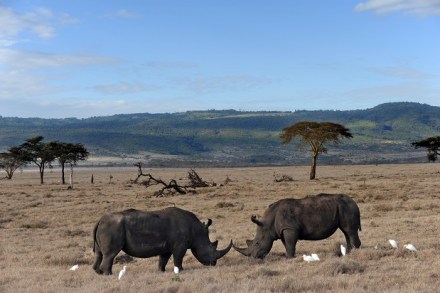
Could legalising the trade in rhino horn – and allowing sport hunting – be the solution to Africa’s rhino poaching problem? Legalisation, it is argued, will make it easier to control the trade in animal products and negate the black market. It’s a similar argument to one often used about the legalisation of marijuana – as Hugo Rifkind wrote a couple of weeks ago: ‘This is an economic land grab. It is the process of taking a criminal industry away from criminals.’ Controlling a legal trade in animal products is easier said than done, however. Authorities have struggled to suppress the illegal trade, so there are doubts about whether they can regulate a legal one. The economics are uncertain, too.

Video: Mad Moose, the racehorse who wouldn’t run

From our UK edition

Once upon a time there was a horse whose job was to run as fast as he could. There was just one problem. Mad Moose didn’t always fancy running. It wasn’t a matter of ability – it’s just that most of the time, he didn’t really feel like it. When he was on form, he could do fantastically well; he won at Cheltenham in 2012 after being 40 lengths behind at one point, but after that win he seemed to have had enough of it all. At his next Cheltenham appearance he refused to race, which he did again at York in May this year: In December at Sandown Park, he started the race; but by the time he got to the first jump, decided to pull himself up. What is there to say – he just wasn’t having a good day.

Is fox hunting on a par with dog fighting?

From our UK edition

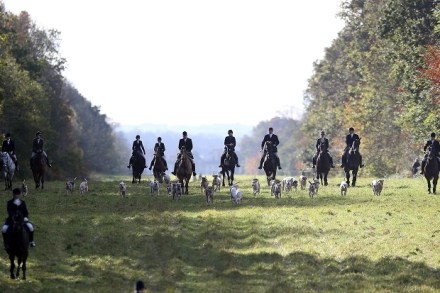
As horses and hounds gathered across the country on Boxing Day, more than a quarter of a million people turned out on foot and on horseback to support their local hunts. But this year, alongside the traditional images of red-coated huntsmen and their steeds, many of the national media quoted the statistic that 80 per cent of the British public would like fox hunting to remain illegal. Can we really take that statistic at face value, though? This latest figure came from research carried out by Ipsos MORI, a reputable market research company whose data is generally seen as trustworthy.

Blackfish and the scandal of caged killer whales

From our UK edition

If you were in a bathtub for 25 years, don’t you think you’d get a little bit psychotic? Well, yes, probably. But this is how captive killer whales live. Tilikum is no different from many of these. A 31-year-old orca who was scooped out of the North Atlantic in 1983, aged two, he has spent the remainder of his life in captivity. Over that time, he has grown to weigh five tons, and has been ‘involved’ in the deaths of three humans. He currently lives at SeaWorld in Orlando, and the documentary Blackfish tells his tale. Much of the video footage in the film speaks for itself; but the interviews that accompany it are equally gripping.

How al-Shabaab is keeping the black-market African ivory trade alive

From our UK edition

It has taken a while, but finally the world appears to be taking the illegal trade in ivory seriously. Why now? Reports of a ‘terror trail’ that links al-Shabaab and black-market ivory. The Elephant Action League investigated the ivory trail into Somalia, and found that ivory, or ‘white gold’, is ‘one of the lifelines of al-Shabaab’. EAL found that according to sources within the militant group, ‘between one to three tons of ivory, fetching a price of roughly $200 per kilo, pass through the ports in southern Somalia every month’. Al-Shabaab’s monthly income from ivory is - according to EAL - between $200,000 and $600,000.

Let us eat horse

From our UK edition

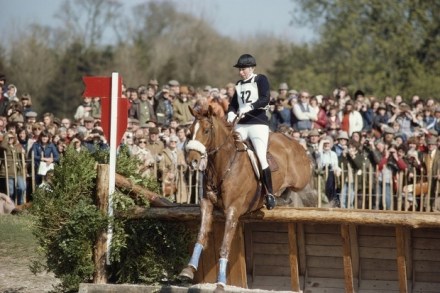
Could creating a UK market for horsemeat be the solution to the increasing number of equine welfare cases? This was the question posed by Princess Anne yesterday at World Horse Welfare’s annual conference. The former Olympic eventer argued that creating a horsemeat market, and thereby adding a financial value to many horses, would most likely improve the level of care that they currently receive. Unsurprisingly, Princess Anne’s comments have upset certain groups such as the RSPCA and Peta, with the RSPCA saying in a statement that ‘the killing of horses for meat is an emotive subject, as many see them as companion animals rather than a food source, a sentiment the RSPCA has sympathy with.

The real battle of the Highlands: capercaillie versus pine marten

From our UK edition

A real-life Wind in the Willows war has broken out. Except this time, the war isn’t between the Weasels and Badger (he’s busy fighting another battle), and the story has relocated from a Berkshire riverbank to the Scottish Highlands. This battle is between the pine marten – a weasel-type animal - and the capercaillie, a turkey-sized bird in the grouse family. So what, exactly, is the problem? 

Well, for starters, both species are protected and endangered in the UK, but pine martens are currently doing pretty well in terms of numbers. They might have been almost extinct at the beginning of the 20th century, but have now made a comeback – which is more than can be said for the capercaillie.