Camilla Swift

Camilla Swift

Camilla Swift is the supplements editor of The Spectator.

Going off-piste in Val D’Isere

From our UK edition

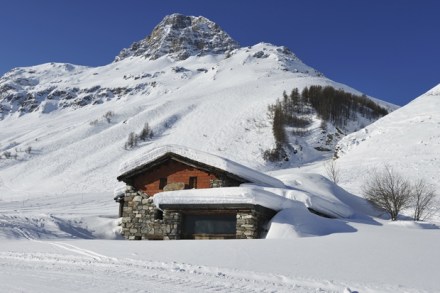
First things first. Yes, Val d’Isère does have a reputation for being expensive — and it is, especially if you’re planning on eating out and embracing the après ski every night. But no matter what anyone says, you can’t argue with the fact that the skiing is fantastic. Combined with its neighbour, Tignes, there’s a total of 330km of piste to explore, with plenty of steep red and blue runs that are perfect for intermediate and advanced skiers. One of the most frequent complaints about skiing in Val is getting home at the end of the day. Almost every route down to the main town is a challenge, even if you are fairly competent at descending mountains with a couple of planks strapped to your feet.

Spectator Play: The highs and the lows of what’s going on in arts this week | 4 October 2013

From our UK edition

The latest adaptation of one of Trainspotting author Irvine Welsh's books is Filth  - a film so filthy that Deborah Ross had to ‘endure’ the film ‘from behind her hands’. But, somewhere amongst the ‘enduring’, she became ‘strangely hooked’, as Bruce Robertson (aka James McAvoy) led her through Edinburgh’s ‘dark underbelly of general horridness’. Filth may be ‘ghastly and unpleasant, but also kind of brilliant’, says Ross. Here’s the trailer: Breaking Bad started off with mixed reviews and an ‘uncertain future’, as it ‘dumbfounded viewers and critics alike’ – at least according to the economics professor Steffen Huck.

Spectator Play: The highs and the lows of what’s going on in arts this week | 27 September 2013

From our UK edition

When you hear the words ‘English art’, there are very few people who would immediately think of embroidery. As Dan Jones said when he was asked if he would like to present a programme about ‘the golden age’ of English embroidery, ‘Embroidery? What, like sewing?’ But accept the offer he did, and found that there’s a lot more to embroidery, as an art form, than ‘just’ sewing. In this week’s magazine he writes about everything he learnt about ‘one of English history’s most underappreciated art forms’. Here's a clip from one of the previous 'Fabric of Britain' programmes - this one on knitting. Downton Abbey has returned to our screens for its fourth season. Is that a reason to crack open a bottle?

Spectator Play: The highs and the lows of what’s going on in arts this week | 20 September 2013

From our UK edition

Yorkshire, says William Cook, is the sculpture capital of Britain. It was the birthplace of ‘Britain’s greatest sculptors, Barbara Hepworth and Henry Moore’ – but is this just coincidence, or ‘is there something about Yorkshire that makes great sculpture happen here?’ In this week’s lead Arts feature, he visits the ‘stunning, 500 acre’ Yorkshire Sculpture Park, ‘adorned with works by every sculptor you can think of’, which, on a sunny day, is ‘a great artwork in its own right’. It’s one thing to produce a biopic. It’s another to produce a hagiography.

Piggies in the middle: why we need to have confidence in our food labelling systems

From our UK edition

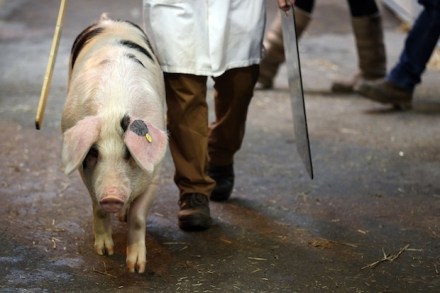
Just 9 months after the horsemeat scandal revealed that products labelled as beef did, in fact, contain horsemeat, one might have expected the food standards authority to have cracked down on food labelling – particularly when it comes to meat. But in an investigation broadcast earlier this week by the BBC’s Farming Today programme, a reporter bought a pork chop ‘at random’ from Tesco. It was labelled with the ‘Red Tractor’ logo, which ought to mean that it ‘is fully traceable back to independently inspected farms in the UK’. However, lab tests showed that the meat probably came from a Dutch farm – in fact there’s less than a 1% chance that the meat came from a British farm.

The View from 22 – Ed Miliband’s last laugh, the IPCC’s latest climate change report, and Lib Dem party conference

From our UK edition

Are the Tories right to see Ed Miliband as a joke? On this week’s Spectator cover, Peter Brookes has drawn Miliband as Wallace, with Ed Balls as his ‘Gromit’ sidekick. And on this week’s View from 22 podcast, presented by Fraser Nelson, he and The Telegraph’s Dan Hodges discuss whether people are right to dismiss him as a cartoon figure. Do Labour have any hope of winning the next election with Miliband as their leader? Meanwhile, the Intergovernmental Panel on Climate Change will be publishing their latest report next week, which appears to show that there has been no statistically significant rise over the past 16 years.

Spectator Play: The highs and the lows of what’s going on in arts this week | 13 September 2013

From our UK edition

As the new artistic director of the Royal Shakespeare Company, Gregory Doran might be expected to lie low as he settles into his new role. But on the contrary – Doran is full of ideas about how to develop the company, as Robert Gore-Langton finds when he interviews him in this week’s Spectator. As well as a plan ‘to stage every play Shakespeare wrote over the next six years’ – that is between now and 2018 – he has also banned Shakespeare from Stratford’s Swan theatre, deciding instead to put on plays ‘by his contemporaries’. Top actors and top ideas are all part of his plan – which you can read more of in the full interview, here. How do you know when you're a real fan of a band?

Spectator Play: The highs and the lows of what’s going on in arts this week | 30 August 2013

From our UK edition

The Great British Bake Off – or 'GBBO', as it's known to the more dedicated fans – is one of the breakthrough television programmes of the past few years. It started off as ‘just another’ cookery show – albeit with a reality twist. But now, as Season 4 kicks off, it has attracted a loyal and devoted following. Just what is it about baking that attracts such an audience, wonders Clarissa Tan in her TV review this week. Perhaps it's the sharing quality of cake - 'after all, baking is communal, isn't it?' But there's also the sheer patriotism of the programme. 'Little Union flags... all the foodstuffs that make Britain great', and a 'national pride [that] spills over to embrace the world'. Maybe cake will bring everyone together, after all.

Spectator Play: The highs and the lows of what’s going on in arts this week | 23 August 2013

From our UK edition

For many people, stories and story-telling formed the basis of their childhood. But there are others whose childhood is devoid of books, and it’s these children that Oxford’s new Story Museum aims to help. As Robert Gore-Langton puts it, ‘beyond [Oxford’s] dreaming spires is an urban hellhole of burning cars, despair and unemployment’, and, he points out, ‘it is ranked number 32 in Crap Towns: The 50 Worst Places to Live in the UK.’ In his piece, he talks to Anne Fine, Amanda Mitichison, Terence Blacker and Keith Crossley-Holland on the joy - and importance - of reading aloud. Below is just one of The Story Museum’s attempts to get children reading.

Spectator Play: The highs and the lows of what’s going on in arts this week | 16 August 2013

From our UK edition

Normally, August is a rubbish time of year for films, as this week’s cinematic offerings prove. But, says Deborah Ross, there’s one release this week which is worth seeing, and that’s Kuma. An Austrian-Turkish project, it focuses on the life of Ayse, who is married off and moved to Vienna, where she finds that she’s actually been married off to the father of the person she thought she’d married – and as his second wife. It might all sound a bit confusing, but Deborah says it’s beautifully acted and ‘would shine bright at any time of year’, so I’ll hold her to her word. What has happened to our television comedies?

Notes on….Walking in the Scottish Highlands

From our UK edition

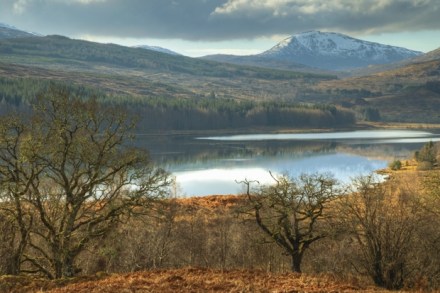
The simplest and best way to get straight to the heart of the Highlands from London is by sleeper. Board in Euston, have a plate of haggis and tatties (and perhaps a nip of whisky to knock you out) and before you know it, you’ll wake up the next morning as the train crosses Rannoch Moor. Don’t think about the fact that the train line is effectively floating on a bed of earth and tree roots, since the peat soil was too soft to support its weight. Admire the view — and keep your eyes peeled for the red deer who congregate along the line. Stepping off at Fort William, you’d be forgiven for being unimpressed by your choice of destination: you emerge into a Morrisons car park.

Is the RSPCA no longer an animal welfare charity?

From our UK edition

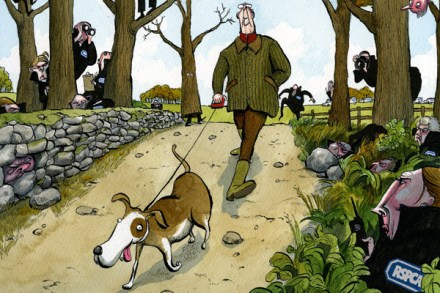
In January of this year, Melissa Kite wrote our cover story about how the RSPCA has morphed from being an animal welfare charity into an animal rights group.  She wrote of the ‘culture of fear at their headquarters’, and explained ‘how deeply suspicious some animal experts have become of this once-respected body’. Since then, the problems have only worsened. In July it was revealed that the charity’s Chief Executive, Gavin Grant, was paid ‘between £150,000 and £160,000’ a year – at least £30,000 more than his predecessor.

Spectator Play: The highs and the lows of what’s going on in arts this week | 3 August 2013

From our UK edition

‘Shakespeare’s Globe’, as the theatre has been called since it was founded in 1997, is unusual for a theatre in that it makes a large annual profit, without receiving public funding. How? Its unique angle means it has no need to market itself – what’s more attractive to an American audience than Shakespeare, in London, in a reconstructed Shakespearean theatre? But its decision to put all Shakespearean productions on hold to make way for another dramatist is a decision which Lloyd Evans isn’t too sure about. Samuel Adamson’s Gabriel may be accompanied by some lovely Purcell music, but the actual play’s content leaves much to be desired. Theoretically, there’s nothing more delightful than evening at Glyndebourne.

Spectator Play: The highs and the lows of what’s going on in arts this week

From our UK edition

The Tate Britain has recently undergone a ‘sorely needed’ rehang, which Andrew Lambirth explores in this week’s Spectator.  As a ‘welcome return to the great tradition of the chronological hang’ might have its detractors, but the BP Walk Through British Art is, overall, a fantastic display. Here’s the director of Tate Britain, Penelope Curtis (who was in charge of the reorganisation) talking about her highlights from the display. And here are Andrew Lambirth’s own highlights. Has sod you architecture finally ‘put on a lounge suit’ asks Stephen Bayley.  That, at least, was the dress code that Richard Rogers applied to the opening of his new retrospective, Inside Out, at the Royal Academy.

Spectator Play: Spectator Play: The highs and the lows of what’s going on in arts this week

From our UK edition

Wadjda is the first feature-length film to come out of Saudi Arabia, and was shot by the country’s first female director - but those aren't the only things that are great about it, says Deborah Ross. It's also ‘fascinating, involving, moving, and an entirely excellent film in its own right’. The story might be simple, but it’s the glimpses of how life might be for a woman living in Saudi Arabia make it ‘wonderful’. Deborah’s second film this week is the The World’s End, an attempt to be humorous that despite its cast (which includes Martin Freeman, Rosamund Pike and Simon Pegg) is completely unfunny, and ‘just boring’. Even the zombies fail to make it more exciting...

The View from 22 — the men from the colonies running Britain, the rise of the Death Café and male toplessness

From our UK edition

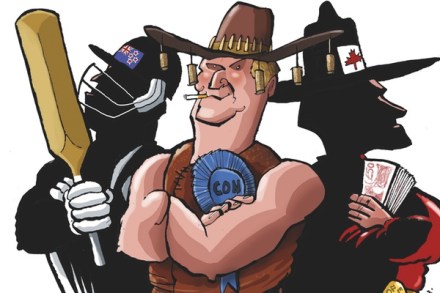
Has the British establishment been taken over by men from the Commonwealth? What with a Canadian in charge of the Bank of England, an Aussie strategy advisor for the Tories, a South African advising the Lib Dems, and — let's not forget — a Zimbabwean coaching our cricket team, it does seem as if alpha males from the former empire are in charge. In this week's podcast, James Forsyth discusses his cover essay on 'The New Colonials', and explains what makes them so successful. He’s joined by Ruth Porter from the Institute of Economic Affairs, a New Zealand citizen who is also married to a Kiwi, as they attempt to get to the bottom of the mystery. Surely, argues James, it makes sense to strengthen our bond with the ‘dominions’, rather than looking to Europe?

The View from 22 debate special: too much immigration, too little integration?

From our UK edition

This May, David Goodhart’s latest book, The British Dream: Successes and Failures of Post-war Immigration, earned him the title of ‘too hot for Hay’ when he was ‘shunned’ by the literary festival. The festival director, Peter Florence, went on to describe the book as ‘sensationalist’ and ‘not very good’. But all was not lost. As event chair Andrew Neil put it: ‘What the Hay festival missed, The Spectator brought to you’, with a special panel on immigration last Tuesday, 9 July. Goodhart was joined on the panel by the Mail on Sunday’s Peter Hitchens, former Mayor of London Ken Livingstone, the former chair of the Equality and Human Rights Commission Trevor Phillips and The Huffington Post’s Mehdi Hassan.

Spectator Play: The highs and the lows of what’s going on in arts this week | 13 July 2013

From our UK edition

Deborah Ross reviews two films for us this week. The first is Pacific Rim, a ‘giant monsters v. giant robots’ film, and to be perfectly honest, that’s about all she has to say on the matter. If you do want to find out more, here’s the trailer: Her second film this week is ‘The Moo Man’, which is almost the opposite of Pacific Rim. ‘Instead of being a big, noisy film with nothing to say, it’s a small, quiet film with quite a lot to say’. A documentary following a dairy farmer around his East Sussex farm, it is ‘beautifully and lovingly and discreetly filmed’, it says everything it has to say about British agriculture, in its own quiet way. The inside of our British palaces used to be almost a state secret, .

Spectator Play: what’s worth watching, listening to or going to this weekend | 5 July 2013

From our UK edition

The BBC’s Proms kick off today, with the First Night of the Proms from the Royal Albert Hall delivering what they describe as ‘a surge of natural energy in sea-inspired works by Britten and Vaughan Williams’. In this week’s magazine, Kate Chisholm speaks to the director of the event, Roger Wright, about the challenges of what sounds like ‘a dream job’, but is in fact 'more like 26-dimensional chess'. Is the next generation being messed up by our celebrity-obsessed culture? That’s the question Sofia Coppola raises with her latest film, The Bling Ring, a film that Deborah Ross thinks ‘might be worth watching just to see Paris’s shoe room’.

Forget about ‘rewilding’: we should be focusing on the species that we do still have

From our UK edition

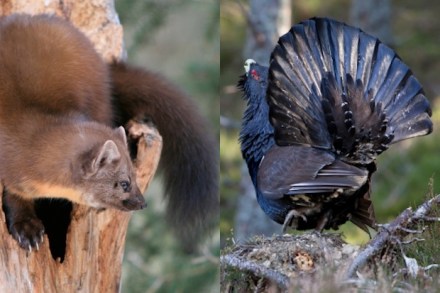
The buzzword of the moment seems to be ‘rewilding’. George Monbiot, the Guardian columnist and environmentalist has a new vision for the countryside, which he wrote about in the magazine two weeks ago. Instead of covering our green and pleasant land with sheep, what we ought to be doing, he argues, is re-introducing all of the species which we humans killed off hundreds, if not thousands, of years ago. The process, which he describes as ‘a mass restoration of ecosystems’, would involve repopulating Britain with the elephants, lynx and bison. ‘We live in a shadow land’, he argues in the ‘animated guide’ to rewilding.