Camilla Swift

Camilla Swift

Camilla Swift is the supplements editor of The Spectator.

Crime fiction at Easter? Look no further than our Scandinavian neighbours

From our UK edition

If you thought that winter in Britain had gone on long enough this year, then spare a thought for the Norwegians. Winters in Norway are famously long, dark and bitter, and – for those who experience them year upon year – can be incredibly boring. During one such winter, in February 1923, two Norwegians called Nordahl Grieg and Nils Lie decided to alleviate their boredom by writing a book. The theme? A train robbery; or more specifically, a looting of the train to Bergen. The title of the book? The Bergen train was robbed in the night (or, in its original Norwegian: Bergenstoget plyndret i natt). Having written the book, the next step was to convince people to buy it, and here the authors came up with a very cunning plan indeed.

Bookbenchers: Peter Lilley

From our UK edition

Peter Lilley, the former Cabinet minister and current Tory MP, is this week's Bookbencher over on the books blog this afternoon. He's been sharing some of his favourite books, indulging his love for the Russian classics and revealing the allure of psychedelic fairytales.

Spectator Debate: Britain’s future lies outside the EU (with audio)

From our UK edition

It was a clash of the Euro titans at our latest sell-out Spectator debate: "Britain's future lies outside the EU". Nigel Farage led the team for the motion and the former president of France, Valéry Giscard d'Estaing, led the opposition - with Andrew Neil in the chair. Patrick Minford and James Delingpole supported team Farage, while Steve Richards and Richard Ottaway MP spoke for the EU. And there was all to play for.

Bookbenchers: Nick de Bois

From our UK edition

Conservative MP Nick De Bois is over on the books blog now sharing some of his favourite reads for the new year. He reveals the sinister political masterpiece he would most like to study, the surprising three books he would save from a burning British Library and the Presidential memoir he reads before bed.

Lord Rennard allegations: A timeline

From our UK edition

As the allegations against Lord Rennard continue to emerge – and confusion continues over who knew what, and when, here is a timeline of the allegations, according to The Telegraph’s correspondence from 2010, and Cathy Newman’s Channel 4 News report from the 21st February 2013. 2003 Bridget Harris, who left her position as Clegg’s Spad just a few months ago, alleges that Rennard behaved in an ‘inappropriate’ manner, touching her legs three times whilst having coffee at a conference in Swansea in 2003. He then invited her up to his room, an incident which she then reported to her line managers. 2004 At an ‘away day’ in Peterborough, in 2004, Lord Rennard allegedly invited an intern to a Lib Dem MP up to his room.

Horsemeat scandal: four key questions

From our UK edition

The ongoing horsemeat scandal has opened up a hugely complicated web stretching across the EU, highlighting the difficulty of tracing the origins of the meat on sale in this country. Even now, almost a month after it was announced that horse could be in beef products, no one is entirely sure of how the horses entered the food chain. There are other big questions, too: here are four that need answers: •       The matter of dodgy horse passports – which I wrote about last month - is something that still hasn’t been fully investigated. It has now emerged that up to 7,000 unauthorised passports have been in circulation in the UK since 2008, highlighting the chaotic state of the passport system.

Bookbenchers: Anne McIntosh

From our UK edition

Conservative Chair of the Environment, Food and Rural Affairs Select Committee Anne McIntosh is on the books blog this afternoon talking about her favourite books. She reveals her penchant for history, the dystopian novel that she thinks sums up 'now' and the Norwegian best-seller she's reading in Danish.

How could carcinogenic drugs have got into the food chain? Ask Defra

From our UK edition

Shadow Defra minister Mary Creagh told MPs today about her fears that a carcinogenic drug commonly used as an anti-inflammatory in horses could have entered the human food chain. Speaking in the Commons, she said: ‘I am in receipt of evidence showing that several horses slaughtered in UK abattoirs last year tested positive for phenylbutazone, or bute, a drug which causes cancer in humans and is banned from the human food chain. It is possible that those animals entered the human food chain.’ As I wrote on Coffee House on Tuesday, it was Defra’s decision last autumn to abolish the National Equine Database which has got us into this mess.

Horse meat in burgers might not be as harmless as you think

From our UK edition

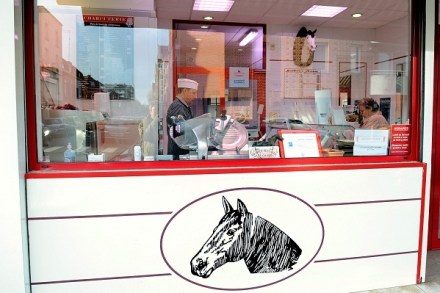
This week's discovery that some burgers sold in UK supermarkets contain up to 29 per cent horse meat was met with a combination of concerns about the labelling and sourcing of food, and jokes about the burgers' 'Shergar content'. But the fact that people are inadvertently eating horse meat isn't the only worrying part of the finding; an additional concern is the provenance of the meat. In many equine-consuming countries, horses are bred specifically for their meat, in the same way that livestock are in the UK. If you go to Auchan in Calais and pick up a horse steak from the 'boucherie' section, then your meat should be perfectly edible and, I've been informed, delicious. As a wimpy horse-lover, I'm more than happy to take their word for it.

The RSPCA’s private prosecutions, and the cost to the public purse

From our UK edition

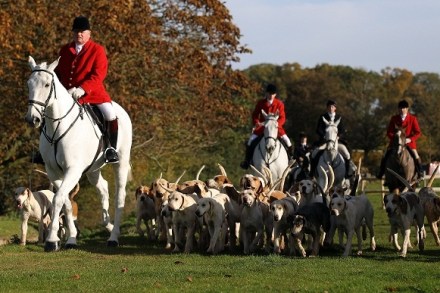
In this week’s Spectator, Melissa Kite spends the day with the Heythrop Hunt – David Cameron’s local hunt, and a hunt that has recently been fined £4,000 for hunting outside of the law. Much has already been written about the ‘staggering’ amount of money which the RSPCA chose to spend on the case, and the lengths to which the RSPCA have gone to mount the prosecution. The two huntsmen charged pleaded guilty to four charges of breaching the Hunting Act and, as Melissa writes: ‘The RSPCA initially laid summonses for 52 separate allegations and the trial had been set to take 30 days of court time spread over three months. Defence costs could have run into six figures, so it is little wonder the defendants pleaded guilty.

Lord Patten’s select committee catfight

From our UK edition

Sparks flew this morning in the Culture, Media and Sport select committee, as Lord Patten came to verbal blows with Tory MP Philip Davies over the extent of his involvement in the BBC. Patten has previously come in for criticism over allegedly holding down 14 separate jobs – including his role of chairman of the BBC Trust - but when asked about his day-to-day work at the corporation, he dismissed the MP’s ‘impertinent question.’ ‘Do you want to know my toilet habits?’ Patten scoffed. Fortunately, Davies didn't, but he went on to describe the BBC as ‘a shambles’, asking: ‘Have you been actually putting in the hours?’ Perhaps wearied by his morning of questioning, Patten had had enough.

No ifs. No buts. Heathrow must have a third runway. Or must it?

From our UK edition

'No ifs. No buts. Heathrow must have a third runway.' This was our motion of the evening at last night's Spectator debate, but when it came to kick-off time, it appeared the audience was there for the taking. The pre-vote count found a majority of nine votes against the motion, but with 21 undecided attendees, everything was still left to play for. Graham Brady - Chairman of the 1922 committee, and MP for Altringham and Sale West (with Manchester Airport on his doorstep, he added) - opened the debate by speaking for the motion. With more than a nod to David Cameron’s conference speech in Birmingham, Brady argued: ‘We are in a global race today… Sink or swim. Do or decline.

The Spectator Parliamentarian of the Year Awards | 21 November 2012

From our UK edition

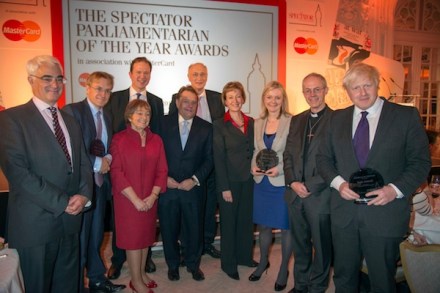
The Spectator’s Parliamentarian of the Year awards are being held this afternoon at the Savoy Hotel. In total 14 awards were presented by Michael Gove, Secretary of State for Education, who was invited to be  guest of honour in recognition of his parliamentary achievement. The award winners were: 1. Newcomer of the Year - Andrea Leadsom MP (Con) 2. Backbencher of the Year - Rt Hon Alistair Darling MP (Lab) 3. Campaigner of the Year - Rt Hon Andy Burnham MP (Lab) 4. Inquisitor of the Year - Rt Hon Margaret Hodge MP (Lab) 5. Speech of the Year - Charles Walker MP (Con) & Kevan Jones MP (Lab) 6. Resignation of the Year - Rt Hon Lord Hill of Oareford (Con) 7. Apology of the Year - Rt Hon Nick Clegg MP (Lib Dem) 8.

Seven things to do if you’re not skiing

From our UK edition

These days, a winter holiday isn’t just about skiing. The majority of larger resorts offer a range of activities from dog-sledding to five-star spa facilities, while adrenalin-fuelled sports such as snow polo and skeleton bobsleighing are becoming increasingly popular. If you fancy doing something a bit different this year, here are some ideas: 1 If you’re a Cameron-style huskie-hugger, then dog-sledding will be right up your street. By day or by moonlight, you can’t beat the feeling of tucking yourself into your sled, and setting off into the snowy wilderness with your pack of canines. Mush! 2 Sledging is always popular with children and the young-at-heart, and most resorts offer toboggan rental, with specially designed toboggan runs on or near the main skiing pistes.

Do you trust your council with your child’s personal details?

From our UK edition

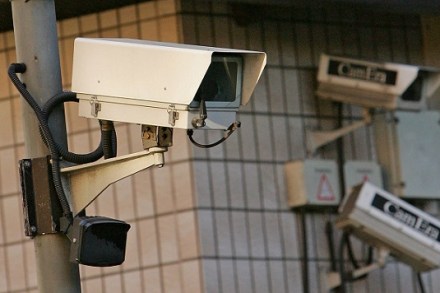
This morning The Sunday Times revealed the existence of a ‘secret database’ holding information on 8 million schoolchildren. Information which has been uploaded by schools and social workers, and ranging from photographs to academic records and records of bad behaviour in school. The database – named 'One', and created and operated by a company named Capita – allows schools to upload information daily, which councils can then share with 'other agencies', such as youth offending teams, NHS staff and charities. If you think this all sounds a bit déjà-vu-ish, then you’d be right.

What kind of regime imprisons people for what they tweet? Oh, hang on…

From our UK edition

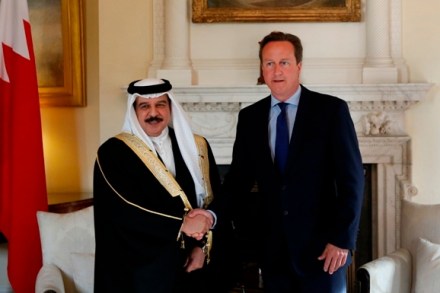
The King of Bahrain certainly doesn't seem to like it up him. In this week's Spectator, Kirsty Walker said her last complaint - before quitting journalism — was from the King objecting to her being rude about his regime. A Bahraini man has just been sentenced to six months in jail for ‘defaming’ the king on Twitter. Three similar Twitter users are up on similar charges next week. David Cameron should be making clear how appalled he is at this repression - except he is not in a very good position to comment. After last year's riots, police threatened to arrest users for inciting the looters. It seemed daft: would you really arrest people for writing posts, mostly moronic, on Twitter?

West Coast rail fiasco a ‘very regrettable mistake’ admits McLoughlin

From our UK edition

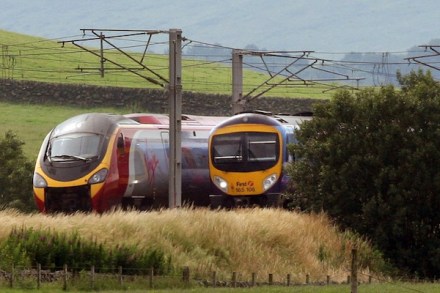
Transport Secretary Patrick McLoughlin today admitted that he held himself responsible for the West Coast rail franchise fiasco, as he appeared in front of MPs to explain what had gone wrong. Describing the mistakes as ‘very regrettable and indeed very serious’, McLoughlin told the Transport Committee that both bidders and taxpayers have ‘a right to expect better’ from the department. The initial findings of the Laidlaw Report, McLoughlin’s independent report into the fiasco, were released on Monday — findings which the Transport Committee Chair, Labour MP Louise Ellman, today described as ‘a damning indictment of the department.

‘Meeting? What meeting? I wasn’t there!’ Vince Cable forgets key growth committee

From our UK edition

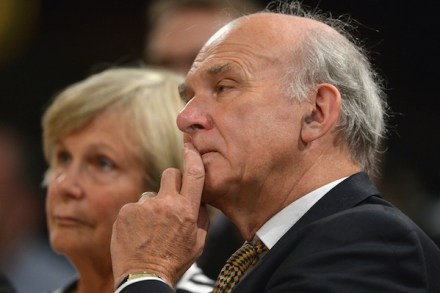
Business Secretary Vince Cable bewildered a select committee this morning by telling members that a new sub-committee, the Growth Implementation Committee, was yet to meet, before later backtracking and announcing that it had in fact met twice. When asked by Labour MP Anne McKechin why the much-lauded new sub-committee, which was launched in September, had not yet had a meeting, Cable replied: ‘I can’t tell you why that committee has not been convened yet’ but that he would endeavour to find out. Later in the meeting however, Cable appeared to retract his previous statement, saying that he wanted to ‘correct the record’, as he earlier ‘couldn't recall meetings of the committee.

Red Ed’s sponsored walk

From our UK edition

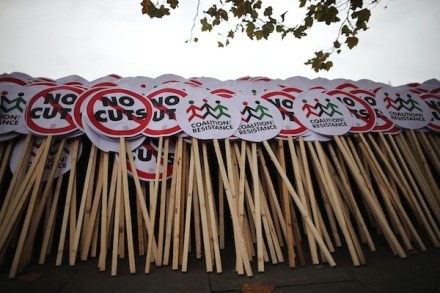
At Prime Minister's Questions this week, David Cameron referred to today's TUC rally as the ‘most expensive sponsored walk in history’, a joke that the Tories have now taken one step further. Ahead of Ed Miliband’s speech to marchers at tomorrow’s anti-cuts demo in central London the Conservatives have launched Red Ed’s Sponsored Walk, a satirical fundraising site for Ed’s charity walk, with all proceeds going - somewhat unsurprisingly - to the Labour party. His online sponsors currently include Unite, GMB and Unite, who’ve ‘sponsored’ Ed to the total price of £12.4 million, accompanied by threatening messages such as ‘Don’t let us down Ed’ and ‘Remember who got you your job’.

How to get around the EU (and weed smokers)

From our UK edition

The Dutch government has just banned foreigners from the country’s ‘coffee-shops’ — aka, cannabis cafés. Given how often we’re told that you can’t ban EU members from doing anything, how did they manage it? Basically, it all comes down to residency. If you live there, then you can apply for what’s being called a ‘weed pass’. If you don’t live there, then no dice. But is it legal for the Dutch government to ban entry to EU citizens in this way? A group of 19 coffee-shop owners decided to go to court over the matter, worried about this potential loss of custom.