What is going on at the RSPCA?
From our UK edition
listen to ‘John Humphrys and the #RSPCA case of Claude the cat ’ on Audioboo.
Camilla Swift is the supplements editor of The Spectator.
From our UK edition
listen to ‘John Humphrys and the #RSPCA case of Claude the cat ’ on Audioboo.
From our UK edition
News just in that George Osborne's cat, Freya, was hit by a car outside Downing Street last night, and is currently at the vet's. Freya is famous for her love of hunting rodents. Indeed, she was promoted above Larry, the Camerons' cat, as Downing Street's 'chief mouser' because Larry preferred lounging around (his master calls it 'chillaxing') to hunting. But Freya's passion has made her wander off-piste in pursuit of prey. Earlier this year she made headlines when she was found patrolling the streets of Vauxhall. And when the Osbornes were living in Notting Hill, Freya went missing for almost three years before being discovered residing a few streets away. Freya sounds like a cat with her fair share of lives.
From our UK edition
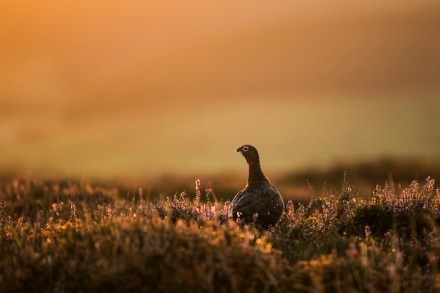
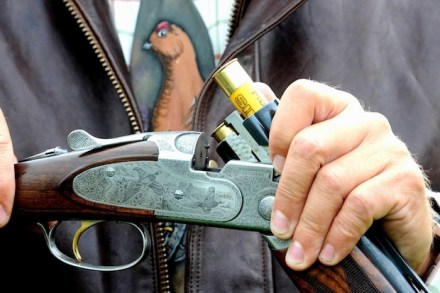
When I told our blogs editor about an independent survey claiming that shooting was worth £2 billion to the rural economy, he didn't believe me. 'Are you sure it's not £2 million, Camilla?' But no. I duly went and checked for him, and £2 billion is indeed the figure. The amount spent on shooting (£2.5bn), is almost ten per cent of the total amount spent annually on outdoor recreation, which has been measured at £27 billion. The problem with shooting, as with many other rural or field sports, is people's perception. Fair enough — after all, not many people have their own grouse moor.
From our UK edition
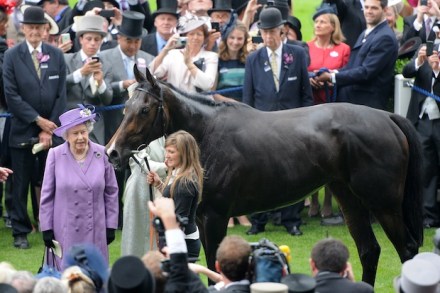
The news that one of the Queen’s horses, Estimate, tested positive for morphine, a banned substance, hit the headlines yesterday evening and unsurprisingly caused a bit of a stir. If the drugs test is confirmed by the British Horseracing Authority then the five year old filly would be disqualified from the 2014 Gold Cup at Ascot in which she came second (and which she won in 2013). She was last night still expected to be racing at Glorious Goodwood on 31st July. Morphine is a painkiller (or a sedative), rather than a performance-enhancing drug, and one that is permitted for use in training, but not in competition. The thing is, morphine is highly unlikely to have affected the performance of the horse at all.
From our UK edition
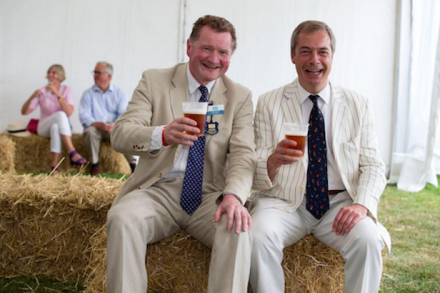
Much has been made of the reception that greeted Nigel Farage at the CLA Game Fair on Friday. The punters were far more interested in Nigel Farage than George Eustice, the incumbent Farming Minister, though perhaps things might have been different had Liz Truss turned up instead. When Farage referred to the much-loved Owen Paterson as ‘having been sacked and made a scapegoat for a failed EU policy [on flooding] which led to the flooding in Somerset’, cheers erupted from the tent. Despite the rumpus that Farage’s presence created at the Game Fair, it’s still debatable whether Britain’s presence in the EU is a good thing for the countryside and rural communities.
From our UK edition
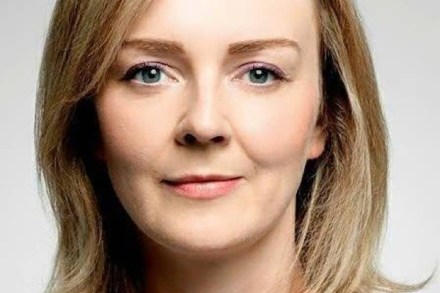
What some people seem to forget is that Owen Paterson wasn’t (and Liz Truss isn’t) just Environment Secretary. As well as having responsibility for the environment, the role also covers food, fisheries and rural affairs. Paterson was one of the few people in Government that many farmers thought of as being ‘on their side’. As Secretary of State at Defra, he always appeared to have the interests of the rural community and the countryside at the centre of his decisions. As Melissa Kite argues in her cover piece this week, Cameron appears to have given in to ‘the animal rights lot’. As she rightly says, ‘They wanted Owen Paterson’s head on a platter and Cameron has given it to them.
From our UK edition
Perhaps you’re aware that it’s Ramadan right now, the month in which all good Muslims refrain from eating, drinking, smoking and sex during daylight. What you might not know is that Ramadan also marks the start of an annual turf war in London; a battle between the tribal Sloanes and the young Gulf Arabs to dominate Chelsea. The skirmish actually begins before Ramadan. The Gulf States heat up to an intolerable degree and their oil-rich young migrate over here in droves to escape both religious censure and the sun. They descend first of all on the department stores in what’s become known as the Harrods Hajj, to flash their cash around. One friend of mine working in Selfridges was asked by a young Saudi what she would like as a present.
From our UK edition
Badgers really are having their moment in the spotlight, aren’t they? Ever since the government decided that the bovine TB epidemic was so serious that something drastic had to be done, Mr Brock has been the recipient of a fantastic PR campaign by the animal-rights lobby. Badgers have been painted as sweet, fluffy, bumbling characters – though I’m not sure that most hedgehogs would recognise that description. As Charles Moore writes in his Notes this week: ‘Badgers, because protected, have grown bolder, so I have had more chance to study them... They are more hairy than fluffy, and their colouring is dirtier than people think. They are ungainly, verminous, and very destructive.
From our UK edition
Bridges aren’t necessarily something you think of as being beautiful, particularly if you consider them primarily as the means to cross a river, rather than as works of art. London, however, has always been famous for its bridges, many of which are architectural marvels. From medieval London Bridge, piled high with shops and houses, to the gothic beauty of Tower Bridge, their variety is one of their most interesting assets. The capital has built itself up around the river over thousands of years, and its bridges offer contrasting viewpoints of the city. This is all emphasised in Bridge at the Museum of London Docklands (until 2 November).
From our UK edition
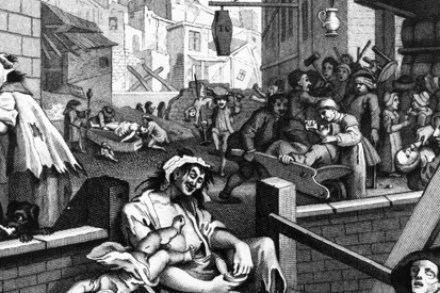
In 1751, William Hogarth was asked to create two prints: one depicting the evils of gin, the other the virtues of beer. Hogarth must have received a pat on the back from the brewers who commissioned him, because ‘Gin Lane’ cast gin as the greatest of all evils. It ruined mothers, and caused starvation, insanity and suicide. In ‘Beer Street’, industry and commerce thrive — and everyone is a picture of health. Gin drinking did get severely out of hand in the 18th century. In one notorious case, a woman named Judith Dufour collected her two-year-old child from the workhouse, strangled him, dumped the body and sold his clothes for 1s 4d to buy gin (the detail from ‘Gin Lane’ above is Hogarth’s version of her).
From our UK edition
Country Life’s 'Gentleman of the Year' awards were announced last week, and contrary to the bookies’ expectations, David Beckham has finished in second place. The winner, their panel decided, was another David. David Dimbleby, in fact, for being: ‘an anchor in every sense of the world’ and ‘holding the nation steady when the water gets choppy’. But is either of those Davids really worth of the title? Country Life’s judges have, apparently, decided that tattoos are allowed, since in the 19th century ‘it was quite a gentlemanly thing to do’. I’m not sure everyone will agree with their decision, particularly Sarah Vine, who recently compared tattoos to ‘a form of self-harm’.
From our UK edition
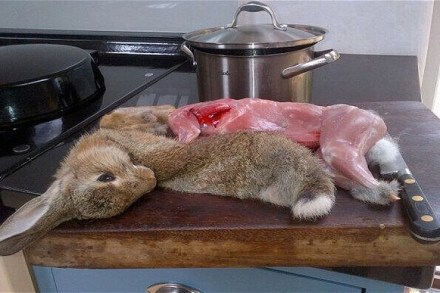
It seems as if the author Jeanette Winterson might have a bit of a pest control problem. ‘Rabbit ate my parsley', she tweeted, ‘I am eating the rabbit.' Accompanied, of course, by step-by-step photos of said rabbit, from skinning to Aga. Fair enough, many might say. At least she was sensible enough to eat the rabbit that she killed (and she even gave the cat the innards. So in the process, she saved on one supermarket chicken, and one tin of Whiskas. Pretty good going, I’d say.) But she's far from the only artist who has demonstrated a fondness for either killing animals, or for using them as artistic props.
From our UK edition
Generation Y – are they really a jilted generation, or do they have absolutely no reason to be complaining about their lot? This was the question posed at Tuesday night’s Spectator debate, with the motion: ‘Stop whining young people, you’ve never had it so good’, and chaired by Toby Young. It all kicked off with an introduction from Alan Warner, the investment director at Duncan Lawrie, who expressed his gratitude to Tony Blair for putting Islington – where Warner owned his first London home – on the map. It’s not just this generation who feels hard done by when it comes to property, he said. Every generation feels like it has missed out on that front.
From our UK edition
How can technology help British students to acquire the skills they need to succeed? This is the question that Matthew Hancock, Minister for Skills & Enterprise, addressed this morning at a Spectator forum on the importance of addressing Britain’s skills deficit. On the same day, the Department for Business, Innovation and Skills released their response to a report they commissioned in a bid to embrace technological advances in further education. Modern technology has the ability to break down so many educational barriers, as Molly Guinness discovered in her interview with the scientist Sugata Mitra in May, who used a computer installed in a public wall to develop the Sole method of learning, which he believes could revolutionise our classrooms.
From our UK edition
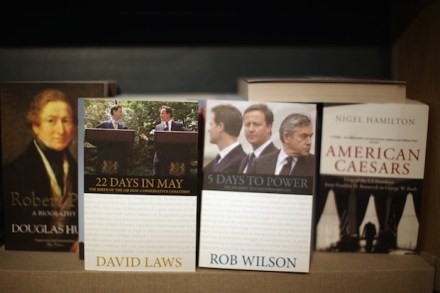
It sometimes feels like there is a never-ending flood of books written by politicians delivered to the Spectator offices. Almost every week a new one – or the invitation to a book launch of a new one – comes through the door. As I type, for example, I can see Fraser’s invitation to the launch of Tristram Hunt’s Ten Cities that Made an Empire (which Hunt was promoting on yesterday morning’s Start the Week), and a copy of Kwasi Kwarteng’s War and Gold on the bookshelf beside me. But what I want to know is, how do all these MPs have the time to write books, when they ought to be working for their constituents? Not that Kwasi or Tristram should have the blame focused on them.
From our UK edition
I imagine there are very few people who haven’t heard about the Duchess of Cambridge’s clothing catastrophe in Australia. And, of course, this isn’t the first time that the duchess has had clothing issues. The wind has caused her to come a cropper at a variety of events – and who could forget the furore when the French edition of Closer ran pictures of her walking around topless while on holiday in the South of France. But can you imagine what people (and the press) would be saying if, rather than it being Kate, it was her sister, Pippa, whose pants (or lack thereof) had been on show for the cameras?
From our UK edition
As Charles Moore has reported in his Spectator’s Notes this week, changes are afoot at equestrians’ favourite publication, Horse and Hound. Speculating on the decision to replace their editor with a new ‘content editor’, Charles worries that the recent upheaval could damage the ‘brand’ rather than strengthen it. But neither H&H nor its departing editor, Lucy Higginson, are strangers to controversy. Let’s not forget that when Lucy took up the reins in 2002, the arrival of the first female (and the youngest) editor of the 130-year-old publication caused an almighty kerfuffle amongst the old-guard, who worried that her plans to ‘spice up’ the magazine would prove detrimental.
From our UK edition
We’re now on day three of the Chelsea Flower Show, and this year the BBC have taken their coverage to the max. As well as the quotidian hourly slot with Monty Don, Joe Swift and newcomer Sophie Raworth, in the week preceding the show we were also treated to the daily Countdown to Chelsea. What is it that makes the public so interested in gardening that we are willing to watch so much of it? Gardening is, for the most part, about scrabbling around in the mud and digging up weeds. But that’s the point. If this were a country where the majority of people earned their keep by growing plants – ie arable farming – it’s unlikely that watching other people do the same would make for enjoyable viewing.
From our UK edition
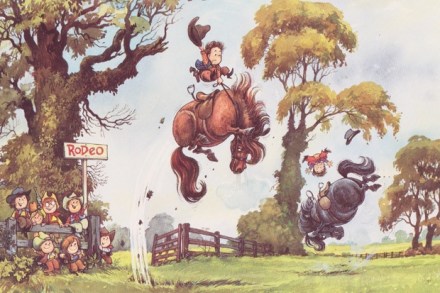
‘The natural aids to horsemanship are the hands, the legs, the body and the voice.’ But a Thelwell pony sometimes required some, er, additional aids. Norman Thelwell’s first pony cartoon was published in Punch magazine in 1953 and struck a nerve with readers; so much so that the editor asked Thelwell for a double-page spread of ponies. ‘I was appalled. I thought I’d already squeezed the subject dry,’ he later recalled. But of course he hadn’t, and Penelope and her pony Kipper went on to become his most popular characters. It may be in pony cartoons that Thelwell found his niche, but he wasn’t just a one-trick pony.
From our UK edition
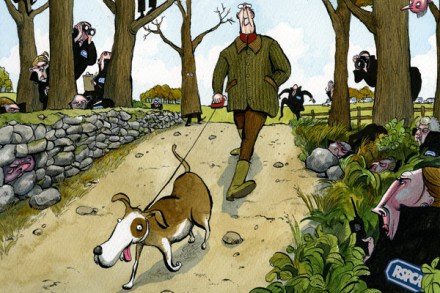
If you were concerned about animal welfare, would you choose to spend money on prosecuting farmers whose welfare is below par? Or would you spend that money on improving animal welfare through regular unannounced farm inspections, and the labeling of meat that has met strict welfare standards? There seems to be a split in the RSPCA, and it’s this farming issue that’s causing all the trouble. At their latest annual meeting the charity’s members voted to support a motion which would see them increase their prosecutions of farmers and slaughterhouse workers, and abandon their current Freedom Food accreditation scheme, according to minutes leaked to The Times.