Bruce Anderson

Bruce Anderson is The Spectator's drink critic, and was the magazine's political editor

Grateful for my grateful friend

The phone rang. ‘You are the last person in the world I should be talking to’, proclaimed an old friend from the States. ‘How have I offended you this time?’ was my surprised reply. ‘Not you personally. My beef is with your hero Donald Trump.’ ‘That is not true. In any jurisdiction, I always like to support the most right-wing legal party, so I keep on hoping that the President will calm down and stop twittering. Then one could relax and enjoy his capacity to infuriate whining leftist belly-achers. But he is devaluing his office and demeaning the great republic: no hero of mine.’ ‘Oh well, I forgive you and anyway I need your help, on Rousseau.’ ‘I’m not sure I’ve much to offer.

The true island spirit

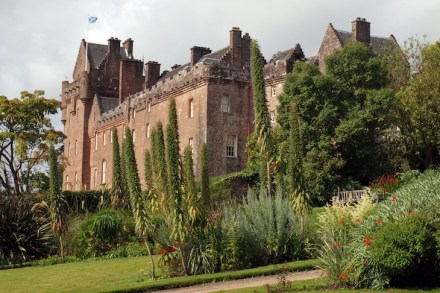
Arran, in the Firth of Clyde, is an island whose charms vary with the seasons. In summer, the hills are verdant. By midwinter, there is a grandeur of rock and snow. These days, the attractions are enhanced by a better class of visitor. Time was, when it suffered from proximity to Glasgow, but the Gorbals-ites who want to start the morning with a cocktail of Buckfast and Irn-Bru now do so in Torremolinos. So: gentle sounds, sweet airs and a formidable amount of history. For centuries, Arran was on the front line in the constant warfare between Norsemen, Gaels, the lowland kings of Scotland and aristocratic factions. It is near Campbell territory: never a safe place to be. When it came to looting, burning and slaughtering, the Campbells could have given tuition to the Vikings.

A vintage in retreat

We were pondering the relationship between military history and wine vintages. It is extraordinary to think that the French managed to make wine throughout both world wars. In the late 1980s, Alan Clark had David Owen and me to lunch at Saltwood, his castle near Hythe. It is a proper castle; the stones are still marked by the rust of medieval warfare. According to legend, the knights who slew Thomas à Becket made their final preparations there. How appropriate for a future Clark residence. There was some dispute as to whether Alan went over to Rome on his deathbed, but during the years of swaggering health his sympathies would have been with the swordsmen, not the croziers. He would have had little use for turbulent priests. Anyway, he produced a swagger wine.

Evening service

It was a culinary triumph. My hosts do not spend much time in the UK, and are determined to entertain stylishly during their visits. This Christmas they succeeded, blending tradition and radicalism. The planning began in Pall Mall on the third lunching-day in advent. We addressed the major strategic question: satiation. After bird plus pud, there is barely the energy to fall asleep in front of an old film and the rest of the day can be unsatisfactory. In recent years, I have noticed a tendency to deal with this problem by de-fanging the pudding. There is a new girlie-man breed of Christmas puds which lack the embrandied pomp of previous generations. In my friends’ case, this was not an option.

The wines of a lifetime

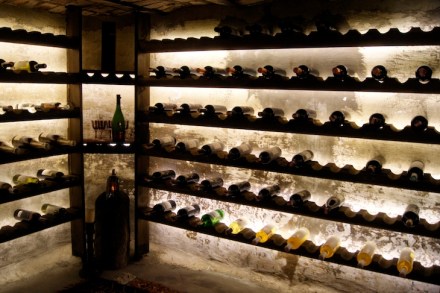
In longevity, great wine can march with human life. Creating (better still, maintaining) a fine cellar really is a compact between the dead, the living and those not yet able to appreciate serious claret. There is a sort of comparison with trees and houses, yet in those cases, the time-scales transcend the shortness of our lifespan. I have a number of friends who plant trees in the serene and stoical knowledge that, one day, the offspring of their husbandry will spread a benison over the surrounding countryside, though they themselves will not be here to see it. Nunc dimittis. Houses are even more germane. One of the glories of England is the number of buildings which have survived in family hands for centuries, preserving a fair proportion of their contents.

Glad tidings from Burgundy

Advent: I am sure that all readers deplore the vulgarly commercial aspects of the pre-Christmas season as much as I do. But over the weekend, a quietly Christian friend made a gentle accusation of hypocrisy. I had been talking about a couple of festivities, evoking the ghost of bottles past, while looking forward to other imminent events and relishing the spirit of the bottles to come. Was this all that the glorious festival meant to me? my friend enquired. On the eve of the great event in Bethlehem, the great dramatisation of splendour and pathos, of hope and renewal, of joy — but also of foreknowledge that the road from the manger would lead to the Cross — was the Christian message nothing more than Nunc est bibendum?

Gender in fluid form

I have lost faith in British boyhood. In mixed schools, young males have failed to seize an opportunity that previous generations would have killed for. Imagine the scene, and to add piquancy, let us locate it in a headmistress’s study. Some hulking youth, a pillar of the rugger scrum, who already needs to shave almost every day, sidles in looking embarrassed. If the headmistress had any gumption — a big ‘if’ these days — she would already be on the alert. But these days that might avail her naught. The lad would have the spirit of the age on his side. ‘Please miss: I don’t know how to put this, but I have been so anxious. I’ve decided that I’m really a girl.

Unbridled delight

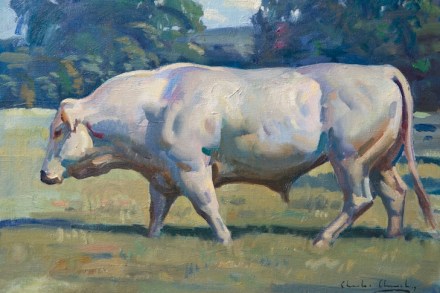
An artist ought to draw on broad human sympathies and an intense commitment to his craft. In both respects, Charles Church qualifies. As a youngster, he set off for art school, in search of instruction, and found it: a worthless curriculum. There was no copying of Old Master drawings (no drawing of any kind), no still lifes, no painting from the nude: no attempt to hold the youngsters’ noses to the grindstone of technique. He could have majored in acrylic, self-expression and pretentiousness. He could have qualified himself to be a court painter for Charles Saatchi and a future rival to Gilbert & George. Instead, he spurned meretriciousness and fled to Newmarket.

A Dutch treat from Bordeaux

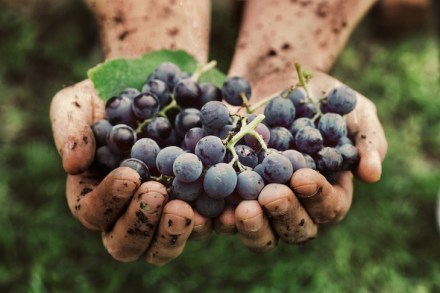
In 1995, a young Dutchman completed an MBA. Banking beckoned. An internship was arranged. But Alexander van Beek thought that he would have a brief gap-summer before surrendering to a life of suited servitude in a counting house. Even though he spoke no French and had little technical knowledge of wine, he went to Bordeaux, rocked up at Château Giscours and asked for a job. Several points were in his favour. He worked hard and never minded getting his hands muddy. He cheerfully put up with any amount of teasing, which encouraged him to learn enough French to fire back. Finally, Giscours and its neighbour, du Tertre had been bought by a Dutch family, who were not thrown by the idea of a fellow Dutchman becoming a vigneron. So the summer passed. Alexander stayed.

The pride of Australia

When she graduated from university in Australia, Sarah Crowe decided to travel. So she sold her car, raised whatever other funds she could, and bought a one-way ticket to Istanbul. Anxious relatives’ doubts were brushed aside: rightly so. This was a brave and resourceful girl. As she made her way across the continent, Sarah’s embrace of European culture quickly extended to wine. Arriving in Burgundy, she used her personality, determination and zest for hard work to find employment and build up experience. Back in Australia, she had no difficulty in persuading a winery to hire her. Her qualities quickly shone through. No one at the vineyard put in longer hours. She did everything and learned about everything.

All’s fair in love and Waugh

I was reminded of Wild West films from boyhood. Then, the beleaguered garrison scanned the horizon; would the US cavalry arrive in time to save them from being scalped? (John Wayne always did.) Now, one was hoping for relief, not from the Injuns, but in the form of an Indian summer. This is of especial interest to those who have a tendresse for Somerset cricket. Its paladins usually have a charmingly amateur quality. As Cardus wrote of an earlier cricketing vintage: ‘[They are] children of the sun and wind and grass. Nature fashioned them rather than artifice.’ Somerset needs a match or two in order to gain points and avoid relegation. That said, the way we were playing earlier in the season, being rained off was the best hope.

Thank Evans for good wine

There was an entirely forgotten leftist called Allen Ginsberg, a so-called beat poet (surely an oxymoron) who once produced a work entitled ‘Howl’. That was appropriate. It reads like a wolf on hallucinogens. The author whined that he had seen the best minds of his generation destroyed. ‘Best minds’: how would he have known? This was hardly Dunbar lamenting the makars of his era. Such of their verse that survives may now be an unyielding read. But in their day they were names to conjure with. Nor did they put their minds up their noses, or inject their hopes into ravaged veins.

The countryside’s eternal youth

I once witnessed a rarer spectacle than Halley’s Comet. I heard Ted Heath tell a funny story. It related to the mid-fifties. Le grand épicier, then chief whip, found himself bear-leading Field Marshal Montgomery on a visit to a racecourse. Pol Roger, a horse belonging to Churchill, was expected to win. The principles of betting were explained to Montgomery, who declared he would wager sixpence on Winston’s horse. Intakes of breath all round. Someone suggested sixpence would not quite do. Monty then agreed to hazard half a crown. There was only one problem. The nag did not oblige. In the face of defeat, some losers would have taken the war to the bookies — and become compulsive gamblers. Not the Field Marshal.

The romantic king of clubs

We were discussing romanticism, with me arguing that it should be confined to the boudoir, the bedroom, the library or the stage. When it escapes into public affairs, disaster often ensues. This led to us reminiscing about romantics we had known, and one of our number denounced the late John Aspinall, who, he said, would have liked to pass as a romantic but was really a society card-sharp. The animus was understandable. This chap would have been significantly richer if his great-uncle had never found his way to Aspers’s gaming tables. Aspers led on to Jimmy Goldsmith, undoubtedly a romantic and charismatic figure, but a consistent political menace — and thus to Jimmy’s nephew by marriage, Robin Birley.

My beef with David Cameron

Insufficient attention has been paid to the history of naughty girls, who deployed allure to prosper in a male-dominated world. Moralists insisted that they would all come to a bad end. From Jezebel to Cleopatra, Lady Hamilton to Becky Sharp, many did so. But not all. Salomé died a queen; Pamela Harriman, an ambassador. There are also fates which transcend earthly glory. Mary Magdalene is often conflated with the woman taken in adultery. In a wooden sculpture, Donatello depicted her in old age, a pitiless portrayal of the ravages the flesh is heir to. Yet she rises above suffering. The expression on her face is beatific. ‘I know that I have been a wicked woman,’ she seems to be saying. ‘I also know that my Redeemer liveth.

I nourish my dream of a fat pill

As good conversation should, the talk meandered from the serious to the playful. One of the serious topics was overseas aid. A generation ago, Peter Bauer, as fine a scholar as ever, addressing himself to that subject, produced a lapidary dictum: ‘Much overseas aid is a subsidy from poor people in rich countries to rich people in poor countries.’ Recent DFID ministers such as Alan Duncan and Andrew Mitchell insist that there have been improvements. Others are sceptical. Announcing that we will spend 0.7 per cent of GDP on aid can create a moral hazard. There is pressure to spend the money: less pressure to ensure that it is wisely spent. A few years ago, someone in London decided that Kenyan schoolchildren did not have enough textbooks and that something ought to be done.

A toast to the new Scottish dawn

‘Stands Scotland where it did?’ As the bottles circulated, we were able to answer Macduff’s question in much more optimistic terms than would have seemed possible even a month earlier, thanks to Ruth Davidson, the Malcolm Canmore of our age. It is extraordinary. Scottish Tories spent almost 20 years on the fringes of politics, marginalised and derided. During that black period, it was clear no other force in Scotland could be relied on to defend the Union. After the Nats’ triumph in 2015, an unpleasant version of Rousseau’s general will seem to have triumphed with it. If you did not support the SNP, you were not a proper Scot. If you were actually a Tory, you were a disgrace to Scotland. This was the darkest hour, with no apparent prospect of dawn.

Uncorking the past

I have been thinking about the Dark Ages. This has nothing to do with Theresa May or Jeremy Corbyn. A friend of mine, Chase Coffin-Roggeveen, has a doctoral thesis in mind about the increasing use of wine for liturgical purposes during the English Dark Ages. Like all scholars who address that period, he has to wrestle with slender sources. Those who do not leave documents tend to be written out of history: think of the Wends. There are revisionists, such as Sally Harvey, who contrast the surviving beauties of Saxon civilisation — consider the manuscripts — with the Normans’ brutality. There is an obvious three-hour essay question: ‘How dark were the Dark Ages?’ Chase is well qualified to address such topics.

Rosé-tinted glasses

It was a typical bank holiday. Usual English weather: glorious, until you leave home without a brolly. Then fickleness supervenes — just like the opinion polls. I was pressed by anxious enquiries. ‘You’re supposed to know about these things. There’s no chance of Corbyn winning, surely?’ On the assumption that enough of the sovereign people are still in their right wits, I was able to sound reassuring. But as I did so, a memory came back: Quintin Hogg in 1964, proclaiming that anyone who voted Labour was stark, staring bonkers. These days, that would be called a gaffe. The once and future Lord Hailsham was famous for gaffes. As he would now be called a national treasure, it is unlikely that any harm was done. But Harold Wilson still won.

French fancies

‘That sweet enemy, France.’ It takes a poet to summarise centuries of military and diplomatic history. On a prosaic level, if we consider Anglo-French relations over many centuries, all the evidence vindicates Sidney’s judgment. Although there is much that each nation admires and respects in the other, we have never been natural allies. For hundreds of years, we fought each other, which never prevented Britain from thriving and prospering. Then we started going to war together. Crimea: a pointless venture. The two world wars: there was probably no alternative to shoring up French weakness in order to resist German domination. But it cost us blood, treasure, an Empire, and it meant lasting genetic impoverishment.