Andrew Tettenborn

Andrew Tettenborn is a professor of law at Swansea Law School

Lord Hermer is dangerously wrong about the ECHR

From our UK edition

How things change. Five years ago few electors cared about the UK’s membership of the ECHR. Today that same convention, with its baneful effect on our ability to police our borders and keep out undesirables, is fast taking centre stage and becoming Concern Number One with burgeoning numbers of voters: voters who, as the government knows to its consternation, increasingly doubt Labour’s ability or even willingness to do much about it. You can have ECHR membership plus loyal adherence to its requirements, or alternatively you can have a proper border policy. You can’t have both No doubt this is why the Attorney-General Lord Hermer, undoubtedly with the backing of the PM, weighed in this week.

The English countryside isn’t ‘racist’

From our UK edition

Three researchers from Leicester University’s Centre for Hate Studies produced a curious report on Monday about the English countryside. Their theme is that much of rural England is a white racist redoubt, where anyone from an ethnic minority is made to feel unwelcome and psychologically, if not physically, excluded. People of colour, it is said, find themselves unaccepted, stared at, and occasionally insulted or worse. Serious measures, we are told, are called for to remove this injustice. You could dismiss this as yet another predictable production from a group of tiresomely progressive academics. And in a sense you would have a point.

The Epping hotel ruling is a victory – and a defeat – for Labour

From our UK edition

It wasn’t surprising that the Home Office chose to back an urgent appeal in the Epping hotel case. Not only were its asylum arrangements in tatters as a result of Mr Justice Eyre’s decision last week: more important, the deadline of 12 September set by the court to stop the use of the Bell Hotel in Essex as a migrant centre on planning grounds faced it with a potential logistical nightmare. If more authorities followed the Epping line, things could have got exponentially worse. Legally, the Home Office has won; politically, its victory could be remarkably Pyrrhic The Court of Appeal’s discharge of the interim injunction this afternoon gives the Home Secretary Yvette Cooper welcome breathing-space. She can also take some comfort from the judgment itself.

The real significance of Farage’s deportation plan

From our UK edition

If Nigel Farage wanted headline treatment for his immigration speech at Oxford Airport this morning, he certainly got it. So far the reaction has been fairly predictable. But politically, there is a good deal more to this affair than meets the eye. The difficulty faced by Farage’s opponents is that, whatever the details, the man’s underlying message rings entirely true One’s first thought, which is probably correct, is that he might well not be able to deliver on his ambition to remove 600,000 people unlawfully here in his first term.

Starmer is dodging the real asylum battle

From our UK edition

The government is badly rattled on immigration. It knows that its perceived inability either to curb rampant asylum abuses or smartly deport those who ought not to be here amounts to an electoral threat. Over this Bank Holiday weekend the Home Office announced yet another scheme to deal with the matter. Currently anyone refused asylum or faced with removal can appeal to a court, namely the Immigration and Asylum division of the First-tier Tribunal, and from there (with permission) to another court, the Upper Tribunal. Even the first appeal can take over a year; and since, with a few exceptions, a person cannot be removed while an appeal is pending, the expense to the public of accommodating them meanwhile is prodigious.

The Epping tipping point

From our UK edition

Yesterday’s injunction granted to Epping Forest council giving the government three weeks to stop using the Bell Hotel for asylum seekers on planning grounds is not quite the slam-dunk that it looks. It is theoretically open to appeal: furthermore, it is only an interim measure pending a full trial later this year. But the affair has seriously spooked the government, and rightly so. Labour’s present immigration policy is now untenable What worries the Home Office is that it’s not only Epping. It seems a safe bet that the contagion will spread fast. As soon as the result was announced, Broxbourne, a nearby Tory council with a similar make-up to Epping, announced that it is contemplating following suit.

The US is right to warn Britain about its free speech record

From our UK edition

Every year the US State Department is required to produce a report on the human rights situation in every country in the world. The report card for the UK came out yesterday. While otherwise fairly anodyne, the US was painfully scathing about our record on free speech. Unsurprisingly, the State Department was unhappy about the Online Safety Act’s long-arm provisions affecting US websites, our abortion protest laws and our strict contempt rules (which last year forced the New Yorker to take the drastic step of geoblocking an important and informative article about the Lucy Letby case). It was particularly caustic about the fallout from Southport, where it did not mince its words.

Labour is going to have to leave the ECHR

From our UK edition

The Home Secretary’s extension of the list of countries covered by the ‘deport now, appeal later’ scheme for foreign criminals, announced this morning, doesn’t actually add to the number of undesirables that we can deport. But it could lubricate the process of getting rid of them. Barring a Damascene conversion of the Strasbourg court, something pretty inconceivable, withdrawal is fast becoming not only an option, but the only option For criminals from the new countries just added, which include a number of African and Asian states, India, Canada and Australia, it means that once the Home Secretary rejects an objection based on human rights grounds, physical removal can be automatic. The deportee can still appeal, but any appeal has to be pursued from abroad.

Starmer will regret his ‘one in, one out’ migrant deal

From our UK edition

Today the much-vaunted 'one in, one out' agreement over returning small boat migrants to France officially comes into effect. Keir Starmer, as you might expect, has announced with an air of quiet satisfaction that repatriation can now start in earnest and implied that the Channel-sized hole in Britain’s borders is well on the way to being stopped up.  If only. Well before any removal flight disappears into the clouds covering the UK, the government’s plan to make us cast aside our worries about immigration is fast unravelling. Even the embattled Home Secretary Yvette Cooper, desperate to cast herself as a migration tough girl for the benefit of the white van man, has refused point-blank to put a figure on the number of illegals we can actually expect to get rid of as a result.

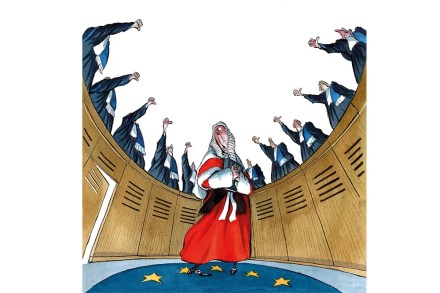
Starmer must not kotow to the ICJ on climate change

From our UK edition

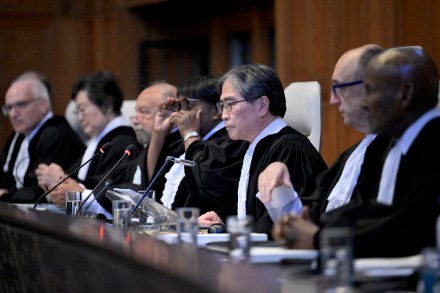
Last week, 15 judges from the International Court of Justice at the Vredespaleis in the Hague, at the request of the UN General Assembly, pronounced solemnly on climate change. Every state, they said, owed duties in international law to take all reasonable measures to suppress climate change; duties, they added, which included exercising control over the activities of private companies. Furthermore, they went on, any state that had broken that duty faced potential claims for compensation from any other state that had suffered damage. Environmental activists went wild.

Kemi has fallen into the Islamophobia trap

From our UK edition

Kemi Badenoch this weekend waded into the Islamophobia debate. In a public letter to Keir Starmer she urged the government to suspend the operations of its working group looking for a semi-official definition of Islamophobia. Unfortunately she then rather spoilt the effect by suggesting that the group needed to be supplemented by representatives of grooming gang victims, counter-terror experts and free speech activists. You can see why she did this. Nevertheless it could prove a bad miscalculation, and a missed opportunity to land a serious blow on Keir Starmer. Her message clearly comes across as an acceptance of the existence of the working group and a preparedness to work with it The government is certainly vulnerable here.

What Suella Braverman’s plan for quitting the ECHR gets right

From our UK edition

This morning’s paper on leaving the ECHR from Suella Braverman and the Prosperity Institute doesn’t say much that hasn’t been said somewhere before. It reiterates the fairly obvious political case for a UK ECHR exit. It talks about the erosion of sovereignty over immigration, policing and vast swathes of social policy; the baneful 'living instrument' doctrine that means we have now effectively given a blank cheque to a self-selecting and unaccountable bench to second-guess our democratic process in ever more intrusive ways; the Strasbourg court’s arrogation of powers, such as the right to order interim measures never contemplated in 1950; and so on.

The flaw in the CofE’s £150 million victims’ fund

From our UK edition

To much fanfare, the Church of England this week instituted a plan, funded to the tune of some £150 million and overseen by a well-respected City law firm, to compensate the victims of abuse carried out by church officials. So far, so good. But when we are talking big money like this, eligibility needs to be carefully circumscribed, with tough boundaries set. Unfortunately, one doubts whether the new Abuse Redress Measure, which set up the scheme, does this. However well-intended, it actually risks a worryingly unpredictable and at times arbitrary use of church funds.

Francesca Albanese is insufferable, but don’t sanction her

From our UK edition

Among the many peripheral hangers-on at the UN, are members of a curious class of functionary known as special rapporteurs. Numbering about 80, these are in theory independent experts appointed by the Human Rights Council to oversee either particular countries or particular issues. In practice, however, they tend to be drawn from the ranks of activists and academics who share the UN’s general leftist worldview. In many cases they hold distinctly partisan views and make little secret of them.

Keir Starmer needs a new attorney general

From our UK edition

A major plank in the Labour Party’s electoral platform last year was its policy of scrupulous obedience to international law. Attorney-General Lord Hermer has repeatedly pushed this view, swearing undying loyalty to everything from pyjama injunctions coming out of Strasbourg to arrest warrants from the Hague. Unfortunately this exercise in legal piety is now coming back to bite the government big-time. It is making it very difficult for Britain to play what cards it has in the new international game of thrones. Most recently think of Midnight Hammer, the US bunker-buster strike on Iran. Britain, normally a keen supporter of the US, was unceremoniously sidelined.

How the ‘experts’ got the grooming gang scandal so wrong

From our UK edition

At this stage we can’t predict what the government’s new grooming gangs inquiry will say. But one thing is overwhelmingly likely: many will feel the heat. This includes police who stood back in the face of clear patterns of child sexual exploitation by young Pakistani men to avoid racial tension; social workers desperate not to offend their largely unassimilated Muslim clients; and councillors and politicians who said ‘move on, nothing to see here’ because of fears that Muslim voters might disown anyone who rocked the multicultural boat. With few exceptions, academics were some of the keenest to suppress discussion about groooming gang abusers’ origins or ethnicity Even more interesting, however, is the light all this this has thrown on academia.

David Lammy has scored a win against pro-Gaza civil servants

From our UK edition

Not for the first time in Whitehall, we are seeing a power struggle between elected government ministers and civil servants under their control claiming the right to follow their own agenda. 300 middle-ranking mandarins in the Foreign Office have written to the Foreign Secretary attacking Israel’s conduct in Gaza, suggesting that it contravened international humanitarian law. Their letter implied that they should not be asked to do any work that might encourage or condone it. The administration called their bluff. Permanent under-secretary Olly Robins, doubtless with Foreign Secretary David Lammy’s approval, told them that if they maintained their position, then their ultimate – and honourable – recourse was to resign.

Kemi Badenoch is walking into her own ECHR trap

From our UK edition

If you think Keir Starmer is rattled by Reform’s awkward-squad views on human rights, spare a thought for Kemi Badenoch. In a speech today obviously aimed at Conservative voters thinking of defecting to Nigel Farage with his unapologetic call to leave the European Convention on Human Rights (ECHR), she will announce that the Tories too are indeed deeply unsatisfied with the convention, and are determined to do something about it.  So far so good. Listen further, however, and you see not so much as a position taken as an exercise in bet-hedging. Rather than going full-on for withdrawal, she is – you guessed it – setting up a committee, albeit one embodying the 'sharpest legal minds'. One can see why she has chosen a non-committal managerialist solution like this.

Brace yourselves for more Quran-burning trials in Britain

From our UK edition

You might well have felt slightly repelled if last February you had passed someone ineptly trying to set fire to a copy of the Quran on the streets of London, while simultaneously using some remarkably fruity language about Islamic doctrine and its effect on believers. The man was Turkish dissident Hamit Coşkun: much to the disgust of a passing Muslim, he was burning the book outside the Turkish consulate as a demonstration against the excessive Islamification of Turkey under Recep Erdoğan. The effect on free speech of this judgement is very concerning But whatever your distaste, you should be very worried about the fact that this man has now been branded a criminal – indeed, a hate criminal.

Britain’s Gulf trade deal is not the place for virtue signalling

From our UK edition

Rachel Reeves announced that a trade deal with the Gulf Co-operation Council (GCC) – in other words, Saudi Arabia and the Gulf states – was imminent last week. It was then leaked that, even though the deal was with unashamed petrostates with no time for net zero and, in some cases, a distinctly doubtful record on rights, the text imposed no legal duties in respect of human rights, modern slavery or the environment. The trade unions and human rights groups are unhappy. The TUC wants any deal to be conditional on workers’ rights protection; the Trade Justice Movement and other earnest humanitarian activists are demanding binding commitments on human rights and pollution. So far, the government has stood its ground.