Andrew Tettenborn

Andrew Tettenborn is a professor of law at Swansea Law School

The worrying flaws in Lammy’s plan to cut jury trials

From our UK edition

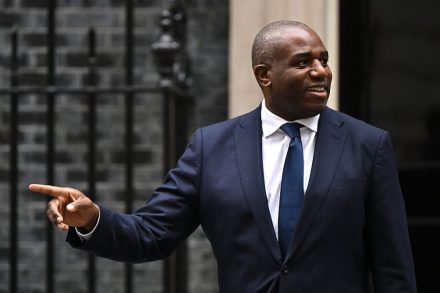
David Lammy clearly spotted that he had set the cat among the pigeons when his plans to cut back on jury trials were leaked last week. Realising how many noses he had put out of joint by proposing to go further even than Sir Brian Leveson’s ideas of last July, in his speech to the Commons today he essentially returned to the Leveson scheme.  Under the new rules, fraud trials will largely become judge-only. In addition, the aim is for anything with a likely sentence of three years or less to be tried by a judge alone in a new crown court bench division. For offences currently triable either way, where currently the defendant has an absolute right to a jury trial – even for (say) the theft of a Snickers bar from Aldi, they will now be decided by a judge alone.

There are some crimes where only a jury can ensure justice

From our UK edition

David Lammy’s plans to prune the right to trial by jury are certainly drastic. Juries would remain only for murder, manslaughter, rape and cases deemed to be in the public interest, with other offences carrying sentences up to five years tried by judge alone. Lawyers are predictably unhappy at these proposals. They see them as seriously compromising the traditional rights of defendants to be tried by their peers, not to mention revealing the hypocrisy of the man who, under the Tories, robustly defended the right to trial by one’s peers. They also think, rightly, that Lammy is now acting not so much from principle as from a desperate need to find a way to clear the backlog of criminal cases (up to five years in some cases) without much money to do so.

Britain must quit the ECHR

From our UK edition

Shabana Mahmood is a bright minister among a cabinet of duds, dealt a difficult hand and playing it rather well. There was a good deal to like about her speech this afternoon, launching the document describing the government’s plans to deal with refugees and deportation. The idea of reviewing refugee status every 30 months, with a view to ending it if the country of origin is no longer dangerous, is overdue. That temporary unrest in a particular state should entitle those at the sharp end automatically to claim permanent rights to remain here is wrong, however much they may prefer their settled life in Britain, when this negatively impacts native Britons.

More asylum hotel protests are inevitable

From our UK edition

The Labour party will, one suspects, curse the name of Epping for some time. The uncomfortable fact is that it stood to lose big-time whatever the result of today’s hearing in the High Court. Following the refusal by Mr Justice Mould to order the owner of the Bell Hotel to cease using it as a migrant hostel, social media is awash with condemnation. As a result of its having made common cause with the hotel owner’s claim to carry on using the premises, Labour is being now being pilloried as soft on illegal immigration and unsound on the rule of law.

Who cares if the Huntingdon train hero is an immigrant?

From our UK edition

When a maniac ran amok on a train near Huntingdon on Saturday, train steward Samir Zitouni put his life on the line. Zitouni bravely blocked the attacker from stabbing a girl, leaving him with a gash on his head and neck. The railway worker remains critically unwell in hospital. His family say they are 'immensely proud of Sam and his courage'. They're right to be: Zitouni saved numerous lives. Whether or not Zitouni is an immigrant isn't clear – and nor does it matter But as Zitouni, who has worked for LNER for more than 20 years, recovers in hospital following the brutal attack, he is being used by some as a political football. 'B****y immigrants coming here and…oh.

The rise of anti-democratic human rights

From our UK edition

Seventy-five years ago today the European Convention on Human Rights was signed in Rome by the 12 states, including Britain, that then formed the Council of Europe. There will be official celebrations: in Strasbourg tonight, a solemn ceremony of speeches and a gala classical concert at the Opéra national du Rhin, and in London next month a formal lecture by our recently-retired man in Strasbourg followed by a Foreign Office reception. But one thing is very noticeable: beyond the great, the good and the earnest (such as the human rights bar and organisations like Amnesty and Liberty), few care. Most of the public, and for that matter most of our politicians, will blithely ignore the whole caboodle.

Human rights scepticism is now mainstream

From our UK edition

When Nigel Farage introduced a bill in the House of Commons requiring the UK to leave the ECHR (European Convention on Human Rights) this week, it was clear that something has changed in British politics. It wasn't the absence of deluded heckling from Labour MPs or Lib Dem leader Ed Davey, both of which were fixtures of the debate. And, no: the Reform leader's bill didn't get anywhere. No-one expected it to, but that was not the point. Such bills are not generally taken as serious legislative proposals; they are more ballons d’essai to gauge reaction. And reading between the lines, the reaction to this one is both informative, and also encouraging to ECHR-sceptics. It demonstrated all too clearly that human rights scepticism is now mainstream.

Non-crime hate incidents aren’t dead yet

From our UK edition

The Met has announced that it will stop investigating non-crime hate incidents, or NCHIs. The pressure on other forces to fall into line may well now be hard to resist (we will have to see). But don’t cheer too loudly yet. The devil is in the detail, and there may be less to rejoice over than you think. An NCHI, to remind you, is any incident ‘perceived’ to be motivated – wholly or partly – by hostility or prejudice towards someone with a particular characteristic. It is noted by police, often secretly, against a person’s name; and while not a criminal record it has effects.

Human rights busybodies should keep out of the trans toilet row

From our UK edition

The problems with the European Convention on Human Rights (ECHR) and the bureaucracy behind it aren’t limited to the spanners they push into the wheels of immigration enforcement. They also now appear to be meddling over hard-won sex-based rights. A letter from the Council of Europe’s Human Rights Commissioner, Michael O’Flaherty, is likely to be seized upon by the trans lobby to further their cause.

Badenoch’s ECHR pledge could be the start of a Tory revival

From our UK edition

Kemi Badenoch’s announcement that the Conservatives are now irrevocably committed to pulling out of the European Convention on Human Rights (ECHR) surprised no-one. It was nevertheless nicely done, and showed that here at least the Tory leader is playing a bad hand rather well. The Tories have now stolen a march on Nigel Farage For one thing, this is patently the right decision for the UK. The baneful effects of scrupulous adherence to the ECHR have been apparent for some years. Migration is a straightforward example. The ever-widening Strasbourg interpretation of Articles 3 and 8, protecting freedom from torture and family life, which we then have to apply loyally, often makes securing our borders against those we do not want here nearly impossible.

Labour’s leave to remain overhaul is thin gruel

From our UK edition

Labour is again running scared on migration. At the party's conference yesterday, Shabana Mahmood made a clear pitch to middle Britain on the subject. 'You may not always like what I do,' she said, addressing Labour’s left, but as regards migration we had to 'question some of the assumptions and legal constraints that have lasted for a generation and more'. She would, she added, be tightening the rules on indefinite leave to remain (ILR). From now on, migrants would have to wait ten years rather than five to apply to settle permanently, though they could apply earlier if they spoke good English, volunteered in their local communities, were net contributors to the economy and had a 'spotless' criminal record.

Deploying the military won’t stop illegal migration

From our UK edition

There was a grain or two of truth in what Donald Trump said last week about migration. A polity is indeed vulnerable to being eaten from the inside by the entry of large numbers of people from very different backgrounds who are not inclined to embrace its culture in preference to their own. But the same does not go for his further advice that the best way to stop the rot was by bringing in the military. For one thing, there would be legal difficulties. By international treaty every country has to require its vessels to do what they can to rescue those in danger of being lost at sea. This applies even to those cynically abusing the rule by engaging, like many Channel migrants, in moral blackmail by deliberately endangering themselves and then demanding to be picked up.

Labour is in a migration trap of its own making

From our UK edition

The failure to deport any illegal migrants at all on the first designated flight to France yesterday under the agreement the government struck with France in August may be due to bad luck rather than bad management. This is still bad news for the nation; the smuggling gangs, far from being smashed by a complacent Keir Starmer, will now be airily reassuring clients that their investment is safe because, whatever the Home Office says, they are most unlikely to be sent back to France. However, in the longer term this is much worse news for Labour.  Labour are largely hamstrung here by their own ideology When the agreement for migrant returns was trumpeted amid manly hugs between Emmanuel Macron and Starmer, anyone who read the small print could see that it was largely meant for show.

Lord Hermer is dangerously wrong about the ECHR

From our UK edition

How things change. Five years ago few electors cared about the UK’s membership of the ECHR. Today that same convention, with its baneful effect on our ability to police our borders and keep out undesirables, is fast taking centre stage and becoming Concern Number One with burgeoning numbers of voters: voters who, as the government knows to its consternation, increasingly doubt Labour’s ability or even willingness to do much about it. You can have ECHR membership plus loyal adherence to its requirements, or alternatively you can have a proper border policy. You can’t have both No doubt this is why the Attorney-General Lord Hermer, undoubtedly with the backing of the PM, weighed in this week.

The English countryside isn’t ‘racist’

From our UK edition

Three researchers from Leicester University’s Centre for Hate Studies produced a curious report on Monday about the English countryside. Their theme is that much of rural England is a white racist redoubt, where anyone from an ethnic minority is made to feel unwelcome and psychologically, if not physically, excluded. People of colour, it is said, find themselves unaccepted, stared at, and occasionally insulted or worse. Serious measures, we are told, are called for to remove this injustice. You could dismiss this as yet another predictable production from a group of tiresomely progressive academics. And in a sense you would have a point.

The Epping hotel ruling is a victory – and a defeat – for Labour

From our UK edition

It wasn’t surprising that the Home Office chose to back an urgent appeal in the Epping hotel case. Not only were its asylum arrangements in tatters as a result of Mr Justice Eyre’s decision last week: more important, the deadline of 12 September set by the court to stop the use of the Bell Hotel in Essex as a migrant centre on planning grounds faced it with a potential logistical nightmare. If more authorities followed the Epping line, things could have got exponentially worse. Legally, the Home Office has won; politically, its victory could be remarkably Pyrrhic The Court of Appeal’s discharge of the interim injunction this afternoon gives the Home Secretary Yvette Cooper welcome breathing-space. She can also take some comfort from the judgment itself.

The real significance of Farage’s deportation plan

From our UK edition

If Nigel Farage wanted headline treatment for his immigration speech at Oxford Airport this morning, he certainly got it. So far the reaction has been fairly predictable. But politically, there is a good deal more to this affair than meets the eye. The difficulty faced by Farage’s opponents is that, whatever the details, the man’s underlying message rings entirely true One’s first thought, which is probably correct, is that he might well not be able to deliver on his ambition to remove 600,000 people unlawfully here in his first term.

Starmer is dodging the real asylum battle

From our UK edition

The government is badly rattled on immigration. It knows that its perceived inability either to curb rampant asylum abuses or smartly deport those who ought not to be here amounts to an electoral threat. Over this Bank Holiday weekend the Home Office announced yet another scheme to deal with the matter. Currently anyone refused asylum or faced with removal can appeal to a court, namely the Immigration and Asylum division of the First-tier Tribunal, and from there (with permission) to another court, the Upper Tribunal. Even the first appeal can take over a year; and since, with a few exceptions, a person cannot be removed while an appeal is pending, the expense to the public of accommodating them meanwhile is prodigious.

The Epping tipping point

From our UK edition

Yesterday’s injunction granted to Epping Forest council giving the government three weeks to stop using the Bell Hotel for asylum seekers on planning grounds is not quite the slam-dunk that it looks. It is theoretically open to appeal: furthermore, it is only an interim measure pending a full trial later this year. But the affair has seriously spooked the government, and rightly so. Labour’s present immigration policy is now untenable What worries the Home Office is that it’s not only Epping. It seems a safe bet that the contagion will spread fast. As soon as the result was announced, Broxbourne, a nearby Tory council with a similar make-up to Epping, announced that it is contemplating following suit.

The US is right to warn Britain about its free speech record

From our UK edition

Every year the US State Department is required to produce a report on the human rights situation in every country in the world. The report card for the UK came out yesterday. While otherwise fairly anodyne, the US was painfully scathing about our record on free speech. Unsurprisingly, the State Department was unhappy about the Online Safety Act’s long-arm provisions affecting US websites, our abortion protest laws and our strict contempt rules (which last year forced the New Yorker to take the drastic step of geoblocking an important and informative article about the Lucy Letby case). It was particularly caustic about the fallout from Southport, where it did not mince its words.