Andrew Tettenborn

Andrew Tettenborn is a professor of law at Swansea Law School

David Lammy has scored a win against pro-Gaza civil servants

From our UK edition

Not for the first time in Whitehall, we are seeing a power struggle between elected government ministers and civil servants under their control claiming the right to follow their own agenda. 300 middle-ranking mandarins in the Foreign Office have written to the Foreign Secretary attacking Israel’s conduct in Gaza, suggesting that it contravened international humanitarian law. Their letter implied that they should not be asked to do any work that might encourage or condone it. The administration called their bluff. Permanent under-secretary Olly Robins, doubtless with Foreign Secretary David Lammy’s approval, told them that if they maintained their position, then their ultimate – and honourable – recourse was to resign.
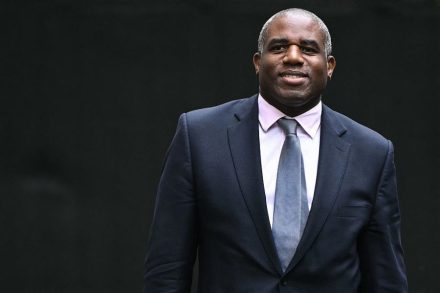

Kemi Badenoch is walking into her own ECHR trap

From our UK edition

If you think Keir Starmer is rattled by Reform’s awkward-squad views on human rights, spare a thought for Kemi Badenoch. In a speech today obviously aimed at Conservative voters thinking of defecting to Nigel Farage with his unapologetic call to leave the European Convention on Human Rights (ECHR), she will announce that the Tories too are indeed deeply unsatisfied with the convention, and are determined to do something about it.  So far so good. Listen further, however, and you see not so much as a position taken as an exercise in bet-hedging. Rather than going full-on for withdrawal, she is – you guessed it – setting up a committee, albeit one embodying the 'sharpest legal minds'. One can see why she has chosen a non-committal managerialist solution like this.

Brace yourselves for more Quran-burning trials in Britain

From our UK edition

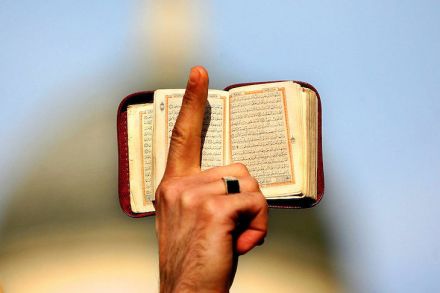
You might well have felt slightly repelled if last February you had passed someone ineptly trying to set fire to a copy of the Quran on the streets of London, while simultaneously using some remarkably fruity language about Islamic doctrine and its effect on believers. The man was Turkish dissident Hamit Coşkun: much to the disgust of a passing Muslim, he was burning the book outside the Turkish consulate as a demonstration against the excessive Islamification of Turkey under Recep Erdoğan. The effect on free speech of this judgement is very concerning But whatever your distaste, you should be very worried about the fact that this man has now been branded a criminal – indeed, a hate criminal.

Britain’s Gulf trade deal is not the place for virtue signalling

From our UK edition

Rachel Reeves announced that a trade deal with the Gulf Co-operation Council (GCC) – in other words, Saudi Arabia and the Gulf states – was imminent last week. It was then leaked that, even though the deal was with unashamed petrostates with no time for net zero and, in some cases, a distinctly doubtful record on rights, the text imposed no legal duties in respect of human rights, modern slavery or the environment. The trade unions and human rights groups are unhappy. The TUC wants any deal to be conditional on workers’ rights protection; the Trade Justice Movement and other earnest humanitarian activists are demanding binding commitments on human rights and pollution. So far, the government has stood its ground.

How Starmer was stitched up over the Chagos islands

From our UK edition

Yesterday, following a last-minute flurry of lawfare, the government published the text of its Chagos agreement with Mauritius. Future history books may well cite it as the perfect example of Britain ceasing to be a country that can be taken seriously. This lousy deal essentially amounts to a massive gift from British taxpayers to the Mauritian government, in exchange for being allowed to give up territory The agreement transfers to Mauritius the entire Chagos archipelago, including the Diego Garcia airbase, subject to a 99-year leaseback of the latter. The small print is worth noting.

Allowing camping on Dartmoor is a terrible mistake

From our UK edition

Away from the hamlets and farms that dot the edge of it, the high moor on Dartmoor is a wild and solitary place, especially overnight and in the early morning. But if you like that sort of thing, you might be well-advised to make the most of it while you can. As a result of an unfortunate decision from the Supreme Court yesterday, the solitude may not last much longer. The peculiarity of Dartmoor is that even though it looks like a public space, most of it is privately owned. The land is looked after by a mixture of large estate owners, farmers and others. Public access, for centuries tolerated by tradition, was in 1985 confirmed by an Act of Parliament specifically permitting anyone to access on foot and horseback for recreational purposes.

A 10mph speed limit is preposterous

From our UK edition

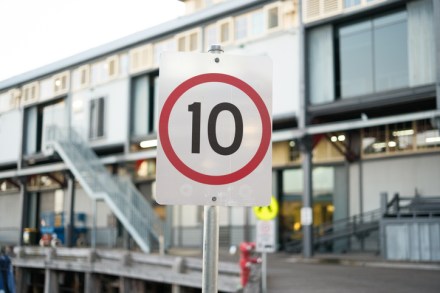
The increase of 20mph speed limits in Britain has been sending drivers around the bend. But if an organisation called the Road Safety Foundation (RSF) has its way, things could be about to get even slower – and more frustrating – for motorists. The RSF says that road speeds in cities should be cut to 10mph to prevent deaths and reduce serious injuries. Talk of a 10mph speed limit is preposterous. Does the RSF want to take us back to 1903, when the Motor Car Act of that year first raised the speed limit to what was then a blistering 20mph?

Starmer will struggle to deport foreign criminals

From our UK edition

The government is rattled on immigration. Forget its liberal metropolitan supporters: just-about-managing voters from Whitehaven to Waltham Cross are deadly serious about the need to curb the numbers coming here. After a last-minute get-tough announcement by Yvette Cooper failed to stop massive Reform gains earlier this month, Keir Starmer has now gone on the attack with a migration White Paper. If Labour is to convince potential Tory and Reform electors that it is serious about immigration, vague words are not enough Apart from making it more difficult for migrants to obtain full residency rights, and tightening English language and education requirements, this proposes changing the law to stop foreign criminals and illegal migrants winning the right to stay on human rights grounds.

Voters won’t be fooled by Yvette Cooper’s human rights gimmick

From our UK edition

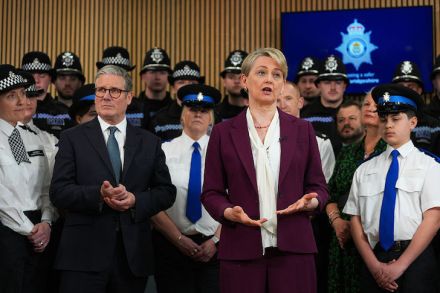
Keir Starmer's government has grudgingly accepted publicly something it has privately known for months: voters are deadly serious about what they see as uncontrolled immigration. Despite the best attempts of the Prime Minister to make vacuous promises to “smash the gangs”, they can no longer be fobbed off. Labour's real problem is that on immigration and human rights it has painted itself into a corner This realisation has led to a flurry of announcements from the Home Secretary. Yvette Cooper has said that serious sex offenders will be automatically denied asylum.

We don’t need a crackdown on killer cyclists

From our UK edition

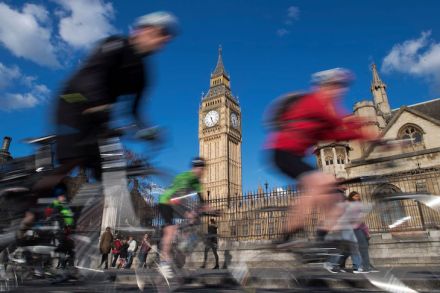
Wayward cyclists watch out: Keir Starmer is coming for you. The government has announced a crackdown against bikers who kill pedestrians. The offence of ‘careless cycling’ is to be punished with a potential two years’ imprisonment if someone is injured, five if they are killed. With ‘dangerous cycling’, the punishment could be up to five years for injury, or imprisonment for life – yes, life – in the case of death. Much of Middle England, especially motorists exasperated by cyclists often behaving as if they own the road (not to mention the pavement), will cheer. But the case for this crackdown is not as strong as it looks. For one thing, there is some slightly doubtful morality here.

Would scrapping juries help tackle the courts backlog?

From our UK edition

There’s a lot to digest in the new Crime and Justice Commission report, which came out today. Its proposals include, for example, a legal ban on access to social media for under-16s and a universal digital ID card system. But the most eye-catching idea in the Times-sponsored report is that for those outside the most serious crimes – notably murder, manslaughter, rape and serious violent and sexual offences – the right to jury trial should go. Instead, other crimes for which currently there is a right to a jury should, if the defendant chooses, instead be tried by a so-called intermediate court consisting of a judge sitting with two magistrates.  There is little doubt that the government would agree.

Are the wheels finally coming off net zero?

From our UK edition

Hands up: who still supports net zero 2050? This is rapidly becoming a sensible question to ask. Kemi Badenoch for the Tories suggested three weeks ago that it simply couldn’t be done: since then her shadow energy secretary Andrew Bowie has confirmed on GB News, no doubt with her say-so, that the party has indeed dropped any commitment to it at all. Meanwhile Labour, hitherto solid on carbon emissions, is itself under plenty of attack on that front. It is desperately trying to prevent the steelworks in Scunthorpe, a traditional Labour heartland, from closing down because the highest energy prices in Europe, which it introduced, make it hopelessly uneconomic.

Is Hungary right to quit the ICC?

From our UK edition

When Hungarian leader Viktor Orbán, who is nobody's fool, offered Israeli prime minister Benjamin Netanyahu a state visit to Budapest last year, he knew a storm would follow. Netanyahu has now arrived in Hungary – and the backlash has duly followed. Orbán has vowed not only to ignore the International Criminal Court's (ICC) arrest warrant against Netanyahu for alleged war crimes and crimes against humanity during the war between Israel and Hamas; he has said his country will withdraw altogether from the ICC. During a joint press conference yesterday with Netanyahu, Orbán said the ICC had become a 'political court'. Netanyahu hailed Hungary's 'bold and principled' decision to withdraw from the court.

The US is right about free speech in Britain

From our UK edition

The US government’s threat to scupper any trade deal with the UK unless we commit to widening free speech not only looks like a naked attempt to interfere with our internal affairs – it is one. On Sunday, the US State Department unusually released a statement saying it was ‘monitoring’ the case of Livia Tossici-Bolt, who was charged after holding a sign saying ‘here to talk’ near an abortion centre. The Business Secretary Jonathan Reynolds denied this morning that free speech had been raised in the trade talks he’d been a part of, yet the Telegraph reports a source familiar with the negotiations believes there will be ‘no free trade without free speech’.

Will Labour back ECHR withdrawal?

From our UK edition

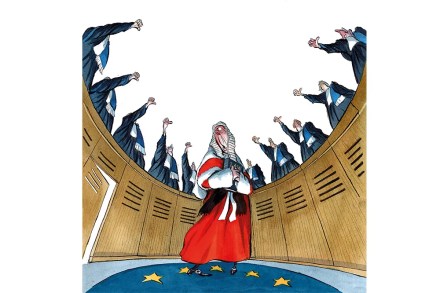
Amidst the U-turns, if there is one thing on which Labour has remained almost rock-solid until now, it is human rights and the UK’s continued participation in the ECHR (European Convention on Human Rights). But even here things are changing. ECHRexit, like Brexit once did, looks increasingly respectable On Saturday, a group of Red Wall Labour members, led by Hartlepool MP Jonathan Brash, broke ranks and publicly called for the government to do something to stop ECHR being used to stymie the removal of criminals and other undesirables from the UK. They said that 'huge numbers' of others in Labour supported them. Even if that is an exaggeration, this is still very significant. At this stage, it must be admitted that the initiative is pretty quixotic.

Why should MPs tell parents not to smack their kids?

From our UK edition

Is it about to become illegal for parents to smack their child? We might have known that the already top-heavy Children's Wellbeing and Schools Bill would be hijacked by those with an agenda to push. Labour MP Jess Asato has tabled an amendment, backed by 26 MPs (including surprisingly one Tory), that would abolish the legal defence of reasonable chastisement. This would criminalise all physical punishment, even within the home, as has been done in Wales and Scotland. A number of organisations have already lined up behind her, including Humanists UK and the Royal College of Paediatrics and Child Health (RCPCH). This amendment must be resisted.

The CofE is dealing with its safeguarding crisis badly

From our UK edition

The John Smyth affair in the Church of England has already claimed the scalp of Archbishop of Canterbury Justin Welby and may yet engulf Stephen Cottrell in York. Earlier this week, it became clear that its reverberations will go much further. The Church has applied to arraign ten other clergy, including an ex-Bishop of Durham, under the Clergy Discipline Measure. It alleges that they knew or ought to have known about Smyth’s proclivity for brutally flagellating young men, indulged first at an evangelical camp at Iwerne Minster in Dorset and later in southern Africa after he was packed off there in 1984, and that they could have taken steps to stop him. If upheld, the proceedings could lead to their being banned from priestly functions for life.

Should burning the Quran be against the law?

From our UK edition

There are worrying signs in Britain that a blasphemy law – abolished in 2008 – might be sneaking in through the back door. Last week, a Turkish man allegedly set fire to the Quran as part of a protest against the Turkish government outside its consulate in Rutland Gate, London. He was then attacked by an outraged zealot with a knife, arrested and charged with a similar offence. He has pleaded not guilty and remains to be tried. Earlier this month, a Manchester man filmed publicly burning pages from the Quran in protest at Islamist excesses was also very swiftly arrested and locked up. Two days later, the man pleaded guilty to a religiously-aggravated offence under the Public Order Act for abusive behaviour likely to cause distress. He will be sentenced in April.

Judges have finally backed a Christian who was sacked for LGBT posts

From our UK edition

Finally, some good news on the free speech front: a Christian school worker who lost her job after sharing posts about gay relationships has won a crucial legal battle. Seven years ago, Kristie Higgs, a pastoral worker and mother at a primary school who held firm Christian views, used her private Facebook account to complain in colourful language about plans to rejig sex and relationships education in primary schools. One post referred to "brainwashing our children". Another mentioned "suppressing Christianity and removing it from the public arena". Higgs also called on her Facebook friends to sign a petition. She felt particularly exercised about suggestions that gender was a matter of choice, and that same-sex relationships might be stated to be as good as heterosexual ones.

The Sara Sharif family court judges should have been named far sooner

From our UK edition

There is something of an anti-climax in the naming of the judges involved in the Sara Sharif case. It's true that Judge Alison Raeside, Judge Peter Nathan and Judge Sally Williams oversaw Family Court hearings involving Sara in the years before she was murdered in 2023 by her father Urfan Sharif and stepmother Beinash Batool. But Family Court judges in England are hardly household names. The vast majority of people will never have heard of Raeside – who decided that Sara should live with her father – or Nathan and Williams. It is a fair inference that, after a few days, their names will be forgotten.