Andrew Tettenborn

Andrew Tettenborn is a professor of law at Swansea Law School

Why shouldn’t schools encourage middle class aspirations?

From our UK edition

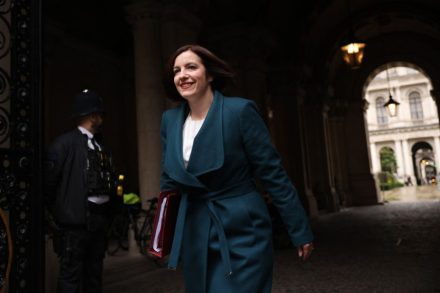
Education Minister Bridget Phillipson wants to make our schools engines of ambition and social mobility. Good for her. Unfortunately, some of the the advice she has received as to how to do this demonstrates one thing more than anything else: when it comes to class prejudice, it’s earnest bourgeois reformers who habitually head the pack. Lee Elliot Major, a professor of social mobility, has told her that the answer lies in schools’ downplaying of middle class institutions. Out with visits to museums and theatres and references to skiing, jam-making or house-buying, which the underclass can’t connect with.

Non-crime hate incidents are out of control

From our UK edition

It’s police overreach season again on free speech and non-crime hate incidents, or NCHIs. On Remembrance Day morning, we had Essex police’s surreal doorstepping of journalist Allison Pearson, demanding an interview about a long-forgotten Tweet by her they refused to identify. Pearson has said the police told her it was a NCHI, though the force says it regards the issue as a criminal matter concerning material ‘likely or intended to cause racial hatred’ under the Public Order Act 1986.

Surely no MP can vote for this assisted dying bill

From our UK edition

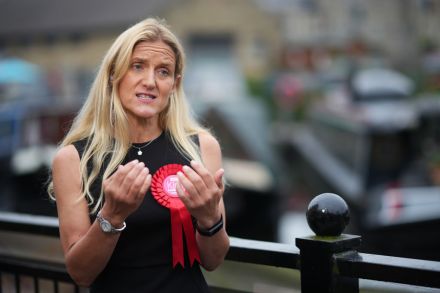
There’s a beguiling simplicity to the idea behind Kim Leadbeater’s Terminally Ill Adults (End of Life) Bill, published yesterday. If someone is terminally ill and likely to die within six months and wants to accelerate the process, surely it’s only kind that the state should give two doctors the ability to help them do it rather than force them to endure months of anguish and possibly severe pain. Put in safeguards against undue pressure, make sure proper legal procedures are followed by requiring the imprimatur of a High Court judge, and who can rationally complain? Well, I can.

Raising university tuition fees will only delay the inevitable

From our UK edition

Universities in the UK desperately needed Bridget Phillipson’s announcement this afternoon of a rise in tuition fees. The Education Secretary has said they will rise from £9,250, to £9,535 next year and £10,500 by 2029. This was necessary if only to offset the effect of last week’s Budget announcement of a 1.2 per cent rise in employers’ NI and the reduction in the threshold at which it becomes payable; that alone will saddle them with extra costs of just under £400 million a year.  What is unsustainable is the number of students the state chooses to support All this aside, the institutions are already in deep trouble. Fees for domestic students do not cover costs.

Street lights are costing Britain too much

From our UK edition

The East Riding of Yorkshire is flat, prosperously agricultural and slightly off the beaten track. Deeply conservative, it isn’t the place you would normally look for originality. Over the weekend, however, its county council announced an inspired experiment. It wants to see what happens if it gets rid of large numbers of its street lights. Not the lighting in town centres, you understand, but the endless lines of light-stalks you see on the main roads that wind their way between the cornfields. As a trial over the next three years, it plans to switch off hundreds of the lamp-stalks that march grimly alongside the road that connects York and the Humber Bridge.

Chris Kaba and the danger of inquests 

From our UK edition

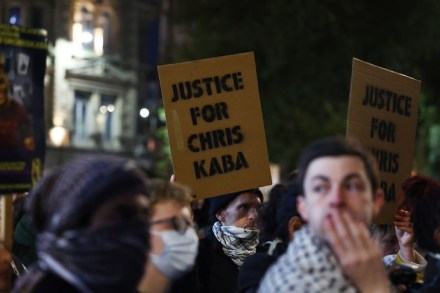
The firearms officer Martyn Blake was cleared of murdering Chris Kaba this week. Kaba was a serious wrong ‘un: a violent gangland enforcer with a rap sheet as long as your arm going back to the age of 13. During the trial this information was kept under wraps, on the basis that Kaba’s past was irrelevant to Blake's guilt or innocence and speculation about it potentially prejudicial to the Crown’s case. After the acquittal, however, all this is rightly in the open. What is worrying, however, is that our ability to know the full facts even now was a fairly close-run thing. Immediately after the trial Chris Kaba’s family tried hard to keep the matter legally secret. Why?

It’s shameful that an army veteran was convicted over a prayer for his dead son

From our UK edition

Adam Smith-Connor was this week convicted of a heinous offence, slapped with a conditional discharge and a costs order for £9,000. The actual crime in question? The 51-year-old army veteran was praying silently, on his own, for the soul of a child which he had, now much to his regret, aborted many years earlier. The reason this affair reached Poole Magistrates’ Court was that he had been doing this near a Bournemouth abortion clinic, and that clinic was the subject of a buffer zone order. This episode should worry all of us, pro-life or pro-choice, if we believe in the idea of liberty.

Labour’s worrying creep back towards the EU

From our UK edition

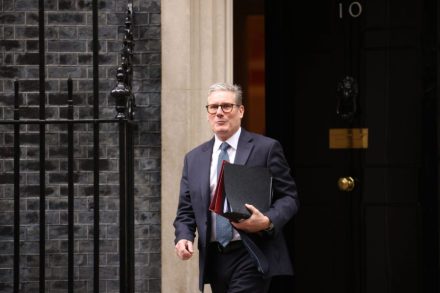
In Labour’s manifesto this year, Keir Starmer cannily sought to reassure any Brexiteers out there by ruling out a return to the EU single market. But, being a lawyer, he carefully inserted a small-print proviso. The Labour leader said that he did not rule out doing much the same thing by realigning Britain piecemeal with EU standards as opportunity presented itself. This process he has now started. As the eagle-eyed Lord Frost pointed out yesterday in the House of Lords, the government’s boring-sounding Product Regulation and Metrology Bill is something of a Trojan horse.

Boris is right: we need a referendum on the ECHR

From our UK edition

Nobody should be surprised that Boris Johnson favours a referendum on leaving the ECHR, as his book now makes clear. Boris is an instinctive populist and maverick, who cordially despises the educated progressive establishment which argues for continued membership. He is also right.  Intellectually, the case for remaining in the ECHR gets ever flimsier Intellectually, the case for remaining in the ECHR gets ever flimsier. When we ratified it in 1951, the convention was fairly uncontroversial.

Why tuition fees should go up

From our UK edition

The fees English universities are allowed to charge home students in England are fixed by government fiat. At £9,250 per year, they are some of the most expensive in Europe. Shortly after the election Education Secretary Bridget Phillipson denied any plans to raise them. She appears to have changed her mind, saying the fee has been ‘eroded’ because it hasn’t gone up in a ‘very long time’. Officials are reportedly drawing up plans to raise the fee to to £10,500 over the next five years, thereby tracking inflation. They are right to do so. In the end, some future Education Secretary will have to swallow an unpalatable pill Put bluntly, the universities need the money.

Labour’s two-tier prison plans

From our UK edition

There are not many women in prison, but those who are inside show worryingly high rates of mental illness, suicide and self-harm; their families suffer badly while they are inside, and when they are released, few of them come out rehabilitated in any real sense. Given this, you can see why the new Lord Chancellor, Shabana Mahmood, told the Labour conference that she wanted to reduce the number of female prisoners and announced the setting up of a Women’s Justice Board under prisons minister, Lord Timpson, to see how this could be done. For every woman locked up in this country, there are something like 25 men Sounds good? Possibly. I’d suggest a degree of caution. One point is that, looked at closely, what is being proposed is not so much action as rather more bureaucracy.

Why the cost of replacing Britain’s border fleet has soared to £300 million

From our UK edition

The fleet of border control cutters responsible for patrolling our waters (and at times for dealing with irregular migrants on them) is showing its age and needs renewing. Unfortunately we now know that the exercise will cost £300 million rather than the original estimate of roughly £50 million, and will be delayed until at least 2030. Why has this happened? The reason is a big post-Brexit legal snafu which cuts across the government’s wish to ensure that the vessels are built here. To keep it as simple as possible, an international treaty called the General Agreement on Tariffs and Trade, or GATT, prevents governments indulging in protectionism, but it has two exceptions. One is national security, allowing a government, for example, to insist on warships being home-built.

Labour is in denial about our bad universities

From our UK edition

Our universities are in a mess. Too many degrees lack intellectual quality and utility, and leave those doing them with little but disappointment and debt. Nor is the debt limited to students. Foreign student numbers, on which many institutions rely, are drastically down, and it is an open secret that three big names (Cardiff, York, and Goldsmiths) and at least three less prestigious institutions (notably Lincoln, Kingston, and Middlesex) are making cuts or haemorrhaging money.

Scrapping one-word Ofsted verdicts is a mistake

From our UK edition

The decision to scrap one or two-word Ofsted inspection grades for England's schools is good news for teachers – but bad news for just about everyone else, not least parents and pupils. Many school staff have never liked the labelling of schools as 'Outstanding', 'Good', 'Requires Improvement' and 'Inadequate'. They say that it doesn't give the full story and heaps pressure on staff during inspections. In one case last year, a head teacher took her own life after her school received an unflattering report. What happened to Ruth Perry was a terrible tragedy. But while some reform was no doubt necessary, getting rid of straightforward Ofsted summaries is not the answer.

Starmer may regret an outdoor smoking ban

From our UK edition

It’s a curious political world. Few who voted Labour last month actually wanted Labour policies, or for that matter had more than the haziest idea what they were. Now the Labour leadership is returning the compliment. It is increasingly obvious that it has neither much idea what electors want, nor any great desire to provide them with it. Withdrawing the winter fuel allowance, going hell-bent for net zero (whatever the consequences), clamping down on our rights online, the list goes on. The government’s proposed extension of the smoking ban, leaked yesterday, is a further case in point.

The worrying return of non-crime hate incidents

From our UK edition

The longer it continues in office, the more reactionary and beholden to vested interests this government turns out to be. So far it has surrendered to the establishment on immigration, on the EU, and on higher education (blocking any awkward notions of making administrators respect free speech). Yvette Cooper, the Home Secretary, now appears to believe it is the police establishment’s turn to be appeased: witness the reports this week about the recording of non-crime hate incidents, or NCHIs. Until about three years ago, NCHIs were recorded by the police in vast numbers, largely against people who spoke out of turn online, however lawfully, and had a complaint made against them.

Louise Haigh’s LTN policy is doomed to fail

From our UK edition

The Labour party is in a bind over cars. Its instincts – collectivist, green, managerialist – strongly favour anti-car measures like low traffic neighbourhoods (LTNs) with roads strategically blocked off, and 20 mph speed limits. Unfortunately motorists overwhelmingly disagree. In Wales, the new government under Eluned Morgan has learnt this to its cost. Faced with something like a 70 per cent disapproval rate of the national default 20 mph limit in urban areas, it has now been humiliatingly forced to roll it back. It’s working people who will bear the brunt of these anti-car measures In England, Transport Minister Louise Haigh has sought to play a more subtle game.

Are too many young people going to university? 

From our UK edition

University hopefuls trepidatiously opening their official A-level emails this morning will on the whole be happier than last year. All the indications are that they are more likely to get a college place, and indeed have a better chance of making their first choice. The reasons for this are complex, but largely boil down to two serendipitous facts. One is the disappearance of the artificial bubble created by Covid, which left universities overfilled and so constricted their scope for new admissions. The other is a drop in foreign applications, due among other things to students being discouraged from bringing their extended family with them, and to the collapse of the currency of Nigeria, from which many overseas students previously came.

Will a social media crackdown really stop future riots?

From our UK edition

The riots of 2024 will be remembered for many things. One of them is the way the establishment spectacularly closed ranks on online speech.  Metropolitan Police commissioner Mark Rowley said on Saturday that he intended to throw the book not only at rioters themselves, but at ‘keyboard warriors’ who might support them. The CPS, through the Director of Public Prosecutions, solemnly warned that anyone repeating inflammatory material online faced prosecution. Meanwhile, senior police were said to be trawling social media to hunt down those fomenting hatred and division.  Action followed words.

Why Britain must say no – again – to China’s ‘super embassy’ in London

From our UK edition

The previous Tory government may not have been very successful in containing the global ambitions of China, but at least it tried. Whether David Lammy’s Foreign Office has the same ambition to stand up to Beijing’s bullying is unfortunately becoming more doubtful. A straw in the wind is the announcement by China this week that it has revived plans to build a spanking new 'super embassy' – ten times the size of Beijing’s current outpost – on land it owns in the heart of the capital, a stone’s throw from the Tower of London.  This isn’t any old exercise in replacement of one piece of real estate with another. What China wants to build is a massive campus covering about 5.4 acres of prime City land just across the road from the old St Katharine Docks.