Andrew Tettenborn

Andrew Tettenborn is a professor of law at Swansea Law School

Alex Salmond’s disturbing grab for the Stone of Scone

From our UK edition

Claims of financial skulduggery abound, Nicola Sturgeon is politically hors de combat and Humza Yousaf is quickly rebranding the SNP as a party not only of shatteringly incompetent government but also of lost causes, political irrelevance and sheer kookiness. Thinking Scots who don’t fancy the Tories might be forgiven for contemplating a switch of loyalties to Alex Salmond. His new party Alba, formed in 2021, might be a bit rough round the edges, but at least it looks principled.

Giving anonymity to paedophiles is a threat to our justice system

From our UK edition

Substantial constraints on the freedom of the press tend to accumulate from seemingly small restrictions. Events last week in a court in Antrim in Northern Ireland demonstrate this neatly. A paedophile was caught sending suggestive emails to undercover police posing as prepubescent girls, and went down for 16 months. Who was he? We will never know. Why have human rights led to this boxing in of free speech in favour of the frankly undeserving? Why? The answer is that in court he threatened suicide unless given anonymity. The court gave in to his demand. An injunction now bars any disclosure of who he is for his lifetime, and anyone breaking it, whether in the press or social media, faces a strong prospect of jail time.

The EU is alienating eastern Europe

From our UK edition

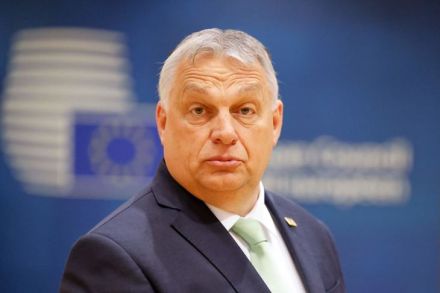
For most of its 66 years of existence, a vital part of the EU’s mission has been the inexorable expansion of its power to tell member states what to do. It now has to grasp though that in future it will need to backtrack. Unless Brussels morphs pretty quickly from a centralised technocracy dispatching orders to its vassals, into an organisation based on broad consensus between elected governments, it is likely to find itself side-lined or even facing a continental schism. If you were looking for the most inept way to run an organisation like the EU, this comes close The latest illustration of this arises from a sudden glut of Ukrainian grain. For the last nine years or so this has enjoyed largely tariff-free access to the EU.

Europe is falling apart on the world stage

From our UK edition

There is rather more than meets the eye to Emmanuel Macron’s inept visit to Beijing last week. The immediate fallout – Xi’s flat refusal to change tack on Ukraine, and Macron’s subsequent insistence that France was not beholden to the US or for that matter over-concerned with what China might do in Taiwan – looks like a stinging national rebuff to France and a face-saving retreat by Paris to curry favour with China. And so it is. But it goes further. There is a strong EU dimension to this whole debacle: what it really shows is the increasing weakness and disunity of Europe when it tries its hand at power projection on the world stage.

The truth about the Dartmoor wild camping row

From our UK edition

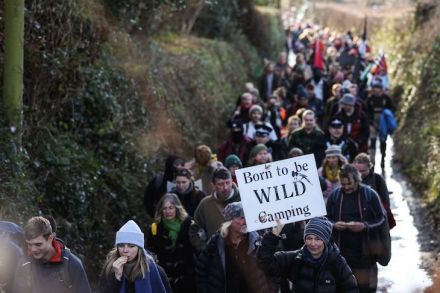
It’s often said that the less important the issues at stake, the bitterer the argument about them becomes. This seems to have been more than confirmed in the last few weeks in Devon by the curious case of the argument over wild camping on Dartmoor. The high moor on Dartmoor is an anomaly. Although nearly all of it is privately-owned by a mixture of estate owners, small farmers and others, for as long as anyone can remember people have in practice been walking and riding across the wilder unfenced parts of it, known as the Commons, for recreation without anyone making objection.

The Tories should think again on targeting Netflix

From our UK edition

If you want to understand the curious attitude of our government towards media freedom, look at two provisions in the draft Media Bill, published yesterday. One is refreshingly liberal; the other curmudgeonly and authoritarian. First, the good news. The Bill reads the last rites over the Leveson Report of 2012. A worrying document embodying lofty patrician contempt for the popular press, this had called for highly intrusive controls over it. This included closer supervision of what journalists were allowed to do and editors to publish, an increase in damages for breach of privacy and a noticeable tightening of the dead hand of data protection on newspaper information-gathering.

The UK is right to refuse entry to a Quran-burning activist

From our UK edition

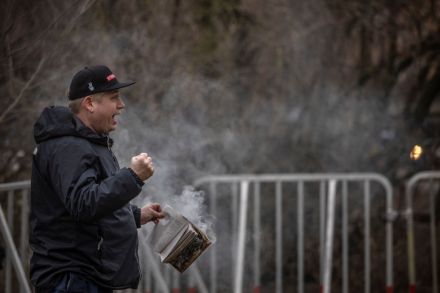
Nobody came well out of the Quran-scuffing incident at Kettlethorpe High School in Wakefield last month. Following calls from Islamic fundamentalists for severe measures to suppress any insults to Islam, the headmaster of the school concerned largely took their side rather than dismiss the incident as the school triviality it was; the council that employed him was equally pusillanimous. The police also chose to appease the hotheads by initially recording an entirely inadvertent cause of offence as a hate incident: only later it seems, with bad grace, did they condescend to gently reprimand a child over death threats to the boy who had dropped the book.

Justin Welby’s gay marriage troubles could be about to get worse

From our UK edition

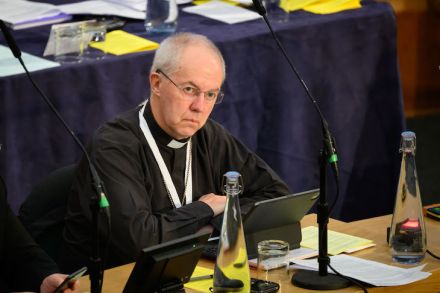
After the hash the Church of England has made of the issue of same-sex marriage, a group of MPs led by long-standing churchman Ben Bradshaw has hatched a plan to pull the Anglican chestnuts out of the fire. His scheme is undoubtedly well-meaning: unfortunately, it is more likely to push them further in, to be reduced to ashes. The current church fudge, prepared by the bishops after years of politely pious wrangling and approved by Synod last month, is easy enough to criticise. The teaching that marriage proper is between one man and one woman remains: the church will thus will have no part in marrying same-sex couples. However, it will now bless loving and committed same-sex unions and develop special prayers for them.

Will Rishi Sunak admit the truth about net zero?

From our UK edition

When Boris Johnson nailed the Tories’ environmental colours to the mast a few years ago, he probably gained votes from a few waverers. Was it worth it? Almost certainly not. The point he missed was that promises of that sort regularly come back to bite the people that make them. The commitment to net zero by 2050 and no fossil fuel-powered cars after 2035 is a case in point. This pledge made little account of whether or not the technology will actually be up to scratch by then. Nor did it properly consider the question of if we can afford it, or indeed have assured access to the raw materials necessary to apply it. Yet still the political green lobby continues to exercise a disproportionate influence over the government.

Is it right to criminalise verbal sexual harassment?

From our UK edition

In febrile times, politicians tend to have a touching belief in their ability to pass laws and make men good. The well-meaning, but actually slightly sinister, Protection from Sex-based Harassment in Public Bill, which went through its committee stage yesterday with full support from Labour and no dissenting voices, is a case in point. The proposed legislation is a private member’s Bill brought by Greg Clark, Conservative MP for Tunbridge Wells, but it is broadly supported by the government. At first sight it does very little. It has long been a crime under the Public Order Act to intentionally cause someone harassment, alarm or distress by saying or doing anything threatening, abusive or insulting. This can clearly stretch to covering sexual harassment.

The EU is mired in sleaze

From our UK edition

The last year has not been good for the European Union’s image. The Qatargate scandal rumbles on. So far, apart from various functionaries and hangers-on, three MEPs, including a vice president of the European parliament, and one ex-MEP have been implicated in the scandal. Last week, however, yet another festering sleaze scandal broke, this time over the EU’s purchase of Covid vaccines from Pfizer. The scandal is less serious in that no one suggests it involves actual bribery. But it is nevertheless rather more embarrassing because it embraces Commission president Ursula von der Leyen herself.  At issue is the billions paid by the bloc to Pfizer for the vaccines. In 2020 Pfizer had delivered a first batch at the stiffish price of €15.50 a pop.

Solar farms and the trouble with net zero

From our UK edition

Say it quietly, especially when there’s a Green listening: but there’s one certainty about Net Zero 2050. It won’t happen. As any honest MP will admit in private, it is stymied not only by the need to keep the lights on following the Ukraine energy shortage, but also for another reason: because no democratic majority will tolerate the cutbacks in their quality of life necessary to maintain the headlong dash to carbon neutrality in 27 years’ time. Unfortunately there is also another certainty about Net Zero. While it remains official policy, however quixotic, corporate capital is being handed a heaven-sent opportunity at the expense of you, me and the country we live in. If you don’t believe this, ask anyone who lives in rural East Anglia, between Newmarket and Soham.

Rishi Sunak is right to challenge Europe’s human rights treaty

From our UK edition

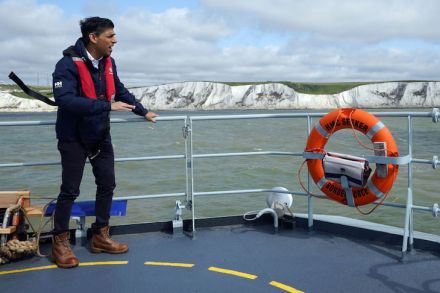
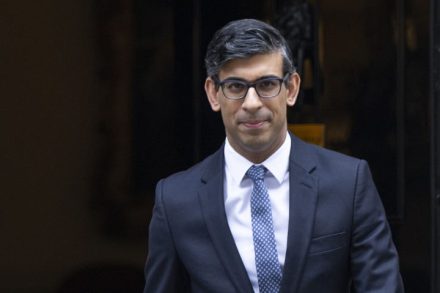
Rishi Sunak senses, rightly, that tough talk on the Channel migrant issue will go down well in both middle England and the Red Wall. One can see why. No small country with overstressed social provision should tolerate an annual influx of irregular migrants sufficient to populate a medium-sized town landing openly on its beaches. That they are from countries where they are in no appreciable danger, can mouth the word ‘asylum’ and then either disappear or use every intricacy of the law to stymie attempts to deport them feels intolerable to many.  Last week Rishi floated an idea to stop this. It would subject those who arrived irregularly on our shores to automatic detention and deportation, and prevent them claiming asylum at all until they were out of the country.

How the Tories can avoid falling into Sadiq Khan’s Ulez trap

From our UK edition

Sadiq Khan has an inveterate desire to show Londoners who is boss: the mayor’s latest wheeze is an expansion of London’s Ultra Low Emission Zone (Ulez). Khan is seeking to roll out Ulez to all of London’s boroughs from August – along the leafy lanes of Surrey, Kent, Essex and Hertfordshire.  Aside from ostentatious green zealotry, it’s difficult to see any convincing argument in favour of doing so. These areas already have sparser public transport than the rest of London. Charging hard-pressed residents who are unable to afford a fancy car £12.50 a day for the privilege of driving to the station to catch a sustainable train is a slap in the face. It could also backfire by encouraging them to do the whole run by car.

Penny Mordaunt is wrong to lecture the Church of England on gay marriage

From our UK edition

On Sunday, the Leader of the House Penny Mordaunt wrote an open letter to the Bishop of Portsmouth (where her constituency is). In it she called on him to vote to ‘back reform’ and, as demanded by a coterie of radical bishops, change forever the Anglican stance on same-sex marriage. Today the Church of England has partially rejected that demand, and will not allow clergy to conduct same-sex ceremonies, although it is proposing to allow 'prayers' and 'blessings' for same-sex couples in civil partnerships. Mordaunt’s intervention was perfectly legitimate, you might think.

Ron DeSantis is the Republican party’s best hope

From our UK edition

Florida governor Ron DeSantis is shaping up as the GOP’s best hope for next year’s US presidential election. Large parts of his popular appeal are his open attack on (now fairly well-established) left-wing infiltration in education and to some extent in commerce, and his expressed intention to make Florida the state ‘where woke goes to die’. Hitherto his success has been limited. But recently there have been signs that he may be learning from his mistakes. His troubles started with a failure to grasp that a direct legal attack on left-wing influence, however electorally popular, was likely to be doomed.

The decline of traditional university study is no bad thing

From our UK edition

University vice-chancellors will find some uncomfortable reading in their New Year in-tray today. Last month the chairman of accountancy giant PwC pointed out that more and more middle-class teenagers are walking away from old-style university studies and embracing degree apprenticeships and other forms of on-the-job learning. Already the number of those taking up degree apprenticeship is nearing 10 per cent of university admissions, and this figure is still set to grow. Although many such apprenticeships boast an element of university involvement and some even a qualification called a ‘degree’, their emphasis is quite different. Learning happens predominantly by working; the academy is not the centre of the process, but merely a cog in the wheel.

Is Eric Zemmour’s court defeat something to celebrate?

From our UK edition

Éric Zemmour is an old-style reactionary France-first politician, a little in the mould of the interwar Charles Maurras. Though unceremoniously blindsided by Marine Le Pen in the 2022 Présidentielles, he should not be written off yet. But this week Zemmour suffered a setback: the European Court of Human Rights rejected his appeal over a conviction for ‘inciting discrimination and religious hatred’ for comments targeting French Muslims. Zemmour's opponents are celebrating – but the verdict suggests the Strasbourg court can be selective in the rights it chooses to back, and those it doesn't.

Could Britain pull out of Europe’s human rights treaty?

From our UK edition

Just as Brexit began with a few harmless-looking chips at what looked like an impregnable concrete wall, something similar may be happening with Britain’s attachment to the European Convention on Human Rights.  The latest episode was yesterday’s ten-minute rule bill from the Tory MP for Stoke-on-Trent North, Jonathan Gullis. His Asylum Seekers (Removal to Safe Countries) Bill was nothing if not direct. Put bluntly, his plan would seek to avoid a repeat of the Rwanda debacle earlier this year by allowing asylum seekers to be flown to Africa, despite any orders from Strasbourg to the contrary. Like nearly all other ten-minute rule bills, everyone accepted this one was entirely quixotic.

Abortion clinic buffer zones are a step towards the end of free speech

From our UK edition

There is nothing like abortion to make feelings run high. Termination of pregnancy has been lawful in Northern Ireland since 2020: this year, however, the Legislative Assembly in Belfast turned the screw and passed a further, remarkably authoritarian, Bill. This makes it illegal – anywhere within 100 metres of an abortion clinic – not only to impede access to it, but to do any act ’with the intent of, or reckless as to whether it has the effect of, influencing’ any visitor. In effect, this is the creation of large public zones where, on pain of a £500 fine, no-one is allowed to talk about abortion, hand out leaflets, or even silently pray.