Andrew Tettenborn

Andrew Tettenborn is a professor of law at Swansea Law School

Poland’s relationship with Ukraine reaches breaking point

From our UK edition

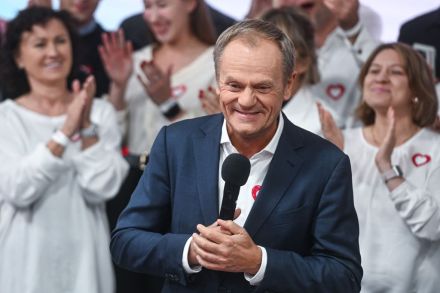
Poland is Ukraine’s best friend in Europe. But no alliance can ever be entirely unconditional, and this is as true of the Poland–Ukraine bond as of any other. Poland, which has supplied Ukraine with tanks and fighter jets since the start of the war with Russia, has now said it will stop supplying weapons. The reason for the fall out is one that has been simmering for months: Ukraine's grain. Since Russia withdrew its Turkish-negotiated free pass for grain exported from Ukraine ports in July, Moscow has been targeting Ukraine’s grain infrastructure at Odesa and elsewhere.

Who cares if this UCL academic ‘undermined’ Britain’s history?

From our UK edition

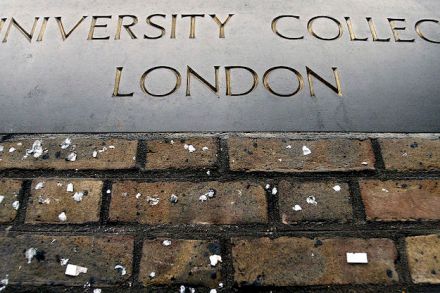
There’s a long list of academics, some of whom are on the right, who have had their lives made difficult by fellow academics. Now, for a change, a left-wing academic is feeling the heat.  Dr Jenny Bulstrode, a history lecturer at University College London (UCL), has been accused of ‘undermining the history of Britain’ without evidence. The allegation came after Bulstrode claimed in a paper that an English ironware maker, Henry Cort, stole his invention from slaves. Before conservatives engage in too much self-congratulation, however, they should stop and think carefully about whether this attack against Bulstrode is really something to celebrate.

Don’t fine drivers for doing 31mph in a 30mph zone

From our UK edition

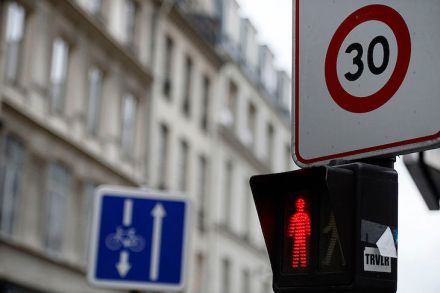
Drivers could soon be prosecuted for travelling 1 mph over the speed limit, at least if some MPs get their way. The all-party parliamentary group on walking and cycling (APPGWC) also proposes stiffer penalties for drivers of heavy cars like SUVs involved in accidents, and an invariable requirement for a fresh driving test for anyone disqualified. However well they may go down among a certain class of activist, it’s not difficult to see that these are all fairly terrible ideas.  First, speed limits. Current informal guidance from police chiefs, pretty widely observed in England (though not in Scotland) is '10 per cent plus 2': in other words, ignore speeds up to 35 mph in a 30 mph zone, 57 in a 50 mph zone, and so on. This must go, the APPGWC say. Why?

What’s the point of forcing murderers like Lucy Letby into the dock?

From our UK edition

We all recoiled when Lucy Letby, a nurse of all things, was convicted of killing seven babies in cold blood. But this murderess had one more card up her sleeve. When called to court for the last time to receive the inevitable sentence – not only life, but in her case whole-life – she casually declined to appear. By doing so, Letby added insult to injury, constraining the grieving parents of her victims to watch the judge address an eerily empty dock.  Under the present law she was arguably within her rights. But not for much longer. The government, with it seems the full backing of Labour, has promised to change things.

The break up of Bosnia-Herzegovina cannot come soon enough

From our UK edition

If you fret about a democratic deficit in the EU or even Britain, turn your mind for a moment to one European country with a very peculiar form of democracy indeed. In this country, divided into two parts which hardly deign to speak to each other, your right to vote, to be returned, and in certain cases to stand for office, depends on your declared ethnicity. The presidency is split among three people, again chosen by law on ethnic lines.  The whole affair is presided over by a High Representative, a kind of international proconsul (previous appointees include Paddy Ashdown; the present one is a softly-spoken German former agriculture minister). They possess almost plenary powers to change the law or the constitution by a stroke of the pen.

The EU is heading for a bruising showdown with eastern Europe

From our UK edition

Eurocrats don’t naturally do compromise, but Brussels may have to learn to compromise quite fast if it is to have any hope of avoiding a bruising showdown with eastern Europe. As often happens the backdrop is formed by events in Poland, where the ruling PiS party under Prime Minister Mateusz Morawiecki faces a crucial election in October. Apart from a rather esoteric ongoing argument about the rule of law which it is fair to say even most Europe-watchers don’t understand, Warsaw currently has two big gripes against the central EU bodies.

WhatsApp messages shouldn’t be criminalised

From our UK edition

Imagine a policeman feels your collar and tells you you’re nicked because someone has reported you for telling off-colour stories in a corner of the rugby club bar, or for making sick jokes at a party to a group of friends which the authorities disapproved of? Something as positively Stasi-esque wouldn’t happen here, would it? Perhaps not in that form, at least yet.  How have we got to the position where we are policing private speech for politeness? But change the scenario to the online world, and something disconcertingly like it is already in place.

Lincoln’s Inn has fallen for the latest fad

From our UK edition

The story of the out-of-touch 1960s High Court judge asking counsel ‘Who are the Beatles? Are they giving evidence in this case?’ is almost certainly apocryphal, as is the suave response (‘I believe they are a popular beat combo, m’lud.’). But a majority decision from the Benchers of Lincoln’s Inn this week shows that senior lawyers can still manage the remarkable feat of being at the same time both super-hip and blithely unaware of much going on around them.  From its founding in the turbulent late fourteenth century the Inn has started all formal meals with a grace, the present version being: ‘Lord God, Heavenly Father, bless us and these Thy gifts which we receive from Thy bountiful goodness, through Jesus Christ, our Lord. Amen.

Rishi Sunak should ignore the National Trust’s empty voter threats

From our UK edition

The National Trust, RSPCA, RSPB and the Woodland Trust have put the government on notice over its climate policies. Prime Minister Rishi Sunak has effectively been told: water down your net zero commitments and you’ll have our 20 million members to answer to.  The warning came in an open letter in which the PM was told: ‘We will not stand by whilst politicians use the environment as a political football. It is courage and leadership that we need now.

Does Labour know the point of going to university?

From our UK edition

It’s not difficult to pick holes in Education Secretary Gillian Keegan’s plan, publicised over the weekend, to deal with so-called 'rip off' university courses. True, there is a serious problem. Too many students are being inveigled into signing up for degrees with low entry requirements, little intellectual stimulation, a high drop-out rate and not a great deal deal of vocational usefulness at the end of it all. Something clearly must be done about this grievous waste of both young people’s time and also a great deal of just-about-managing taxpayers’ money. The trouble with the government’s answer is that it shows a miserable myopia about the point of higher education.

The BBC presenter feeding frenzy

From our UK edition

Rishi Sunak has touched down at the Nato summit, but there's only one question journalists want to ask him about: the allegations that a BBC presenter paid a young person for explicit photos. The claims are 'shocking and concerning', the Prime Minister said, adding that he has been assured the BBC's investigation will be 'rigorous and swift'. Yet amidst the ongoing and frantic speculation – and endless chatter on social media – the silence from officialdom, the police and the news media as to who the man at the centre of the story actually is has been deafening. A veritable feeding frenzy continues online, not to mention on foreign websites speculating on who the unlucky man might be. The result has been predictably toxic.

The EU is heading for a clash with Poland over immigration

From our UK edition

Failing to tackle immigration isn't only a problem for Rishi Sunak. The European Union is also struggling to deal with the issue. Now, Brussels has devised a plan for dividing up among its member states the would-be migrants at the EU’s doors. But Poland and Hungary are not happy. The EU used qualified majority voting, which is intended to allow a sufficient number of its larger countries to override a small number of holdouts, to push the idea through. Essentially each member state will be given a quota and could then be charged €20,000 (£17,000) per head for falling short. This is legally fairly watertight, since, under EU law, immigration is generally a matter for majority voting.

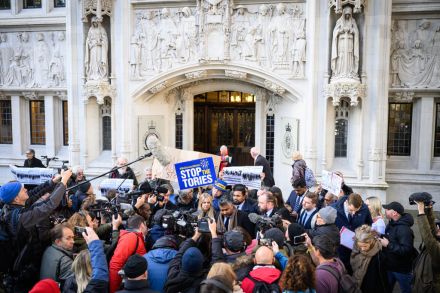
The Rwanda ruling is nothing to cheer about

From our UK edition

The government’s loss in its Rwanda appeal spells trouble for Rishi Sunak. But liberals are delighted: 'Massive result,' said the barrister Adam Wagner after the Court of Appeal ruled that would-be asylum seekers cannot be sent to the African country while their claims are processed. Sunak plans to seek permission to appeal to the Supreme Court – but his pledge to 'stop the boats' looks to be in trouble. Or is it? There is more to today's decision than meets the eye. The victory hardly resounding. Of the five grounds of appeal, ranging from super-technical ones like retained EU law and data protection issues to more general issues of conditions in Rwanda, only one was successful – and only by a majority of two to one (the Lord Chief Justice dissenting).

Brussels will regret its crackdown on Hungary’s migrant plan

From our UK edition

Hungary, a magnet for numerous would-be migrants because of its 110-mile land border with Serbia, has taken its own steps to stem the flow. One is brutally physical: a twelve-foot razor wire fence. The other is legal. Three years ago, Budapest passed a law preventing anyone not already lawfully resident seeking asylum, except through nominated Hungarian embassies abroad, one of which was that in Belgrade. The application had to be made in person there: the embassy would then decide whether to issue a temporary travel document allowing entry to Hungary while the application was processed.

Humza Yousaf’s troubling plan for an independent Scotland

From our UK edition

Even with Nicola Sturgeon politically hors de combat, Scotland's first minister Humza Yousaf has made it clear he intends to forge ahead with her plans to hold a second independence referendum. The Scottish government has produced its blueprint for the future constitution that could flow from such an independence vote. Any voter contemplating taking up Humza’s offer and voting Yes in a possible Indyref2 would do well to read this document closely. They could be letting themselves in for a great deal more than they thought. Put simply, the plan is to make the SNP’s soft-left Bruntsfield-style ideology an almost irremovable feature in Scottish public life. A lot will be familiar.

Sunak must resist the bid to sink the ‘stop the boats’ bill

From our UK edition

Parliamentary select committees can, on occasion, be wise, impartial and dispassionate. Unfortunately they are also vulnerable to being taken over by an unholy combination of those with an axe to grind, and members of the great and the good unwilling to rock the liberal boat. This is essentially what has happened to the Joint Committee on Human Rights (or JCHR). Its report on the Illegal Migration Bill, published over the weekend, is a case in point. The 'Stop the Boats Bill' aims to make it more difficult for irregular migrants to cross the Channel and then use judicial review and human rights laws as a means of presenting the UK with a fait accompli.

The university union may be beyond redemption

From our UK edition

Life is not terribly good these days for most university teachers. Colleges, once centres of collegiate administration run on a principle of de facto equality and open expression of opinion, are now top-down managed by a cadre of bosses more interested in spreadsheets than seminars, and image more than erudition, where an injudicious word can cause serious trouble. To add insult to injury, jobs at the lower end, previously fairly safe, are now precarious and pretty wretchedly paid. You might have thought the lecturers’ union UCU would be an effective counterweight to all this, especially since universities are to all intents and purposes public sector employers, with union representation correspondingly high, at something over 120,000. Unfortunately you would be disappointed.

Rishi Sunak’s Confucius Institute muddle

From our UK edition

Rishi Sunak’s promise to close down the Confucius Institutes in UK universities when he pitched for the Tory leadership sounded like a good idea. Sadly it was also ill thought out. In a liberal democracy it’s difficult just to close down organisations you don’t like by governmental order. His backtracking on that promise this week was therefore both predictable and understandable. Unfortunately the way he has chosen to do this has been a terrible exercise in bad judgment. To this extent the right of the Tory party are absolutely right to call him out.

British universities are beyond redemption

From our UK edition

There’s no doubt that the government has the best of intentions when it comes to clearing up the Augean stables of UK higher education: witness its setting up of the Office for Students to protect students’ interests against ever-more monolithic university management, and more recently this year’s Higher Education (Freedom of Speech) Act aimed at safeguarding the interests of both students and staff. However, all this leaves a much more awkward issue: what are we actually promoting? True, it’s the done thing for middle-class 18-year-olds to be sent away to university. True too that you still need a degree to obtain certain kinds of well-paid jobs.

Why Rishi Sunak should take the fight to Airbnb

From our UK edition

Last month Michael Gove suggested changing the law in England to allow tourist hotspots to force homeowners to seek planning permission before they can rent out holiday lets. Planning laws aimed at preserving the character of a locality are entirely consistent with conservative principles It didn’t go down well. Some on his own side, including hard hitters like Jacob Rees-Mogg, saw the notion of restricting homeowners’ rights as anti-commercial, anti-freedom and downright unconservative. Not surprisingly, Airbnb said it would fight the idea hard, joined by pressure groups representing those who had done well out of the Airbnb boom.