Andrew Tettenborn

Andrew Tettenborn is a professor of law at Swansea Law School

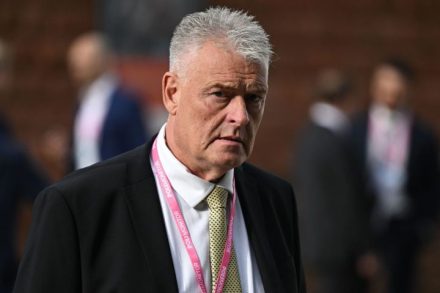
Joining Reform may be a smart move for Lee Anderson

From our UK edition

Richard Tice of Reform may not be the most charismatic party leader, but he has impeccable timing. The ink was hardly dry on Lee Anderson and Brendan Clarke-Smith's joint resignation letter following their support for Robert Jenrick's amendments to the Rwanda Bill, before he openly propositioned them to defect. Predictably Anderson told Christopher Hope straight away on GB News that he was not for turning. But things can change fast in politics. The idea that at least some of the New Conservatives should jump ship actually makes more sense than you might think, whether you look at things from the point of view of the people concerned, the Tory party or the country as a whole.

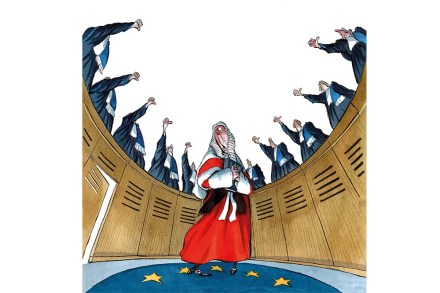
The European Court has become positively immoral

From our UK edition

Another new year, and on the very first day we hear of two cases where human rights law has made a laughing stock of our immigration system.  Gjelosh Kolicaj, an Albanian migrant given dual British citizenship after marrying a British woman (whom he later divorced), turned out to be a senior crime boss. After he got six years for money laundering, the Home Office said he should be stripped of his citizenship and deported. Immigration judges quashed the order: insufficient consideration had been given to his right to family life under article eight of the European Convention on Human Rights (from two children born here to a later wife) and a probation report suggesting a low (but not non-existent) risk of reoffending.

The trouble with the United Nations’s fringe organisations

From our UK edition

A new year is a good time for nations, like families, to review the institutions they support. For 2024 I have a suggestion for the UK: it could do worse than standing back and considering hard how it should deal in future with the United Nations and its offshoots. We’re not talking here about leaving the UN as a whole. Except for the lunatic Republican fringe in the United States, there is no serious call for any country to do this. Indeed, there are legal doubts about whether this is even possible, the charter being silent on the matter. (Indonesia purported to quit in the 1960s, but it soon changed its mind and the episode is now universally forgotten.

The Tories have messed up the return to imperial measurements

From our UK edition

Cheers! You will soon once again be able to buy champagne and wine in pint bottles – Winston Churchill’s favourite measure. It will be possible for the first time since an overbearing Common Market (as it was then) effectively put an end to the practice in 1973. This is very good news, and I’m certainly looking forward to drinking my first pint of fizz – the ideal unit for one person – over dinner.  But look further, and any satisfaction may well vanish in much the same way the bubbles in your celebratory glass might if you put it down too long. How this whole affair of reintroducing imperial measurements has been handled is a horrible sign of a flailing Tory administration that has lost its way.

Why was this Christian teacher hounded for her views on LGBT issues?

From our UK edition

Who’d be a teacher these days? Until about 50 years ago, your outlook didn’t matter very much provided you were reasonably competent. Today the profession is coming close to saying that anyone who doesn’t profess progressive and morally relativistic views shouldn’t bother applying. Glawdys Leger, an experienced Catholic teacher in a Church of England state school, expressed her views on LGBT issues during a religious education lesson. Leger also raised objections to teaching LGBT material. She was sacked by Bishop Justus CofE School in Bromley, south London, in May 2022, but her troubles didn't end there.

The CofE’s same sex blessings stance is even more illogical than the Vatican’s

From our UK edition

Traditionalists in the Church of England and the Catholic church don't, of course, always see eye to eye. But on the issue of gay marriage and same-sex relations they may have found some common ground. In a landmark ceremony last week, the Church of England blessed a same-sex couple's relationship for the first time. Prayers for two women – Catherine Bond and Jane Pearce – were held at St John the Baptist Church, in Felixstowe, Suffolk. As if by chance, this week we also heard about the same issue from the papal Dicastery, the Vatican body tasked with maintaining sound doctrine. Five conservative cardinals had submitted a dubium (i.e. awkward question) about whether blessings of same-sex unions were reconcilable with either scripture or church teaching.

The unexpected free speech threat coming from Northern Ireland

From our UK edition

Threats to free speech can come from unexpected places these days. A law passed in Northern Ireland has troubling implications for what can be said or reported about serious sexual misconduct, not only in Belfast, but also in London. Victims of sexual offences are granted lifetime anonymity in the UK. The law bans publications from printing anything that could publicly identify them. But since September, the Northern Ireland Justice (Sexual Offences and Trafficking Victims) Act goes way further. It extends the gag to 25 years after the victim’s death unless a court decides otherwise, and allows any relative down to a great-grandchild to petition the court to prolong it if it thinks this in the public interest.

If France can ignore the ECHR, why can’t we?

From our UK edition

A couple of weeks ago, according to a story broken last Friday in Le Monde, the French government did the unthinkable. ‘MA’, as he has been dubbed by the French press, is an Uzbek exile and alleged radical Islamist who has long been a thorn in France’s side. Allegedly linked to the Islamist party Hizb-ut-Tahrir (which he denies), he had fled Uzbekistan after facing criminal proceedings in 2015, and was denied refugee status in Estonia. France, having found him to be someone ‘embedded in the jihadist movement’ with a desire to fight in Syria, followed suit and served him an expulsion order.

The insidious powers lurking in the Criminal Justice Bill

From our UK edition

The Conservative party used to be the party of individual liberty. No longer, it seems – at least if the Criminal Justice Bill just introduced in the House of Commons is anything to go by. It’s not simply the worrying powers it promises that will interfere with people at home (for example, it contains police powers to enter homes without a warrant to search for items of stolen property, or to seize the knives you keep at home, potentially without compensation, on the mere suspicion that they might be used criminally). Discreetly lurking in the Bill (in schedule 6, since you ask) is something much more serious: something which comes very close to a power in the police to legislate permanently for what you and I are allowed to do in public.

Why is the UN speaking up for two jailed Just Stop Oil activists?

From our UK edition

We shouldn’t be surprised that Ian Fry, the United Nations’ rapporteur for climate change and human rights, has waded in on the jail terms handed to Just Stop Oil (JSO) activists. The UN has a growing habit of muscling in and trying to micromanage states' internal affairs, especially in cases where there’s a progressive point to be made. Fry said he was ‘particularly concerned’ about the sentences received by the two activists who scaled the M25 bridge over the Thames at Dartford last year. Marcus Decker and Morgan Trowland were convicted of causing a public nuisance, with Decker imprisoned for two years and seven months and Trowland for three years.

The Rwanda judgment was not a foregone conclusion

From our UK edition

This morning, the Supreme Court upheld the Court of Appeal’s judgment on the Rwanda plan and declared that the scheme is unlawful. The Court of Appeal had said that the principle of sending asylum seekers to foreign countries was unexceptionable. But the courts had to decide if Rwanda was likely to be a safe country which would not mistreat asylum seekers, or send them on to third countries where they would face mistreatment. It determined that Rwanda was not safe. The Supreme Court’s decision was, broadly, that the Court of Appeal had been right to take that line, and that the justices agreed with it.  This decision is not particularly good news for believers in democracy, or those who believe elected authorities should have the right to police borders.

Do churches and cricket clubs really need anti-terrorism training?

From our UK edition

One problem clearly emerged after an Islamist fanatic blew himself up at a major pop concert in the Manchester Arena in 2017, killing 22 other people. This was that no one there had a clue about how to react to events of this sort. The government promised action. Action we now have, in the form of the Terrorism (Protection of Premises) Bill announced in the King’s speech. Unfortunately, as with many well-intentioned 'something must be done' measures, this Bill, aimed at requiring a degree of terrorism preparedness at events like this, could well go too far the other way. If enacted as suggested, the cure could end up being worse than the disease.

Why did the United Nations hand a human rights job to Iran’s ambassador?

From our UK edition

What does Iran have to teach the world about human rights? The United Nations appears to think we have plenty to learn from a pariah state which backs Hamas, arrests and beats women for failing to wear a hijab, executes protesters and hangs gay people. In Geneva, the Social Forum of the UN Human Rights Council – essentially a human rights jamboree – opens today; its chair is Ali Bahreini, Iran’s UN ambassador, who will oversee a conference discussing the contribution of science, technology and innovation to the promotion of human rights. Iran, which has used facial recognition technology to identify dissidents, is likely to have some expertise here. It's beyond a joke, of course.

The EU’s muddled response to Gaza has exposed its flaws

From our UK edition

The EU's response to the war between Israel and Gaza has been badly muddled. While Rishi Sunak and Joe Biden have been making their view crystal clear on Israel’s right to defend itself against Hamas’s attacks, Josep Borrell, the top EU diplomat, has toed a different line. Borrell this week called for what was effectively an Israeli ceasefire to allow humanitarian aid into Gaza. Israel’s more ardent European allies are furious. 'We cannot contain the humanitarian catastrophe if Gaza’s terrorism continues. There will be no security and no peace for either Israel or the Palestinians if this terrorism continues,' Annalena Baerbock, Germany’s foreign minister, said.

Who do the police protect?

From our UK edition

The function of the police, one might have thought, was to protect the weak against the overbearing and the bullying. Unfortunately, a by-product of the Gaza crisis has been to suggest that, at least on the streets of London, a bit of carefully targeted thuggery against your political opponents can pay useful dividends. For some days now, the Campaign Against Antisemitism (CAA) has been raising awareness of the plight of abducted Israelis in Gaza by driving display vans around iconic parts of London. These vans are fitted with electronic billboards on the sides and back containing the names of children taken by Hamas from Israel a couple of weeks ago, and still holed up (assuming they are alive) in the Gaza Strip.

Donald Tusk’s victory will only please Brussels

From our UK edition

Change in Poland looks likely. A second exit poll gives the ruling Law and Justice party (PiS) the most votes, but not enough to form a majority. The nativist right-wing party Konfederacja might’ve helped them form a coalition, but even combined the two parties still don’t have the numbers. Ex-Eurocrat Donald Tusk, who leads Civic Platform (KO), says he has built a coalition with Lewica, on the left, and Third Way (TD), conservatives, that can govern Poland. The result is not particularly good for the Polish people, or for Europe, but the European Commission in Brussels, and progressives on the Continent generally, will be delighted. Brussels benefits twice over from Tusk’s coalition.

Suella Braverman’s Israel protest clampdown is troubling

From our UK edition

It is understandable that Suella Braverman has swiftly written to chief constables demanding them to take a tough line on potentially anti-Semitic protests. She pointed out that while it was true that explicitly supporting Hamas, a proscribed terrorist body, was ipso facto a crime, the police could go much further in discouraging demonstrations of this kind. Waving a Palestinian flag could in suitable circumstances be taken as amounting to a glorification of terrorism, another serious offence; the mere act of chanting ‘from the river to the sea, Palestine will be free’ might in some cases be a public order crime; and so on. And, she added, something had to be done about what people were saying on the internet. Online offending, she said, ‘is as serious as offline offending’.

Sunak’s smoking ban is a terrible policy

From our UK edition

What, you might ask, has Rishi Sunak been smoking? There is no way to spin as conservative the idea of working towards a complete ban on cigarettes by legislating a progressive age-related bar on buying tobacco. This is not conservatism as libertarianism or as the Scrutonian practice of not taking the axe to existing social institutions. The only serious precedent is not happy: think supremely bossy Jacinda Ardern, the New Zealand premier who brought in a similar draconian ban last December before abruptly leaving politics. Rather like Prohibition, this will open the door to bootlegging and racketeering Admittedly, there is on one level a kind of abstract logic here. A lacklustre Keir Starmer, seeking a shiny new health policy.

Suella Braverman’s sex offender crackdown won’t work

From our UK edition

It’s easy to see the thinking behind Suella Braverman’s plan announced in Manchester today to prevent sex offenders changing their name. In a country without ID cards or universal means of identification, it is fairly easy discreetly to disappear if you are at the margins of society, and possibly even to find a way of claiming at least some form of social security. This obviously defeats much of the object of having a sex offenders’ register, since it can in too many cases reduce the official record to something more like Gogol’s rentroll of dead souls. True, it is already technically a crime for anyone on the register not to tell the police of any change of name, address, or other details.

Letting Strasbourg rule on net zero is a risk to democracy

From our UK edition

Any serious politician knows perfectly well by now that net zero 2050 won’t fly democratically. There was an inevitability about Rishi Sunak graciously allowing us longer to keep buying our petrol cars and using our gas boilers, not to mention Emmanuel Macron’s own subsequent climbdown on the gas boiler issue in France earlier this week. Their voters would not have stood for anything else. But where does this now leave the serious climate activist? Effectively they have two choices: make the best of a democratic process which has turned against them, or move to take such decisions out of the hands of the voters.