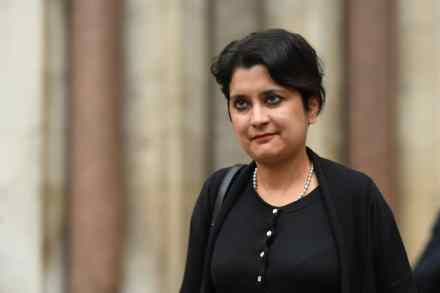
Andrew Tettenborn

Andrew Tettenborn is a professor of law at Swansea Law School

Allison Bailey and the trouble with Stonewall

From our UK edition

When a pressure group moves from promoting the rights of a minority to trying to micromanage the behaviour of the majority, we should be worried. When large numbers of organisations in both the public and private sectors dance to the tune of that body, we should be more so. Stonewall is a case in point, if the evidence given at an employment tribunal case decided yesterday involving commendably pugnacious lesbian activist Allison Bailey is anything to go by. Founded in 1989 as a gay equality campaign group, in recent years Stonewall has diversified into aggressively promoting trans activism. As an organisation, it has also become pretty rawly commercial.

Will the police finally see sense on ‘non-crime hate incidents’?

From our UK edition

Sex offences, violence and fraud have spiked, according to the latest crime figures. Meanwhile, the number of convictions remains staggeringly low: in England and Wales, more than 99 per cent of rapes reported to police do not end in a conviction. In short, there's plenty for the police to get on with. Yet worryingly, officers are sometimes kept busy investigating legitimate debate. Finally, though, there are signs that police chiefs are seeing sense. The College of Policing, the national standards body for police, has said that officers need to focus on cutting crime, take a common sense approach and 'not get involved in debates on Twitter'.

Suella Braverman’s human rights critics are missing the point

From our UK edition

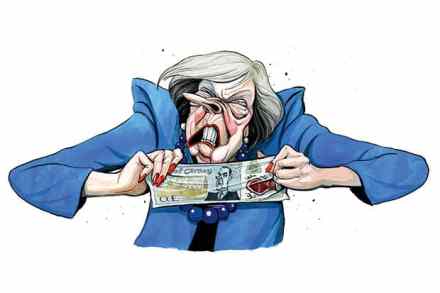
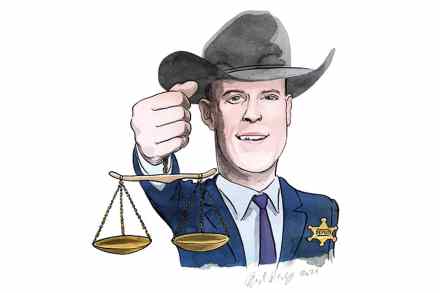
Yesterday Suella Braverman unequivocally stated that, as Prime Minister, she would work to withdraw Britain from the European Convention on Human Rights (ECHR). The reaction she encountered on social media was, of course, predictable. To say she was portrayed as a right-wing nut-job, a kind of amalgam of Cruella de Vil and Josiah Bounderby, Dickens’s heartless capitalist in Hard Times, is probably an understatement. As usual in politics, however, there is a bit more to this than meets the eye. To begin with, Suella has only said directly what other politicians have hinted at before: think Theresa May’s tentative suggestion about exiting the ECHR in 2017, briefly floated and hurriedly withdrawn as too hot to handle.

The European Court is powerless to stop Russia

From our UK edition

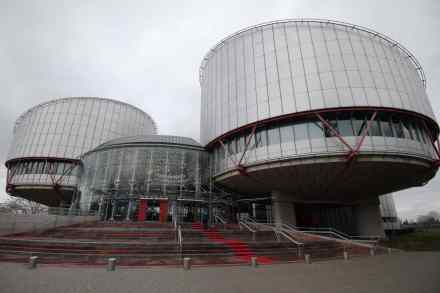
Last Thursday saw a wry twist to the Ukraine war. The European Court of Human Rights solemnly intoned that Russia should stop the execution of two Englishmen condemned to death in the Donetsk People's Republic for fighting for Ukraine. It knew perfectly well it was screaming into the void. Russia, though technically in the ECHR till September, had said it would ignore any of the court’s orders; and there is no doubt whatsoever that the People’s Republic will do exactly the same. This is not the first time the court has raised eyebrows by issuing peremptory declarations of this kind. Just under three weeks ago, a plane was about to take off carrying asylum seekers to Rwanda. The English courts had refused to grant any injunction.

The Church of England’s misguided quest for ‘racial justice’

From our UK edition

As if the Church of England didn’t have enough to worry about with leaky roofs, empty churches and lack of money to pay priests, it now has the Archbishops’ Commission for Racial Justice, or ACRJ. Appointed a year ago, this group of twelve of the great and good, under ex-Labour Cabinet minister Paul Boateng, has just published its first report. This document is certainly full of good intentions. Whether it has much to offer the ordinary churchgoer, or for that matter the Church of England as a whole, is rather more doubtful. Go into any church this Sunday, and it’s a racing certainty that you won’t find much old-fashioned racism.

It’s time to trust democracy again after Roe v. Wade

From our UK edition

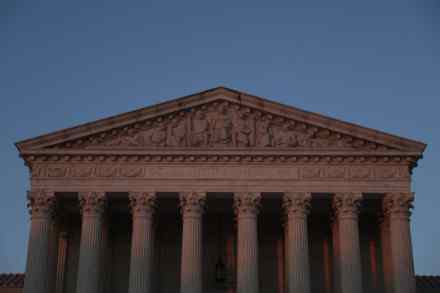
Progressive outrage greeted this week’s US Supreme Court majority decision which overturned Roe v. Wade. ‘Extreme ideology,’ thundered Joe Biden. It was ‘a huge blow to women’s human rights’ according to Michelle Bachelet at the UN; a case of ‘back to the Middle Ages,’ in the view of one melodramatic performer at Glastonbury. These are understandable views. But they are still misguided. Some background can help. Before January 1973 abortion in America was a state law matter. Some states were restrictive, some liberal: it all depended on public opinion and local politics. Roe v. Wade changed all that.

The EU’s solidarity for Ukraine is a sham

From our UK edition

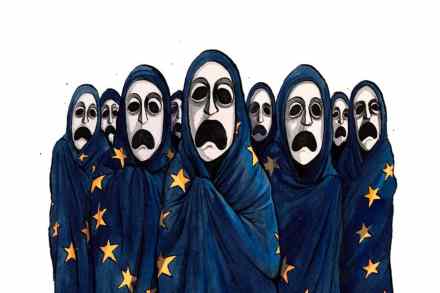
The EU will formally add Ukraine to its list of candidate countries this Friday. But if you look carefully beneath the pomp, you will see this is much less of a big deal than Brussels would have you believe. For one thing, the gesture is symbolic. The list of official EU candidates is a bit like the waiting list for a smart London club. Being on it may be flattering, but it does not guarantee a quick decision; nor does it rule out the possibility of one or more black balls if and when your name eventually comes up.  Albania, North Macedonia, Montenegro, Serbia and Turkey are all current candidates on the list. All are respectable nations, but don’t hold your breath as regards an early admission for any of them.

The European court has seriously overstepped over Rwanda

From our UK edition

Last night’s abrupt order from the European Court of Human Rights that led to the grounding of the first Rwanda deportation flight delighted progressives everywhere. They will of course say – rather in the fashion of twentieth-century home secretaries calmly refusing to reprieve a condemned murderer – that the law is merely taking its course, and that we should be proud that the rule of law has been upheld. This sounds comforting. It is also wrong-headed. The Rwanda debacle in fact raises very serious questions about the legitimacy of the Strasbourg judges and their interference with national administrations. To remind you of the background, concerted lawfare in the English courts failed to block the flight.

Welsh Tories would be wise to split from the Conservatives

From our UK edition

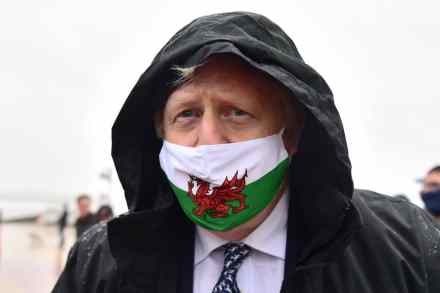
Conservatives in Wales are jumpy. Seeing Boris’s name as poisonous on the doorstep, a number of them have suggested disaffiliating from the national party and forming their own Welsh Conservatives as the party of the right west of Offa’s Dyke. Some in the central party in London are, perhaps unsurprisingly, aghast: one unnamed Tory MP has referred apocalyptically to the Balkanisation of the Conservatives. At least one very vociferously unionist Senedd member, James Evans, is also furious. They should not be worried. Why? Because the break-up of the Tory party is actually rather a forward-looking idea, beneficial in the long term to Conservatism. CCHQ should welcome this plan with open arms. For one thing, the union issue is a red herring.

How the Tories can avoid a repeat of their confidence vote conundrum

From our UK edition

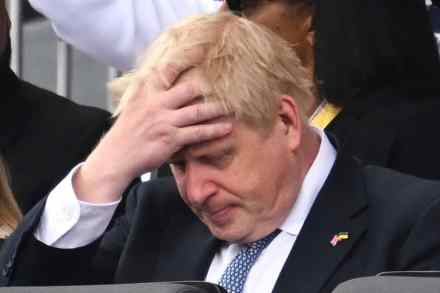
Boris Johnson insists that his victory in last night's confidence vote means he will be able to 'draw a line under issues our opponents want to talk about'. But what the result actually shows, as Boris undoubtedly knows, is that even some of those who backed him in the vote now want him gone. Why? Shortly after the debacle, Matthew Parris in the Times hit the nail on the head. One minister had, he wrote, let the cat out of the bag when he (or she) confided to him: 'He’s appalling: he’s got to go' before trooping in to vote against the no-confidence motion with gritted teeth.

In defence of MPs’ second jobs

From our UK edition

Should MPs be allowed second jobs? In the wake of last year's Owen Paterson scandal, in which it was revealed the Tory MP had breached lobbying rules, there was a clamour to clamp down on Parliamentarians’ outside income. The Commons Standards Committee toyed with the idea of placing some restriction on the time MPs could spend on extra-Parliamentary employment, or on the amounts they earned from it. But now the Committee has decided against taking action. Voters will be unhappy, but this is a decision that should be welcomed. Why? Because outside work by politicians is not a distraction to be avoided, as some more puritanical MPs have it. More often it's something that usefully informs debate and Committee work.

The EU is hopelessly muddled on Ukraine

From our UK edition

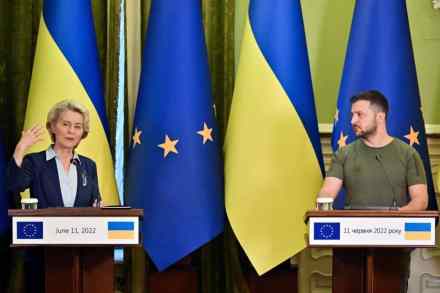
A couple of weeks ago Ursula von der Leyen portentously announced a further package of EU sanctions against Russia – the sixth, in case you had lost count. No doubt an underling immediately told Vladimir Putin. Most likely, that adviser will have been waved away; Vladimir has more important matters to think about. Much of the announcement was small beer. Putin won’t be shaking in his shoes at the thought that a few more of his top brass are being sanctioned, the odd bank removed from Swift, three broadcasters silenced in the EU, and a bar on the EU supply of corporate services like accountancy to Russian companies.

In defence of a British bill of rights

From our UK edition

Amnesty International and Stonewall are no strangers to criticising the government. This week they've been at it again: blasting Dominic Raab's plans to make adjustments to the Human Rights Act by replacing it with a British Bill of Rights. But they are wrong to attack an approach that most Brits will realise is perfectly sensible. Raab’s plan, which was set out in the Queen's Speech yesterday, is simple. Britain will remain in the European Convention on Human Rights when it comes to international matters, but when interpreting domestic laws, it will change its emphasis slightly.

The EU is trying to bring Hungary to heel

From our UK edition

If there was a word in Euro-speak for ‘Move on, nothing to see here,’ the EU would undoubtedly have used it in its announcement yesterday about Hungary. Brussels has formally notified Budapest that it is invoking the so-called ‘conditionality mechanism’ against it, meaning a supermajority within the EU can vote to withhold funds from a member state where there is a threat to the rule of law coupled with direct effects on the sound financial management of the EU budget or other EU financial interests. The notification itself has not been publicised; but everything, the EU says, is in order.

Could Shami Chakrabarti torpedo Priti Patel’s Rwanda bill?

From our UK edition

Priti Patel’s reforms to the rights of asylum seekers have predictably scandalised the House of Lords. Befitting what is now effectively a club for patricians and liberals who hate Boris Johnson, it duly sent her Nationality and Borders Bill back badly mauled. The Commons excised these amendments in short order; today, the Lords will be asked to restore them. But will it do what it's supposed to? This is a dangerous moment for the government – not least because Shami Chakrabarti's proposed amendment could torpedo the whole project. This is because the most sweetly reasonable change her fix is trying to make is also the most potentially catastrophic.

The relentless march of Europe’s zombie centrists

From our UK edition

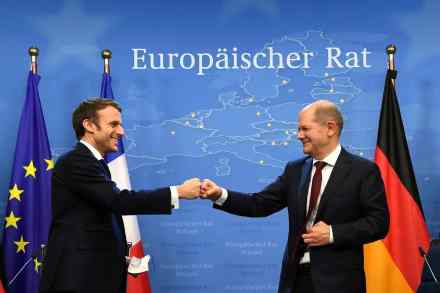
Journalists rarely had it so easy as when it came to writing up the final result of the French presidential election on Monday morning. The copy almost wrote itself: the triumph of moderation, demonstrated by a convincing win for centrist Emmanuel Macron over his far-right challenger Marine Le Pen; the clear defeat of disruptive extremist politics that might otherwise have threatened European stability; and the return to EU business as usual, with euroscepticism once again off the table and the re-establishment of a stable Franco-German axis in charge of Brussels. Easy, but ultimately unconvincing. Centrists who can be trusted not to be too radical may indeed be in power in France, as they have been in Germany since the installation of Olaf Scholz as Chancellor late last year.

The real danger Marine Le Pen poses to the EU

From our UK edition

As the French Presidentielle hots up for the final vote on Sunday week, both Macron and Le Pen are fighting bitterly for the support of the erstwhile supporters of the left-winger Mélenchon who came a very respectable third in last Sunday’s poll. From the great and the good, who detest Le Pen, there is a concerted call to all and sundry to form an anti-far-right alliance and vote for Macron (where necessary holding their noses) so as to replicate what happened in 2017. It is fair to say that much of what is said against Le Pen is misleading. Her economic policies are if anything more Mélenchon than Macron: lowering the pension age, reducing the burden on young families, and reducing the tax on fuel.

Ukraine has exposed the EU for what it really is

From our UK edition

Since the Ukraine conflict erupted, the EU has had a great deal to say about its sympathy for Ukraine as a brother European state. But if you look closely it has not actually done a great deal to derail Vladimir Putin’s war machine. Even the grisly discoveries at Bucha has wrought little change. Not surprisingly, the patience of some Europeans is now wearing thin. It's true that after the grim findings in recent days in newly-liberated Ukrainian towns, the EU did announce further sanctions. But for all the fanfare they were small beer. A few more banks were boycotted; the ageing Russian merchant marine was excluded from EU ports; and bars were put on imports of oil and coal.

Viktor Orbán’s victory has dashed hopes in Brussels

From our UK edition

The scale of Viktor Orbán's victory in the Hungarian election overnight has taken even his supporters by surprise. Against many predictions, Orbán has actually improved his position: he has retained for his Fidesz party the two-thirds parliamentary majority necessary to override certain constitutional challenges to change a number of constitutional rules. Progressive opinion, in and out of Brussels, is not difficult to gauge. This is an unfair victory in a gerrymandered electoral system by someone who used an inflated media influence to trounce his opponent Péter Márki-Zay, who called for close EU co-operation and an increase in anti-Putin zeal. It shows Hungary as unconcerned with the rule of law.

Don’t prosecute Soldier F

From our UK edition

Sometimes old grievances are best laid to rest. That was certainly the view of Tony Blair when his government issued nearly 200 ‘comfort letters’ to Irish nationalist gunmen in the wake of the Good Friday Agreement. But a decision by the Northern Ireland High Court on Wednesday will upend that principle, setting back years of compromise and reconciliation. For some time it has been all but impossible to prosecute IRA men for murders committed during the Troubles. British security forces, however, remain vulnerable, although most are now in their seventies and long retired.