Andrew Tettenborn

Andrew Tettenborn is a professor of law at Swansea Law School

The EU’s bid to control Hungary may backfire

From our UK edition

To anyone looking in from the outside, the ongoing argument between Budapest and Brussels over EU subsidies, which flared up again this week, looks both drearily legalistic and eye-glazingly boring. However, as often happens with the EU and its member states in eastern Europe, there is a good deal more to all this than meets the eye. At issue is a tad over €13 billion: €7.5 billion in ‘cohesion funds’ (i.e. regular subsidies to help out poorer states) and €5.8 billion in Covid recovery funds. Both would normally have gone to Hungary without serious question. However, these are not normal times.

The Tories should defend free speech, not neglect it

From our UK edition

The government’s Online Safety Bill is coming to look more and more like some ghastly juridical juggernaut: a vessel grimly unstoppable, even if no-one quite knows where it is heading or where they want it to go. The latest changes to the Bill, announced this week, look very much like an attempt to make the best of a bad job. They leave untouched the provisions of the legislation aimed at safeguarding the young, but slightly relax it as regards others. The aim is the awkward one of placating three disparate constituencies: child protection activists, those desperate to be seen to be doing their bit to bridle Big Tech, and those who value free speech online. And they are a mixed bag. The good news first.

New Zealand’s Supreme Court is playing a foolish game of politics

From our UK edition

If you are still trying to come to grips with our Supreme Court’s delicate relation with the politics of Scottish independence, spare a thought for the people of New Zealand. Their courts have just dived headfirst into the political pool with no such hesitation as affects our justices. The result is not encouraging. Three years ago, numerous schoolchildren in New Zealand took part in a series of Greta Thunberg-inspired school strikes. Shortly after that, a youth organisation called Make it 16 was formed to agitate for a voting age of 16 rather than 18. Its argument was that if youngsters are likely to be affected by such matters as climate change, they should get a formal say in dealing with them.

Rishi Sunak should consider levelling down HS2

From our UK edition

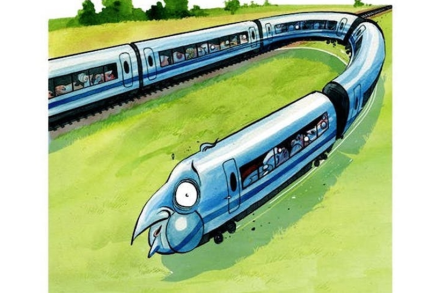
If you’re after a lesson in how to lose friends and alienate people, look no further than the government’s cack-handed approach to improving transport in the Red Wall. Last week Grant Shapps announced insouciantly to any northerner who was listening that there was not ‘much point’ (his words) in an important part of the Northern Powerhouse rail project, namely a section of brand-new track covering much of the route between Manchester and Leeds. Although this would have slashed journey times between the west and east coasts at Liverpool and Hull, given the region a source of pride and put Bradford firmly on the rail map, he thought it simpler to put in some improvements on the existing, but already fairly congested, tracks between Leeds and Manchester.

Poland wants reparations from Germany

From our UK edition

If you think British politics is cracked, spare a thought for Europe. A spat between Germany and Poland is rapidly developing into a full-scale row involving not only those countries but the EU as a whole. Just a couple of weeks ago, Polish foreign minister Zbigniew Rau of the ruling PiS (Law and Justice) party handed an explosive diplomatic note to his German equivalent, Annalena Baerbock, on a visit to Warsaw to discuss security. In it was a formal legal demand that Berlin pay a cool €1.3 trillion in reparations for damage done to the Polish state during world war two. Ms Baerbock instantly made it clear that in the view of the German government the issue of reparations for events 80 years ago was long closed and it did not owe a cent. How will all this end?

How Liz Truss can wrongfoot Labour over human rights

From our UK edition

Liz Truss's government has taken a deserved pasting in the polls for its slapdash economics, but all is not lost for the Tories: the party is doing a good job of holding the line on some of its more enlightened social policies – not least on ensuring freedom of speech. Justice Secretary Brandon Lewis's appearance at a fringe event yesterday was understandably overshadowed by other events. But his comments are too important to go unnoticed. Lewis told a Policy Exchange meeting he intended to fashion free speech laws to make clear there was a right to say what one thought, even if it offended others.

Is the EU’s crackdown on Hungary a bluff?

From our UK edition

Brussels appeared to be finally getting serious with a rogue member state this week. A couple of days ago it announced that it would use its power – which it obtained last year – to withhold €7.5 billion (approximately £6.4 billion) from Hungary unless Viktor Orbán’s Fidesz government cleaned up its act on corruption. The EU, it is fair to say, has a point. Like a number of other eastern European countries, Hungary is not known for the trustworthiness of its officials, or for its scrupulous avoidance of nepotism and favouritism in awarding state contracts. Nevertheless, as is often the case with EU affairs, outward appearances can be misleading. The reality is a good deal murkier. But it is also rather more interesting.

The EU is hoping to catch Liz Truss on the backfoot over Brexit

From our UK edition

A vital part of gamesmanship, according to the British author Stephen Potter, is to disconcert your opponent before they have joined the game. True to form, gamesmanship has already begun in earnest on one matter likely to be high up in Liz Truss’s pending in-tray: the Northern Ireland Protocol negotiations. It comes both from the EU and from Irish nationalists. The Protocol is that part of the EU withdrawal arrangement aimed at preserving the integrity of the EU single market, despite the existence of open borders between the UK and Ulster and Ulster and the Republic.

Is university good value for money?

From our UK edition

Opinion polls these days don’t normally raise more then passing interest. But there are always exceptions worth a second look. One such was a YouGov survey out on Wednesday on what people thought about university finance. The big question was whether they believed nearly £30,000 for three years at college was good value for money. Among graduates, many of whom will have paid these fees, the answer (by a margin of well over two to one) was clear. They didn’t. For good measure, nearly half of the graduates polled thought most degrees actually left them worse off overall, against just over a third who thought they led to financial benefits. Many, no doubt, will draw a predictable conclusion.

Britain doesn’t need a public holiday to remember the slave trade

From our UK edition

A fair number of episodes in the history of this country are frankly best forgotten. The last thing to do with them, one might have thought, would be to memorialise them with bank holidays. Giving people in Britain a day off to mark, say, Cromwell’s harrying of Ireland in the 17th century, or the starting of the Boer War in the interest of corporate capital in the 19th, would at the very least raise eyebrows. Yet yesterday, on Unesco’s International Day for the Remembrance of the Slave Trade, black studies academic Kehinde Andrews suggested exactly this in respect of one such event: namely, our involvement in slavery. There was, he said, ‘really nothing more important to Britain’s development.

The EU’s bullying behaviour over the Horizon programme

From our UK edition

You wouldn’t normally electrify the world with a press release detailing a formal UK legal demand for discussions and possible arbitration about non-admission to Horizon Europe, a EU-led scientific research programme which in all probability most people will never have heard of. But, as you may have gathered from recent news reports, there is more to this episode than meets the eye. It actually tells us a fair amount about the Brexit process, and perhaps more about the EU. Set up in 2021 by the EU with a budget of €95.5 billion to be spent over seven years, Horizon Europe is a kind of super Euro-research council: an institution dedicated to promoting and funding high-powered international scientific research with public money.

How Hungary and Poland could shatter the EU’s power

From our UK edition

Is the EU about to shatter? There is increasing talk of it after the bloc’s well-publicised difficulties with Poland and Hungary in the last week or so. This is almost certainly premature: nevertheless, the events are significant, and even if they do not break the EU they could precipitate some profound changes. For some time, undeclared guerrilla war has subsisted between the EU and its two maverick eastern members. Both face multiple court complaints from Brussels about what it sees as rule of law issues and they see as their internal affairs. Hungary is facing allegations of infringement of media freedom and LGBT rights, Poland on stated threats to judicial independence and the supremacy of EU law.

The problem with Justin Welby’s environmentalism

From our UK edition

There is an excellent religious case to be made for environmentalism. Roger Scruton ten years ago made the point that a ‘natural piety’ is inherent in most of us. Scruton argued this was a call to be responsible for the environment and urged us to love the earth and not to exploit it. This argument sweetly slips into theological terms. The earth is not there to satisfy as many of our crass secular desires as possible ,it is there to give us – and very importantly our descendants – the opportunity to be closer to God, be this moral, aesthetic or otherwise. Justin Welby, nominal head of the Anglican communion, is undoubtedly on board with environmentalism. He made this clear in a keynote speech on Sunday at the Lambeth Conference.

Allison Bailey and the trouble with Stonewall

From our UK edition

When a pressure group moves from promoting the rights of a minority to trying to micromanage the behaviour of the majority, we should be worried. When large numbers of organisations in both the public and private sectors dance to the tune of that body, we should be more so. Stonewall is a case in point, if the evidence given at an employment tribunal case decided yesterday involving commendably pugnacious lesbian activist Allison Bailey is anything to go by. Founded in 1989 as a gay equality campaign group, in recent years Stonewall has diversified into aggressively promoting trans activism. As an organisation, it has also become pretty rawly commercial.

Will the police finally see sense on ‘non-crime hate incidents’?

From our UK edition

Sex offences, violence and fraud have spiked, according to the latest crime figures. Meanwhile, the number of convictions remains staggeringly low: in England and Wales, more than 99 per cent of rapes reported to police do not end in a conviction. In short, there's plenty for the police to get on with. Yet worryingly, officers are sometimes kept busy investigating legitimate debate. Finally, though, there are signs that police chiefs are seeing sense. The College of Policing, the national standards body for police, has said that officers need to focus on cutting crime, take a common sense approach and 'not get involved in debates on Twitter'.

Suella Braverman’s human rights critics are missing the point

From our UK edition

Yesterday Suella Braverman unequivocally stated that, as Prime Minister, she would work to withdraw Britain from the European Convention on Human Rights (ECHR). The reaction she encountered on social media was, of course, predictable. To say she was portrayed as a right-wing nut-job, a kind of amalgam of Cruella de Vil and Josiah Bounderby, Dickens’s heartless capitalist in Hard Times, is probably an understatement. As usual in politics, however, there is a bit more to this than meets the eye. To begin with, Suella has only said directly what other politicians have hinted at before: think Theresa May’s tentative suggestion about exiting the ECHR in 2017, briefly floated and hurriedly withdrawn as too hot to handle.

The European Court is powerless to stop Russia

From our UK edition

Last Thursday saw a wry twist to the Ukraine war. The European Court of Human Rights solemnly intoned that Russia should stop the execution of two Englishmen condemned to death in the Donetsk People's Republic for fighting for Ukraine. It knew perfectly well it was screaming into the void. Russia, though technically in the ECHR till September, had said it would ignore any of the court’s orders; and there is no doubt whatsoever that the People’s Republic will do exactly the same. This is not the first time the court has raised eyebrows by issuing peremptory declarations of this kind. Just under three weeks ago, a plane was about to take off carrying asylum seekers to Rwanda. The English courts had refused to grant any injunction.

The Church of England’s misguided quest for ‘racial justice’

From our UK edition

As if the Church of England didn’t have enough to worry about with leaky roofs, empty churches and lack of money to pay priests, it now has the Archbishops’ Commission for Racial Justice, or ACRJ. Appointed a year ago, this group of twelve of the great and good, under ex-Labour Cabinet minister Paul Boateng, has just published its first report. This document is certainly full of good intentions. Whether it has much to offer the ordinary churchgoer, or for that matter the Church of England as a whole, is rather more doubtful. Go into any church this Sunday, and it’s a racing certainty that you won’t find much old-fashioned racism.

It’s time to trust democracy again after Roe v. Wade

From our UK edition

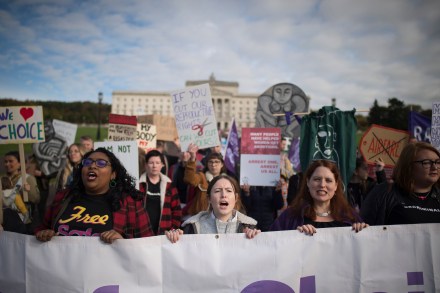
Progressive outrage greeted this week’s US Supreme Court majority decision which overturned Roe v. Wade. ‘Extreme ideology,’ thundered Joe Biden. It was ‘a huge blow to women’s human rights’ according to Michelle Bachelet at the UN; a case of ‘back to the Middle Ages,’ in the view of one melodramatic performer at Glastonbury. These are understandable views. But they are still misguided. Some background can help. Before January 1973 abortion in America was a state law matter. Some states were restrictive, some liberal: it all depended on public opinion and local politics. Roe v. Wade changed all that.

The EU’s solidarity for Ukraine is a sham

From our UK edition

The EU will formally add Ukraine to its list of candidate countries this Friday. But if you look carefully beneath the pomp, you will see this is much less of a big deal than Brussels would have you believe. For one thing, the gesture is symbolic. The list of official EU candidates is a bit like the waiting list for a smart London club. Being on it may be flattering, but it does not guarantee a quick decision; nor does it rule out the possibility of one or more black balls if and when your name eventually comes up.  Albania, North Macedonia, Montenegro, Serbia and Turkey are all current candidates on the list. All are respectable nations, but don’t hold your breath as regards an early admission for any of them.