Andrew Lambirth

Neglected master

From our UK edition

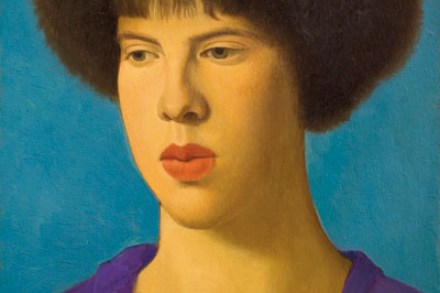
Every so often, about once a decade, the work of Mark Gertler (1891–1939) is rediscovered and exhibited. I remember seeing excellent shows of his work at the Ben Uri Art Gallery in 1982 and in 2002, and at Camden Arts Centre in 1992. Each time a well-selected body of his paintings is gathered together, we are reminded of the extraordinary talent of this young artist, who tragically took his own life. Yet for many of those who care about art, Gertler is still best remembered as the wild bohemian obsessed with the Bloomsbury siren Dora Carrington. Certainly, Gertler’s 1913 portrait of her, a striking example of his Neo-Primitive tempera style in the key of blue, and one of the many treats of this exhibition, doesn’t quite explain the attraction.

Green fingers

From our UK edition

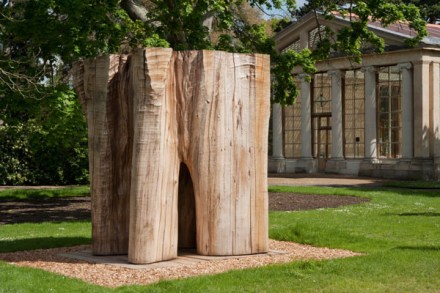
The last time I visited Kew was to see the installation of Henry Moore’s sculptures in 2007. Moore’s monumental bronzes made an enormous impact on the botanical gardens, so much so that the gardens were in danger of becoming merely a backdrop for the sculpture. Although a good many people came to see the exhibition, it was felt by the authorities at Kew that the crowds took away a greater appreciation of Henry Moore than they did of the Royal Botanical Gardens. So, when another sculptor was invited to show at Kew, the intention was that he or she would be involved more closely with the aims of the institution. Who better than David Nash (born 1945), known worldwide for his work with trees?

Picturing Dickens

From our UK edition

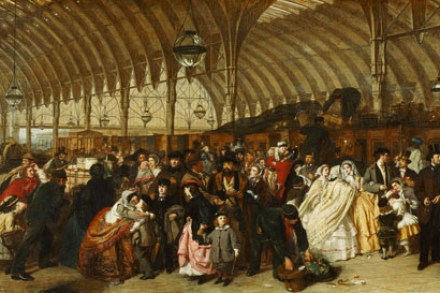
In this Olympic year, when we feel less guilty than usual about promoting and celebrating all things British, it is appropriate to be lauding our greatest writers. Shakespeare is commemorated at the British Museum, but what about Dickens? Unbelievably, in what is after all the bicentenary of his birth, the Charles Dickens Museum in Doughty Street is closed. Thank goodness the Watts Gallery has had the initiative to mount an exhibition devoted to Dickens’s relationship with art — at least somewhere the spirits of Phiz, Dolly Varden and Little Nell may disport themselves with Olympic pizazz in a museum setting. That is, if you think Little Nell would be up for it...

Heavenly bodies

From our UK edition

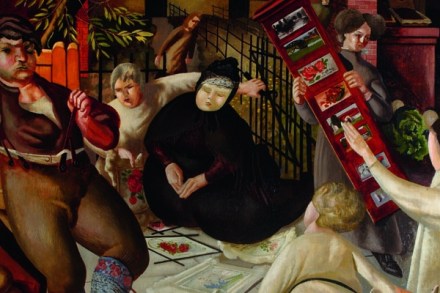
Fifty years ago, the Stanley Spencer Gallery was founded in a converted Wesleyan Chapel by a group of local enthusiasts who wanted to celebrate the extraordinary achievement of Cookham’s most famous son. As Joan George recounts in her fascinating book, Stanley Spencer Remembered (Taderon Press, £6), at the gallery’s inauguration, Gilbert Spencer (Stan’s younger brother) quoted an inscription remembered from childhood on the chapel’s wall: ‘How amiable are thy tabernacles O Lord of Hosts.’ ‘Nowhere,’ declared Gilbert, ‘would its message be more appropriate than in this Gallery.

Beguiled by bronze

From our UK edition

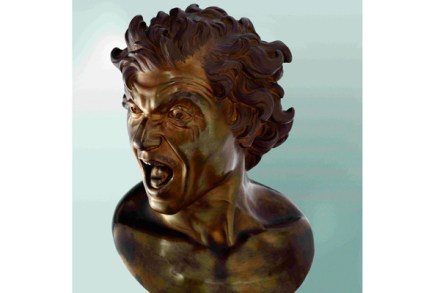
There are nearly 160 bronze sculptures ranged throughout the Royal Academy’s main galleries in Bronze, a glorious exhibition (until 9 December) covering a period of 5,000 years — effectively the entire history of the medium. The progression of this durable and universal art form is laid out at a relaxed pace in an exhibition that spans both grandeur and intimacy. Some people have complained about the installation, finding it difficult to follow or too competitively arranged, but I enjoyed it tremendously. This is a remarkable survey of a fascinating subject and the Academy must be congratulated on entrusting it to the capable hands of David Ekserdjian, Professor of History of Art and Film at the University of Leicester.

Under the skin | 19 September 2012

From our UK edition

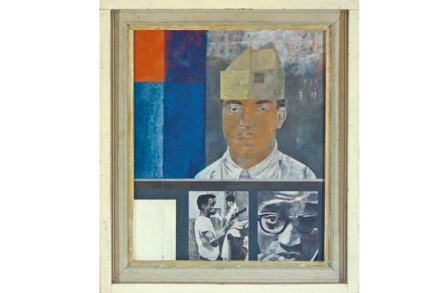
John Berger (born 1926) is one of the most intriguing and richly controversial figures in British arts and letters. Actually, since he lives full-time in France, he can scarcely be considered English in any meaningful way, and is indeed an international figure, widely regarded outside this country as one of Europe’s greatest intellectuals and quite often as some sort of cultural guru. Here he is thought of as a Marxist art critic, a dangerously potent broadcaster and a writer or novelist who defies categorisation. One suspects he is a bit of an embarrassment to the arts establishment, so he tends to be ignored.

Connecting threads

From our UK edition

The past few months have been busy for Jock McFadyen. Substantial commercial shows of his work have been held in London and Edinburgh, he has been elected a member of the Royal Academy, and a retrospective of four decades of his painting is currently on view at the Fleming Collection in Berkeley Street, Mayfair (until 17 October). Although Scottish by birth (he was born in 1950 in Paisley and brought up on the outskirts of Glasgow), he has lived most of his life in London. All the men in his family worked in the shipyards, but his father took a job in England when McFadyen was 16, so he came south in 1966 and stayed on to become an artist. He made his name in the 1980s with a brand of tough Hogarthian realism that focused on East London low-life.

Cut to the Chase

From our UK edition

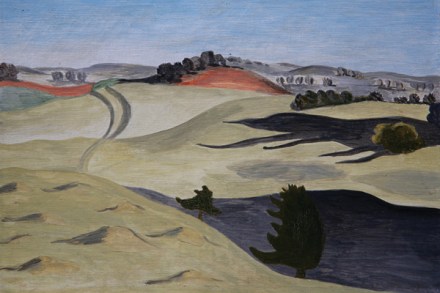
Circles and Tangents sounds like a show of abstract art, but actually the title is somewhat misleading. As Vivienne Light, the exhibition’s curator and author of the accompanying book, explains, the circles are intended to denote networks of artists (not the circular forms in a Ben Nicholson painting, though Nicholson is included in the show), and the tangents are really digressions. Clear? Put more simply, the exhibition focuses on art made on or about Cranborne Chase, the lovely unspoilt stretch of Dorset landscape once William the Conqueror’s hunting ground and more recently the inspiration for countless painters and sculptors.

Conversation pieces

From our UK edition

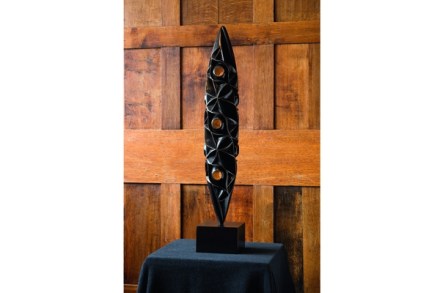
Anyone interested in art holidaying in the Lake District this summer — or indeed taking a short break in the Lakes — is in for a treat. The Lakeland Arts Trust, which administers both Blackwell and Abbot Hall, has mounted a pair of exhibitions which offers a range of painting and sculpture a good deal better than most things currently on view around the country. And many people may find that tuning into the wild beauty of Cumbria will help them to look with greater enjoyment and discernment at contemporary art. Certainly Baillie Scott’s magnificent 1898 Arts and Crafts house, Blackwell, on the shores of Lake Windermere, is the perfect setting for Halima Cassell’s work in clay, glass, marble and porcelain.

Slow art

From our UK edition

With the death of the critic and historian Robert Hughes, a great beacon has gone out in the art world of the West. I take his absence personally, not because I knew the man (I met him only once), but because he was such an invigorating and perceptive guide to excellence. Of course I didn’t agree with everything he said, but he wrote like an angel (possibly a fallen one) and he certainly made you think and even revise your opinions. Although I was aware that he’d been unwell for a long time, I was unprepared for his death at the age of 74, and feel robbed of the books he didn’t write. What happened to the second volume of his memoirs, and what else might he have got around to writing?

Unholy alliance

From our UK edition

The British Museum has collaborated with the Royal Shakespeare Company on this exhibition, in order to make links between the rich array of BM treasures and Shakespeare’s plays. I’ve never been very convinced about the intermingling of video screens and art: people almost always gravitate to the moving image, particularly if words are involved and people featured. Clips of actors rolling out Shakespeare’s lines with every appearance of enjoyment are bound to capture the attention of the audience at the expense of artefacts, which simply don’t have the same drama or human interest. ‘Oh look, there’s Siân Phillips — or is it Harriet Walter?

Gentleman abstractionist

From our UK edition

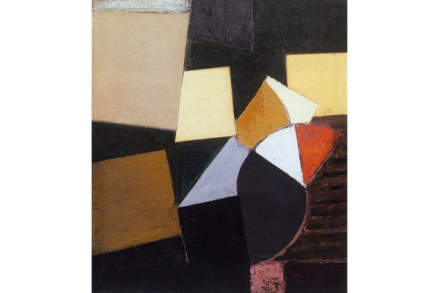
Adrian Heath (1920—92), like so many artists, was a mass of contradictions. Jane Rye begins her excellent study of him by quoting Elizabeth Bishop: ‘A life’s work is summed up as the dialectic of captivity and freedom, of fixed form and poetic extravagance, of social norms and personal deviance.’ Heath thought of his painting as an attempt to reconcile the intellectual and the sensual, a meeting point of classical and romantic. Roger Hilton complained that Heath couldn’t decide whether he wanted to be a painter or an accountant. Certainly, Heath did not conform to the public’s cherished image of the artist as bohemian.

Beyond the expected

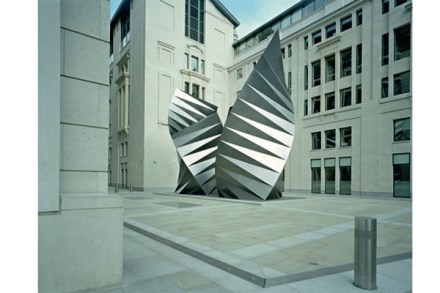
Thomas Heatherwick (born 1970) is one of our most exciting and inventive designers, so it is somewhat unfortunate that he is much associated in the public mind with a project that failed, the memorably named ‘B of the Bang’. This was a sculpture commissioned to commemorate the 2002 Commonwealth Games held in Manchester, and the idea was to create a sunburst of tubes and poles to symbolise an explosion of energy. It was a good idea and a formidable undertaking. Erected in 2005, it was plagued with technical problems and bits even fell off. It was taken down in 2009, and only the documentation remains.

Diana on show

Metamorphosis (sponsored by Credit Suisse) is more than an exhibition, it is wider in its manifestations and implications. The Sainsbury Wing galleries are full of interesting works of art, but the Metamorphosis festival — for that is what it surely is — extends to the Royal Opera House and beyond, through dance and poetry. Unfortunately, there are only limited performances by the Royal Ballet, but these will be filmed and thus available for viewing, and the poetry is published in a handy illustrated paperback (price £8.99), with a learned but accessible introduction by the director of the National Gallery, Nicholas Penny.

Prophet of alienation

Nothing gains headlines for art quite like high prices. A few weeks ago, one of the versions of Munch’s famous image of ‘The Scream’ was sold at auction for £74 million, which couldn’t have been bettered as advance publicity for the Tate’s new show. Admittedly, there is not a single version of that key painting in this exhibition (owners are jittery about loaning them — particularly since one was stolen from Norway’s National Gallery in 2004), but there are plenty of other treats for admirers of this Scandinavian ray of sunshine. Among his favourite subjects were sickness and death, lust and jealousy, fear of sexual disease and even fear of life.

Altered images | 30 June 2012

From our UK edition

An important part of the critic’s role is to search out artists, living or dead, whose work has disappeared from general view, and to attempt some kind of reassessment of their value. The trouble with most coverage of the visual arts today is that the same few artists are constantly written about because their work is currently fashionable. Editors seem not to encourage their critics to be wide-ranging. Meanwhile, museums and galleries are not readily inspired to put on exhibitions of less well-known painting and sculpture because they’re primarily concerned with high visitor attendance and sales. As a result, the public is not best served — and neither are the artists.

Italian surprise

From our UK edition

It’s a rare pleasure to find an unfamiliar artist of the 18th century whose work speaks to the contemporary mind as lucidly as Carlo Labruzzi (1748–1817). I had never heard of him before this show, being still in my playpen when the last Labruzzi exhibition excited the art world in 1960. Although celebrated in his day, he was largely forgotten in the 19th and for most of the 20th century, but it’s clear from this excellent exhibition that he deserves a permanent place in the history books. Not much is known about him beyond the meagre biography that he was born in Rome, the son of a weaver and finisher of velvet, and that his younger brother Pietro was also an artist and became court painter to the King of Poland.

Red alert

From our UK edition

Rumours of disaffection were widespread even before I had seen this year’s RA summer extravaganza (sponsored by Insight Investment). The usual complaints about the hanging and selection had doubled or trebled, not just from non-members but from the Academicians themselves, but the critic tries to keep an open mind for as long as possible. Unfortunately, my equanimity did not survive the first room. This year, the visitor enters the exhibition via the Central Hall, where a gallimaufry of work has been hung against bright red walls. Some of it survives this shock treatment, but other exhibits are disastrously affected. Is it insensitivity or spite that accounts for the hanging of two early masterpieces by John Hoyland against this destructive red?

The art of monarchy

From our UK edition

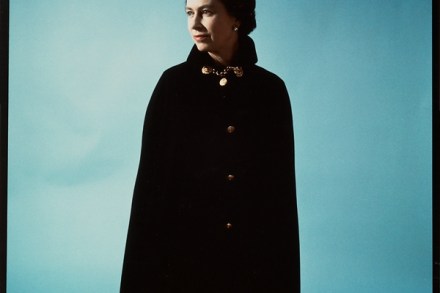
Andrew Lambirth reflects on the images that help shape our perception of the Queen Her Majesty the Queen has been a global celebrity for 60 years, and she carries her status with a naturalness and dignity that many of the more tearaway celebs would do well to emulate. She graduated from being a young and glamorous queen to a happy and fulfilled mother, but then had to settle for pausing in that most difficult of categories — middle age — for rather a long time, owing to the wondrous longevity of Queen Elizabeth, the Queen Mother. As the Queen now celebrates her Diamond Jubilee, in her own distinguished old age, it is revealing to consider how art and the mass media have helped to shape our changing perceptions of the monarch.

Glass act | 26 May 2012

From our UK edition

The name of Patrick Reyntiens (born 1925) is indissolubly linked to the recent history of stained glass in this country. Reyntiens bridges the often troublesome gap between craft and art: not only is he a superb and innovative craftsman, but he is also a substantial artist. The second quality is not always recognised. Best known as John Piper’s associate, many assume that Piper was the artist behind their stained- glass collaborations, with Reyntiens as technical expert. Actually, Reyntiens played a more creative role than is generally supposed.