Andrew Lambirth

Barocci exhibition review: is he better unfinished?

From our UK edition

The press release blithely informs us that Federico Barocci (1535–1612) is ‘beloved by artists and art historians throughout the ages’, but I must beg to differ. Not by me, nor by any of my considerable range of friends and acquaintances in both fields, has he been loved or even much known. Barocci is one of those artists who has slipped under the general radar, partly, I suspect, because his work often looks like a sweet and sentimentalised version of Raphael. Raphael is a great genius, but there are a number of paintings by him I find hard to take, particularly when he descends to sickly emotionalism.

How Roy Lichtenstein became weighed down with superficiality

From our UK edition

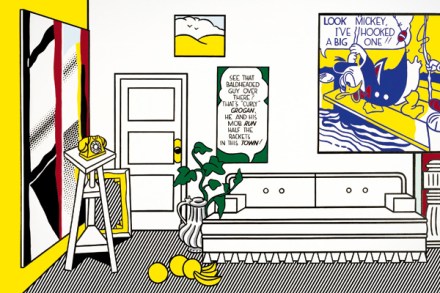
On both sides of the Atlantic there are still heated debates about who invented Pop Art, the Americans or the British, but it seems much more probable that concurrently each initiated their own brand in response to the zeitgeist of post-war consumerism. Certainly, the American Roy Lichtenstein (1923–97), after near-abstract beginnings, started in 1961 to paint large freehand versions of comic-strip frames, complete with speech bubbles, and exhibited them in New York in the first Pop Art shows. He moved on a bit from comic strips to Disney, advertising and the ordinary objects of the modern environment, and developed a style of measured drawing and stencils that broke up colour into what looked like the Ben-Day dots of mechanical reproduction familiar from newspapers.

David Inshaw: the great romantic

From our UK edition

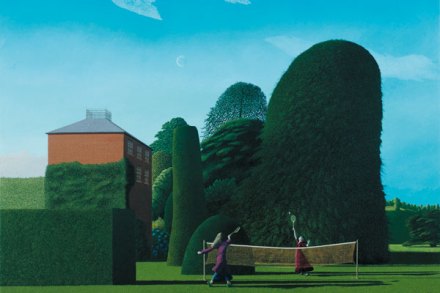
David Inshaw will celebrate his 70th birthday on 21 March, around the time of the spring equinox. On the eve of this grand climacteric, which will be marked by an exhibition of new and old work at the Fine Art Society, I went down to Devizes to interview him. He has lived for much of his life there, with brief interludes in Bristol, London, Cambridge and Wales. In Devizes he is surrounded by the countryside that has most inspired him — the Marlborough Downs and the open stretches of Salisbury Plain, the trees and hills of his beloved Wiltshire. Inshaw is a landscape and figure painter, known to many as a Ruralist (a group he co-founded in 1975 with his great friend Sir Peter Blake, and which he left in 1983).

In the thick of it

From our UK edition

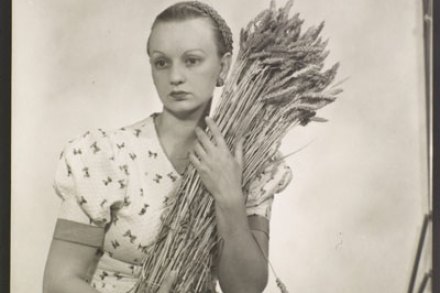
Man Ray, born Michael Emmanuel Radnitzky (1890–1976) in Philadelphia, was a maker of images par excellence. He made sculptures, paintings and photographs, but the medium was always secondary to the image. After all, it is the reproduction of his marvellous painting ‘Observatory Time — The Lovers’, in which Lee Miller’s lips are emblazoned across the sky, that one remembers, or the reproduction of his object ‘Gift’, a flat iron with tacks stuck to its ironing face; not the originals. Perhaps the only sculpture one recalls as a three-dimensional presence is his ‘Indestructible Object’, a metronome with a photo of a woman’s eye attached to its swinging arm; and that’s chiefly because it moves.

Ice Age art at the British Museum: Geniuses of 40,000BC

From our UK edition

The best way to approach any exhibition is with a clear and uncluttered mind, without expectations or prejudices. Of course this is often impossible, for all sorts of reasons, particularly when we have some familiarity with the subject on view. Inevitably we are besieged by images and opinions before we enter an exhibition of Manet or Picasso, but with Ice Age Art I was able to approach without any troubling preconceptions. I arrived at the British Museum in a state of pleasant anticipation, and within minutes I was entirely won over. The curator, Jill Cook, has given us an extraordinary glimpse of a long-distant age which yet feels incredibly fresh and relevant to us today.

Finding beauty in junk

From our UK edition

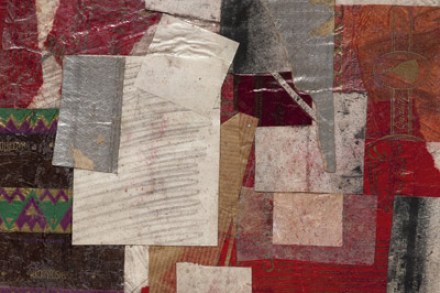
Although Kurt Schwitters (1887–1948) did not invent the technique or theory of collage, he was one of the greatest practitioners of it, raising it in his work to the level of an independent art form. The Cubists may have made art out of collage first, but for them it was intricately allied with painting, whereas Schwitters made collages for their own sake. They are some of the finest things in this rich and varied exhibition, which focuses on his years in Britain (1940–8), though the full range of his work, including a fascinating selection of paintings and sculptures, is also indicated in this typically large Tate display. Viewing it is a potentially exhausting experience, so best to be selective in what you choose to study.

Thoroughly modern Manet

From our UK edition

There can’t really be many people who look at art with any regularity who continue to confuse Manet with Monet. But there are those who still think that Manet was an Impressionist, because so many of his friends and contemporaries were members of the group. In fact, Manet kept his distance and steadfastly refused to exhibit with them. His was an urban, studio-based art, not given to plein-air effects of atmosphere and local colour. He looked instead to the dazzling bravura of Franz Hals’s portraits, and the sombre and often majestic originality of Velázquez and Goya.

Seraphic misfit

From our UK edition

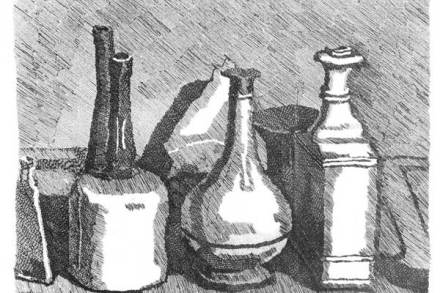
This year marks the 15th anniversary of the Estorick Collection and it is fitting that Giorgio Morandi (1890–1964), one of the most consistently popular of the museum’s artists, should inaugurate the celebrations. Although Morandi’s trademark still-life paintings of bottles and jars have been regularly shown in Britain (the last major show was at the Tate in 2001), the appetite for his work is unassuaged, perhaps because its delights are not revealed all at once. His work encourages repeated looking and gives something back each time, differently articulated. ‘The monk of the bottles’, as he was called, lived with his mother and three sisters in an apartment in Bologna, hardly travelling anywhere, and concentrating on working in his studio.

Line man

From our UK edition

One of the pleasures of the critic’s life is to review exhibitions of work by artists who have been forgotten or overlooked, and to recommend them for general attention. I know some arts editors are only interested in fashionable or mainstream artists, but I’m happy to say that The Spectator’s editorial policy is altogether more wide-ranging. Hence this review of the unjustly neglected Randolph Schwabe (1885–1948), an artist who believed in the value of classical draughtsmanship, which he promulgated through a lifetime of teaching. German by origin (his cotton merchant grandfather settled near Manchester), he trained at the Slade, then studied in Paris and travelled in Italy before returning to England.

Nexus of opposites

From our UK edition

Francesco Clemente (born Naples 1952) began his rise to prominence in this country with two exhibitions at the Royal Academy — the famous New Spirit in Painting of 1981, when figuration was officially relaunched on London (though for some it had never gone away); and Italian Art in the 20th Century eight years later. A third RA venture was a Clemente solo show in 1991, a touring exhibition entitled Three Worlds, memorable as much for its plethora of exciting and witty images (many in pastel or watercolour), as for the beautiful girls thronging the private view. Clemente has long been a fashion icon; in him popular art and high art meet and mingle.

Best in show | 3 January 2013

From our UK edition

The National Gallery is limiting itself to two major shows a year in the Sainsbury Wing. The spring exhibition is Barocci: Brilliance and Grace (27 February to 19 May), the first major showing of Federico Barocci (1535–1612), who managed to fuse Venetian colour with the sense of drawing and pictorial design favoured in Central Italy. The autumn show is The Portrait in Vienna 1867–1918 (9 October 2013 to 12 January 2014), an examination of the punchy Viennese avant-garde of Klimt, Schiele and Kokoschka. Both sound very promising, and for lighter entertainment, there are smaller shows of Frederic Church’s oil sketches (6 February to 28 April) and Michael Landy’s kinetic sculptures (23 May to 24 November) in the main building.

Particularity of place

From our UK edition

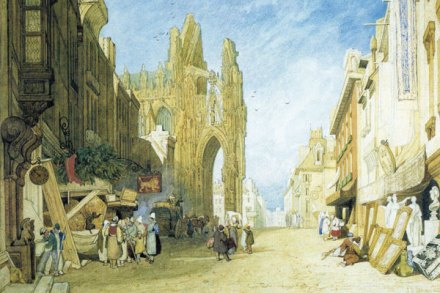
John Sell Cotman (1782–1842) is a key figure in the great tradition of English watercolour painting. A prominent member of the Norwich School (he was born in the city), he was a landscape painter of genius, who transcended mere topographical record by making paintings of superb abstract design which also evoke the particularity of place. He could suggest space and light and weather with the lightest and broadest of touches, in images that look curiously modern, if not timeless. He earned a living by teaching and travelling, making saleable studies of antiquities, many of which were reproduced as etchings. Between 1810 and 1821 he focused on the architecture of Norfolk and Normandy, and it is from this work that the exhibition is drawn.

The art of Christmas

From our UK edition

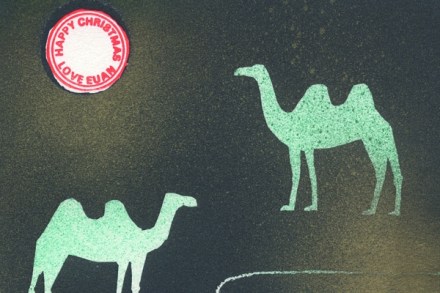
One of the most important and enjoyable Christmas decorations in our house is the profusion of Christmas cards. I am fortunate to number quite a few artists among my friends, and a good percentage of them make and send their own Christmas cards. Most of these tend to the secular and celebratory, but the range of image and technique is what really stands out. Literally, in the case of the sculptor Ann Christopher (born 1947), who makes wonderful little constructions of flexed and frayed silver card often decorated with stars, which balance three-dimensionally on the mantelpiece, like geometric Christmas trees.

Heavenly hands

From our UK edition

The Hepworth has been garnering plaudits right and left as a new museum to be welcomed to the fold, and my first visit to this monolithic structure with its feet in Wakefield’s River Calder exceeded all expectations. Designed by David Chipperfield Architects, the ten linked blocks that make up this new suite of galleries are spacious and light-filled with excellent views out to the river and town. Restaurant, education centre and offices are on the ground floor, and upstairs the art comes into its own. At the top of the stairs is a room of six classic sculptures by Barbara Hepworth (1903–75), whose name the museum has taken since this significant figure of British Modernism was born in Wakefield.

Friends reunited | 29 November 2012

From our UK edition

Christopher Wood (1901–30), billed as the great white hope of British Modernism, who perished by his own hand before his full potential could be explored. Friend of Ben Nicholson, with whom he supposedly ‘discovered’ the naïve painter Alfred Wallis in 1928, he was a Europeanised sophisticate who knew Picasso and Cocteau and dabbled in Cubism and Surrealism. He was a talented painter with a penchant for harbour scenes, but, as this fascinating exhibition suggests, his gifts have been exaggerated (no doubt because of his romantic life story), while the achievement of his older contemporary Cedric Morris (1889–1982) has been marginalised and largely ignored.

Lonely Lakelander

From our UK edition

Five years ago I had never heard of Percy Kelly (1918–93). I knew the work of some Cumbria artists, and much admired the dark and moody landscapes of Sheila Fell (1931–79), for instance, but Percy Kelly had not then registered on my radar. He was already highly regarded in the Lake District, but it was not until after his death that his work was really exhibited and promoted. He was one of those artists who believe in their own value, and want others to share their high opinion, but are not prepared to sell their work to achieve this. Time and again Kelly was offered exhibitions and sabotaged them, while potential buyers were frustrated in their attempts to purchase the paintings and drawings they admired.

A world apart | 22 November 2012

From our UK edition

Although the starving artist in the garret is no longer the favourite public stereotype, painters and sculptors remain something of a mystery even to those who spend time looking at their work. So a film that helps to explain their assorted motivations can only be a good thing, and one as lucid and entertaining as Jake Auerbach’s latest offering, The Last Art Film (available on DVD at £16.99), should be welcomed with open hearts and minds. Jake Auerbach is a distinguished film-maker with a string of successful artist documentaries behind him (his subjects have included Sickert, Freud, his father Frank and Allen Jones), and he has distilled all his experience of the strange ways of artists into this 94-minute film.

Unexpected structures

From our UK edition

There are only eight single paintings in the current show of early work by Gillian Ayres (born 1930) — eight paintings and the four panels of a mural created for the dining room of Hampstead High School for Girls. The mural is over seven feet high and 27 feet wide, and its scale and achievement are remarkable for a young painter. (Ayres was 27 when she painted it.) But it is less original than the paintings it prepared the way for, and which now hang in the Foreshore Gallery of the Jerwood Foundation’s splendid new space in Hastings. The mural has an undeniably decorative impulse and looks very much of its time, but the paintings have moved beyond period confines and peer expectations.

Missing links

From our UK edition

The primary experience of looking at painting is the crucial encounter between a painted surface and the human eye. Nothing is quite like it, and this unique experience cannot be replaced or replicated by looking at a painting in printed reproduction or on a computer screen. This may be a truism but it is worth emphasising once again in an age that relies increasingly on mediated experience, and lives — almost literally — by the screen. It is a truth brought into especial prominence by the concatenation of three exhibitions currently showing in London. Photography does not require the same intimate experience of viewing.

Spanish encounter

From our UK edition

Renaissance to Goya: Prints and Drawings from Spain opens well with a superb drawing by Zurbarán, ‘Head of a Monk’, and a Goya lithograph, ‘The Bulls of Bordeaux’. After that, turn left into the main print room and the disappointment starts. Have you ever wondered why we are not familiar with more Spanish artists than the few great names? On the evidence of this exhibition the answer is clear. The lesser names are simply not very good, so it is a relief to find the Italian Federico Zuccaro, a working visitor to Spain, among the likes of Vicente Carducho and Miguel Barrosso. However important a historical survey, this show only intermittently comes alive.