Andrew Lambirth

Daumier’s paintings show he is at heart a sculptor

From our UK edition

There hasn’t been a decent Daumier exhibition in this country for more than half a century, so art lovers have had to be content with the handful of pictures in national collections and books of reproductions. This works all right for the lithographs, which were after all made to be reproduced, and it is on his high status as a satirical printmaker that Daumier’s fame principally rests. And yet he is frequently lauded by artists who talk about him as a major draughtsman, sculptor and painter, not just as a political and social cartoonist, however fine. The chance to see a show of all aspects of his work is thus very welcome: how does the Academy acquit itself of the responsibility? The first thing that must be said is that there are rather too many lithographs on display.

In the National Gallery’s Vienna show, it’s Oscar Kokoschka who’s the real revelation

From our UK edition

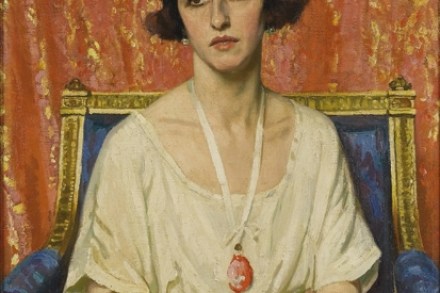
The current exhibition in the Sainsbury Wing claims to be a portrait of Vienna in 1900, but in fact offers rather an interesting survey of portraits made there from the 1830s to 1918. The gallery layout has been usefully adapted to display the work thematically rather than chronologically, which is more dynamic but stylistically confusing. The only way to enjoy the show is to wander at will and pick out the paintings that appeal. There are some horrors here (I wouldn’t linger over Broncia Koller), but plenty of good things as well.

Ditchling Museum’s guiding dream

From our UK edition

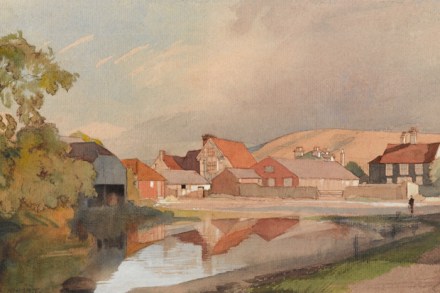
The charming East Sussex village of Ditchling lies at the foot of the South Downs, its narrow streets lined with ancient houses and pubs. For much of the 20th century it was home to a community of artists and craftsmen, the most famous of whom are Eric Gill and David Jones, master and pupil. In 1985, two sisters, Hilary and Joanna Bourne, founded a museum to preserve and celebrate the wealth of local creativity. It is this museum that reopened at the end of September after a major overhaul and redevelopment by Adam Richards Architects. The results are very fine indeed: this is one of the loveliest small museums I have visited, the lucid spaces well laid out, the plan and the detailing equally considered.

The painter of poetry

From our UK edition

The famous court case in which Ruskin accused Whistler of ‘flinging a pot of paint in the public’s face’ continues to rumble through the public response to art in this country. The man in the street, the man on the Clapham Omnibus and most of the men who drive black cabs all like their art to be recognisable. (Perhaps women are less hidebound.) Their definition of skill is the ability to paint with photographic fidelity, and they prefer art to tell a story. James Abbott McNeill Whistler (1834–1903), leading exponent of ‘art for art’s sake’, painted pure visual poetry rather than the hard facts of detailed realism. His paintings are supremely atmospheric: subtle and allusive, they suggest rather than state, evoke rather than describe.

How China’s Bayeux Tapestry differs from ours

From our UK edition

The V&A’s remarkable survey of Chinese painting begins quietly with a beautiful scroll depicting ‘Court Ladies Preparing Newly Woven Silk’, from the early 12th century, which, with its bright colours, shallow space and lack of setting, invites comparison with a western masterpiece of a similar date, the Bayeux Tapestry. The crowded urgencies and narrative drive of the English/French embroidered cloth couldn’t be further from the refined intervals and sophisticated relationships of the Chinese scroll, and yet both tell much about the cultures that produced them. However, neither should be read simply as historical documents: both offer rare aesthetic pleasures of quite different distillations.

Is Paul Klee really a great modern master?

From our UK edition

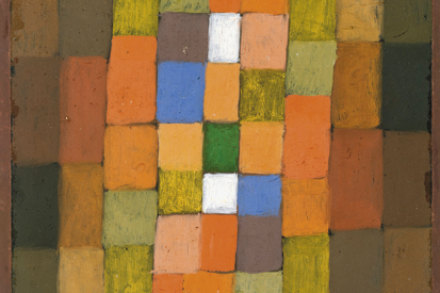
There is a school of thought that sees Paul Klee (1879–1940) as more of a Swiss watchmaker than an artist, his paintings and drawings too perfect, too contrived. Viewing this new exhibition at Tate Modern, one might add that they are also too mannered and precious. I had been looking forward to this show, but going round it I found myself all too frequently impatient and disappointed. Yet Klee is a great modern master, you say; can he be dismissed so easily? Perhaps it is all in the selection of work, for Klee was prolific even though he died young, with a total output of about 10,000 paintings, drawings and works on paper, more than a thousand of which he made in the last year of his life.

Welcome home, Malcolm Morley

From our UK edition

The Ashmolean Museum has taken the radical step of embracing contemporary art, and is currently hosting (until 30 March 2014) a mini-retrospective of Malcolm Morley’s work, curated by Sir Norman Rosenthal and borrowed entirely from the prestigious American-based Hall Art Foundation. Morley (born London 1931) was the first winner of the ever-controversial Turner Prize (apparently David Sylvester threatened to resign as a judge if Morley was not awarded the prize), but has lived in America since 1958 and visits these shores rarely. The last time he was here was in 2001, for a full-scale retrospective of his work at the Hayward Gallery. We haven’t seen enough of his art in this country over the past decade, so this show is a most welcome event.

Andrew Lambirth: Emilio Greco’s early work is undeniably his best

From our UK edition

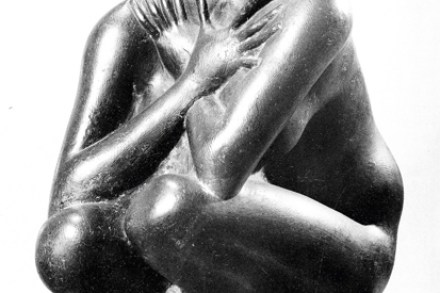
Emilio Greco (1913–95) is considered to be one of Italy’s most important modern sculptors, and certainly he was a successful one, enjoying considerable popularity and renown with his deliberately mannered re-interpretations of classical subjects. A figurative sculptor, Greco went in for elongated limbs and awkward yet dynamic poses that often have a surprising elegance and no little wit. His most celebrated work is ‘Monument to Pinocchio’ (1953) in the Tuscan hill town of Collodi, and one of the highlights of this new exhibition at the Estorick — no doubt intended to revive Greco’s reputation (on the wane since the 1970s) — is a bronze study for it.

Frank Holl: a forgotten talent much admired by van Gogh

From our UK edition

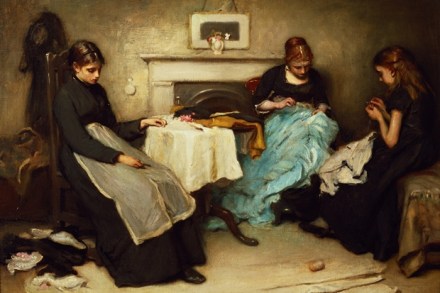
The Watts Gallery, just outside Guildford off the Hog’s Back, is a delightful place to visit at any season, with its permanent collection of work by G.F. Watts, whose studio it once was, and an ambitious programme of exhibitions on related subjects. But as autumn reaches over the hills a sense of the Victorian past may be even more closely felt and appreciated, and particularly a life of promise cut short, as was the case with Frank Holl (1845–88). Until this exhibition began to gather a fresh audience, few had heard of Holl or were able to summon an image by him to mind. This show brings together some 30 of his most famous works and offers us the chance to reassess an unfairly forgotten talent.

Is the best Australian art yet to come?

From our UK edition

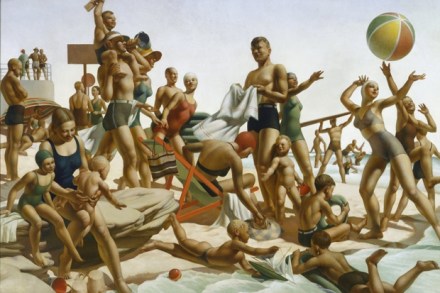
Astonishingly, the last major survey show of Australian art in this country was mounted more than half-a-century ago. Then it was the innovative writer, critic and museum director Bryan Robertson who staged Recent Australian Painting at the Whitechapel Art Gallery in 1961, a show he consolidated by monographic exhibitions of Sidney Nolan, Roy de Maistre and Arthur Boyd, also at the Whitechapel. Later Robertson also wrote extensively about Brett Whiteley, but his one-man Australian project was not taken up by other curators. Although Nolan and Boyd have had their supporters here (particularly Nolan), Australian art has for far too long remained not just a closed book but an unknown quantity in the UK, too.

Chris Ingram: from messenger boy to museum benefactor

From our UK edition

Chris Ingram is a silver-haired, incisive man, with an air of quiet authority and decided opinions about the art he so passionately collects. A media entrepreneur who started work at 16 as a messenger boy in an advertising agency, Ingram has the strength of his convictions. Over the past dozen years he has built up a remarkable collection of some 500 paintings, drawings, prints and sculptures, of which 350 belong in the category described by auctioneers as Modern British. (Or, in other words, 20th century rather than contemporary.) He began by buying for the home and consulting his wife’s taste as well, but branched out when he bought for the office.

David Tress: an artist of independent spirit

From our UK edition

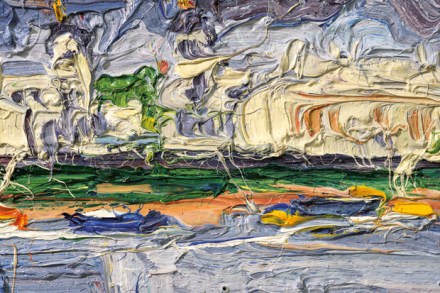
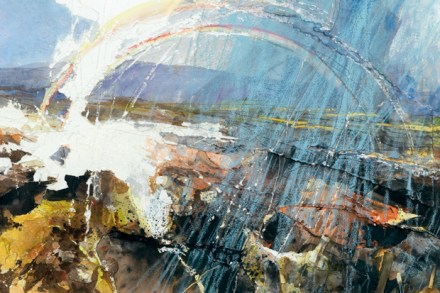
Like all artists of independent spirit, David Tress (born 1955) resists categorisation. He has been called a Romantic and a Neo-Romantic, a mixture of Impressionist and Expressionist, a traditionalist and a modernist, yet not one of these labels quite fits. He is all and none, drawing his inspiration from the great traditions of western art but principally from the British landscape that continues to evoke a response in him that can only find outlet through drawing and painting. Tress is a landscape painter and draughtsman of great poignancy, imbuing his dramatically coloured and vigorously constructed works with an emotional intensity that makes them difficult to ignore.

Under the Greenwood Tree – an exhibition worth travelling for

From our UK edition

A mixed exhibition of paintings, drawings and prints devoted to the subject of the tree might sound an unexciting event, filled with what Johnny Cash memorably described as ‘hopeful stars of flickering magnitude’, but actually in this case the reverse is true. The show has been divided into two halves, the first of which deals with a historical survey of the tree in past art, the section which is herewith under review. The sequel, focusing on the tree in contemporary art, will be at the museum from 12 October – 23 November. Readers who have to travel any distance, and may thus be limited to a single visit, should choose with care which portion of the show they think they’d most like to see.

Laura Knight was an artist skilled in the ways of the world

From our UK edition

The popular conception of Dame Laura Knight is of an energetic woman piling on the paint in the back of a huge and antiquated Rolls-Royce at Epsom Derby, the door propped open to the view, or charging off in pursuit of gypsies, clowns or ballerinas. A widely popular and successful artist, she painted people in action in a robust, realistic style, and was able to compete with men on their own terms, managing to get herself elected to that hitherto almost entirely masculine preserve, the Royal Academy. But wasn’t there something slightly mannish about her?

At last Alfred Munnings is being taken seriously again

From our UK edition

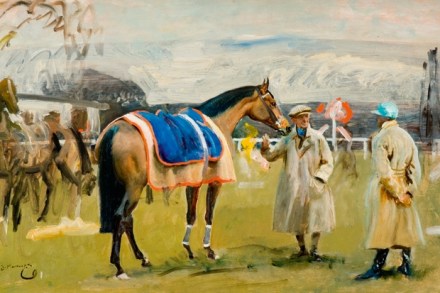
Sir Alfred Munnings (1878–1959) did himself a grave and lasting disservice when he publicly attacked modern art in a bibulous after-dinner speech at the Royal Academy in 1949. He had been president of the RA for five years, pipping Augustus John to the post, but the controversy he stirred up (he called Picasso and Matisse ‘foolish daubers’) led to his resignation. The echoes of his rant linger on more than half-a-century later, constituting for many the most memorable thing about him. Like Canute, Munnings could not stem the tide, and Modernism for a time swamped and eroded his reputation.

The whizz stirrer-up

From our UK edition

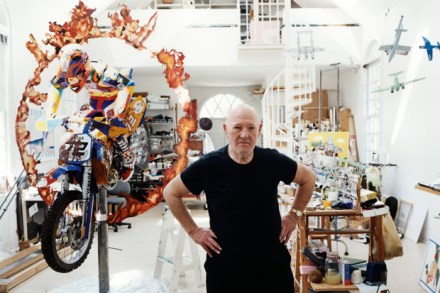
‘Professor’ Bruce Lacey (born 1927) is one of those figures who has existed effectively on the periphery of the art world for more than half a century. Part licensed jester, part society’s conscience, Lacey operates best on the fringes, stirring things up, provoking thought and challenging preconceptions, a lightning conductor for comment and criticism. Before this exhibition, I associated him principally with the Kitchen Sink painters (John Bratby used to describe him as ‘a whizz’) and the type of idiosyncratic humour best exemplified by the Bonzo Dog Doo-Dah Band.

The problem with self-portraits: Ruth Borchard competition and Stranger reviewed

From our UK edition

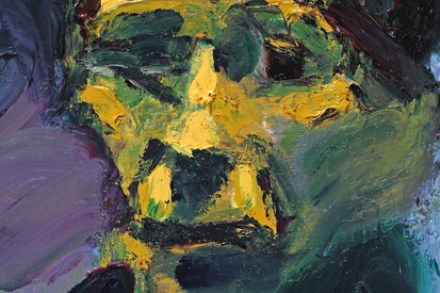
My wife says you can always tell a self-portrait by the quality of its self-regard. There’s something about the eyes and mouth (though not invariably flattering or admiring) or the set of the chin that give the artist away. Perhaps it’s simply that the artist is more interested in depicting the self than anyone else; or that the degree of self-awareness is inevitably deeper. Some of the great paintings have been self-portraits, from Rembrandt to van Gogh, and when they’re good they’re always worth looking at. So it was with optimism in my heart that I made my way to Kings Place to view the results of the second bi-annual Ruth Borchard Self-Portrait Competition.

State-sponsored cultural renaissance in revolutionary Mexico

From our UK edition

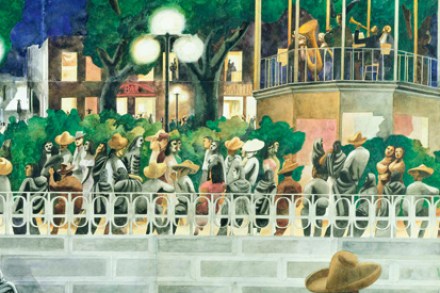
Revolution shook Mexico between 1910 and 1920, but radical political change was not mirrored in the art of the period. In this exhibition, we do not see avant-garde extremes, but witness instead a deepening humanism, as if for once art was interlocking with human need. The cultural renaissance that followed was state-sponsored, and artists were employed by the Ministry of Education to promote the revolution. This was political art at its best, and three artists were active at its heart: los tres grandes, Diego Rivera, José Clemente Orozco and David Alfaro Siqueiros. Their most significant achievements were murals, which remain firmly in place on Mexican buildings and thus are difficult to make an exhibition about.

Samuel Courtauld’s great collection

From our UK edition

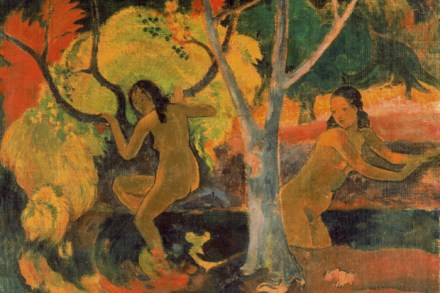
In 1929, Samuel Courtauld owned the most important collection of works by Paul Gauguin in England: five paintings, ten woodcuts and a sculpture. He subsequently sold two of the paintings, but for this show the gallery that bears Courtauld’s name has borrowed them back. One of them is the very beautiful ‘Martinique Landscape’ (1887), now owned by the National Galleries of Scotland, in which colour and pattern lock together in the most subtle and satisfying way. Even the rather startling turquoise with which the gallery’s walls have been painted cannot distract from its powerful presence. The other great painting here is supposedly ‘The Dream’, which Roger Fry declared was ‘the masterpiece of Gauguin’.

Compare and contrast Rodin and Moore

From our UK edition

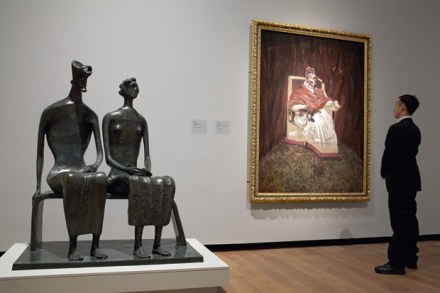
One generation is usually so busy reacting against its predecessors that it can take years for a balanced appreciation of real and relative merits to emerge. Henry Moore was born in 1898, and Rodin didn’t die until 1917, but they never met. All his life Moore was aware of Rodin’s work, and although early on he made apprentice works influenced by Rodin, it was only when he had established his own territory as an artist that he could afford to look long and admiringly at the senior artist. Indeed, Moore came to value his work so highly that he included four sculptures and three drawings by Rodin in his own collection and was happy to be consulted over the installation of the great Rodin exhibition at the Hayward Gallery in 1970.