Andrew Lambirth

A Cumberland legend

From our UK edition

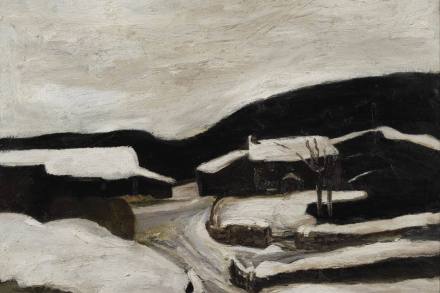
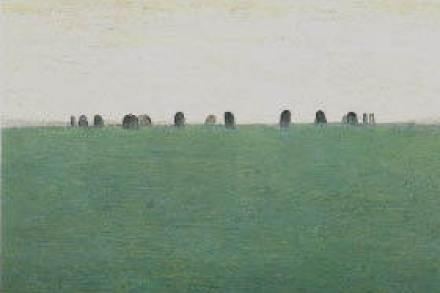
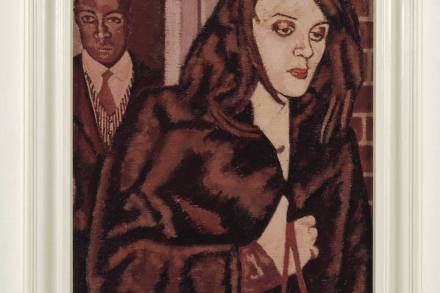
The legend of the glamorous artist Sheila Fell (1931–79), with her striking looks — black hair, white skin, large eyes — who died young, has tended to obscure the real achievement of her art. The legend of the glamorous artist Sheila Fell (1931–79), with her striking looks — black hair, white skin, large eyes — who died young, has tended to obscure the real achievement of her art. She was part of a talented generation which included her friends Frank Auerbach, Jeffery Camp and Craigie Aitchison, and was given her first solo exhibition at the age of 24 by Helen Lessore at the Beaux Arts Gallery in London. Fell came from Cumberland and painted its landscape. At that first show, L.S.

Direct observation

From our UK edition

Although he was the leading portrait painter of Regency England, Thomas Lawrence (1769–1830) has somehow slipped beneath the catch-net of modern public recognition. Although he was the leading portrait painter of Regency England, Thomas Lawrence (1769–1830) has somehow slipped beneath the catch-net of modern public recognition. He was the son of a Bristol innkeeper, who moved with his family to Devizes in 1773 to take over the Black Bear public house, and by 1780 young Lawrence was charming all and sundry with what Fanny Burney called ‘his astonishing skill in drawing’. His precocious talent came in handy when his father was declared bankrupt and Lawrence became the family breadwinner with his pencil profiles and pastels.

A look ahead | 18 December 2010

From our UK edition

The trend of fewer temporary exhibitions in our museums is becoming established, as the cost of mounting blockbusters escalates beyond even the generous reach of sponsorship. This is in sharp contrast to the commercial galleries, which still put on as many as 10 or 15 different shows a year in the hope of tempting clients to part with their cash. Taking a keen look at forthcoming exhibitions is always a mixed pleasure: the expected counterpointed with the novel, the obvious with the obscure. Thankfully, there are still enough exciting prospects in the public sector to raise the spirits and move us to make a note in the diary.

Intimations of infinity

From our UK edition

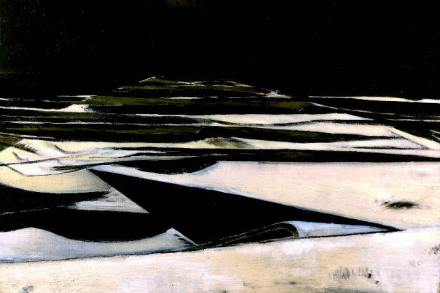
Andrew Lambirth finds a striking metaphor for the physical limitations of earthbound existence versus the infinite freedom of the spirit in Paul Nash’s painting ‘Winter Sea’ Paul Nash is one of the best-loved English painters of the last century, a great imaginative artist, always trying to discover the appropriate form for what he wanted to say. Nash was a philosopher-poet who expressed himself best (though he was a good writer) in visual terms and chose landscape painting as his primary vehicle. Although he died prematurely, in 1946 at the age of 57, his work stands easily above that of most of his contemporaries, and its originality and inventiveness have continued to inspire painters and beguile the public.

Exhibitions Round-up: lifting the heart

From our UK edition

The run-up to Christmas is the perfect season for an exhibition of Andrew Logan’s joyful and extravagant art. The run-up to Christmas is the perfect season for an exhibition of Andrew Logan’s joyful and extravagant art. At Flowers (82 Kingsland Road, E2, until 31 December) is an installation of glittering sculptures which lightens the spirit and brings a song to the lips. Fashion meets fantasy in Logan’s signature mirror sculptures, his unique blend of resin, glass, fibreglass, paint and glitter. For the past 40 years, Logan (born 1945) has brought colour and light into people’s lives. He was a pioneer of the sensational long before the YBAs toddled into view; revealingly, Sir Norman Rosenthal, chief enabler of the YBAs, is a long-time admirer of Logan.

Light relief

From our UK edition

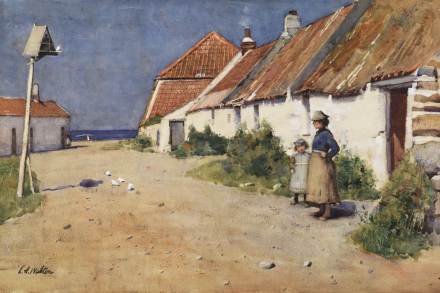
The so-called Glasgow Boys had no manifesto, common background or style, apart from working in and around the city of Glasgow and sharing a belief in the importance of painting from direct observation and experience. They acknowledged the influence of the naturalism practised by the Barbizon and Hague schools in the later 19th century, and rejected narrative in painting and especially the sickly sentimentalism that bedevilled so much Victorian art. They were a loosely associated group of painters, sometimes called the Glasgow School but preferring to be known by the slightly more raffish title of the Glasgow Boys, who banded together principally to exhibit. This ploy worked and they achieved a degree of international recognition.

Forget the matchstick men

From our UK edition

Here at last is a book that takes L. S. Lowry’s art seriously and treats it with the scholarly attention it deserves. Here at last is a book that takes L. S. Lowry’s art seriously and treats it with the scholarly attention it deserves. Tom Rosenthal has been a life-long admirer of Lowry’s work, spending his formative years in Greater Manchester and even interviewing the old curmudgeon for Radio 3 in the 1960s. One of his aims in this book is to dispel the various myths that have grown up around Lowry and his critically underestimated art. It has become fashionable in the art world to look down on Lowry as a naive painter who could only paint industrial landscapes full of ridiculous scampering matchstick people.

The folly of ambition

From our UK edition

Andrew Lambirth talks to the artist Keith Coventry about drawing inspiration from Sickert, Churchill and Ladybird Books Keith Coventry has no time to visit the two lap-dancing clubs that lurk a few doors down from his studio, a small room with barred windows in a light-industrial block in the East End. Here, he puts in long hours, often forgetting to eat in his total immersion in the act of putting paint on canvas. He grudgingly admits to being a workaholic. This is where he painted ‘Spectrum Jesus’, which two months ago won him the £25,000 John Moores Painting Prize, one of the most prestigious accolades in the art world. Winning the John Moores does not guarantee immortality — not much does, except perhaps genius — but it can make a difference.

Small blessings

From our UK edition

As I pointed out last week, one of the chief attractions of the Treasures from Budapest show at the Royal Academy is the inclusion of two rooms of Old Master drawings. For those of us who find large exhibitions overwhelming, there is a refreshingly modest display of French drawings (admission free) at the Wallace Collection, which makes a good companion to the RA’s blockbuster. The earliest work is a fanciful, somehow ethereal, black-chalk and brown-wash 16th-century drawing of a water festival at Fontainebleau, by Antoine Caron. Much tougher is a neighbouring red-chalk study by Jacques Callot, ‘Ecce Homo’. Despite a certain vulgarity of pose and gesture, it has a brash energy that buttonholes the viewer in a way the Caron never could.

Fresh and feisty

From our UK edition

Harry Becker (1865–1928) is one of those artists too often dismissed as being of regional interest only, who feature but rarely in the art chronicles of the period. Harry Becker (1865–1928) is one of those artists too often dismissed as being of regional interest only, who feature but rarely in the art chronicles of the period. He is most widely known for his illustrations to Adrian Bell’s celebrated Suffolk trilogy — Corduroy, Silver Ley and The Cherry Tree — and it is worth noting that Becker’s pictures were matched to Bell’s prose after the artist’s death, though they seem to be made for each other in their near-perfect fit. Becker only moved from London to Suffolk in 1913, but he found there his perfect setting.

Look and learn | 6 November 2010

From our UK edition

The greatest myth to affect Paul Gauguin (1848–1903) is the one of his own life: the romantic bohemian who escaped to the South Seas. The greatest myth to affect Paul Gauguin (1848–1903) is the one of his own life: the romantic bohemian who escaped to the South Seas. This has spawned numerous popular interpretations from novels such as Somerset Maugham’s Moon and Sixpence to films which include Lust for Life (though principally about van Gogh, it features Anthony Quinn as an unforgettable Gauguin) and the Danish–French Wolf at the Door (1986).

Silent witness

From our UK edition

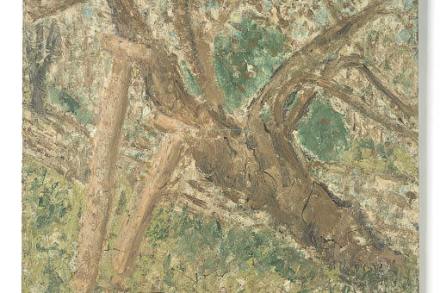
A new exhibition of paintings and drawings by Leon Kossoff (born 1926) is an event in the art world. Kossoff is an intensely private man and keeps such a low profile that many people react with surprise to the information that he is still very much alive and working. Not for him the carefully calculated public appearance or widely disseminated views; he is reluctant to give interviews and finds it increasingly difficult to say anything at all about his pictures. In fact, he is so reticent about his art, and so much wants it to speak for itself, that he has discouraged several people from writing books about him. To date, there are a number of Kossoff exhibition catalogues, with more or less revealing texts, but no heavyweight monograph.

Venetian Visions

From our UK edition

Andrew Lambirth finds the National Gallery’s new exhibition on Canaletto and his contemporaries both illuminating and enjoyable Giovanni Antonio Canal (1697–1768), better known as Canaletto, is a safe bet and a crowd-pleaser, and the weary critic is entitled to ask — not another Canaletto show? What can there be left to say? But note the exhibition title — Venice: Canaletto and his Rivals. Venice comes first, the great tourist trap herself, kingdom of the sea and romance-magnet, and in the placing of the words the unashamed popularism of the show emerges. Or so the cynic might think.

Taking to the skies

From our UK edition

In the first retrospective of his work for nearly 40 years, Peter Lanyon (1918–64) is given the kind of recognition long his due. In the first retrospective of his work for nearly 40 years, Peter Lanyon (1918–64) is given the kind of recognition long his due. A major figure in the St Ives group, his work holds its own on an international stage even though it remains rooted in his native Cornwall. He was an inventive and innovative painter who conjured up the sensation of being in certain places and experiencing particular weather conditions. This was not an art bound to the earth’s surface, and it began by delving beneath it, with the Cornish miners, and increasingly rising above it — quite literally — into the air in a glider.

A place to dream

From our UK edition

As regular readers of this column will know, I am not an admirer of large exhibitions. The exhaustive is exhausting, and I refuse to believe that the general visitor can absorb the contents of a blockbuster show on a single viewing. Of course in these days of enforced leisure, more and more viewers are able to return to exhibitions (particularly if mounted by institutions of which they are members), though the time and expense involved deters those with jobs from making repeated visits. Vast exhibitions are designed to bring glory on the host museum and garner headlines as well as visitor numbers.

An artist of the sinking world

From our UK edition

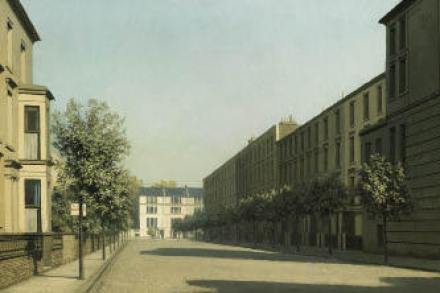
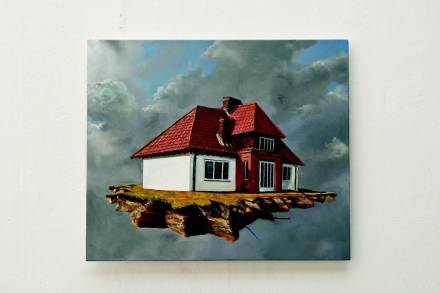
Julian Perry (born 1960) paints images of genuine topicality in an immaculate high-definition realist style. Julian Perry (born 1960) paints images of genuine topicality in an immaculate high-definition realist style. His last show in 2007 dealt with the allotment sheds bulldozed by the relentless encroachment of the Olympic site. Since then he has been painting pictures of coastal erosion, visiting locations around England and composing hallucinatory images of deracination and loss. ‘Clifftop with Fridge Freezers’ was one of the first of the new series. I asked him to describe the subject.

Weaving a spell

From our UK edition

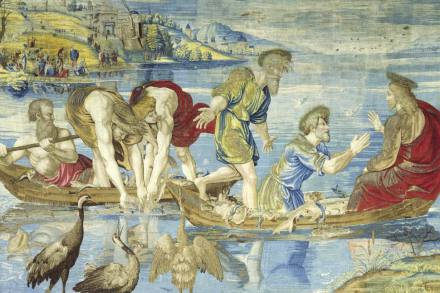
We tend to take for granted the fact that the V&A houses one of the great wonders of the Italian High Renaissance: Raphael’s remarkable tapestry cartoons celebrating the lives of St Peter and St Paul. We tend to take for granted the fact that the V&A houses one of the great wonders of the Italian High Renaissance: Raphael’s remarkable tapestry cartoons celebrating the lives of St Peter and St Paul. These tapestries were designed for the Sistine Chapel to be hung around the lowest tier of the walls on ceremonial occasions, and thus had to complement (if not compete with) Michelangelo’s awesome ceiling decoration.

Liquid gold

From our UK edition

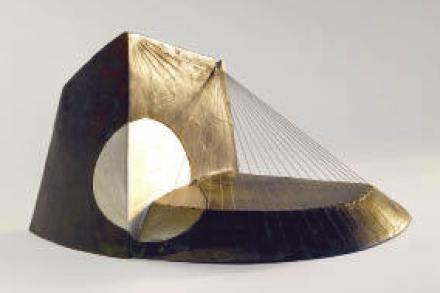
William Pye has observed, somewhat wryly, that he’s better known among architects and designers than he is by the art-loving public. William Pye has observed, somewhat wryly, that he’s better known among architects and designers than he is by the art-loving public. There is a simple reason for this: in recent years he has had very few exhibitions in galleries. His work used to be a regular feature of the Royal Academy Summer Exhibition, but he is not an RA, and an artist of his stature does not readily court rejection. After a run of showing at the RA for some 30 seasons, he was turned down twice in the hurly-burly of general submission. The panjandrums of Burlington House missed a trick when they passed over Pye.

Out of the ordinary | 11 September 2010

From our UK edition

Frederick Cayley Robinson: Acts of Mercy National Gallery, until 17 October The free exhibitions in the Sunley Room offer a programme of meditations on the National Gallery’s permanent collection, either through works of art directly inspired by or related to the old masters, or connected in a more oblique way. Frederick Cayley Robinson (1862–1927) is a little-known early-20th-century English painter in oils, tempera and watercolour who deserves wider recognition: this loan exhibition is the first show of his work for more than 30 years.  A traditionalist with a feeling for the more modern statement, Cayley Robinson was using the same methods and materials as the old masters, but wanted to create something of relevance to his period.

Shared affection

From our UK edition

The Switch 12A, Nationwide As a rule, Richard Burton acted stupendously well in stupendously bad films. Jennifer Aniston has mastered half that duality. The Switch, her latest film, is comfort-zone Aniston: a charmless rom-com with a crass attempt at eroticism — Toy Story’s more titillating, to be honest. Cliché is The Switch’s currency. A pallid dawn rises over New York’s landmarks and we are taken back seven years. It is breakfast time. An aging girl-next-door (Aniston) tells her lachrymose friend and former lover Wally (Jason Bateman) that she is seeking a sperm donor. ‘The clock has struck,’ she says, to crown the cliché.