Andrew Lambirth

All things bright and beautiful

From our UK edition

Beauty is generally considered old-fashioned by the young and not-so-young bloods of contemporary culture, so an exhibition appealing unashamedly to the aesthetically refined will not seduce the practitioners of sensationalism, bad taste and ever more self-indulgent and feeble art. But it will appeal to a public fed up with the empty, egomaniacal posturings of today’s fashionable art world nonentities, whose every burp and slurp is faithfully reported by a cynical press. At last, you may justifiably say, here is an exhibition to delight the eyes. Assuredly, it’s another of the V&A’s great blockbusters, and as such really too large to take in at one session, but at least it’s full of real art, worth more than a sneer or a puff.

Read all about it

From our UK edition

As newspapers are consulted increasingly on screen, and newsprint is all set to become a thing of the past, artists are turning their attention to this endangered medium. The Irish Expressionist painter Michael Kane (born 1935) has produced a provocative series of 100 paintings in ink, acrylic paint and collage, done on newsprint magazine pages taken mostly from the Irish Times (see above). The results are witty and moving, powerful comments on the age-old imperatives of humanity, acted out against the media stories and features of yesterday. Kane responds to the pictures and headlines he’s painting over, either as shapes or narratives, juxtaposing and repositioning to good effect. Man and the city is his great theme.

Portraits of a marriage

From our UK edition

Andrew Lambirth on the special relationship between the artists Zoran Music and Ida Barbarigo that is explored in an exhibition that shows their work together for the first time in more than half a century At the Estorick Collection, a modest north London townhouse, there is until 12 June a most engaging exhibition devoted to two artists, husband and wife, whose work is not particularly well known in this country, though both are recognised and celebrated internationally. Ida Barbarigo (born Venice 1925) first met Zoran Music (1909–2005) at an exhibition of his paintings in Trieste in the spring of 1944. Their burgeoning friendship was interrupted when Music was arrested by the Nazis, who first accused him of spying and then wanted to recruit him.

Free spirit

From our UK edition

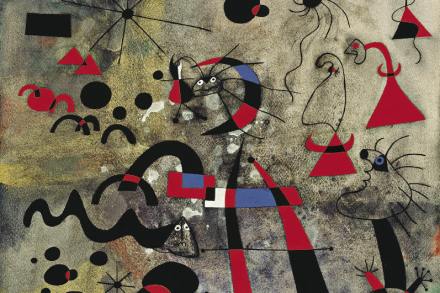
Joan Miró (1893–1983) was a great imaginative artist and a pure painter of genius. Joan Miró (1893–1983) was a great imaginative artist and a pure painter of genius. He produced a huge body of work over a long life, and this excellent selection of it transforms the uninspiring galleries at Tate Modern, which have rarely looked so good. This exhibition offers the political interpretation. You can see Miró as a surrealist, as a formalist or as a political artist. Actually, he was none of these, but allowed each to touch upon the wellsprings of his creativity and have some sort of relationship with his art.

Garden delights

From our UK edition

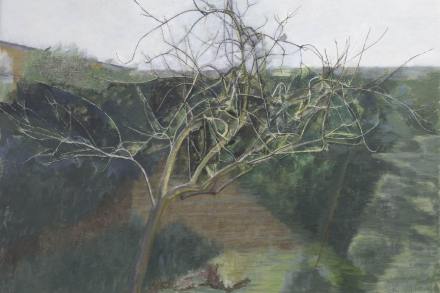
There were two John Tradescants, father and son, operating in the 17th century as travellers and gardeners from a base in south London. Their family tomb is at the heart of the garden surrounding the Garden Museum in the former church of St Mary-at-Lambeth in Lambeth Palace Road, a garden designed as a Tradescant memorial 30 years ago by the Dowager Marchioness of Salisbury. This hallowed place has been the principal subject for the past year of the painter Charlotte Verity (born 1954), the museum’s first artist-in-residence. The initiative has been generously funded by the Cochemé Trust, and the results of Verity’s year-long residency are now on show in the museum’s new gallery.

Spring round-up

From our UK edition

Perhaps to contradict the shocking fade-out of sculpture post-1970 in the Royal Academy’s Modern British Sculpture exhibition, just ended, there are a number of good sculpture shows in the commercial galleries. Perhaps to contradict the shocking fade-out of sculpture post-1970 in the Royal Academy’s Modern British Sculpture exhibition, just ended, there are a number of good sculpture shows in the commercial galleries. A survey at Waddington’s of Bill Woodrow’s witty recycled works from the 1980s ends on 16 April, but over the road is a fine display of recent prints and sculpture by Ivor Abrahams (born 1935), entitled Suburban Encounters (Mayor Gallery, 22a Cork Street, W1, until 28 April).

Personal vision

From our UK edition

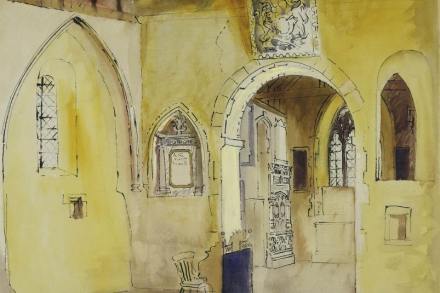
At the beginning of Richard Ingrams’s book on John Piper (1903–92), he quotes the artist as saying: ‘The basic and unexplainable thing about my paintings is a feeling for places. At the beginning of Richard Ingrams’s book on John Piper (1903–92), he quotes the artist as saying: ‘The basic and unexplainable thing about my paintings is a feeling for places. Not for “travel”, but just for going somewhere — anywhere, really — and trying to see what hasn’t been seen before.’ It’s a good description of what makes Piper’s best work special and memorable, that feeling not just for identifying the spirit of a place, but for depicting it as never before.

Lines of beauty | 2 April 2011

From our UK edition

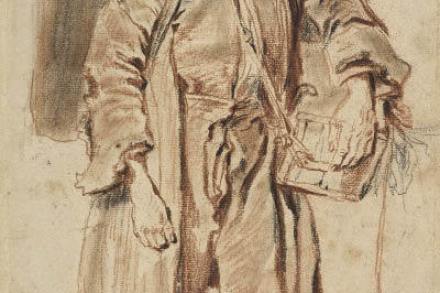
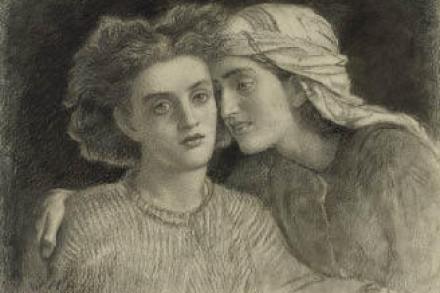
So far, 2011 has been a good year for drawing. The great Pre-Raphaelite drawings show at Birmingham is still fresh in my mind as I write this review of a superb Watteau exhibition at the Royal Academy (supported by Region Holdings) and a select survey of Victorian drawings and watercolours at the Courtauld. Watercolours are often described as a form of drawing, though they are in fact made with paint. So they occupy a hybrid category, allowing rather too great a laxity of definition, as can be seen in the Tate’s current watercolour compendium. But there is no uncertainty about the Academy’s show: this is all drawings, and of a very high quality indeed. So far, 2011 has been a good year for drawing.

East Anglian friends

From our UK edition

Three exhibitions in East Anglia serve to remind us that museums and galleries outside London continue to programme stimulating events. At Norwich Castle is an excellent survey of British art from the beginning of the first world war to the end of the second — a time of great richness and considerable innovation. There’s so much of interest and value here that it’s difficult to decide what to mention and what to leave out. Three exhibitions in East Anglia serve to remind us that museums and galleries outside London continue to programme stimulating events. At Norwich Castle is an excellent survey of British art from the beginning of the first world war to the end of the second — a time of great richness and considerable innovation.

Out of place

From our UK edition

Since pluralism in the arts became the order of the day, categories have been bursting at the seams, and the old definitions have lost validity. No longer does visual art denote painting, sculpture, printmaking and drawing, but all manner of extraneous and tangentially linked activities as well. Film, installation and performance are crammed in under the same umbrella as Michelangelo, Dürer and Monet, when it’s painfully clear they have almost nothing in common with such illustrious forerunners. In fact, it’s extremely doubtful whether much of the stuff that currently parades under the banner of art has any justification for being there.

Erotic review

From our UK edition

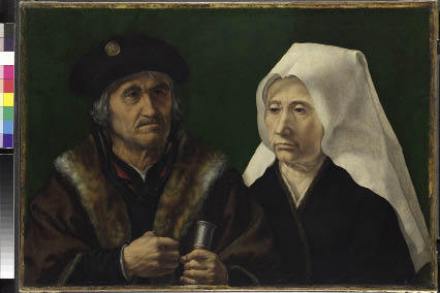
First, a note about naming. The artist here presented as Jan Gossaert (c.1478–1532) was formerly known as Jan Mabuse, so designated after the Walloon town he came from — Maubeuge in Hainaut. First, a note about naming. The artist here presented as Jan Gossaert (c.1478–1532) was formerly known as Jan Mabuse, so designated after the Walloon town he came from — Maubeuge in Hainaut. The Americans, meanwhile, miss out the e and spell his name Gossart, which makes the poor fellow sound even more like an underwear firm, though the word is itself more attractive-looking than its variant. So if you were wondering where this newly minted artist had sprung from, the likelihood is he was flying under different colours the last time you saw him.

Painter’s progress

From our UK edition

Andrew Lambirth talks to Alan Reynolds, who abandoned a lucrative career as a landscape painter to follow his instincts towards abstraction At the age of 85, Alan Reynolds is enjoying a sudden and well-deserved flurry of interest in his work. A superb monograph has just been published on his art, written by Michael Harrison, director of Kettle’s Yard in Cambridge, and to launch the book there’s an exhibition at Annely Juda Fine Art (23 Dering Street, W1, until 26 March). This is Reynolds’s seventh solo show at the gallery, which has successfully represented him since 1978, and which has been responsible for promoting his work in Europe.

Selective attention

From our UK edition

Another vast exhibition at Tate Britain, but one which will no doubt prove popular with the public. Watercolour is a national pastime, and the English tend to wax proprietorial about it. As a painting medium it appeals greatly to amateurs because it’s nearly always possible to do something passable in watercolour which couldn’t be achieved in oil paint without more knowledge, application and experience. Passable, yes, but not distinguished: it takes a very great deal of skill to achieve the more than ordinary in watercolour, and herein lies its seduction and challenge. The stakes are raised by the existence of a tradition of great watercolour painting in this country, which prospered with particular insistence in the period 1750 to 1850.

Fine lines

From our UK edition

Drawings are often valued as an artist’s first thoughts, the most direct and intimate expression of his or her response to a subject. Drawings are often valued as an artist’s first thoughts, the most direct and intimate expression of his or her response to a subject. Looking at a drawing, you feel you can see the artist’s mind at work — in a much more spontaneous way than in a painting made from preparatory studies. Yet in the rather ridiculous established hierarchy of art, drawings are ranked much lower than paintings, perhaps because they are generally considered to be working tools, less durable than oil on canvas, and frequently not preserved with the same care as ‘finished’ pictures.

Enlightened patronage

From our UK edition

Alberto Della Ragione (1892–1973) was a naval engineer from Genoa with a passion for music, poetry and the visual arts; he also had the collecting bug. Alberto Della Ragione (1892–1973) was a naval engineer from Genoa with a passion for music, poetry and the visual arts; he also had the collecting bug. Towards the end of the 1920s, he sold his earlier accumulation of 19th-century paintings and began to acquire modern art, concentrating on works with a figurative bias, but by some of the most adventurous spirits then active in Italy.

Look and learn

From our UK edition

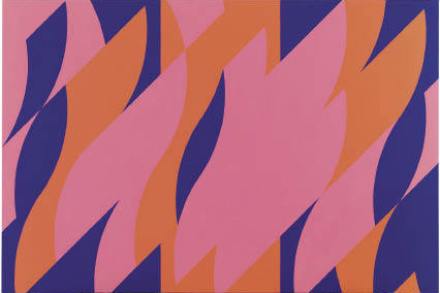
Bridget Riley turns 80 this year, a fact easy to forget when looking at the surging energy and contemporaneity of her pictures. She is a remarkable artist who, although imposing severe formal restraints on her work, manages continually to surprise us with the richness of her invention. Perhaps it is because of the self-limitations she endures that her imagination is compelled to delve so deeply in the narrow field she has made her own. And its very modernity is an aspect of the way her vision is directly and inspirationally linked to the art of the past. The free display in the Sunley Room at the NG, sponsored by Bloomberg, demonstrates this very effectively. The exhibition begins with Riley’s own work in company with Old Masters.

New look

From our UK edition

There has already been a certain amount of controversy over this exhibition: not just the predictably ruffled feathers of Royal Academicians omitted from the selection, but also the kind of ill feeling among the Academy’s organisational staff which gives a museum a bad name. There has already been a certain amount of controversy over this exhibition: not just the predictably ruffled feathers of Royal Academicians omitted from the selection, but also the kind of ill feeling among the Academy’s organisational staff which gives a museum a bad name. This is a great pity, as the exhibition is a remarkable one — out of 12 rooms, eight contain some of the best-displayed Mod Brit sculpture I’ve seen for a long time, in interesting and revealing juxtapositions.

Dark art

From our UK edition

Shadow Catchers is an effective title, with its magical and occult associations, and a nice echo of body snatchers into the bargain. Shadow Catchers is an effective title, with its magical and occult associations, and a nice echo of body snatchers into the bargain. The exhibition (sponsored by Barclays Wealth) it labels is less impressive: a group of five individuals who might be photographers or might be artists showing us their experiments with light-sensitive materials. Wandering round the more than usually subfusc exhibition space, I wondered whether this was not more properly a display for the Science or Natural History Museums.

More real art, please

From our UK edition

Although I am an admirer of Dulwich Picture Gallery, and like to support its generally rewarding exhibition programme, I will not be making the pilgrimage to see its latest show, Norman Rockwell’s America. Although I am an admirer of Dulwich Picture Gallery, and like to support its generally rewarding exhibition programme, I will not be making the pilgrimage to see its latest show, Norman Rockwell’s America. This is not just because it’s quite a hike to Dulwich for me, involving a bus, a train, another bus and another train (anything in excess of three hours from door to door), but also because I don’t think the trip will be worth it.

Death watch

From our UK edition

Although I stopped watching TV some years ago, films are a continuing solace and pleasure. Among the Christmas treats was a previously unseen Jack Nicholson movie, entitled The Bucket List. The plot revolves around two very different Americans, Nicholson and Morgan Freeman, both of whom are suffering from cancer and are given a mere matter of months to live. The Bucket List is their wish list of things to do before they die, some of the more exotic of which the wealthy Nicholson enables them to achieve. The excellent Freeman, a poorer man but the greater philosopher, reminds Nicholson of a more important consideration: the two questions asked of Ancient Egyptians at the gates of Paradise. Have you found joy in your life? And, has your life brought joy to others?