Andrew Lambirth

Shared affection

From our UK edition

The Switch 12A, Nationwide As a rule, Richard Burton acted stupendously well in stupendously bad films. Jennifer Aniston has mastered half that duality. The Switch, her latest film, is comfort-zone Aniston: a charmless rom-com with a crass attempt at eroticism — Toy Story’s more titillating, to be honest. Cliché is The Switch’s currency. A pallid dawn rises over New York’s landmarks and we are taken back seven years. It is breakfast time. An aging girl-next-door (Aniston) tells her lachrymose friend and former lover Wally (Jason Bateman) that she is seeking a sperm donor. ‘The clock has struck,’ she says, to crown the cliché.
Well met in Mexico

From our UK edition

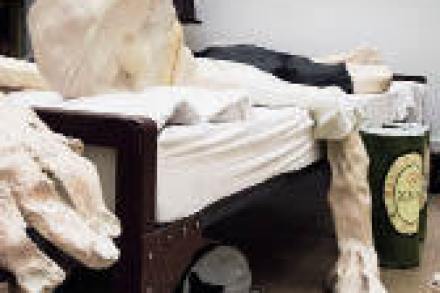
The Surreal House Barbican Art Gallery, until 12 September Surreal Friends: Leonora Carrington, Remedios Varo and Kati Horna Pallant House Gallery, Chichester, until 12 September It may not come as a surprise to readers to learn that ‘the individual dwelling [is] a place of mystery and wonder’, yet this is the premise of the Barbican’s latest attempt to pull in the punters. A portmanteau surrealism show that tries to blend art, film and architecture, its reach exceeds its grasp, though the designers must have had great fun carving up the space into dark cabins and voids. Some of the best exhibits — apart from fine things by de Chirico, Magritte and Giacometti — are the films.

Drama in Ipswich

From our UK edition

The Saatchi Gallery at Ipswich Art School 1 Upper High Street, Ipswich, until 9 January 2011, Tuesday to Sunday, 10–5 The town of Ipswich is not known for its art. It has a museum and various art galleries, but it is perhaps more celebrated as a port, as the birthplace of Cardinal Wolsey and the home of the cartoonist Carl Giles. It has some beautiful old buildings — examples of exquisite pargeting can still be seen in Butter Market in the town centre — evidence that Ipswich was in the 16th century one of the richest towns in England. Now it has one of Norman Foster’s first important buildings: the headquarters of marine insurers Willis, a darkly dramatic reflective glass structure built in 1975, and Grade 1 listed.

Picasso magic

From our UK edition

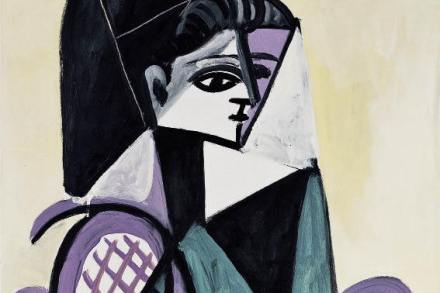
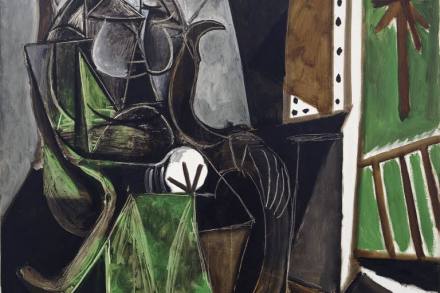
Picasso: The Mediterranean Years (1945–61) Gagosian Gallery, 6–24 Britannia Street, WC1, until 28 August The Gagosian Gallery has been remodelled for this exhibition by the architect Annabelle Selldorf, who has translated the normally looming white spaces into a succession of more sympathetic but nonetheless dramatic rooms. The expectant visitor enters via a black door to be confronted by a large but standard earthenware vase that Picasso has transformed by painting it with a brief yellow bikini. Vase becomes woman, as Picasso reinvigorates the old cliché of womanly hips looking like a vase, and effortlessly renews the metaphor. The humour and playfulness that characterise his work are at once in evidence, and the profound preoccupation with the human figure.

Damp squib

From our UK edition

Sargent and the Sea Royal Academy, until 26 September John Singer Sargent (1856–1925) is an artist whose name arouses hopes of dazzling technical virtuosity even when his subjects are fairly run-of-the-mill. Famed as a portrait painter, his art (at its finest) has great glamour and stylishness, backed up by exuberant brushwork which can be truly exhilarating. So a summer-themed exhibition of Sargent and the Sea sounds a treat for all: seductive at the very least, and possibly rising to great heights, with all the explosive splendour of Franz Hals crossed with the Impressionists. Sadly, there is little of such pyrotechnics visible in the Academy’s damp squib of a show.

Summer round-up | 31 July 2010

From our UK edition

Cornwall is looking beautiful under summer sun and outdoor pursuits beckon, but St Ives provides the perfect alternative when the beach palls or rain threatens. Besides the Tate, there are a number of commercial galleries, and chief among them is Wills Lane, which offers a stimulating variety of fine and applied art. For the summer period I have selected a Critic’s Choice for the gallery (until 5 September); of 14 artists, some better-known than others: Maggi Hambling, David Inshaw and Colin Self rubbing shoulders with Tyrel Broadbent, Roland Collins and Nigel Ellis. Landscape is one theme, the sea another.

Psychological approach

From our UK edition

Alice Neel: Painted Truths Whitechapel Gallery, until 17 September Paula Rego: Oratorio Marlborough Fine Art, 6 Albemarle Street, W1, until 20 August The last time I wrote about Alice Neel (1900–84), on the occasion of an exhibition mounted six years ago by the commercial gallery Victoria Miro, a reader wrote in to correct my statement that Neel’s work had not been shown outside her native America. The point I was making was how relatively little known Neel was, particularly in England, though that situation has now changed. At Victoria Miro (until 30 July) a host of international artists pay tribute to Neel’s work, and at the Whitechapel there’s a major survey of her paintings.

Game for a laugh | 17 July 2010

From our UK edition

Rude Britannia: British Comic Art Tate Britain, until 5 September If each age gets the art it deserves, it might also be said that each age gets the exhibitions it deserves. The robust tradition of British Comic Art has never looked so unfunny and anaemic as it does in this current overworked examination at Tate Millbank. My visit coincided with some voluble OAPs up from the country, a know-it-all guide manqué and a couple of solemn Americans who were evidently seeking enlightenment as to the strange habits of this island race. There were sighs aplenty but I’d reached Room 3 before I heard a single laugh, and this response was directed (not surprisingly) at a video screen and headphones replaying old episodes of Spitting Image.

Passion killers

From our UK edition

Beauty & Power: Renaissance and Baroque Bronzes Wallace Collection, Manchester Square, W1, until 25 July Caravaggio’s Friends & Foes Whitfield Fine Art, 23 Dering Street, W1, until 23 July William Crozier: Early Work Pyms Gallery, 9 Mount Street, W1, until 20 July The temporary exhibition galleries of the Wallace Collection are in the basement, next to the lavatories, and while I was there more visitors came down for the purposes of relieving themselves than to acquire new knowledge and experience of Renaissance and Baroque bronzes. It’s a shame if this show is being overlooked, because there hasn’t been a display like it in England for more than 30 years, and there are indeed fine things to be seen.

Relative values | 3 July 2010

From our UK edition

The Wyeth Family: Three Generations of American Art Dulwich Picture Gallery, until 22 August There have been a number of painting dynasties in the history of art — families such as the Bruegels, the Bellinis and the Tiepolos — but fewer in recent years, British art having favoured the older brother syndrome (Paul Nash and John, Stanley Spencer and Gilbert). The Wyeth family is a glorious exception, an American family obsessed with realist painting, and an encouraging phenomenon to study. Andrew Wyeth (1917–2009) is the best known of the painter Wyeths, and indeed the most talented. He is a remarkable artist, and it is his name that will probably attract many of the visitors to Dulwich.

Kaleidoscopic vision

From our UK edition

The Summer Exhibition Royal Academy of Arts, until 22 August The Weston Room is packed with prints as usual, but also features five display cases of artists’ books, including work by such masters of the genre as Ron King, Ken Campbell and Ian Tyson. Among the prints I particularly liked Bronwen Sleigh’s hand-coloured etching, Terry New’s digital print, Cornelia Parker’s etched worry lines, the screenprints of Stephen Chambers, Eileen Cooper’s linocuts, Ivor Abrahams’s ‘Suburban Totem’ and etchings by Paula Rego, Frank Auerbach, John Carter, Peter Freeth and Eileen Hogan (a pale beauty of Bryanston Square). The Small Weston Room is a typical feast of tiny paintings, and supremely popular with the buying public.

Picasso: angel and monster

From our UK edition

Andrew Lambirth talks to John Richardson, biographer and friend of the artist John Richardson has spent a lifetime in the company of great art and artists, and is justly celebrated for his ability to evoke, explain and evaluate their work in beautiful prose. Best known as the biographer of Picasso, he has written about many other artists, including Manet and Braque, and has curated a number of seminal exhibitions since the Picasso retrospective he staged in New York in 1962. For the past 50 years he has lived in New York, though born in England in 1924. He was in London recently for the installation of his major new curatorial excursion, Picasso: The Mediterranean Years 1945–62 at Gagosian Gallery (6–24 Britannia Street, WC1, until 28 August).

Conversation piece

From our UK edition

Another Country: London Painters in Dialogue with Modern Italian Art Estorick Collection, 39a Canonbury Square, London N1, until 20 June In recent years there has been something of a vogue for encouraging contemporary artists to respond to particular works by artists of the past, and to make paintings as part of that response. The prime example of this curatorial trend was Encounters: New Art from Old, staged by the National Gallery in 2000, and including such painters as Balthus, Patrick Caulfield, R.B. Kitaj, Cy Twombly and Euan Uglow.

Drawing for drawing’s sake

From our UK edition

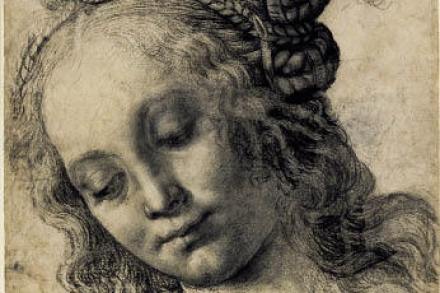
Fra Angelico to Leonardo: Italian Renaissance Drawings British Museum, until 25 July The latest exhibition in the Round Reading Room is an awe-inspiring collection of Italian Renaissance drawings, the kind of display likely to be seen only once in a lifetime. It is a large show of relatively small things, offering 100 examples of the finest drawings made between 1400 and 1510, entirely selected from two collections: the Gabinetto Disegni e Stampe degli Uffizi in Florence, and the British Museum itself. Here we see the birth of drawing as an independent art form, and not simply as a preliminary study for a painting.

New wave challenge

From our UK edition

Maggi Hambling: Sea Sculpture, Paintings and Etchings Marlborough Fine Art, 6 Albemarle Street, W1, until 5 June  Stephen Chambers: The Four Corners Kings Place Gallery, 90 York Way, N1, until 11 June Ceri Richards: Retrospective Jonathan Clark & Co., 18 Park Walk, SW10, until 5 June For the past eight years, the sea has been Maggi Hambling’s principal subject. She draws it regularly, makes portraits of it and now has turned to capturing it in bronze. As Norbert Lynton observed (in another context): ‘The idea of the sea as matter for sculpture should give us pause: not even [Medardo] Rosso, master sculptor of the momentary and the contextual, attempted anything like that.

Life enhancing

From our UK edition

William Crozier at 80 Flowers, 82 Kingsland Road, E2, until 29 May Agnes Martin Timothy Taylor Gallery, 15 Carlos Place, W1, until 22 May William Crozier is Scottish born, but has lived much abroad, spending his formative years in Paris and Dublin, and later working in Spain and America, though always keeping a foothold in England. His sensibility is broadly European, perhaps influenced by the Scottish predisposition to plangent colour, and his work has an intellectual base and emotional breadth that sits easily in an international context. Step into the East End premises of Flowers and be prepared for a blaze of pure visual excitement and pleasure. The effect of this 80th birthday celebration is exhilarating.

A great individualist

From our UK edition

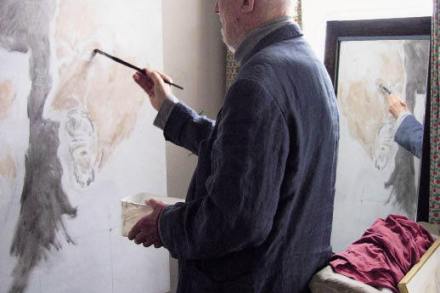
Andrew Lambirth talks to Jeffery Camp about the primacy of drawing in an artist’s practice More than 20 years ago, when I first interviewed Jeffery Camp, he forbade me to bring a tape recorder as he would find it off-putting. ‘I speak slowly enough for you to write it all down,’ he drawled in measured tones. Although born in Oulton Broad, Suffolk, and spending his early years in East Anglia, Camp has a placeless accent but a memorable delivery: you can indeed jot down most of his obiter dicta if you’re nimble with the stylus. Sitting in his kitchen sipping hot chocolate (he doesn’t have coffee) on a balmy spring day, I begin to make notes, but even this, it seems, is inhibiting to his flow.

A world apart

From our UK edition

John Tunnard: Inner Space to Outer Space until 6 June St Ives and Beyond until 31 May Pallant House Gallery, Chichester John Tunnard (1900–71) is one of that shamefully extensive body of distinguished 20th-century British artists whose work is largely unfamiliar today. For reasons best known to itself, the Tate doesn’t see it as its duty to bring such artists before the public for reassessment, so the job is left to others. Thankfully, there are smaller museums in this country with the necessary initiative and interest, notably Pallant House in Chichester, currently mounting the first museum show of Tunnard in more than 30 years.

Decorative magnificence

From our UK edition

The Indian Portrait: 1560-1860 National Portrait Gallery, until 20 June Mark Shields: Here and Elsewhere Grosvenor Gallery, 21 Ryder Street, SW1, until 14 May   I suspect that the first thought in many people’s minds to be associated with the Indian portrait is of the delicately detailed miniatures produced at the Mughal court in the 16th and 17th centuries. This is indeed the beginning of Indian portraiture as we know it, and the point at which this fascinating exhibition commences. Here is the portrait not just as likeness, but also as propaganda and official chronicle. The exhibition design in the Porter Gallery is constructed to steer the visitor clearly round the exhibits. A long curving wall with a large aperture commands our progress: we enter the gallery and go left.

Arboreal glory

From our UK edition

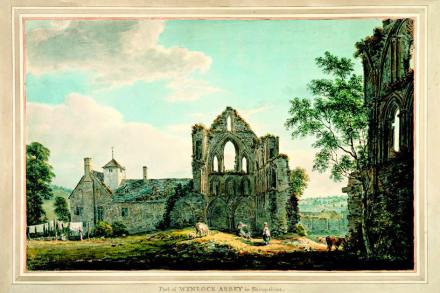
Paul Sandby: Picturing Britain, a Bicentenary Exhibition Royal Academy, until 13 June As Paul Sandby’s dates 1731—1809 suggest, last year was his bicentenary, when this exhibition started out in Nottingham. Sandby lived in that illustrious city before heading north to Edinburgh, when he was appointed draughtsman to the Military Survey of North Britain in 1747. It is therefore most appropriate that this exhibition travelled from Nottingham to Edinburgh before coming south to the RA. It follows Sandby’s own trajectory in this. He moved to London in 1751, to stay with his elder brother Thomas at Windsor and in Soho, and became involved in the St Martin’s Lane Academy.