Andrew Lambirth

‘England’s most closely guarded secret’

From our UK edition

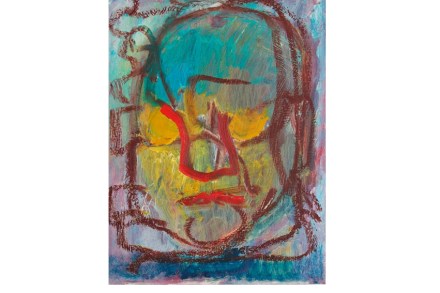
Dennis Creffield is admired by artists but little known to the wider public. Andrew Lambirth meets this octogenarian artist as his new show on the theme of William Blake and Jerusalem opens ‘I’m a peripatetic architectural draughtsman,’ says Dennis Creffield, best known for his magnificent series of charcoal drawings of the medieval English cathedrals, commissioned in 1987 by the Arts Council. He has indeed travelled the country, drawing not only cathedrals but also Welsh and English castles, the pagodas of Orford Ness in Suffolk (laboratories that were used for testing the trigger mechanisms of atomic bombs), the stately pile of Petworth House in Sussex, and many aspects of London.

Battle lines | 17 September 2011

From our UK edition

The introductory room to Women War Artists at the Imperial War Museum confronts the visitor with a large canvas of a women’s canteen in 1918 by the little-known Flora Lion. It’s an honest painting, workmanlike but dull. Hanging to its left is Laura Knight’s famous ‘Ruby Loftus Screwing a Breech-ring’ (1943), and in between is a monitor playing a wonderful film clip of Dame Laura and Ruby going to see the painting at the Royal Academy. Ruby, overcome by emotion, kisses Dame Laura; Dame Laura bobs about, smoking furiously. Of course, Laura Knight on film and in paint grabs the attention; Flora Lion is inevitably sidelined. And that sets the tenor of the show, which is rather a shame, as there is work of real interest among the more obscure names.

Spirit of place | 10 September 2011

From our UK edition

In the Weston Rooms of the Royal Academy’s main suite of galleries is the third of a series of exhibitions designed to show the processes by which artists arrive at their work. In the Weston Rooms of the Royal Academy’s main suite of galleries is the third of a series of exhibitions designed to show the processes by which artists arrive at their work. Nigel Hall (born 1943) is an internationally celebrated abstract sculptor, known for his restrained purist forms, exquisitely balanced combinations of cone, ellipse, circle and wedge, executed in bronze, steel or polished wood. He also exhibits tautly rhythmic charcoal and gouache drawings of twisting ribands or other flat geometric shapes.

Something old, something new

From our UK edition

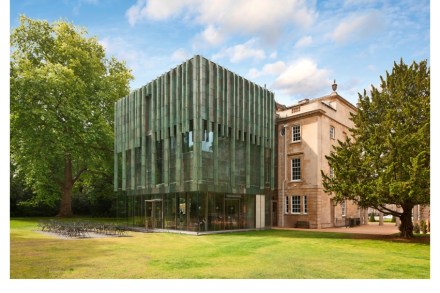
Very last chance to see the inaugural exhibition at the magnificently revamped Holburne Museum — a selection from the collections of Peter Blake, together with some of his own work. If, as Geoffrey Grigson suggested, the mind is an anthology, and the museum case or exhibition is a map of that mind, then what a remarkably diverse but ordered person Mr Blake must be. The new temporary exhibition gallery at the top of the Holburne’s new wing is filled with images of fantasy, dream and even nightmare, but everything is calmly laid out with great clarity and precision. The result is obsessional but intriguing.

Beyond belief | 27 August 2011

From our UK edition

The subtitle of Treasures of Heaven is ‘saints, relics and devotion in medieval Europe’. The key words here are medieval and Europe. The subtitle of Treasures of Heaven is ‘saints, relics and devotion in medieval Europe’. The key words here are medieval and Europe. There’s not much from England because we suffered the autocratic cleansing of the Reformation in the 16th century, and much of our native tradition of what was then dubbed idolatry was destroyed or swept away. And because our Church was reformed in this way, those of a C of E persuasion tend to be suspicious of relics and devotional aids.

Pastoral perfection

From our UK edition

One of the highlights of the Royal Collection is Gainsborough’s ‘Diana and Actaeon’, a painting I always make a point of visiting when I am viewing a new temporary exhibition in the Queen’s Gallery One of the highlights of the Royal Collection is Gainsborough’s ‘Diana and Actaeon’, a painting I always make a point of visiting when I am viewing a new temporary exhibition in the Queen’s Gallery. An unusual picture, it is Gainsborough’s only mythological subject with an identifiable classical literary subject. Best-known for his portraits, Suffolk-born Thomas Gainsborough (1727–88) would have preferred to spend his time painting landscapes, but couldn’t make a living at that.

Hungarian photography, Richard Long, Thomas Struth

From our UK edition

As regular readers of this column will know, I am not a great admirer of photography exhibitions, but the current show in the RA’s Sackler Galleries is more enjoyable than most. I have long loved the work of André Kertész and Brassaï, and besides presenting a lavish selection of their photographs, this show offers the context of their fellow Hungarians to further illuminate their achievement. The effect is interesting, if not entirely happy. Nothing seems to diminish Brassaï, but Kertész suffers by comparison. In the company of such relatively unknown photographers as Imre Kinszki, Rudolf Balogh and Erno Vadas, Kertész looks less strikingly original.

Cy Twombly and Poussin

From our UK edition

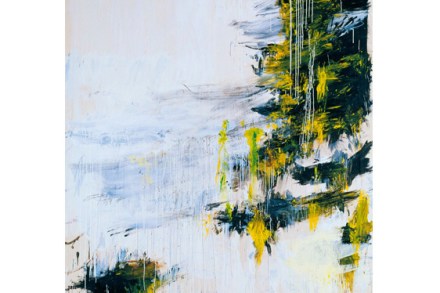
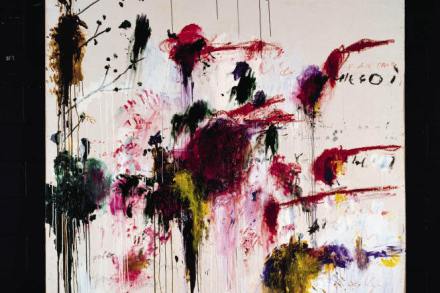
When a major artist dies while an exhibition of his or her work is up and running, there is inevitably a surge in visitor numbers. Consequently, the death of Cy Twombly at the beginning of last month has sent along to Dulwich a number of people who didn’t know his work to find out what all the fuss was about. Others, the long-standing admirers of Twombly, will visit Dulwich with sadness in their hearts that this delightful and surprising artist, this genius of the wayward mark, will make no more new work. Dulwich is not the easiest of London galleries to get to, but I recommend this show, not just for its quota of Twomblys, but also for the added bonus of Poussin, seen here in great glory. Their juxtaposition is a stimulating one.

John Hoyland – an appreciation

From our UK edition

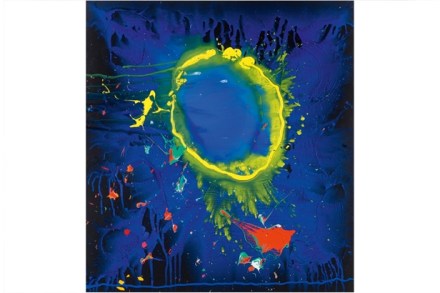
It’s difficult to believe that John Hoyland is dead. He was a man so full of life, with such appetite for living, that his absence from our midst makes no sense. Even when grievously ill in the past months, he was more likely to engage in anecdote and tell jokes than complain of his increasingly frail condition. The spirit of the man continued to shine brilliantly despite the adverse circumstances. His last exhibition, all new paintings, opened at the Beaux Arts Gallery in Cork Street in April. At the private view, Hoyland, although already much reduced physically, sat in the midst of his vividly coloured and exhilarating work, and accepted the homage of friends and admirers.

Show of wonders

From our UK edition

One of the art books purchased in recent months that I’ve most enjoyed has been Arthur Boyd: Etchings and Lithographs, published in 1971. Boyd was an Australian painter, potter and printmaker, born in 1920 in Melbourne, who came to England in 1959 and made his home in this country. A deeply interesting image-maker, he came from a dynasty of artists, was largely self-taught, and evolved a powerful style that owed much to surrealism and expressionism, but was entirely his own vision. Boyd created a beguiling world of mythical beasts and figures, many of them involved in events of unusually potent religious or sexual drama. At one point we saw a lot of his work in this country, and it was a great enlivening force.

Sublime timelessness

From our UK edition

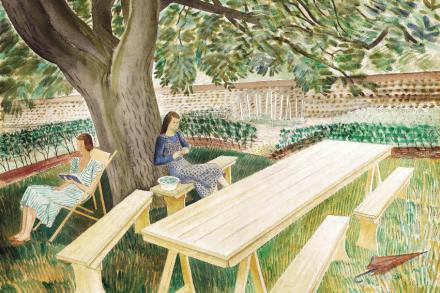
The Fry Art Gallery is housed in a Victorian Gentleman’s Gallery of two main rooms, built in 1856 for the Quaker banker Francis Gibson. The Fry Art Gallery is housed in a Victorian Gentleman’s Gallery of two main rooms, built in 1856 for the Quaker banker Francis Gibson. It was first intended to accommodate his own collection, but was always open to the public, and in 1985 it was taken over by the Fry Art Gallery Society, a charity set up to create the North West Essex Collection, of work by artists of the locality. The focus is primarily on the remarkable group of painters and printmakers who settled in nearby Great Bardfield from the 1930s to the 1970s, and which included Edward Bawden and Eric Ravilious, John Aldridge, Michael Rothenstein and Kenneth Rowntree.

Appreciation – Cy Twombly: the outsider

From our UK edition

With the passing of Cy Twombly — who has died of cancer aged 83 — a beacon light of rare civilisation has gone out in the Western world. With the passing of Cy Twombly — who has died of cancer aged 83 — a beacon light of rare civilisation has gone out in the Western world. An elusive artist, with a highly developed faculty of challenge and response, he developed a pattern of investigation into the visual which was part philosophical inquiry and part sensual celebration. Despite close association with Robert Rauschenberg and Jasper Johns, recognition came late. He remained something of an outsider: an esoteric American artist who settled in Italy in 1957 and grew obsessed with Classical antiquity.

Spiritual solace

From our UK edition

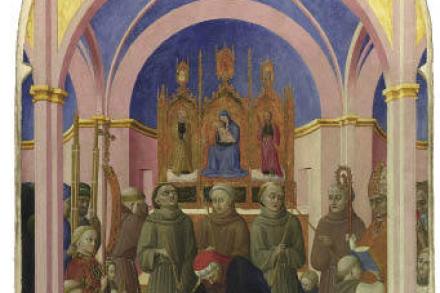
The basement galleries of the Sainsbury Wing are darker than ever for this intriguing redisplay of some of the oldest paintings in the National Gallery. The atmosphere attempts to recreate the penumbral gloom of church and chapel in which these paintings were originally to be seen, before impoverished religious foundations flogged them to dealers and collectors. Nearly all these pictures come from the NG’s permanent collection, but it is always revealing to see things exhibited in new ways, and this exhibition is no exception. For a change, it focuses our attention on the nuts and bolts of altarpieces — how they were commissioned, constructed, framed, positioned — and in so doing sheds much light on them as devotional objects.

Artistic rebellion

From our UK edition

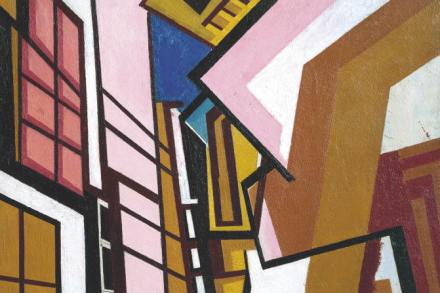
Vorticism is often referred to as the only British 20th-century art movement of international importance, but the work of the Vorticists — Wyndham Lewis, Edward Wadsworth, Gaudier-Brzeska and their associates — has up to now not been widely known. Vorticism is often referred to as the only British 20th-century art movement of international importance, but the work of the Vorticists — Wyndham Lewis, Edward Wadsworth, Gaudier-Brzeska and their associates — has up to now not been widely known. However, the Tate’s show has already been seen in Venice at the Peggy Guggenheim Collection, making it the first ever Vorticist exhibition in Italy, stronghold of Futurism (Vorticism’s rival), and in America, at the Nasher Museum of Art in North Carolina.

A feast of visual delight

From our UK edition

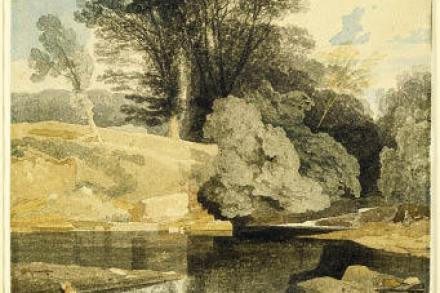
There are just 26 drawings and watercolours in the magnificent exhibition at Lowell Libson, but they are all of such quality and interest that the show is a feast of connoisseurship and visual delight. Selected by Libson and Christopher Baker from the National Gallery of Scotland, the range of work gives a distinct flavour of the museum’s holdings, from major watercolours made for exhibition to more informal studies. Here are the big names (Turner, Constable, Blake) and the lesser-known (William Callow, John Webber). Most deal with travel or landscape, but there are figure studies and visions, too. The variety within such a small compass is impressive. For pure pleasure, this show is hard to beat.

Lautrec’s dancing muse

From our UK edition

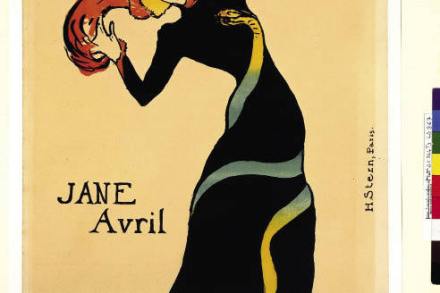
Henri de Toulouse-Lautrec (1864–1901), diminutive aristocrat and radical artist, was roundly travestied in John Huston’s 1952 film Moulin Rouge, and at once entered the popular imagination as an atrociously romanticised figure doomed for early death. Henri de Toulouse-Lautrec (1864–1901), diminutive aristocrat and radical artist, was roundly travestied in John Huston’s 1952 film Moulin Rouge, and at once entered the popular imagination as an atrociously romanticised figure doomed for early death. In fact, Lautrec was a tough and original artist, incisive and unsparing in his observation though also compassionate of the human comedy, a perfect painter of what then passed for modern life.

The art of architecture

From our UK edition

Leighton House, studio-home of Frederic, Lord Leighton (1830–96), is one of my favourite museums, and always a treat to visit. Leighton House, studio-home of Frederic, Lord Leighton (1830–96), is one of my favourite museums, and always a treat to visit. This small but informative exhibition about the architect George Aitchison (1825–1910) who built it is a well-timed adjunct to the V&A’s great survey of the Aesthetic Movement, in which he is also included. Leighton House is Aitchison’s monument, for there are few other buildings to his name, apart from imposing warehouses; certainly no churches or country houses.

Conflicting demands

From our UK edition

This year, the sequence of galleries has been subtly altered, and for a change we enter the fabled Summer Exhibition (sponsored by Insight Investment) through the Octagon rather than Gallery 1. This brings the visitor straight into the heart of the show, and it’s quite a good idea at this point to turn right into the Lecture Room for a gallery dedicated entirely to RA members, hung by that éminence grise, Michael Craig-Martin. Of course this is Craig-Martin’s choice, so the more traditional practitioners are excluded, but the Lecture Room nevertheless looks better than it has done for years. A big tattooed head by Tony Bevan keeps company with Humphrey Ocean’s ‘Windscreen’, a roughly massed urban landscape.

Inquire within

From our UK edition

In the Mellon Gallery of the Fitzwilliam is an unashamedly rich and demanding exhibition of Italian drawings, ranging from the 15th to the 20th century. I say ‘demanding’ because you need to look closely and with attention at these works — not simply to decipher what is going on (the narrative component), but to appreciate how it has been achieved (the formal aspect). So much of the stuff that is produced under the name of art today is easy on the eye and mind, with as much aesthetic nourishment as used air. Real art solicits the spectator’s involvement: it’s not a variant on wallpaper, it requires interpretation and response, intellectual as well as emotional.

Candid camera | 28 May 2011

From our UK edition

When the photographer Ida Kar (1908–74) was given an exhibition of more than 100 of her works at the Whitechapel Gallery in 1960, history was made. When the photographer Ida Kar (1908–74) was given an exhibition of more than 100 of her works at the Whitechapel Gallery in 1960, history was made. She was the first photographer to be given such an honour — a substantial solo show in a public gallery — and the presentation of her photographs was carefully considered. This set a precedent for subsequent photography exhibitions and brought the question of whether photography is art firmly to the forefront of debate. The person responsible for all this was the dynamic and innovative director of the Whitechapel, Bryan Robertson.