Andrew Lambirth

Sacrificing art for ideas

From our UK edition

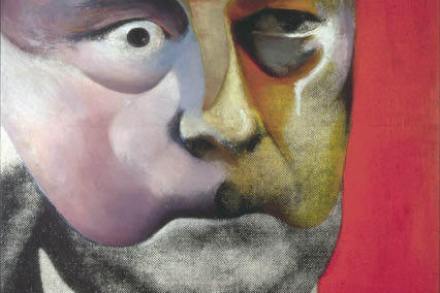
Richard Hamilton: Modern Moral Matters Serpentine Gallery, until 25 April This year is the 40th anniversary of the Serpentine Gallery, that most welcoming of exhibition venues — the gallery in the park — with its wide views and well-appointed rooms. Expectation rises as the visitor walks through gardens burgeoning with spring, even if it is raining. To start its anniversary year, the Serpentine has mounted an exhibition of Richard Hamilton’s political work entitled (in homage, presumably, to Hogarth) Modern Moral Matters. The show is a real disappointment: the blinds are down to focus the visitor’s attention inward, which might be acceptable if there were riches to be seen.

Time for thought

From our UK edition

Andrew Lambirth on how a powerful Easter message can be found in images of the Crucifixion Easter is not just a time for bonnets and bunnies, but also for reexamining the fundamentals of life and faith. In the self-denial of Lent, whether we’ve given up chocolate or alcohol, or something even more difficult, we are offered the opportunity of facing and considering temptation, without the usual pretence that it’s not happening to us. Taking the easy way out is perhaps our most constant temptation, particularly rife in a society which dislikes rules and moral restraints, but Lent gives us the chance to confront that insidious habit. Also the chance to check — if only fleetingly — the wilder excesses of self-indulgence. And the purpose of all this self-denial?

Round the galleries

From our UK edition

I admire J.G. Ballard, who died last year, but much of his writing leaves me cold — as if abandoned in one of the lunar jungles or deserts that Max Ernst’s paintings so often depict. I admire J.G. Ballard, who died last year, but much of his writing leaves me cold — as if abandoned in one of the lunar jungles or deserts that Max Ernst’s paintings so often depict. It’s a deep chill of the psyche, a numbing of the human warmth that makes life bearable, and Ballard rightly identified it as taking over our culture. He wasn’t really a science fiction writer so much as a social commentator, dissecting our present dystopia — a remarkable and original voice, unafraid to describe the dark psychopathology of the human race, however ominous his predictions.

Interpreting history

From our UK edition

Painting History: Delaroche and Lady Jane Grey National Gallery, until 23 May Just up the road from where I write is the dramatic ruin of Framlingham Castle, the historical seat of the Howard family and the Dukes of Norfolk. The castle was granted to Princess Mary by her half-brother King Edward VI, and she took refuge there when on Edward’s death his second cousin Lady Jane Grey was named as his successor, rather than she herself. The country was in the grip of its worst period of internal religious strife, which Protestant Edward had tried to avoid by commending devoutly Protestant Jane to the crown. But the Catholics would have none of it, and Mary’s star was very soon in the ascendant.

Talking point

From our UK edition

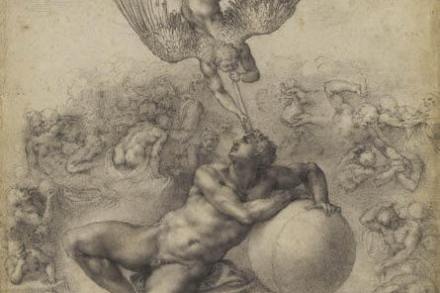
Michelangelo’s Dream Courtauld, until 16 May This is one of the series of exhibitions built around a single masterpiece from the Courtauld’s collection — in this case Michelangelo’s remarkable presentation drawing ‘The Dream’ — placed in an informative context of closely related loans. The Courtauld does it superbly: quietly stated, rigorously researched, laid out with clarity and authority. It is accompanied by a hefty but handsome catalogue (published by Paul Holberton, £30 in paperback), packed with scholarly exegesis, with particularly useful notes on individual exhibits. The show consists of a group of Michelangelo drawings, original letters and poems by the artist, and certain works by his contemporaries.

Shape shifter

From our UK edition

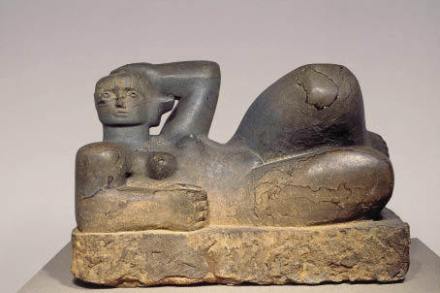
Henry Moore Tate Britain, until 8 August Even some of the greatest artists go in and out of fashion, though market forces are grimly determined (in the short term) that this should not be so. Death often brings a lull in interest, or conversely a revival. An artist who has been overrated may be for a time forgotten, until someone starts the process of reassessment and perhaps a more balanced appraisal is reached. The reputation of Henry Moore (1898–1986) has had its ups and downs — he was first displaced from critical pre-eminence by his one-time assistants Anthony Caro and Phillip King and the revolution in abstract, coloured sculpture in the 1960s — but now his standing is deemed in need of revision.

Rare magic

From our UK edition

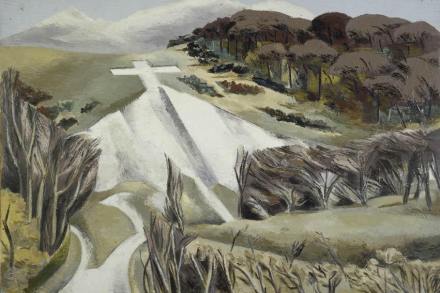
Paul Nash: The Elements Dulwich Picture Gallery, until 9 May Paul Nash (1889–1946) is one of those rare artists whose work manages to be British, Modernist and popular at the same time without imploding. It is thus curious that there are not more exhibitions of his beautiful and poignant work. The last general Nash survey in London was at the Tate in 1975. More recently, the Imperial War Museum has shown his war work, and in 2003 there was a good and wide-ranging show at Tate Liverpool. With that exhibition the Tate no doubt felt it had done its duty to Nash, so the current, long-overdue London display was left to other hands. All praise, then, to Dulwich Picture Gallery for rising to the challenge. But a show of Paul Nash there presents certain problems.

In Arcadia

From our UK edition

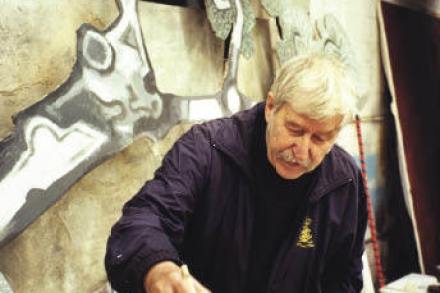
Last year, within the space of five weeks before Christmas, I lost two friends who had illumined the world for me and made it a more enlivening place. Both were artists, both were in their eighties and both were determined individualists who recognised each other’s work without being in any way close allies. John Craxton was the first to die, in hospital on 17 November after a short illness. Just over a month later, Craigie Aitchison dropped dead of a heart attack. I hope to write about Aitchison when some of his distinctive work on the theme of the Crucifixion is on show. This is a tribute to John Craxton.

Feasts of colour

From our UK edition

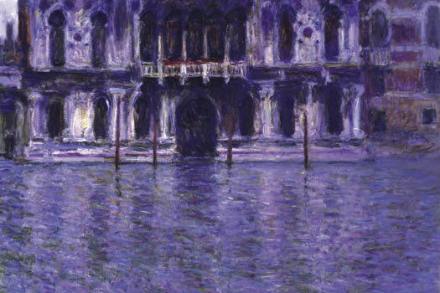
Gillian Ayres at 80 Alan Cristea Gallery, 31 & 34 Cork Street, W1, until 13 March Claude Monet Helly Nahmad Gallery, 2 Cork Street, W1, until 26 February Birthday greetings are in order for Gillian Ayres, who has just celebrated her 80th with an exhibition of new work of undiminished vigour, inventiveness and sheer uplift. One of our leading abstract artists, Ayres manages to keep on surprising us with large-scale paintings of superabundant vitality despite her own poor health, and with images of pronounced joy. However, her work is not all high spirits. The celebration of colour which distinguishes it is made with the full and certain knowledge of personal extinction (though may that moment be long delayed).

Island inspiration

From our UK edition

Chris Ofili Tate Britain, until 16 May There’s always something temporary-looking about an installation of Chris Ofili’s early paintings. These works are not hanging on the wall, but lean against it, propped up on feet of elephant dung — the best-known ingredient of this Turner Prize-winning artist’s work. As a consequence, the exhibition looks as if it’s still in the process of being hung, and these elaborately decorated and largely trivial paintings have yet to be hoisted on to the gallery walls.

Extremes of joy and suffering

From our UK edition

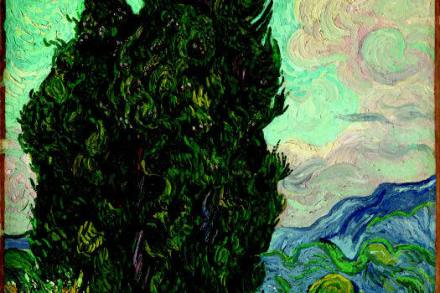
The Real Van Gogh: The Artist and His Letters Royal Academy, until 18 April Sponsored by BNY Mellon From time to time we need to remind ourselves of the astonishing fact that Vincent van Gogh (1853–90) produced more than 800 paintings and 1,200 drawings in a mere ten-year career. He also wrote letters, of a depth and originality that qualify them as literature in their own right. So much to offer the world, such a sense of discovery and originality, yet he took his own life while still in his thirties. For decades, Van Gogh has been the artistic god of the self-taught and the misunderstood, making a particular appeal to the adolescent mind. I remember devouring my first book on him in an unusually quiet school dormitory during an influenza epidemic.

Do the locomotion

From our UK edition

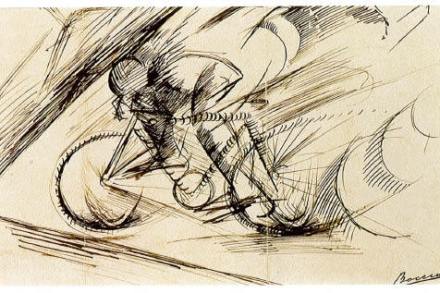
On the Move: Visualising Action Estorick Collection, 39a Canonbury Square, London N1, until 18 April The Estorick Collection, which specialises in modern Italian art, has mounted a series of rewarding exhibitions in recent years, all of which bear some essential relationship to its permanent holdings. Futurism remains the best known and most widely celebrated modern Italian art movement, and the current exhibition helps to put in context the Futurist obsession with recording movement through the static image. This display, curated by Jonathan Miller, offers a background to and explanation for the way in which the Futurists depicted movement by examining how animal locomotion was first represented and analysed through the developments in scientific photography.

Talk show

From our UK edition

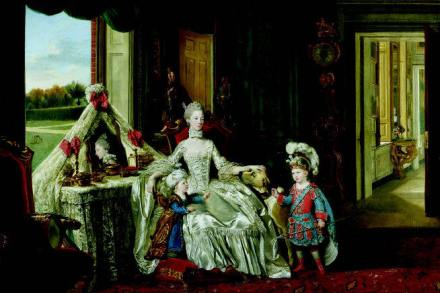
The Conversation Piece The Queen’s Gallery, Buckingham Palace, until 14 February A visit to the Queen’s Gallery is always a civilised, enjoyable experience. Apart, that is, from the airport-style security to which the visitor is subjected — a saddening sign of the retrograde times we live in. The treasures of the Royal Collection are worth any number of visits (I always want to see Gainsborough’s ‘Diana and Actaeon’ or Annibale Carracci’s ‘Head of a Man in Profile’, but there are plenty of other fine things), while the temporary exhibitions mounted in the side galleries are very often of the highest quality. One such is the current display devoted to The Conversation Piece, and subtitled Scenes of Fashionable Life.

Fine line

From our UK edition

Drawing Attention Dulwich Picture Gallery, until 17 January Last chance to see a really excellent selection of works on paper from the Art Gallery of Ontario in Canada. It’s a relatively new collection, begun in 1969, but despite that it includes many of the great names of Western art. From the Italian Renaissance to 18th-century France via England and the Netherlands, from German Expressionism to international abstraction, not forgetting a group of works by some of Canada’s finest, the collection maintains a hearteningly high standard. In the first room are the Italians, so good it’s difficult to know where to start. Stroll round the room a couple of times and see what particularly catches your eye.

A look ahead | 2 January 2010

From our UK edition

Andrew Lambirth on artistic delights and pleasures we can look forward to in 2010 The juggernaut of blockbusters at last shows signs of slowing down. In recent years, museums have deluged us with loan exhibitions of often very mixed quality in order to generate the increasingly large amounts of revenue necessary to fund their extended bureaucracies. Too many shows really, particularly when concocted by curators of boundless self-esteem with scant regard for the public. I long for fewer exhibitions chosen with greater discernment, and it seems that the crisis in international finance is finally helping to achieve this. World tours are being cancelled, ambitions checked, sponsorship withdrawn. Initially, this means that there are marginally fewer exhibitions running for longer.

Master of accretion

From our UK edition

Frank Auerbach (born 1931) is one of the most interesting artists working in Europe today, a philosophical painter of reality who works and re-works his pictures before he discovers something new, something worth saving. William Feaver, in this grand new monograph, calls Auerbach’s paintings ‘feats of concentration’, and stresses the hard work which goes into their construction, despite their appearance of spontaneity. Feaver has a gift for the evocative phrase: ‘Studied yet impulsive, ranging from darkness to radiance and from the declamatory to the subdued, they are keyed to an air of resolve as unguarded as joy, as involuntary as grief.’ This is a book strong on context.

‘All must be safely gathered in’

From our UK edition

Andrew Lambirth reflects on Stanley Spencer’s ‘Study for Joachim Among the Shepherds’ Stanley Spencer (1891–1959) is a rare figure of international standing among British 20th-century artists. As the painter and critic Timothy Hyman has observed, Spencer can be ranked alongside Munch, Bonnard, Kirchner, Beckmann and Guston for his extraordinary work exploring the relationship between the self and the world. He was a wonderfully original and inventive artist whose work has paradoxically suffered because of his unconventional private life.

Portrait of a working artist

From our UK edition

Edward Bawden Bedford Gallery, Castle Lane, Bedford, until 31 January 2010 In these days when museums seem to think it acceptable to sell off the charitable gifts of past ages to feed contemporary vanities, I wonder who will be tempted to donate works of art without binding them securely in protective red tape? In the last eight years before his death, the artist and illustrator Edward Bawden (1903–89) gave a vast archive of his work to the Cecil Higgins Art Gallery in Bedford. It was, effectively, the contents of his studio, representing nearly every period of his career, and it numbers more than 3,000 items.

Closely guarded secret

From our UK edition

Andrew Lambirth on how the cult of youth can lead to the neglect of distinguished older artists One of the least endearing traits of our age is youth worship. I can understand that advertisers might need to target a large and gullible audience suddenly and unaccountably blessed with disposable income (or should that be credit?), but to attribute wisdom or originality to youth is a rash act indeed. The attention paid to young artists in recent decades has grown increasingly disproportionate, for no good reason apart from the follow-my-leader media circus which keeps their antics before an increasingly bored and bewildered (if not downright cynical) public.

Christmas round-up | 28 November 2009

From our UK edition

Andrew Lambirth trawls the galleries and finds a visual feast for the festive season Most people who have heard of James Ward (1769–1859) will know his monumental landscape in Tate Britain, ‘Gordale Scar’, but perhaps little else by him. ‘Gordale Scar’ is immensely impressive (I also love Karl Weschke’s versions of the same subject made in 1987–8), but Ward was far from being a one-work artist. A painter of animals as well as of landscapes, his gifts of observation and curiosity made him a valued recorder of country life. A superb show of his drawings at W.S. Fine Art/Andrew Wyld (27 Dover Street, W1, until 11 December) gives a full account of his skills as a draughtsman in subjects ranging from charcoal burners to cloud studies.