Alexandra Coghlan

Follow the lieder

From our UK edition

If a symphony is, as Mahler famously put it, ‘like the world’, then songs and lieder are like seeing that world in Blake’s grain of sand. Their span may be short, but their emotional horizon is infinite — a lyric window on to an epic landscape. And yet there’s something about a song recital that sets up quite a different expectation. Maybe it’s the venues. Entering the Wigmore Hall or Oxford’s Holywell Music Room still feels like stepping into another, older world. Politeness, not passion, is the overriding sensation of well-heeled audiences with their well-thumbed programmes, prepared for 90 minutes of just-enough-but-not-too-much musical excitement.

Salon Strauss

From our UK edition

An opera without singers, a Strauss orchestra of just 16, and an early music ensemble playing Mahler: welcome to the Oxford Lieder Festival, where familiar repertoire is getting a reboot this year thanks to some brilliantly ambitious programming. When it comes to classical music, we’re used to living in a bifurcated world. On the one hand, you have the contemporary ensembles: the orchestras, choirs and quartets performing pretty much everything from Mozart onwards. And on the other the early music groups, whose territory is everything that’s left — Bach, Byrd, Hildegard of Bingen. It’s only fairly recently, and thanks to groups such as the Orchestra of the Age of Enlightenment, that this crude, artificial divide has been challenged.

Soap opera

From our UK edition

Previously on Giulio Cesare… English Touring Opera’s new season caters cannily to the box-set generation by chopping Handel’s Egyptian power-and-politics opera in two, playing each half on consecutive evenings as edge-of-your-seat instalments in a sort of baroque House of Cards. Will Cleopatra outwit her wicked brother? Will she and Cesare ever get together? Will Sesto ever stop dithering and do the deed? Tune in tomorrow night to find out. If that sounds like the kind of pacy, racy entertainment you’ve always longed for in the opera house, be warned; this is Giulio Cesare: the Director’s Cut, doggedly and absolutely complete, down to every last recitative, aria and interlude.

Vice and virtue

From our UK edition

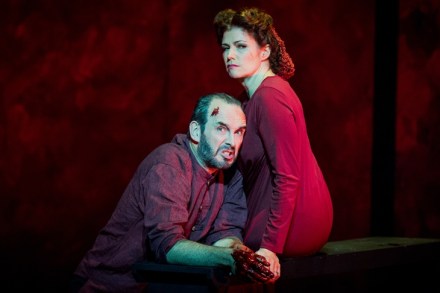
‘Can the ultimate betrayal ever be forgiven?’ screams the publicity for The Judas Passion, transforming a Biblical drama into a spears-and-sandals soap opera in a sentence. Thankfully, this really isn’t the premise of composer Sally Beamish and poet David Harsent’s new oratorio. Instead, the two authors pose a more interesting problem: is betrayal still betrayal when it’s divinely ordained, the price of salvation? A performance of Mahler’s Fourth Symphony this week celebrated the innocent joys of heaven; The Judas Passion invited us to count their sinful cost. You see them before you hear them. The 30 pieces of silver catch the light as they hang suspended as part of the ‘Judas chime’, an instrument created especially for The Judas Passion.

Mozart’s mischievous muse

From our UK edition

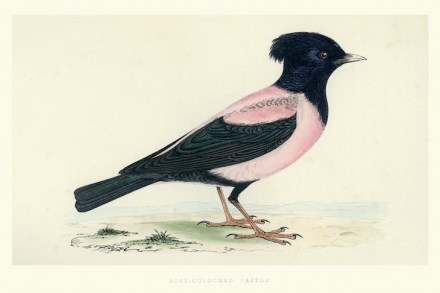
If you were to compare Mozart to a bird it wouldn’t be the starling. Possibly the wood thrush or nightingale, with their beautiful, haunting songs; or maybe the lyrebird with its astonishing ear for imitation; or perhaps the composer would find his match in the exotic rarity of the ivory-billed woodpecker or giant ibis. But the common starling? More pest than pet in its adoptive North American home, this ‘ubiquitous, non-native, invasive species’ seems an unlikely fit for a singular prodigy. So thought the ecophilosopher and naturalist Lyanda Lynn Haupt, when she started work on this book, exploring the composer’s relationship with the bird he bought after hearing it singing one of his piano concertos, and kept as a pet until its death.

Grimes triumphant

From our UK edition

‘Peter Grimes!’ Ranked high above us in the Usher Hall — a mob smelling blood, hot for the kill — the chorus let forth those three primal cries, and we were all lost. The modesty-curtain of civilisation was torn away, and our basest human urges — hate, revenge, suspicion of difference, delight at weakness — were exposed. Looking up at those faces, shielded by no proscenium, separated by no stage lighting, I don’t know when I have ever felt more horrified, more shaken by a performance. ‘A staged concert,’ writes conductor Ivan Fischer, ‘looks for complete harmony and coordination between music and theatre... for organic unity in which vocal and acting skills merge completely.’ He’s not wrong.

Time to end authenticity

From our UK edition

They say the first step towards recovery is admitting that you have a problem. So I’m staging an intervention and asking the BBC Proms to admit what they’ve known for some time: they have a big problem when it comes to early music. How to perform it, where to perform it, even who should perform it — these are all questions that, year after year, remain unsatisfactorily, inconsistently or superficially answered, and there’s little in this year’s programming to suggest that 2017 will be any different. Up until now the festival’s conversation about early music has been dominated by the red-herring question of venue.

Risk assessment

From our UK edition

Someone at the Buxton International Festival had a wry smile on their face when programming this year’s trio of operas. To sandwich together Verdi’s Macbeth and Mozart’s Lucio Silla — charged tales of political tyranny, both — with Benjamin Britten’s Albert Herring is a juxtaposition as canny as it is risky. Dictatorship takes many forms, it says, and whether your choices are prescribed, your desires proscribed, by a Roman dictator or by the tweed-bosomed ‘self-appointed chief constable’ of a small Suffolk village makes little difference.

Music matters | 1 June 2017

From our UK edition

The ancient Greeks had a word for it —katabasis, descending into the depths, to the underworld itself, in search of answers. To cross the threshold between life and death, innocence and knowledge, the everyday and what lies beyond, is an act woven through art, resurfacing in each generation. For Orpheus, and for Monteverdi, the journey may be a literal one, but for Bartok’s Bluebeard, imagined in the age of Freud and Jung, hell is not found outside, or even in other people, but within the darkest recesses of our own selves. When we speak of Orpheus it is of music, of birds and beasts beguiled, and men and women drawn into dance.

Soaring and singing

From our UK edition

Whether it’s Coleridge’s nightingale or Petrarch’s, Ted Hughes’s wren or Shelley’s skylark, Helen Macdonald’s hawk or Max Porter’s crow, literature is measured out in warbles and wingbeats — metaphors that have long since broken free of their originals, birds made not of sinew and bone but ‘ink and sentiment’. Richard Smyth’s A Sweet, Wild Note brings these black and white creatures back into colour, gives them science and geography, acoustics and ecology as well as poetry, bringing all these disciplines to bear on one question: what do we really hear when we hear birds sing?

Bingeing on Bach

From our UK edition

Coined in 1944, ‘completism’ is a modern term for a modern-day obsession. What began as a phenomenon of possession — whether of comic books, records or stamps — has evolved in the age of Spotify, Netflix and cloud computing. No activity defines current cultural trends better than binge-watching, completism taken to its logical extreme: art turned extreme sport. It’s an attitude that has found a natural home in the concert hall and opera house (what is Wagner’s Ring Cycle, after all, if not the original box set?) where length has long been fetishised and endurance accepted. But just as new media has changed the way we make art, so new contexts have changed how we consume it.

Passion indeed

From our UK edition

‘The dripping blood our only drink/ The bloody flesh our only food…/ Again, in spite of that, we call this Friday good.’ In spite of that. Anglo-Catholic convert T.S. Eliot knew a thing or two about Easter. The Passion story might end with resurrection and redemption, but it’s a celebration that we achieve in spite of agony, torture and abandonment, a tale whose root lies in the Latin ‘passio’, meaning suffering. Musical Passion settings are no different — or shouldn’t be. A performance of Bach’s St John or St Matthew Passion should disquiet, even distress, as much as it consoles.

The lost Stradivarius

From our UK edition

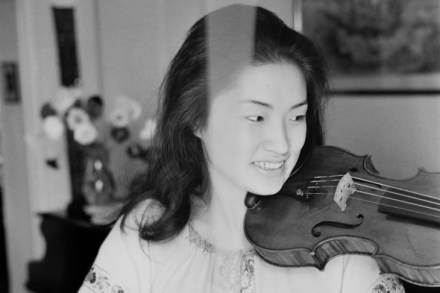
Min Kym is a violinist, but if you Google her name you won’t find sound-clips or concert reviews, touring schedules or YouTube videos. What you’ll get are news reports. Because one evening in 2010, when Kym was waiting for a train at Euston Station, her 300-year-old Stradivarius violin was stolen. Almost three years later it was recovered, and an ‘elated’ Kym was back in the papers, but the happy ending was more editorial convenience than truth. Now Kym herself has written a memoir in an attempt to explain what she really lost that day, and the impossibility of ever truly recovering it. Gone is an awkward book.

Death becomes her

From our UK edition

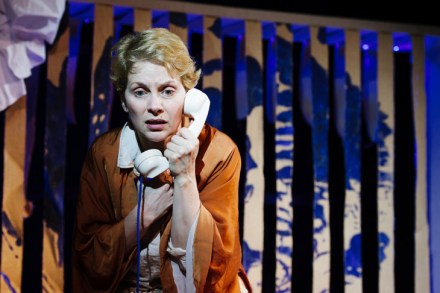
Opera is littered with the bodies of abandoned women. Step over Dido and Gilda, and you’ll still stumble into Donna Elvira, Euridice, Elisabeth, Ariadne, Alcina. The list goes on. Pop music might have ‘50 Ways to Leave Your Lover’, but opera has 500. Call it chauvinism or voyeurism if you like, but opera’s women are at their most powerful in despair, even death. Their anguish might be aestheticised, but it shouts louder and more truthfully than the corpses of the endless female victims of television’s police procedurals, as two arresting performances attested this week. It’s her feet you notice first. Flexing and arching convulsively, rubbing up against one another as though to scrape flesh from bone.

Denial has rarely looked so good

From our UK edition

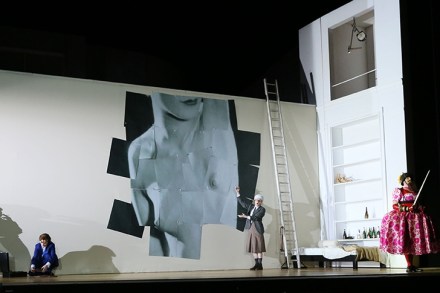
Ceci n’est pas une Partenope. Forget the warring classical kingdoms of Naples and Cumae: this is surrealist Paris in the 1930s and imminent invasion is the stuff of conversational parenthesis, barely worth interrupting a rubber of bridge for, let alone an embrace. Man Ray, Lee Miller and their androgynous associates slink and affect their way around a monochrome salon with its suggestively curved central staircase, offering up the performance of themselves as a living exhortation to make art, not war. As a response to Handel’s most Shakespearean of comedies, Christopher Alden’s production is inspired — more now, if anything, than in 2008 when it was new.

Thoroughly modern Monteverdi

From our UK edition

‘Eppur si muove’ — And yet it moves. Galileo’s defiant insistence that the Earth revolves round the Sun, his refusal to submit to the Inquisition, is a familiar one. It’s the battle cry not of a reformer but of a revolutionary, a passionate teller of truths. It’s a credo he shared with composer Claudio Monteverdi. Born barely three years after the astronomer, Monteverdi faced his own inquisition. Defying those who would make music an immoveable sphere, bound in place by harmonic proprieties and structural conventions, he made works that rejected tidy formalism in favour of messy, fleshy humanity. His was music that moved in every sense, that lived as vividly as those who inspired it.

Notes on a scandal | 2 February 2017

From our UK edition

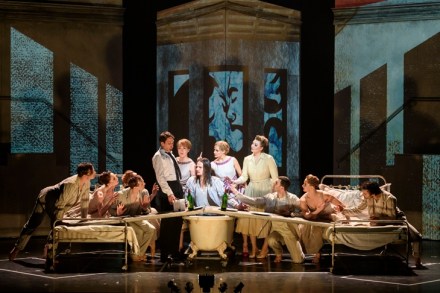
Kids: who’d have them? Certainly no one who has ever been to the opera. If they’re not murdering you, they’re betraying you, defying orders or throwing themselves into the arms of the nearest unsuitable suitor. What happens when that suitor is a god, or — god forbid — their own brother or sister? Answers came on the back of two very different operatic postcards this week. At the Barbican, bathtime gone bad. A claw-foot bath sits centre stage, a cold, white womb in which monstrous twins writhe in fleshy ecstasy. Backs arched, legs flexed into Priapic verticals, they coalesce the clenching pulse of orgasm and the surging agony of childbirth into a single, exquisitely choreographed moment.

The wartime origins of Carols from King’s

From our UK edition

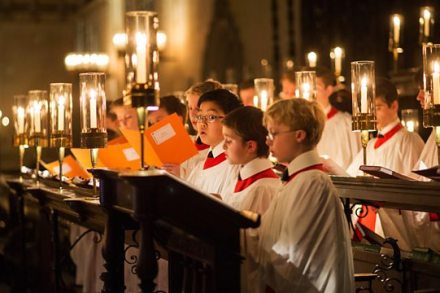
Christmas, for many people, began at exactly 3 p.m today, Christmas Eve. The moment when everything stops, frantic present-wrapping, mince-pie making and tree-decorating ceases and calm briefly takes hold. The reason? A single boy treble whose voice, clear and fragile as glass, pierces through the chaos with those familiar words: ‘Once in Royal David’s city/ Stood a lowly cattle shed…’. The service of Nine Lessons and Carols from King’s College, Cambridge, and its annual broadcast on BBC Radio 4 is as essential a part of contemporary Christmas folklore as stockings and Santa Claus, plum pudding and presents.

How a Christmas Eve ritual was conceived in the trenches

From our UK edition

Christmas, for many people, begins at exactly 3 p.m. on Christmas Eve. It’s the moment when everything stops, frantic present-wrapping, mince-pie making and tree-decorating ceases and calm briefly takes hold. The reason? A single boy treble whose voice, clear and fragile as glass, pierces through the chaos with those familiar words: ‘Once in Royal David’s city/ Stood a lowly cattle shed...’. The service of Nine Lessons and Carols from King’s College, Cambridge, and its annual broadcast on BBC Radio 4 is as essential a part of contemporary Christmas folklore as stockings and Santa Claus, plum pudding and presents.

Lessons from the front

From our UK edition

Christmas, for many people, begins at exactly 3 p.m. on Christmas Eve. It’s the moment when everything stops, frantic present-wrapping, mince-pie making and tree-decorating ceases and calm briefly takes hold. The reason? A single boy treble whose voice, clear and fragile as glass, pierces through the chaos with those familiar words: ‘Once in Royal David’s city/ Stood a lowly cattle shed...’. The service of Nine Lessons and Carols from King’s College, Cambridge, and its annual broadcast on BBC Radio 4 is as essential a part of contemporary Christmas folklore as stockings and Santa Claus, plum pudding and presents.