Alexandra Coghlan

Saved by the chorus

From our UK edition

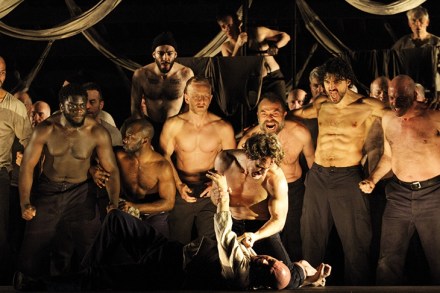
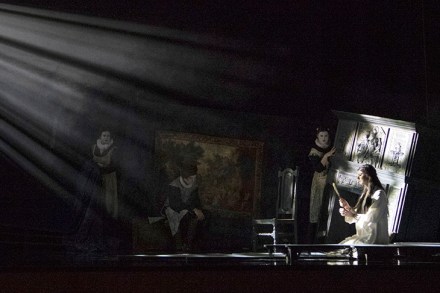
We’ve cried wolf with Handel. Ever since the modern trend began for staging the composer’s oratorios we’ve hailed each one in turn as the composer’s ‘most dramatic’. We’ve said it of Theodora, Saul, perhaps loudest (and most persuasively) of Jephtha. The trouble is that now, nearly 40 years since we last saw Belshazzar on an English stage, this magnificent drama of warring armies and nations, grieving parents and defiant children returns and we’ve spent all our superlatives. So you’ll just have to trust me when I say that it’s really quite good. A narcissistic sybarite of a king rules over a land bloated with corruption, rife with factions.

More sex, please

From our UK edition

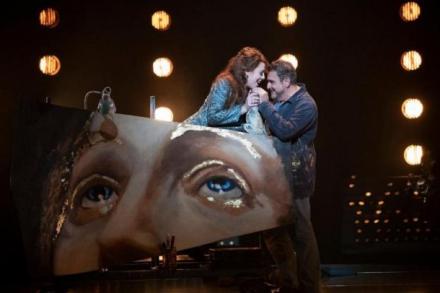
Where was the desire, the frisson, the flicker of attraction? Hell, where was the sex? I ask because a week spent at the seedier end of the romance spectrum has left me feeling profoundly unsatisfied. Two classic femmes fatales — Puccini’s convent-girl manqué Manon Lescaut and Janacek’s dark-eyed gypsy Zefka — had their chance to beguile and blew it. There was disquiet, revulsion, confusion and a certain amount of modish awkwardness, but the itchy urgency of it all was absent — the emotional ignition without which neither Manon Lescaut nor The Diary of One Who Disappeared can find their flame. A chilly night launched Opera Holland Park’s 2019 season, and there wasn’t much more heat coming from the stage.

Vocal heroes | 9 May 2019

From our UK edition

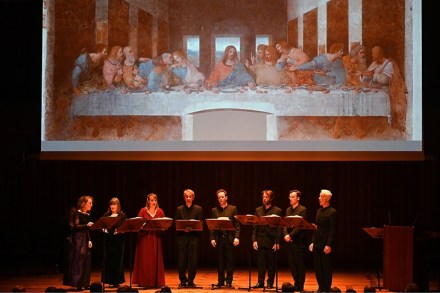
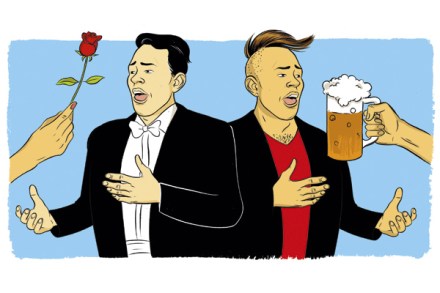
We’ve all read the article. It does the rounds with the dispiriting regularity of an unwanted dish on a sushi train. Classical concerts are dying and if they are to survive they need to evolve, to innovate, to banish (variously) seating, silence, dress codes (for musicians), dress codes (for audience), programme notes, formal venues… But among so much institutional hand-wringing and professional self-loathing I’d like to take a moment to celebrate one classical tribe getting innovation exactly right: period music groups.

All at sea | 2 May 2019

From our UK edition

The climactic central scene of Benjamin Britten’s Billy Budd ends unexpectedly. The naval court has reached a verdict of death, and Captain Vere must depart to tell Billy his fate. Voices fall silent, the stage empties, and for two whole minutes the unseen drama is distilled into just 34 chords. And not sprawling elbowfuls of notes either, but plain old triads — the child’s building blocks of harmony. It’s wilfully, maddeningly ambiguous and utterly inspired. It’s also a touchstone for any performance — the moment the opera reveals itself either as a parable, groping gradually but surely towards redemption, or a darker tale of the indiscriminate cruelty of fate.

Call of duty

From our UK edition

Is it possible to write a feminist opera about Jack the Ripper? Composer Iain Bell thinks it is, and his Jack the Ripper: The Women of Whitechapel tries very, very hard to prove it. But while the result is respectful, topical and agonisingly, paralysingly sincere, it’s also a sheep in wolf’s clothing. You can’t have your victims and kill them too. You have only to look at the opera’s title, bent awkwardly round its central colon, to see the conflict. Front and centre you have Jack the Ripper — a marketing department’s darling, promising Gothic horror and lashings of gore. Following behind (in slightly smaller type) you have his victims, the drab, downtrodden women whose lives and voices the piece hopes, laudably, to restore.

Deft and daft

From our UK edition

Operas are like buses. Both are filled with pensioners and take ages to get anywhere, but more importantly they always seem to arrive en masse. You wait ages for a Magic Flute, then five come along at once. Opera North started us off in January, Welsh National Opera and English National Opera are currently following suit, with Scottish Opera and Glyndebourne covering the summer shift. It’s a mess and, when you consider that at least four of these are touring with inevitable overlap, a wanton, self-destructive splitting of an already small opera-going audience. With more Flutes than a school wind-band to choose from this season you can afford to be picky (assuming you haven’t already exhausted yourself with the three concurrent Katya Kabanovas).

Mirror, mirror…

From our UK edition

We increasingly accept the collision between life and art. Whether we’re puzzling over the real identity of Elena Ferrante, choosing our own adventure in Bandersnatch, or boycotting the latest Polanski film, we’re buying into culture that’s more mirror than window. But wasn’t it ever thus? It’s a case Barbara Strozzi would certainly argue. The most-published Italian composer of her age, a musician whose work could stand alongside Cavalli, Rossi, even Monteverdi, was caught throughout her career in the double-bind of biography. You have only to look at her famous portrait — gazing insolently out at the viewer, breast bared — to see the erotics of performance at work.

Divinely reticent

From our UK edition

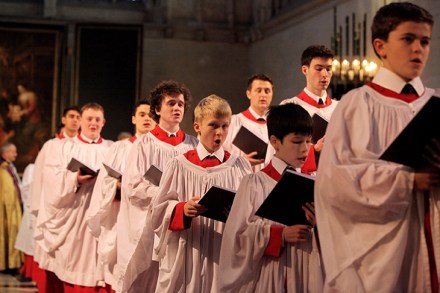
Earlier this year The Spectator published an article in celebration of Evensong — the nightly sung service of the Anglican Church. Attendance, it seems, is not just up but dramatically so. While church visitor figures across the UK have fallen steadily and substantially since the 1960s, congregations at sung services have swollen up to ten times over, often rising to three figures. Why? The answers come easily enough. In an increasingly volatile world, the certainty and beauty of Evensong offers a welcome still point — time and space to contemplate, meditate, an opportunity to listen to voices raised in a candlelit chapel and experience spirituality aesthetically rather than intellectually. The greatest appeal of all, however, seems to lie in the idea of continuity.

Voices of doom

From our UK edition

It’s December, and while musical theatre is busy celebrating ‘warm woollen mittens’, opera, as usual, is far more interested in the tiny frozen hands inside them. Because nothing says Christmas quite like consumption, and I’m not talking turkey and mince pies. London’s opera companies are serving up a heaped sleighful of heartbreak this year. English National Opera is going traditional with La bohème, while the Royal Opera is thinking outside the snow-covered coffin with Carmen. There’s something for everybody, so long as it’s tragedy. ENO’s Bohème is the safe option, the show you take your granny to.

Chills and thrills

From our UK edition

How do you solve a problem like Lucia? Murder, madness, abuse, possibly even incest, all set to a soundtrack of rollicking, rum-ti-tum tunes. Add to that a Scottish setting (nothing sabotages dramatic seriousness quite like a kilt, just ask Mel Gibson) and you have Gilbert & Sullivan in an Italian accent, Ruddigore with a cigarette and a suntan. Recently at the Royal Opera House Katie Mitchell tried to naturalise Donizetti’s opera into submission, but ended up tussling with a score she clearly didn’t trust and a cast who didn’t seem to trust her, giving her audience what she wanted Lucia to be, rather than what’s actually there.

On the road | 25 October 2018

From our UK edition

Wolverhampton; Workington; Blackburn; Sheffield; Lancaster; Hackney. Every year English Touring Opera does what our national opera company doesn’t: packs up its props and takes to the road, bringing opera to the bits of the UK other companies don’t even think about reaching. And not just Traviatas and Toscas either, but properly interesting, often unusual, repertoire. With a core staff you can pretty much count on your fingers, and ticket prices that would scarcely buy you a sandwich at the Royal Opera House, let alone a seat, the whole operation is one of those minor miracles of the arts world — a company where a little bit of funding goes an awfully long way, and not just geographically. Then there’s the talent.

The naked and the dead

From our UK edition

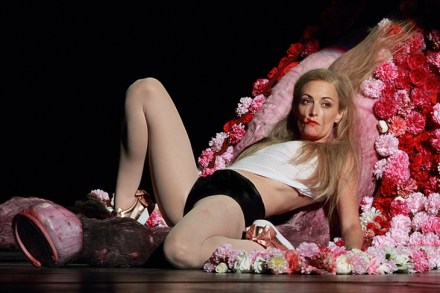
Yes, Oscar Wilde never wrote it. No, Strauss didn’t intend it. In fact, the composer famously demanded the Dance of the Seven Veils be ‘thoroughly decent, as if it were being done on a prayer mat’. But that doesn’t stop this striptease and musical money shot being the look-but-don’t-touchstone of any Salome. A blonde, blank-faced Barbie doll in gym knickers, vest and shiny trainers stands in a spotlight, a baseball bat in her hands. Strauss’s oboe begins its suggestive arabesques but Salome remains quite still, her eyes fixed impassive, unblinking on the audience. Eventually her hips begin to twitch, her back arches and she goes sullenly through the motions of sensuality, never breaking her gaze, defying us to find her desirable.

Murderer or Madonna?

From our UK edition

At the end of Act Two of Tosca there are some 30 bars of orchestral music — accompaniment to a very specific set of stage directions. During this time Tosca takes two candles and places them on either side of the dead Scarpia’s head. She then removes a crucifix from the wall and lays it on his chest. The tableau is a messy, bloody one, but the message is clear: here the politics of religion and the religion of politics are one and the same. A pietà or the body of a thug? A murderer or a Madonna? It’s all just a matter of spin. In a year of embattled Supreme Court nominations and moral muscle-flexing by our own DUP, Edward Dick’s new, 21st-century Tosca for Opera North relishes these slippery elisions and entanglements of church and state.

Britten at war

From our UK edition

‘I feel I have learned lots about what not to write for the theatre…’ There’s a prevailing idea that the ever-precocious Benjamin Britten was an operatic natural — a composer whose gift sprang fully formed with the première of Peter Grimes in 1945. But that’s not strictly true. Go back just a few years to 1941 and you’ll find Paul Bunyan — the oversized skeleton in Britten’s musical closet. Rewind those few years and Britten, darling of post-war England, was all but a national pariah. A pacifist who had escaped conscription by travelling to America, he was forced to take work wherever he could find it.

Lord of the dance

From our UK edition

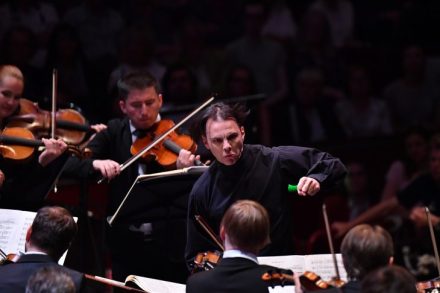
Some conductors conduct from the fingers — think of Gergiev’s convulsive gestures, flickering up and down the keyboard of an invisible piano in the air — while for others (check out footage of an elderly Richard Strauss) it all comes from the wrist: graceful, fluid and utterly detached. You could cut off Toscanini and poker-down-the-back-of-his-tail-coat Karajan (famously dismissed by fellow-conductor Fürtwangler as ‘just a time-beater’) at the waist and lose nothing from their precise gestures; but try the same trick with the irrepressible Dudamel or Kristjan Jarvi and the life-force of movements that start from the feet and shudder up through the entire body would be gone. With Teodor Currentzis it’s all about the knees.

War on waste

From our UK edition

No wonder we have a problem with classical music in this country. The week started in celebration. The stats are in and it turns out that Radio 3’s breakfast show has enjoyed a rise of some 64,000 listeners — a not-to-be-sniffed-at11 per cent increase on last year. Meanwhile Classic FM’s listenership is also up significantly, including a startling 43 per cent rise in under-25s. Champagne (or perhaps something a little less effervescently elitist) all round. Why are all these new people tuning in? Musical diversity, apparently. That and a preference for music over chat, for radio that offers an escape from the emphatic, combative everyday of John Humphrys and his ilk over on Radio 4. Escape. Retreat.

Russian ragout

From our UK edition

There is famously no door into the late-night diner of Edward Hopper’s ‘Nighthawks’. Its three silent patrons are trapped behind the plate-glass window — specimens of urban disaffection and isolation. In Richard Jones’s Lady Macbeth of Mtsensk it’s the windows that are so disquietingly absent. John Macfarlane’s designs propel the action of Shostakovich’s final opera through an endless enfilade of rooms. There are doors aplenty, and thresholds — of morality, sexuality and social status — are gleefully broached and breached, but each ultimately leads only to another domestic hell.

What’s in a name

From our UK edition

Janacek is the master of the operatic title. Think of the slippery, sleight-of-hand emphasis of Jenufa in its original Czech —Her Stepdaughter — or the elegant misdirection of The Beginning of a Romance. It encourages the suspicion that when Janacek christened his final opera, deliberately truncating the title of Dostoyevsky’s Siberian prison camp-inspired novel Notes From the House of the Dead, there was good reason. It’s a title that opens out a description into an implied question: From the House of the Dead to, where or what exactly? Where can you go, who can you cry out to, once you have crossed over into the underworld and witnessed its horrors? Where indeed.

Accentuate the negative

From our UK edition

A chaste act of adultery and a silent conversation: these are the encounters at the heart of Un ballo in maschera. On paper Verdi’s opera is a hot-blooded political thriller climaxing in a regicide, but in the watching it’s something entirely other. Just like the buoyant score, whose ‘aura of gaiety’ seems so at odds with the dark subject matter, the drama of Ballo is a sustained act of misdirection. The focus in this unusual piece is not on action and event but on absences, unspokens — the negative and not the photograph is what absorbs Verdi so compellingly here.

Half-heard truths

From our UK edition

If you’ve ever had a text or email thread spiral wildly and unexpectedly out of control or clocked a couple having a blank-faced argument in Tesco or a mother remonstrating with her toddler even though you couldn’t hear the words exchanged, then you understand the importance of the human voice. Command of tone, timbre, pitch — the how, not the what, of communication — is at once the most natural and instinctive of skills, common to every infant and its parent, and the most fetishised, finessed and, of course, monetised. A whole industry, and a lucrative one at that, exists to transform the human voice from tool to product, from nature to nurture, from prose to poetry.