Alexandra Coghlan

How we became a nation of choirs and carollers

From our UK edition

Between the ages of 15 and 17 I had a secret. Every Monday night I’d gulp down dinner before rushing out to the scrubby patch of ground just past the playing fields, where a car would be waiting. Hours later — long after the ceremonial nightly locking of the boarding house — I’d sneak back, knocking softly on a window to be let in. I’d love to say that it was alcohol or drugs that lured me out. It wasn’t even boys — or, at least, not like that. My weekly assignation was with Joseph and Johann, Henry, Ben and Ralph. My addiction? Choral music.

A coherent evening of real opera: GSMD’s Triple Bill reviewed

From our UK edition

Covid has been many things to the arts — most of them unprintable. A plague, a scourge, a disaster from which many institutions and artists won’t recover, it has also been a great equaliser. Suddenly there’s space to be heard, silence to be filled. In a digital world no one cares about the size of your stage. All you need is a laptop and a good idea and you’re competing alongside the Met or the Royal Opera. In the case of the Virtual Opera Project it was a shed and a homemade green-screen. Oh, and a cast, chorus and creative team of well over 100. And did I mention the London Philharmonic Orchestra?

Unobtrusively filmed, powerfully performed but still unsatisfying: LSO’s Bluebeard reviewed

From our UK edition

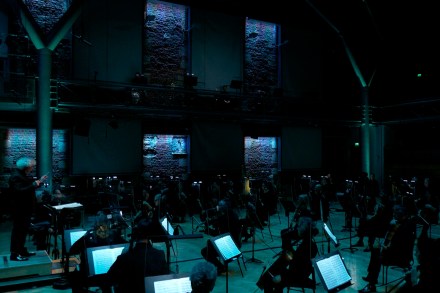
The timing couldn’t be better. Just as the gates clang shut on another national lockdown, trapping us all indefinitely with our nearest and dearest, the London Symphony Orchestra serves up an opera that’s pure domestic horror — a story about what happens when we lock all the doors, close the curtains tightly, and turn and look our beloved square in the eye. Bluebeard’s Castle, Bartok’s only opera, is a single-breath sort of piece. Barely an hour long, just two singers on stage throughout, it’s a conversation that starts with love and ends with — well, it’s not quite clear. Torture? Murder? Imprisonment? Bigamy? Truth, certainly.

I don’t know when I’ve been more moved: Ora Singers at Tate Modern reviewed

From our UK edition

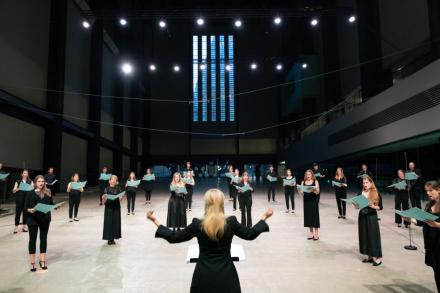
It’s the breath I miss most. The moment when a shuffling group of men and women in scruffy concert blacks breathe in as one and become an ensemble. Now that our breath is diseased, shrunk from, masked, now that performances are digitally distanced and filtered, smoothed and flattened out on screens, there’s something dangerously poignant about that physical swell of inhalation and exhalation that sets the air in motion at the front of a concert hall. Which is why, when I heard that 40 singers would be coming together in Tate Modern’s Turbine Hall to sing Thomas Tallis’s Spem in alium, I twitched with need to be there.

If we stop idolising Beethoven we might understand him better

From our UK edition

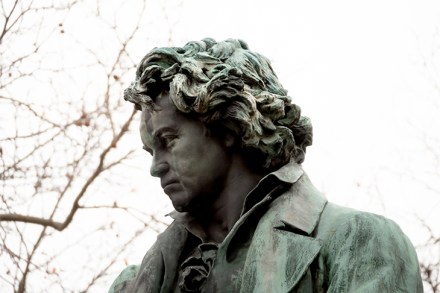
Ludwig von Beethoven belongs among those men whom not only Vienna and Germany, but Europe and our entire age revere. With Mozart and Haydn he makes up the unequalled triumvirate of more recent music. The ingenious depth, the constant originality, the ideal in his compositions that flows from a great soul assure him… of the recognition of every true admirer of the divine Polyhymnia. Originality, nobility, greatness, genius – when it comes to Beethoven, we all know the score. It was a beatification that happened early, as this paean from Germany’s deliciously titled Morning Paper for the Educated Classes reminds us.

After weeks of silence, Royal Opera reopened with a whimper

From our UK edition

It was the fourth time, or maybe the fifth, that I found myself reaching for the tissues that I began to feel suspicious. Somewhere between the poignant gaiety of A.E. Housman’s ‘…lads that will never be old’, Shakespeare’s tender valediction ‘Fear no more the heat o’ the sun’ and Strauss’s ‘Morgen!’, with its rapturous vision of a never-reached tomorrow, emotion turned to manipulation. You can’t engineer catharsis (though you can score it to music), and this attempt felt like something a visit to the Royal Opera House has rarely felt like before — cheap. It wasn’t that there was anything wrong with the performances at this first in a series of live-streamed concerts.

The best recordings of Ravel’s L’enfant et les sortilèges

From our UK edition

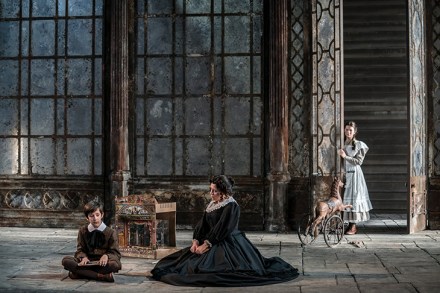
‘I don’t want to do my work. I want to go for a walk. I want to eat all the cakes… to shout at everybody!’ Which of us hasn’t felt like this at some point during the past ten weeks? The small child at the centre of Ravel’s L’enfant et les sortilèges speaks for us all as he rages against the restrictions of his suddenly enclosed and joyless world. Shut in the schoolroom until he finishes his homework, the little boy lashes out, spilling ink on the carpet, smashing the crockery, snapping the pendulum off the clock, tearing the wallpaper and terrorising the cat. But just as his tantrum is exhausted he finds that the tables have turned as the furniture, objects and animals that surround him come to life and scold him for his behaviour.

No one understood the ennui of lockdown better than Louis XIV and his courtiers

From our UK edition

A few years ago I interviewed an eminent baroque conductor. Prickly and professorial, tired after a day of rehearsals, he batted question after question away until we landed on the subject of French baroque opera. No longer disinterested, now he was furious. He’d recently had a conversation with a major UK opera house, who had decided never again to stage anything by Lully, Rameau or Charpentier. Why? ‘It doesn’t sell.’ Since then we’ve had precisely one professional production of this repertoire in this country. It’s not the first time that English audiences have been suspicious of foreign imports. Back in the 18th century, when the cultural invasion came from Italy, feelings on this subject ran high.

Why we love requiems

From our UK edition

At some point during the 20th century death disappeared. The dying were discreetly removed from our communities and homes, taken to hospitals with short memories and wipe-clean walls. Mourning blacks faded before vanishing altogether; the elaborate funeral monuments of the 19th century shrugged off curlicues and cherubs and arranged themselves into unobtrusive, apologetic sobriety. Coffins — gauchely literal — gave way to the more tasteful euphemism of the ash-filled urn. Only concert halls bucked the trend. Suppressed from everyday life and language, death found a different outlet. How many choral societies or symphony choruses today go a year without performing a requiem mass? How often do Classic FM or Radio 3 go a day without playing music from one?

The best recordings of my favourite Passion

From our UK edition

In the autumn of 1632, a man called Kaspar Schisler returned home to the small Bavarian town of Oberammergau. He didn’t walk through the gates in daylight, but waited until night, sneaking in past the tower guards. A few days later he was dead from the plague that was swelling and blistering its way across Europe — a plague which, until that point, strict quarantine had kept out. Within a year it had killed a quarter of the town. The remaining residents gathered together and made a vow: if they were spared, they would stage a play of the life and death of Jesus, and would continue to do so every ten years in perpetuity.

The musical vaccination we all needed: ETO’s Cosi fan tutte reviewed

From our UK edition

Anyone familiar with Joe Hill-Gibbins’s work will brace instinctively when the curtain goes up on his new Figaro. He’s the young British director who smeared the Young Vic with jelly and custard (The Changeling) and transformed it into a giant mud pit (A Midsummer Night’s Dream), covered the Almeida in blood and more mud (The Tragedy of King Richard the Second) and bathed his cast in a stomach-turning blend of salad cream, ketchup and baked beans at the Edinburgh Festival (Greek).So when the curtain rises on a white-walled corridor whose sterile purity is broken up only by four equally white doors you do mentally reach for a mop. But Hill-Gibbins’s plans for Figaro are surprisingly clean and surprisingly, well, dry.

A lost opera from the most powerful musician you’ve never heard of: La ville morte reviewed

From our UK edition

Who was the most influential figure in 20th-century classical music? Stravinsky? Pierre Boulez? What about Bernstein or Britten? John Cage or Karlheinz Stockhausen? Powerful public figures all. But there’s a case to be made for a very different kind of character — less king than kingmaker, a musical éminence grise.With a Who’s Who of pupils that included Leonard Bernstein and Aaron Copland, Elliott Carter and Astor Piazzolla, Philip Glass, John Eliot Gardiner and Daniel Barenboim, Nadia Boulanger is the most powerful musician you’ve never heard of, ‘the most important teacher since Socrates’, as one composer only partly joked. Photographs show us a stern, spectacled, almost invariably elderly figure.

One hell of a concert: Opera North’s Bluebeard’s Castle reviewed

From our UK edition

Freud knew something about fear. Not the sudden shock of terror, but the creeping, sickening, slow-burn horror of the uncanny. A haunted house might make us jump, but how much more pervasive is that fear when the house is our own home, the monsters our own family, our own self even? It’s when the familiar becomes the unfamiliar, when the telephone call is coming from inside our own psyche, that the chills really build. Bartok knew this too. ‘Where is the stage — outside or within?’ asks the spoken Prologue to his one-act opera Bluebeard’s Castle — the young composer’s take on the classic fairytale of a curious wife, her mysterious new husband and his many locked doors.

Handsome and revivable but I wasn’t moved: Royal Opera’s Death in Venice reviewed

From our UK edition

Premièred within two years of each other, Luchino Visconti’s film and Benjamin Britten’s opera Death in Venice both take Thomas Mann’s novella as their starting point. But from shared beginnings the two works diverge dramatically. The cloying visual beauty of the film, its pink-and-grey vision of Venice swaddled in Mahler strings, couldn’t be further from the stern, self-loathing austerity of Britten’s last opera, whose beauty is much harder won. The sea that pounds and dashes the Suffolk coast in Peter Grimes is lulled in Death in Venice into the queasy, syncopated swell of the lagoon, a miasma of heat and sickness rising from its waters.

Joyce DiDonato seduces you within the first 10 minutes: Royal Opera’s Agrippina reviewed

From our UK edition

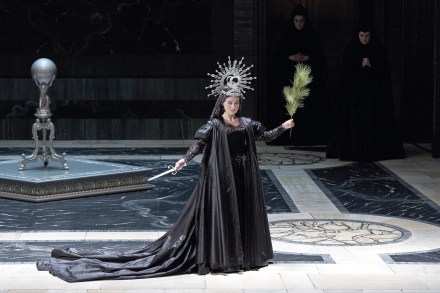
‘Laws bow down before the desire to rule…’ Centuries before ‘proroguing’ had entered British breakfast-table vocabulary there was Handel’s Agrippina, and centuries before that there was the woman herself. Sister of Caligula, wife of Claudius (who she may or may not have poisoned) and mother of Nero (by whom she was eventually executed), Agrippina was a true political animal: instigator, manipulator, machinatrix and far more. It’s a heady story in prose, so add a bit of poetic licence and a score by the 24-year-old Handel and you have a spicy blend of politics, satire and sex — Succession with a Roman accent.

More Grace Kelly than Grace Jones: Welsh National Opera’s Carmen reviewed

From our UK edition

How do you take your Carmen? Sun-drenched exotic fantasy with a side order of castanets, or cool and gritty, sour with violence and politics? Jo Davies’s new production for Welsh National Opera seems unable to make up its mind. Sternly rejecting colour and fantasy, it then fails to commit to an alternative, leaving both its heroine and audience stranded in an unlovely theatrical no-man’s land. Programme notes place us in contemporary Brazil, in a favela painted in unvarying textures of brown and steel. But there’s little in the action to confirm this. Who are the soldiers that guard the compound with desultory inefficiency, and what is their relationship to the women they wolf-whistle and the children who run riot around their feet?

Why are so many operas by women adaptations of films by men?

From our UK edition

Opera’s line of corpses — bloodied, battered, dumped in a bag — is a long one. Now it can add one more to the list: the broken, abused body of Bess McNeill. The heroine of Lars Von Trier’s uncompromising 1996 film is a curious creation. Striving against the restrictions of her austere, Presbyterian community on a remote Scottish island, she marries oil-worker and ‘outsider’ Jan. But when an accident on the rig leaves him paralysed, a promise to her husband and a bargain with God leads her into increasingly degrading and dangerous sexual encounters. Savant or innocent, saviour or sacrificial victim — Von Trier leaves it unclear.

Missing the beat

From our UK edition

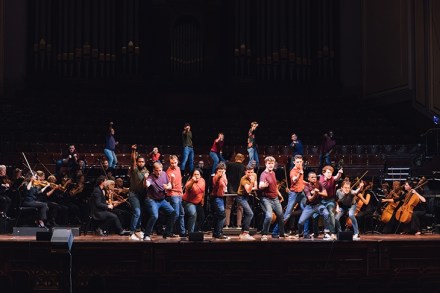
It was as though Damien Hirst had confessed a secret passion for Victorian watercolours, or Lars von Trier had admitted his life’s ambition to direct a rom-com. When it was announced that John Eliot Gardiner — pioneer of the early music movement — would conduct West Side Story at the Edinburgh Festival the reactions were extreme. What next? Harnoncourt conducts Hair? Les Arts Florissants sing Phantom? But is the leap from Bach to Bernstein really that big? Both live or die with rhythm, with the dances that pulse and lilt and churn through them. Minuet or mambo — really, what’s in a beat? And then there’s texture.

Chilling out | 11 July 2019

From our UK edition

Think of the children in opera. Not knowing sopranos and mezzos, pigtailed and pinafored or tightly trousered-up to look child-like, but actual children. There are Mozart’s Three Boys, Menotti’s Amahl, possibly Debussy’s Yniold and Handel’s Oberto and, if you stretch a point, Marie’s little son in Wozzeck. But that’s about it. Until, that is, you come to Benjamin Britten. It’s a rare Britten opera that doesn’t include a child. Whether it’s Grimes’s doomed apprentice, the chattering powder monkeys of HMS Indomitable, teenage vision Tadzio in Death in Venice, Tytania’s fairies or the watchful Miles and Flora, they are ever-present, but why?

Male order | 4 July 2019

From our UK edition

Another turn around the block for David McVicar’s handsome 1830s Figaro at the Royal Opera — the sixth since the production’s 2006 premiere — scarcely raises an eyebrow, let alone a pulse. But a quick glance down the cast list of the current revival reveals some curiosities. First to catch the eye is Kangmin Justin Kim — the first countertenor in the company’s 250-year history to play sexually rampant page Cherubino, traditionally a trouser role for a woman. Read on and you’ll see starry German baritone Christian Gerhaher making an unexpected mid-career role debut as Figaro, as well as a main-stage house debut for his Susanna — young American soprano Joelle Harvey, who bewitched last summer as Glyndebourne’s Cleopatra.