Alexandra Coghlan

Shaw hand

From our UK edition

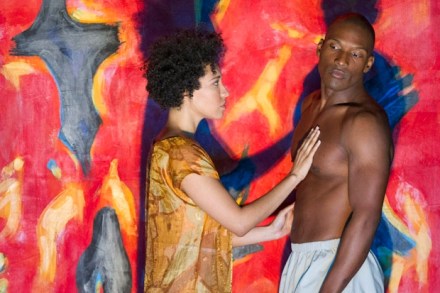
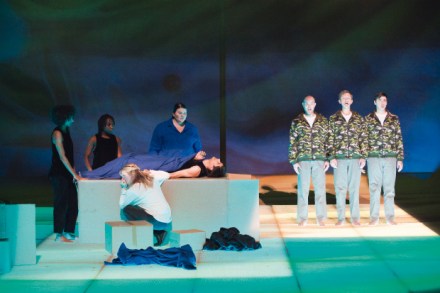
When is a rape not a rape? It’s an unsettling question — far more so than anything offered up by the current headline-grabbing William Tell at the Royal Opera House — and one that lies beneath the meticulous dramatic archaeology of Fiona Shaw’s The Rape of Lucretia. Unlike William Tell, however, there seems little chance of this attack starting riots. Where the director of Tell asserts, Shaw interrogates — a delicate, insistent questioning that probes further and more intrusively, a violation of ideological rather than physical absolutes. Debuted in 2013 as part of the company’s touring season, Shaw’s production now returns to the main festival, where the chamber opera had its première in 1946.

Show and Tell

From our UK edition

There’s no such thing as a tasteful rape scene — or there certainly shouldn’t be. It’s an act of grossest violation, of primal violence. It’s also a reality — and a growing one at that — of contemporary warfare, a ‘weapon’ increasingly deployed strategically, coolly, by armies rather than individuals. Setting his new production of Rossini’s Guillaume Tell in the Balkan conflict of the 1990s, director Damiano Michieletto puts the issue front and centre in a scene whose music was almost lost on opening night in the extraordinary and unprecedented chorus of boos and catcalls from the audience.

The gang rape was the least offensive thing about Royal Opera’s new William Tell

From our UK edition

Guillaume Tell Royal Opera House, in rep until 17 July There’s no such thing as a tasteful rape scene — or there certainly shouldn’t be. It’s an act of grossest violation, of primal violence. It’s also a reality — and a growing one at that — of contemporary warfare, a ‘weapon’ increasingly deployed strategically, coolly, by armies rather than individuals. Setting his new production of Rossini’s Guillaume Tell in the Balkan conflict of the 1990s, director Damiano Michieletto puts the issue front and centre in a scene whose music was almost lost on opening night in the extraordinary and unprecedented chorus of boos and catcalls from the audience.

Celebrations of song and humanity

From our UK edition

‘All my life, always and in every way, I shall have one objective: the good of Hungary and the Hungarian nation.’ Ask any musician for a one-sentence summary of Béla Bartók (1881–1945) and they will probably tell you that he is Hungary’s national composer — a musical modernist who passionately championed his nation’s folk music tradition. David Cooper’s new biography seeks both to enrich and complicate that statement, questioning the definition of musical ‘nationalism’ in a country of such pronounced ethnic heterogeneity, at a time when borders were being drawn and redrawn, peoples created and destroyed, across Europe.

Polite pillage

From our UK edition

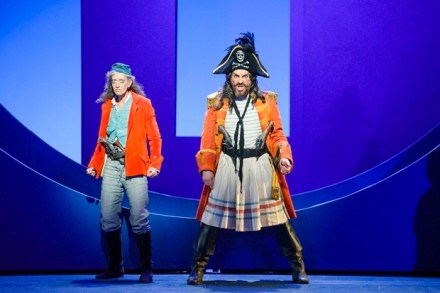
Forget the pollsters and political pundits — English National Opera called it first and called it Right when it programmed Gilbert and Sullivan’s The Pirates of Penzance to open just days after the general election. Who else is the target audience for an operetta that guilelessly proclaims, ‘We love our House of Peers’, and celebrates both the dynastic possibilities of marriage and the material aspirations of a Major-General who bought his ancestors along with his faux-baronial castle, if not Tories (shy or otherwise)? But if ENO has hit a political home run, the same can’t be said artistically of a production Gilbert himself might have described as ‘skim milk masquerading as cream’. Mike Leigh swore he would never direct an opera.

Falling down

From our UK edition

This week, some 200 years since Goya’s ‘The Disasters of War’, almost 80 years after Picasso’s ‘Guernica’, and over 50 since Malcolm Browne won a Pulitzer for his photograph of a self-immolating Buddhist monk, the British media found itself questioning whether art should, or even could, ever represent the horrors of recent history. It was a conversation that picked minutely over the ethical responsibilities of an opera based on the events of 9/11 — was it too soon? how would the families feel? would it exploit tragedy for drama? — but one whose ceaseless moral whys and wherefores prevented it ever arriving at the only real artistic question: how?

Benjamin’s Into The Little Hill is a masterpiece: Speech Acts at Shadwell Opera reviewed

From our UK edition

Speech Acts Shadwell Opera, Courtyard Theatre Election time is upon us again. But before we arrive at the main event there are the warm-up acts – televised debates, broadsheet profiles and daytime television interviews – to be endured. Making this political stand-up more bearable are the intelligent heckles coming from the arts. London’s theatres are filled with issue-plays talking about all the topics the politicians aren’t – the housing crisis, NHS, life on the dole – but despite a rich seam of politically-charged works at its disposal (The Marriage of Figaro, Don Carlo, Boris Godunov among them), the main UK opera houses aren’t following suit.

Why we should revel in the empty virtuosity of Handel’s pasticcios

From our UK edition

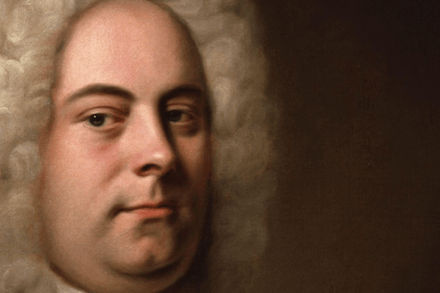
Before the jukebox musical, back when Mamma Mia!, Jersey Boys and Viva Forever! were still dollar-shaped glints in an as-yet-unborn producer’s eye, there was the pasticcio opera. Literally a musical ‘pastry’ or ‘pie’, these brought together arias from different operas, often by different composers, in a single work, designed as a way of feeding an 18th-century public whose appetite for opera was greater than composers’ ability to sate it with new music. Everyone did it — Vivaldi, Mozart, Haydn, and of course that ultimate musical pragmatist Handel — but that didn’t make the practice any the more respectable, as one satirist’s pasticcio ‘recipe’ makes clear.

ENO’s Indian Queen reviewed: Peter Sellars’s bold new production needs editing

From our UK edition

When is an opera not an opera? How much can you strip and peel away, or extend and graft on to the genre, before it simply ceases to be itself? These questions dominated a week in which directors turned vivisectors for new productions — reimaginings — of Purcell’s Indian Queen (ENO) and Mozart’s Don Giovanni (Silent Opera). Anyone familiar with Peter Sellars’s work will know better than to expect any paring back from the larger-than-life American. Amplification is the order of the day for Purcell’s semi-opera — expanded from a trim 50 minutes of unfinished music yoked to a play by Dryden and Howard to a three-and-a-half-hour musico-dramatic spectacle. If that sounds pretentious and portentous, then that’s about right.

Royal Opera’s Orfeo, Roundhouse: shouts its agenda so loudly the music struggles to be heard

From our UK edition

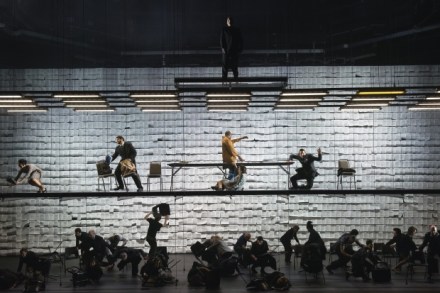
What a week to stage an opera about art’s power to challenge institutional authority, oppression — even death itself. Orfeo’s weapon might be a lyre rather than a pen, but the metaphor is silhouetted clearly against the monochrome backdrop of the Royal Opera’s new production of Monteverdi’s opera. Director Michael Boyd, former artistic director of the RSC, has taken a world of nymphs and shepherds and stripped it for conceptual parts. A battle between Gods and men is reinvented as a struggle between individual creative autonomy and faceless obedience to church and state. In Tom Piper’s designs, meadows and bucolic loveliness are out and 24-style metal walkways and gantries are in.

Royal Opera’s Orfeo, Roundhouse: shouts its agenda so loudly the music struggles to be heard

From our UK edition

Orfeo Royal Opera, Camden Roundhouse, in rep until 24 January What a week to stage an opera about art’s power to challenge institutional authority, oppression — even death itself. Orfeo’s weapon might be a lyre rather than a pen, but the metaphor is silhouetted clearly against the monochrome backdrop of the Royal Opera’s new production of Monteverdi’s opera. Director Michael Boyd, former artistic director of the RSC, has taken a world of nymphs and shepherds and stripped it for conceptual parts. A battle between Gods and men is reinvented as a struggle between individual creative autonomy and faceless obedience to church and state. In Tom Piper’s designs, meadows and bucolic loveliness are out and 24-style metal walkways and gantries are in.

This Winter Journey goes far beyond expectation

From our UK edition

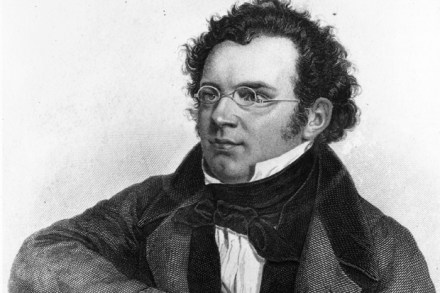
You can tell a lot about a book from its bibliography. It’s the non-fiction equivalent of skipping to the final page of a novel. Turn to the end of Ian Bostridge’s Schubert’s Winter Journey — a study of the composer’s celebrated song cycle Winterreise — and you’ll find monographs on ornithology, weeping as a cultural phenomenon and wood sculpture in Renaissance Germany, essays on Samuel Beckett and the history of the mail coach, and the rather forbidding ‘Regulation of floral organ abscission in Arabidopsis thaliana’. Intrigued? Who wouldn’t be? As academic disciplines go, musicology was a slow starter.

ENO’s Gospel According to the Other Mary: great music weighed down by a worthy staging

From our UK edition

Terrorism; East-West diplomacy; nuclear war: John Adams’s operas have poured music into the faultlines of 21st-century global politics, and the tremors have been significant. Simply staging The Death of Klinghoffer recently was enough to see the Met picketed on charges of anti-Semitism. While The Gospel According to the Other Mary isn’t going to start any riots, Adams’s latest work marks a turning point, both in the composer’s music and his social mission. No longer content to comment and observe, Adams turns his gaze to the story of the Passion — reclaiming and rewriting the originary narrative of the Christian West.

Glyndebourne’s Turn of the Screw: horrors of the most innocent and creepy kind

From our UK edition

We all know that ‘They fuck you up your mum and dad’, but nowhere is this more reliably (and violently) true than in the opera house. If you have the misfortune to be born into an operatic family you can expect to be murdered by your own mother (Médée, Lucrezia Borgia), killed by your grandmother (Jenufa), or even bumped off by a hitman hired by your father (Rigoletto). Perhaps most insidious, however, are the crimes not of violence but of absence, neglect rather than active cruelty. Productions of Verdi’s I due Foscari and Britten’s The Turn of the Screw whispered some of the darkest unspokens of parent-child relations, conjuring nightmares all the more potent for their subtle horrors.

Why, if Cecilia Bartoli invites you to a party, you drop everything and go

From our UK edition

Classical music has a few certainties: Götterdämmerung will always be that little bit longer than you remember, it will reliably rain if you pack a Glyndebourne picnic, and if Cecilia Bartoli invites you to a party, you drop everything and go. Which is why I found myself in Paris earlier this week, along with most of the record industry, prepared for serious music and some even more serious thrills at the launch of Bartoli’s new disc St Petersburg. There are times when only a palace will do. For most of us those times are few and far between, but if you’re mezzo-soprano Cecilia Bartoli – ‘La Gioiosa’, a classical music phenomenon and one of its biggest-selling stars – then life, and art, are far from everyday.