Alexander Larman

Alexander Larman is an author and the US books editor of The Spectator.

Blake Bailey deserves to be heard one more time

From our US edition

At the beginning of 2021, author Blake Bailey might have been forgiven for thinking that his literary career was not merely assured but stellar. He had gathered significant accolades for his writing, including a Guggenheim Fellowship and the National Books Critics Circle Award, and he was a Pulitzer Prize finalist. He had specialized in writing about heavy-drinking Great American Novelists, including the perennially underrated Richard Yates, John Cheever and The Lost Weekend’s Charles Jackson. His most recent subject was the elusive Philip Roth, a man whose literary brilliance was matched by his checkered reputation both on and off the page. Eighteen months later, matters have changed beyond recognition.

Arcade Fire: the last of the art-rockers?

From our US edition

After I saw the Canadian band Arcade Fire on tour in London in late 2010, I began my review of the gig by quoting Psalm 98: “Make a joyful noise unto the Lord, all the earth: make a loud noise, and rejoice, and sing praise.” My abiding memory of the evening was that it was fun. Despite the apparent solemnity of many of the act’s songs — several of which had been taken from their debut album, Funeral, and revolved around death and despair — the concert had a celebratory and upbeat aspect. It concluded (as virtually all of their shows had done) with a euphoric singalong of what has become their signature song, the cathartic “Wake Up.” A decade later, matters have changed. The world is in a considerably more anxious state than it was.

arcade fire

Rebekah Vardy’s spectacular own goal

Jamie Vardy is one of English football's most prolific strikers. But thanks to his wife, his surname will be forever associated with one of the all-time great legal own goals. Rebekah Vardy has spectacularly lost her high-profile libel battle against Coleen Rooney in the so-called 'Wagatha Christie' case.  It's hard to overstate how damning today's judgment is of Vardy: Mrs Justice Steyn said that Vardy’s evidence, which she had treated ‘with very considerable caution’, ‘was manifestly inconsistent with the contemporaneous documentary evidence' and was 'evasive' or 'implausible’.

Ron Howard: nobody’s favorite Hollywood director

From our US edition

If anyone told you that Ron Howard was their favorite film director, you might be forgiven for laughing out loud. Yet on paper, Howard has had as successful a career as any other filmmaker working today. Of the twenty-seven pictures he's directed, there are Academy Award winners and nominees for Best Film, massive box office hits and several critically acclaimed pictures that show a degree of both eclecticism and an apparent ability to turn his hand to anything imaginable. There are few directors who have made everything from epic fantasy to gritty '70s-set dramas about the David Frost and Richard Nixon interviews.

Homage to Sydney Kentridge, South Africa’s courtroom giant

Sydney Kentridge, the protagonist of Thomas Grant’s superb legal saga The Mandela Brief, is that trickiest of biographical subjects: a great man. Grant acknowledges ‘it is rare that, on closer acquaintance, a person touted as a “great” man or woman conforms to the initial description’, but the South African lawyer has been described by countless barristers as the greatest courtroom advocate they had ever seen. Notable for the apartheid cases he conducted as a defence lawyer of especial distinction and passion, Kentridge has also been admired for his calm and assured bearing in court.

There’s one court where Prince Harry can’t win

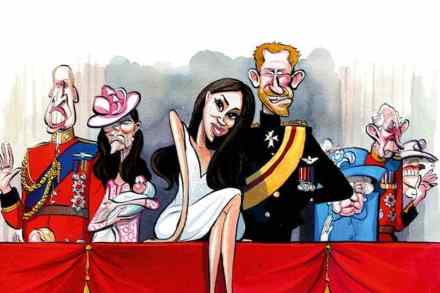
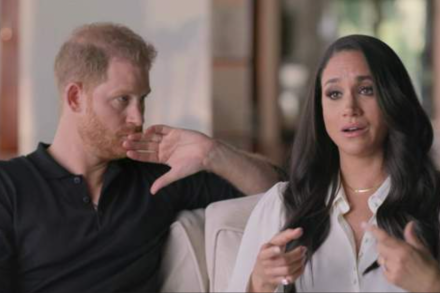
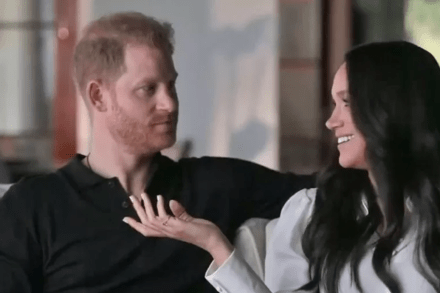
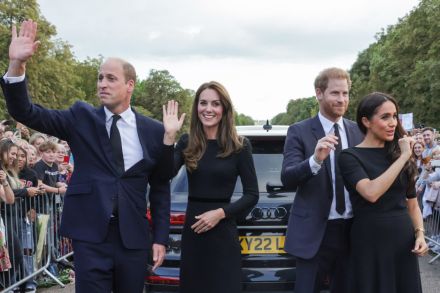
When Prince Harry and Meghan 'stepped back' as working royals, you'd be forgiven for thinking we would see and hear from them a little less. Not so. This week, the Duke of Sussex has repeatedly hit the headlines. Not content with delivering a stern (and far from well received) speech at the United Nations, in which he invoked Nelson Mandela’s name to make a selection of hackneyed points, Harry is back in the news. Today we learn the Duke has won a partial victory in the latest instalment of his apparently endless court cases against the British establishment: in this case, the Home Office. Those who are not studying for their postgraduate degrees in the continuing exploits of Harry and Meghan may need a brief reminder.

Prince Harry’s clunky Mandela day address

Every time that a picture of the Duchess of Sussex arriving at the United Nations is beamed around the world, it gets harder to avoid thinking the words: ‘she’s running’. Rumours of Meghan Markle’s presidential ambitions have been growing over the past few years, and she has done little to assuage them. Meghan’s every public utterance and appearance is carefully stage-managed in order to give the impression she has Something Important To Say, and that she may, yet, be the all-encompassing saviour an anxious America needs. But today, for once, she was not the star attraction. Instead, her husband-cum-cavaliere Prince Harry was thrust into the spotlight, with a high-profile address to the UN on Nelson Mandela day.

The latest Jane Austen adaptation is dreadful

From our US edition

Full marks to whoever tweeted, after watching the trailer for the dire new version of Jane Austen’s Persuasion, that, "I’m sorry but Dakota Johnson has the face of someone who knows what an iPhone is." In that pithy phrase, the failings of Carrie Cracknell’s film are laid bare immediately. Johnson, despite the utter dreadfulness of the Fifty Shades films that launched her to fame, is a talented and likable actress, but she is also contemporary in a way that many of her peers are. You can dress her in all the crinolines and bonnets and Regency finery in the world, but she still looks like a California resident from 2022 cosplaying, rather than an inhabitant of early nineteenth-century Britain. But Johnson is not the only problem with Persuasion.

What is Elon Musk up to now?

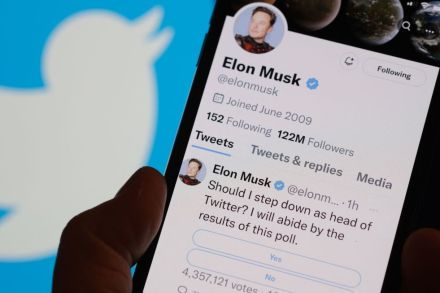
Did Elon Musk ever intend to buy Twitter, or was it all another piece of showboating from a man apparently addicted to the spotlight of publicity? After he announced last Friday that he was walking away from the $44 billion deal that he had previously agreed, Twitter has sued him. A lawsuit angrily states that ‘Having mounted a public spectacle to put Twitter in play, and having proposed and then signed a seller-friendly merger agreement, [Mr] Musk apparently believes that he – unlike every other party subject to Delaware contract law – is free to change his mind, trash the company, disrupt its operations, destroy stockholder value, and walk away’. Musk was unperturbed. ‘Oh the irony lol’, he tweeted.

The latest Thor isn’t ‘super gay’

From our US edition

The career of the New Zealand director, writer and actor Taika Waititi is beginning to resemble an especially demented fairground attraction. An Oscar winner for his screenplay for Jojo Rabbit, a Nazi-themed black comedy that will make people fight in bars over perceptions of its quality (or lack thereof), he has since gone and taken the Marvel dollar. Unlike so many of his fellow Marvel directors, however, Waititi has fought to keep his work personal and distinctive. In the case of 2017’s riotous Thor: Ragnarok, this worked superbly well. Despite his working as a director-for-hire with no screenwriting credit, it was a hilarious and hugely entertaining space adventure that remembered to be fun, unlike so many other Marvel pictures.

The circus that was 80s literary Britain

From our US edition

Many years ago, when I mistakenly thought that I stood a chance of embarking on a career in publishing, I went for an interview at an independent publisher to be editorial assistant and all-around dogsbody. I remember the interview well, because it was the shortest I ever had. The first question was, “How do you like to be managed?” I replied, “sternly, with a large whip.” The second was “What would your ideal role in publishing be?” and I answered, “running Jonathan Cape in the Eighties.” It became clear that our paths were not to join, and I left the room with thanks and smiles. I don’t believe that I was ever actually rejected for the job.

Walsh

Bracing for the tension of Better Call Saul

From our US edition

Next week will see the final tranche of episodes of the sixth series of Better Call Saul swaggering onto Netflix. They follow a tense mid-season cliffhanger that saw the sudden death of one major character and the unexpected return of a former nemesis. Expectations for the last installment are appropriately high, not least because of the much-heralded return of the two characters who defined the Breaking Bad universe from which the series was spun off: Aaron Paul’s hapless Jesse Pinkman and, most excitingly of all, Bryan Cranston’s Walter White. Better Call Saul’s creators, Peter Gould and Vince Gilligan, are intelligent men. Gilligan was responsible for Breaking Bad, on which Gould was a writer, producer and director.

The rise and fall of R Kelly

It’s been an eventful week for celebrity justice, especially of the entirely predictable kind. First, Ghislaine Maxwell was sentenced to 20 years for recruiting and trafficking young girls. Now, the musician and paedophile R. Kelly has received a 30-year prison sentence for sexually abusing girls, boys and women. He was convicted of the offence last September so a lengthy prison sentence has been inevitable ever since. Still, 30 years is a long, long time. Should Robert Sylvester Kelly make it to the end of his incarceration — and the odds against a high-profile convicted sex offender surviving unmolested are not high — then he will be 85 upon his release. A once-stellar music career is over. His name is now a byword for infamy.

Kevin Spacey’s transatlantic fall from grace

From our US edition

At the beginning of the forgettable comedy Austin Powers in Goldmember, there is a selection of starry cameos, including Tom Cruise as an idealized version of Powers and Kevin Spacey hamming it up to high heaven as an alternate Dr. Evil. The film was made two decades ago, when Cruise was probably the biggest star in Hollywood, and when Spacey, a double Oscar winner for his roles in The Usual Suspects and American Beauty, was the leading character actor of his generation, both onscreen and onstage. Today, Cruise is as successful as he has ever been, with his latest film, Top Gun: Maverick, attracting rave reviews and stellar box office earnings. It has been a far different story for Spacey.

Tom Cruise: the last movie star

The actor Tom Cruise has recently released a new film, his first in four years thanks to Covid-induced release delays. You may have heard of it, a low-budget arthouse picture called Top Gun: Maverick. Ecstatic critics have fallen over themselves to praise Maverick not merely as superior to the original Top Gun (a mere 36 years old now) but as one of the greatest action films ever made. It currently has a hugely impressive 97 per cent 'Fresh' score on the reviews aggregate website Rotten Tomatoes. Coincidentally, that’s the same score that Cruise’s previous film, Mission Impossible: Fallout, received there, too. It is proving an enormous box office hit.

Why is Prince Charles accepting bags stuffed with cash?

After the excitement of the Platinum Jubilee, complete with emotional tributes to ‘mummy’, Prince Charles might have been forgiven for wishing to avoid the limelight for the summer. But the heir to the throne is once again in the news. Following the recent revelation that he is said to find the government’s policy of flying refugees to Rwanda ‘appalling’, the prince is in the headlines with a story that is less likely to appeal to the progressives who briefly kept company with him. Once again, Charles has been embroiled in an incident (‘scandal’ is not quite the word being used at the moment). Once more, his basic judgement has been called into question.

In search of a credible Elvis movie

From our US edition

Baz Luhrmann’s latest exercise in excess, a new biopic of Elvis Presley, called simply Elvis, opens across American theaters this weekend. As ever with Luhrmann, it’s a mixture of sensory-popping provocation, cartoonish performances (Tom Hanks’s Colonel Tom Parker is written and played as if he’s walked out of a Snidely Whiplash short), an eclectic soundtrack and, once the sturm und drang settles, a surprisingly conventional account of a decidedly unconventional man. Played with chutzpah and charisma by Austin Butler in what must be a star-making performance, Luhrmann’s Elvis is less the bloated, drug-addicted behemoth of latter days than a youthful, hip-swivellin’, groin-thrustin’ icon.

The Jurassic series is ready for its asteroid

From our US edition

The third — and apparently final, if rumors are to be believed — Jurassic Park film arrived in American theaters last weekend. Entitled Jurassic World: Dominion, one of those meaningless names that looks good on a poster, it was released to critical scorn: “the last time dinosaurs were subjected to a disaster this bad, an asteroid was involved” was a typical comment. Although Dominion opened to a mighty $145 million at the box office, terrible word of mouth is likely to see the gross plummet before very long. This is very much not a Top Gun: Maverick situation, where the most unlikely people have found themselves raving about a brilliant film. This is a bad, generic summer blockbuster, and it will be forgotten in due course, like all bad, generic summer blockbusters.

The royal rabble vs the Queen

By and large, the Platinum Jubilee celebrations were a success. Barring the odd moment of inexplicable poor taste, it was a well-choreographed blend of pageantry, ceremony and fun, and the deservedly viral clip of Paddington taking tea with the Queen seemed to epitomise a spirit of generosity and togetherness. Yet Her Majesty might be forgiven, looking at the headlines since the Jubilee, for wishing that she could always be in the company of an amiable fictitious bear, rather than her unpredictable and wilful family.

Stranger Things and the perils of nostalgia

From our US edition

Recently, Kate Bush went to the top of the iTunes charts — yes, such a thing does still exist — with her 1985 single "Running Up That Hill." It’s an excellent song, one of her finest works, but the reason for its somewhat unexpected resurgence in popularity is because it was prominently featured in the fourth and penultimate season of Stranger Things. It's testament to the show’s continued popularity that its consistent, even ruthless channeling of Eighties nostalgia can lead to unexpected knock-on effects.