Alexander Larman

Alexander Larman is an author and the US books editor of The Spectator.

When will Meghan Markle bring ‘As Ever’ to Britain?

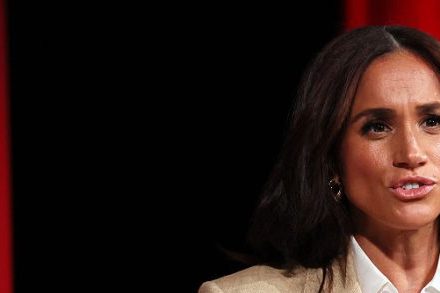
As controversy continues to rage about the ‘he said/he said’ dynamic in Earl Spencer’s damning memoir – and whether Prince Harry knew (and, crucially approved) of the allegations in the book – there is, at least, the opportunity to draw light relief from something rather less consequential. It might seem strange to remember this, given the various other disasters in the world today, but Meghan Markle – now, of course, a resident in Britain once again – is continuing to run her As Ever brand. Even though she no longer has the backing of Netflix and her cursed With Love, Meghan television specials to promote it, it continues to be a going concern. Now, we have been treated to Meghan's dinner party hosting tips. They are neither profound nor revelatory.
Does Tolkien deserve to be celebrated in Westminster Abbey?

Although 2026 isn’t a significant anniversary year for J.R.R. Tolkien, there has been more attention paid to the author recently than most deceased authors get when it’s their centenary. Firstly, D.J. Taylor published his critically acclaimed quasi-biography of Tolkien, The King Under the Mountain, which is the first serious attempt to examine the writer and his legacy since Humphrey Carpenter’s authorised life in 1977. And now, as if in serendipity, Westminster Abbey has announced that there will be a new memorial to the Lord of the Rings creator in Poets’ Corner, to be designed by artist Stephen Broadbent.

French cinema has stopped being chic

Amongst many men of my acquaintance, this season’s biggest blockbuster is not The Odyssey, but the new French epic De Gaulle. The first part, entitled Résistance, was released in British cinemas last month and has immediately become a cause célèbre with the kind of people who grumble that there hasn’t been a great war movie since the halcyon days of Where Eagles Dare and The Great Escape, and that the recent vogue for downbeat revisionism has meant that stirring and heroic tales of national fortitude have gone out of vogue. The second part of the story, Liberté, was released on 18 September. Presumably it, too, will find a ready-made audience, ready to thrill to the battle scenes and psychological duel between Simon Akbarian’s De Gaulle and Simon Russell Beale’s Churchill.

Is Charles Spencer telling the truth about the King?

When Earl Spencer was interviewed by Larry King in 1997, he had nothing but words of praise for the-then Prince Charles, in the aftermath of Diana’s death and funeral. When Larry King asked if the Prince of Wales had had anything to say about Spencer’s fiery eulogy, his guest replied, ‘Not about the speech, no, but he was perfectly polite all day’, and went on to stress that, ‘Nothing nasty has ever been said about it by him to me.’ Spencer attempted to claim that he was drawing a distinction between Charles as king and Charles as unpleasant brother-in-law.

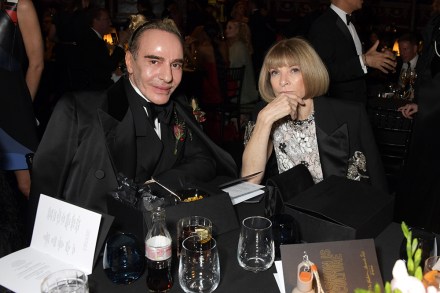
Will Anna Wintour survive the Galliano debacle?

From our US edition

In this summer’s couture blockbuster The Devil Wears Prada 2, the moment of greatest humiliation for Meryl Streep’s Miranda Priestley comes about halfway through the film. With her Vogue-adjacent fashion magazine Runway imperiled by budget cuts and its philistine new owner, Miranda is not spared the hair-shirt treatment the rest of her staff endure. In a scene that is supposed to be funny but ends up being almost tragic, this ice-hearted doyenne of the fashion world is compelled to travel from New York to Milan Fashion Week in coach class, among hoi polloi. As the usually excellent Streep is forced to mug and gurn at the humiliation that she endures, I found myself mouthing “The horror! The horror!” – but for altogether different reasons.

Is Charles Spencer right about King Charles? 

As soon as news broke that copies of Charles Spencer’s memoir about the late Princess of Wales, Swan Song: Diana, My Sister, had been stolen from a truck in the Netherlands, it was inevitable that the contents of the revelatory and potentially scandalous book would soon make it into the public domain. And so it has proved, albeit through the time-honoured means of a serial deal in the Daily Mail. Yet although the first official excerpt will only be published later today, there is already a war of words brewing between Buckingham Palace and Spencer over a particularly shocking story from Swan Song.

Brown furniture isn’t dead

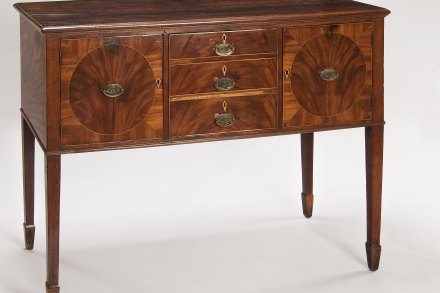
Throw out your grandfather clocks, the naysayers said, and banish your commodes to the scrapheap and junkshop. Brown furniture - invented in the Georgian and Regency eras and popularised for the mass market in the Victorian period - has been decreed by those tastemakers in the know to be as dead as Jacob Marley – a man who undoubtedly would have cherished those heavy mahogany bed frames and cabinets that were synonymous with his age – and showing even fewer signs of returning, even in spectral form.   The reasons for the apparent demise of brown furniture are less to do with a rejection of sturdy, well-built items that were once the pride and joy of any household and more because we are living smaller lives, in all senses.

Harry and Meghan might have a point about their security

As soon as it was announced, somewhat unexpectedly, that Harry and Meghan would be returning to Britain, with the primary intention of educating their children at expensive private schools there, commentators – including this one – speculated that it would be a three-ring circus and that their presence in the country would be eventful, if not wholly consequential. And so it has come to pass. A mere few weeks after they touched down once again in Blighty, the dynamic duo and their brood dominate the royal coverage, possibly to the chagrin of the so-called ‘working royals’. But H ‘n’ M have long been skilled at drawing on various purses without necessarily putting the hours in, and the latest row about their security is a fine example of this.

The resistible eccentricity of Lewes

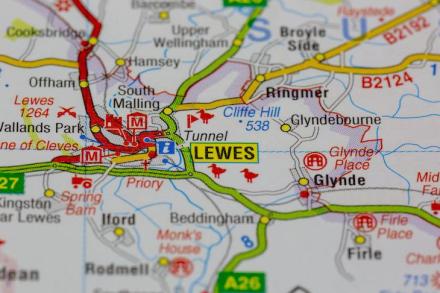
Anyone who has ever lived in Lewes won't be surprised to hear that the East Sussex town has become the first in England to recognise the rights of trees. A motion, which was passed by the local council last week, declares that: “Trees have the right to flourish and to maintain their natural life cycles, ecological functions and evolutionary processes”. Lewes has morphed into a place where your £5 oat-milk latte has probably been served to you by a trustafarian named Tabitha Lewes is, of course, dominated by the Green party: 18 out of 41 councillors on Lewes District Council are Greens. The town's well-heeled denizens have long prioritised ecological issues. Perhaps as a result, Lewes looks like a lovely place to live. It is also one of the strangest.

Robin Hood has lost his way

For those of us whose fondest memories of Robin Hood on screen are either Richard Greene appropriately resplendent in green as he rides through an immaculate (and studio-bound) Sherwood Forest or Errol Flynn’s similarly heroic and dashing Robin, our happy associations with the character are about to be sorely tested. Last week saw Hugh Jackman assume the role of the bow-quiverer in the suitably downbeat The Death of Robin Hood, which imagines the legendary outlaw less as the heroic figure of yore, stealing from the rich and giving to the poor, and more as a near-psychotic vagrant who commits horrific acts of violence towards anyone who gets in his way, including women and children.

Chris Langham was disgusting but talented

The death of the convicted sex offender, actor and writer Chris Langham of pancreatic cancer at the age of 77 brings to an unhappy end one of the most turbulent public careers of any English entertainer. Langham was jailed for ten months in 2007 after having been found guilty of downloading and possessing level five child pornography, and while his sentence was reduced to six months on appeal, the taint of his conviction clung to him for the remainder of his life.  While Langham continued to deny that he had accessed the material for anything other than research purposes – and to make sense of the child abuse that he claimed that he had suffered in his youth – the judgement of Detective Superintendent Paul Fotheringham of Kent Police proved to be the lasting one.

The Windsors have much to learn from Harald of Norway’s reign

The death of the Norwegian monarch, King Harald, at the age of 89 might, initially, seem like a sad but ultimately inconsequential event as far as the British royal family are concerned. Still, at a time when there are only a few monarchies left in Europe, there is an informal fraternity of sorts between the kings and queens who still – some would say anachronistically – cling onto their thrones. And in the case of the Oxford-educated King Harald, there were many parallels, for good and bad, that King Charles, Prince William and the rest of the Windsors would do well to learn from. Given Norway’s rather smaller size than Britain, it is unsurprising that its monarchy has always been a more informal and less rulebound institution than ours.

Tim Curry was the king of camp

From our US edition

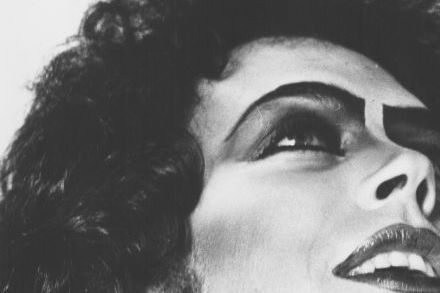
“Do Tim Curry proud,” my friend Simon said to me when he heard I was writing about him. Simon is, admittedly, a Tim Curry fan extraordinaire whose go-to karaoke song is "I’m Going Home" from the Rocky Horror Picture Show soundtrack, which Curry himself sang with mournful gravitas both on stage and in the 1975 film. Yet it also encapsulates the way in which the actor and singer, who has died aged 80, became an extraordinarily beloved part of the pop cultural landscape and remained that way for decades. Even a debilitating stroke in 2012, which forced him into a wheelchair and largely ended his on-screen career, could not damage the Englishman’s inimitable reputation as someone who made audiences laugh – a lot – and, when the occasion arose, tantalized or terrified them as well.

RIP Dolly Parton

“And try to make the most of every moment / ’Cause if you never try, you never win.” There are few more appropriate lines with which to begin an obituary of Dolly Parton, although they do have the slight disadvantage of sounding like something that might be printed on an especially tawdry greetings card. Dolly – always Dolly, never ‘Ms Parton’ – was never particularly concerned about that sort of thing. She understood that sincerity was generally more effective than sophistication, and that if something was true there was little point in making it sound cleverer than it was. She was the greatest singer of her generation, the female Elvis if you will, and she was damned if anyone was ever going to persuade her otherwise.

Keep Spoons noisy!

The much-loved - in some quarters - Wetherspoon pub chain is associated with many things. For their supporters, who include this writer, they supply a range of interesting, well-chosen drinks at reasonable prices, often in buildings of historic or architectural interest that would otherwise have been demolished or turned into luxury flats. To their detractors, they are bilious, low-rent establishments that have caricatured the great British pub beyond recognition. Not for nothing have several taken their names from The Moon Under Water, George Orwell’s fantasia of what an alehouse should be, in what might be seen as either affectionate homage or opportunistic hijacking. Pubs should be fun, convivial and welcoming places Yet what Wetherspoon establishments do not offer is quiet.

Who should pay for Meghan and Harry’s security?

It isn’t long now until the joyous day that Harry and Meghan once more make Britain their home, but several aspects of their return are still clouded in mystery. We have no idea, for instance, where they are going to be living – although the Cotswolds have been mooted. Once they arrive there, there is also the rather vexed question as to whether their no doubt hugely expensive security is going to be privately funded or the taxpayer’s burden. Two former home secretaries have gone public to argue that there should be at least some level of taxpayer-funded protection for the Sussexes. This may not be a wildly popular perspective but can at least be justified on humanitarian grounds.

Harry is paying for his hubris

It has been quite the week for Prince Harry. A couple of days ago, he announced that he would be moving his family back to Britain – not in years, or even months, but in a matter of a few weeks. That story can now be seen in the context of a costs order made against him and his litigants by Mr Justice Nicklin, after the failure of their court case against Associated Newspapers. Harry may have been attempting to seize the initiative and the headlines with his eye-catching announcement that he was once more returning to the country of his birth after his Montecito sojourn, but the price of his hubris has been revealed, and it is an exceptionally steep one.

Harry and Meghan’s return to Britain is no joke

A shade over three decades ago, Gary Barlow and Take That sang ‘Whatever I said, I didn’t mean it, I want you back for good’. ‘Back for Good’ has traditionally been taken to be a song about someone wanting their loved one back after a breakup. However, the Duke and Duchess of Sussex clearly listened to it on whatever easy listening channel they tune into in Montecito and decided that this is not simply Gary Barlow’s lovelorn lament but the earnest desire of the British people to have them return to us. Therefore, Meghan and Harry have announced that they will be returning to Britain. Not for a visit of a few days, as has happened in recent weeks, or even for a more protracted period.

Should Buckingham Palace reveal more about Charles’s cancer?

King Charles is currently on his summer holiday in Balmoral. After the stresses and difficulties of the past few months – which have included a reconciliation not only with Prince Harry and his grandchildren but also with Meghan Markle – he is surely entitled to a few weeks of privacy and relaxation. Yet, against this backdrop, the monarch is still suffering from the undisclosed form of cancer that he was diagnosed with in early 2024. While the mood music has been broadly positive when it comes to treating the King's illness, there has been no announcement that he is in remission or if the cancer has been cured altogether. This suggests that this continues to be a strain both on himself and those around him.

What happened to Will Self?

It is usually taken as a given, for better or worse, that the Grand Old Men of English letters tend to move, if not necessarily to the right, to an accommodation with conservatism and the status quo as they grow older. It is, after all, harder to rail against the establishment when you have been weighed down with CBEs, honorary doctorates and the adulation that comes from being a much-loved writer. However, nobody seems to have told this to the novelist, polemicist and one-time enfant terrible Will Self, and the results have been, depending on your perspective, either disappointing or bleakly amusing. Self has published an extraordinary 7,000-odd word open letter to Andy Burnham on his X account, as part of what he calls his ‘Sitreps’.