Alexander Horne

Alexander Horne is a barrister and visiting professor at Durham University. He was previously a senior parliamentary lawyer.

Could this Lords paper save the Rwanda Bill?

From our UK edition

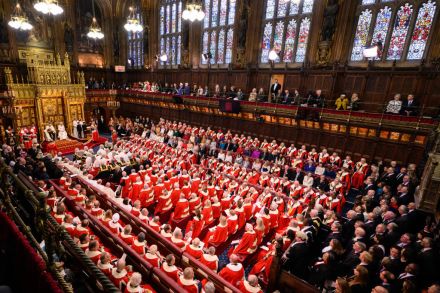
Parliamentary procedures and conventions are often dismissed as ‘arcane’ or ‘byzantine’ by commentators. Still, on occasion, they can have a significant impact on politics – as demonstrated by the recent furore over a Labour amendment to the Gaza ceasefire motion in February. Last week, a new paper in the House of Lords was published which has the potential to have a similar political impact – and could even save the government’s controversial Rwanda Bill, which is in its Report Stage today. The paper, by the convenor of the crossbench peers Lord Kinnoull, is on the Salisbury-Addison convention, which says that the Lords will not vote against Bills which were in the government’s manifesto.

Protests targeting MPs’ homes must not become the norm

From our UK edition

On Monday evening, more than 60 activists gathered outside the home of Tobias Ellwood, a Conservative backbencher and former junior defence minister and chair of the Defence Select Committee. The protestors had assembled to call for a ceasefire in Gaza, although several were also heard supporting the Houthi rebels in Yemen, who have recently been attacking shipping in the Red Sea. They mustered with placards and a megaphone. One of the signs accused Ellwood of being 'complicit in genocide'. Ellwood and his family said that they had been advised by police to 'stay away' from their home on the basis that 'arriving through that crowd would’ve antagonised the situation'.

It will be difficult for Israel to ignore this ICJ ruling

From our UK edition

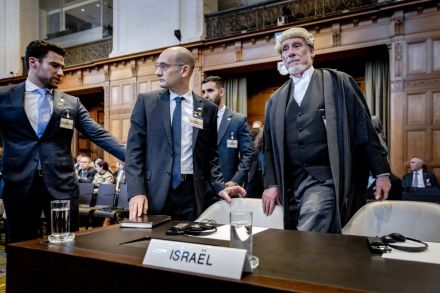
Yesterday, the International Court of Justice (ICJ) delivered an interim ruling on South Africa’s genocide case against Israel. Its decision is likely to please neither side of the debate, but seems broadly balanced: it criticised Israel, but failed to demand a suspension of the conflict.  The court, which sits in The Hague, was formed in 1945 and is one of the principal organs established by the Charter of the United Nations. It is the UN’s highest court.  On 29 December, South Africa brought its proceedings in the ICJ under Article 9 of the Genocide Convention of 1948. It claimed that Israel was engaging in genocidal acts against the Palestinian people in Gaza.

Will the Lords block Rishi’s Rwanda Bill?

From our UK edition

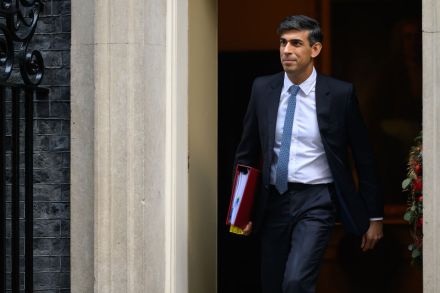
Rishi Sunak will have been delighted last night to see his Rwanda Bill pass in the Commons, by 320 votes to 276. An expected Conservative rebellion was quelled, with only 11 Conservative MPs voting against the measure and no amendments accepted. The vote exposed the posturing of the Conservative rebels. Fifty nine Conservative MPs were prepared to back an amendment tabled by Robert Jenrick, the former immigration minister, which would have meant that ‘interim measures’ made by the European Court of Human Rights would automatically be treated as not binding on the UK. But, when it came to the crunch, the vast majority of Conservative MPs could not bring themselves to reject the unamended Bill, whatever their concerns about its effectiveness.

Ireland could regret its attack on the Troubles law

From our UK edition

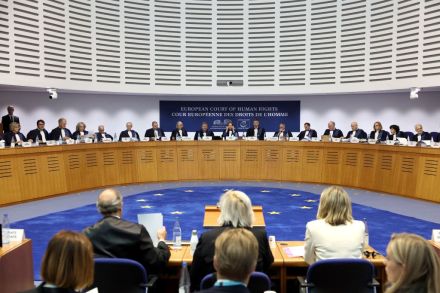
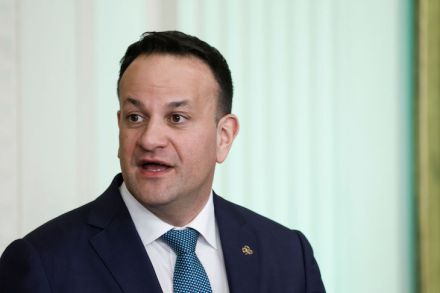
The Irish government has controversially announced that it will bring an inter-state claim against the UK in the European Court of Human Rights over the Northern Ireland Troubles (Legacy and Reconciliation) Act. Taoiseach Leo Varadkar rather piously claimed that he had 'no option' but to bring the case, since the Act breaches the European Convention on Human Rights (ECHR). The Legacy Act, which has few friends in Northern Ireland, is designed to stop the commencement of new Troubles-era cases and inquests.

The Rwanda Bill is going to be hugely contentious

From our UK edition

On Wednesday, the government finally published its promised ‘emergency legislation’, after the Supreme Court ruled in November that the Rwanda scheme was unlawful. The new legislation follows the agreement of a new treaty with Rwanda on Tuesday which aimed to ‘strengthen the UK-Rwanda Migration Partnership’ and deal with the serious problems identified by the Supreme Court. Rishi Sunak has made the small boat crossings into a totemic issue but it has now rather spun out of control. Some might argue that the main ‘emergency’ the legislation is really designed to address is a crisis in the Conservative party over the issue of migration. The new legislation may not have been strong enough for former immigration minister Robert Jenrick.

Has Sunak done enough to fix the Rwanda plan?

From our UK edition

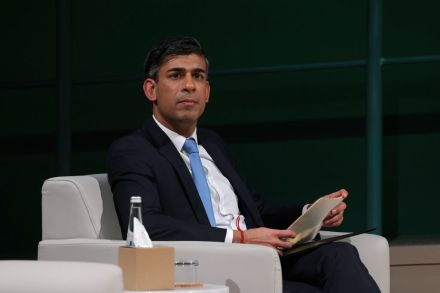
When the Supreme Court found against the government on the Home Office’s Rwanda policy in November, the plan appeared to be dead in the water. The court made clear that there were substantial grounds to think that asylum claims would not be properly determined by the Rwandan authorities. As a result, it concluded that asylum seekers might be returned to a country where their life or freedom would be threatened, or where they would be subject to a risk of torture or inhuman or degrading treatment – contrary to a number of international conventions. The judgment gave the Prime Minister an ‘out’ from a controversial and costly policy, which was always unlikely to have a significant impact on the immigration and asylum figures.

Why the Supreme Court demolished the Rwanda scheme

From our UK edition

In its simple and comprehensible judgment, the Supreme Court has dealt a crushing blow to the Home Office’s Rwanda policy this morning.   The court upheld the decision of the Court of Appeal that the policy was unlawful. It reached that view because it believed there were substantial grounds to think that asylum claims would not be properly determined by the Rwandan authorities. That would mean that asylum seekers might be returned to a country where their life or freedom would be threatened, or where they would be subject to a risk of torture or inhuman or degrading treatment.

The case for prosecuting ‘from the river to the sea’

From our UK edition

As an international lawyer, splitting my time between London and Brussels, I dare say I might be considered one of Theresa May’s ‘citizens of nowhere’. Nonetheless, as the protests about the Israeli response to the atrocities committed by Hamas on 7 October have become more strident and legally problematic, I have also had cause to reflect on my heritage as a dual British-Israeli national.  Much of my mother’s side of the family arrived in Israel from Bukhara (then part of the Russian empire, now modern-day Uzbekistan) at the end of the nineteenth century. They were prosperous silk traders who originally settled in the Bukharan Quarter of Jerusalem, following pogroms in Russia.

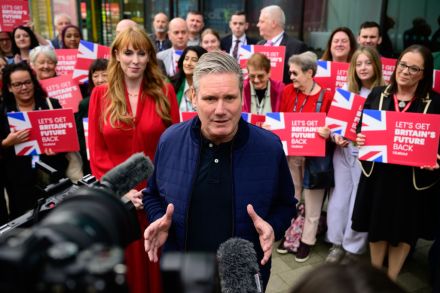
Will constitutional reform be on Starmer’s conference agenda?

From our UK edition

As Labour travels to Liverpool this weekend, one issue which will attract attention is the extent to which Sir Keir Starmer spells out his vision on constitutional reform, if the party wins a majority at the next election.  The Blair administration introduced a variety of ambitious constitutional innovations in its first term, including devolution, Lords reform, the Human Rights Act and freedom of information. Gordon Brown also envisaged change, launching a significant (albeit unfinished) review into the governance of Britain when he took over as Prime Minister in 2007.  As we enter what might be the final Labour conference before the next general election, it is far from clear how radical Starmer wishes to be.

Why can’t we just leave the European Convention on Human Rights?

From our UK edition

Anyone reading the news over the past two days could be forgiven for feeling a certain sense of déjà vu. Senior figures in government, including an unnamed cabinet minister, have suggested that if Rwanda flights removing asylum seekers are blocked by the courts, Conservatives would ‘inevitably’ back moves to leave the European Convention on Human Rights. The Telegraph reports that up to a third of the cabinet are prepared to back leaving the convention. Backbenchers are restless.   It is hard to see how it would be possible for the UK to depart the convention without causing some significant problems These threats to leave the ECHR seem to recur cyclically.

Boris Johnson has finally run out of luck

From our UK edition

Last night, Boris Johnson unexpectedly resigned from the House of Commons. His graceless and indignant resignation statement made clear that he blamed the Privileges Committee for his departure, arguing that he had been forced out of parliament over partygate. The committee had written to Mr Johnson in advance of the publication of its report, outlining its proposed criticisms. It seems pretty clear that Johnson seems to have jumped before he was pushed. Yet, if one looks more closely at Johnson’s account of events, it contains a some significant inaccuracies which go far beyond the usual rough and tumble of politics.

Margaret Ferrier’s Commons ban could complicate partygate for Boris

From our UK edition

Margaret Ferrier has received a 30-day suspension from the Commons for breaching the Code of Conduct for MPs when she broke Covid rules. As the suspension is for longer than ten days, she is now at the mercy of a recall petition and by-election: it’s almost certain that the constituents of Rutherglen and Hamilton West will soon have a new MP. Unusually, 40 MPs voted against the suspension (185 voted in favour), and a high number of abstentions were recorded. Ferrier was sentenced to 270 hours of unpaid work in September last year after she pleaded guilty in a Scottish court to culpable and reckless conduct. Having discovered she was positive for Covid, Ferrier took a train from Westminster to Glasgow during the pandemic.

Why Boris Johnson might escape a partygate punishment

From our UK edition

After several months of anticipation, two contentious legal submissions from Lord Pannick KC and a bumper 52-page witness statement, Boris Johnson finally made his appearance before the Privileges Committee yesterday. Regular select committee watchers might have been surprised to see the panel of seven MPs conduct a forensic examination of Mr Johnson, sticking doggedly to their task, asking detailed questions and marshalling the facts at their disposal with some skill. Harriet Harman proved an adept Chair, keeping the committee on track and precluding too much lengthy meandering by the witness. Johnson was provoked to tetchiness, and even anger. But he could not be goaded into any explosive revelations.

Does Boris Johnson’s partygate defence stand up to scrutiny?

From our UK edition

This morning, Boris Johnson’s response to the accusations against him was published in a substantial dossier to the Privileges Committee. It comes just a day before the unprecedented hearing that is likely to determine his political future. This submission was a long time coming. In its interim report, published on 3 March, the Committee noted that it had first written to Johnson asking for his version of events as long ago as 21 July last year. Spectator books editor Sam Leith – who worked with Johnson in his former role as Daily Telegraph comment editor – suggested that this late submission was very much ‘on brand for the great man’. What do we learn from the 52-page dossier? Well, Johnson accepts that he misled parliament.