There was considerable pressure on Sir Keir Starmer this morning to indicate what action might be taken against his former US ambassador, Lord Mandelson. In addition to his ill-advised friendship with Jeffrey Epstein, Mandelson has been accused of leaking confidential government information to the convicted paedophile.
Despite his previous, improbable, resurrections it is impossible to imagine the Prince of Darkness bouncing back from this disgrace
The matter has been referred to the Metropolitan Police, and it has been alleged that it could potentially mean Mandelson being prosecuted for misconduct in public office, a criminal offence which carries a maximum sentence of life imprisonment.
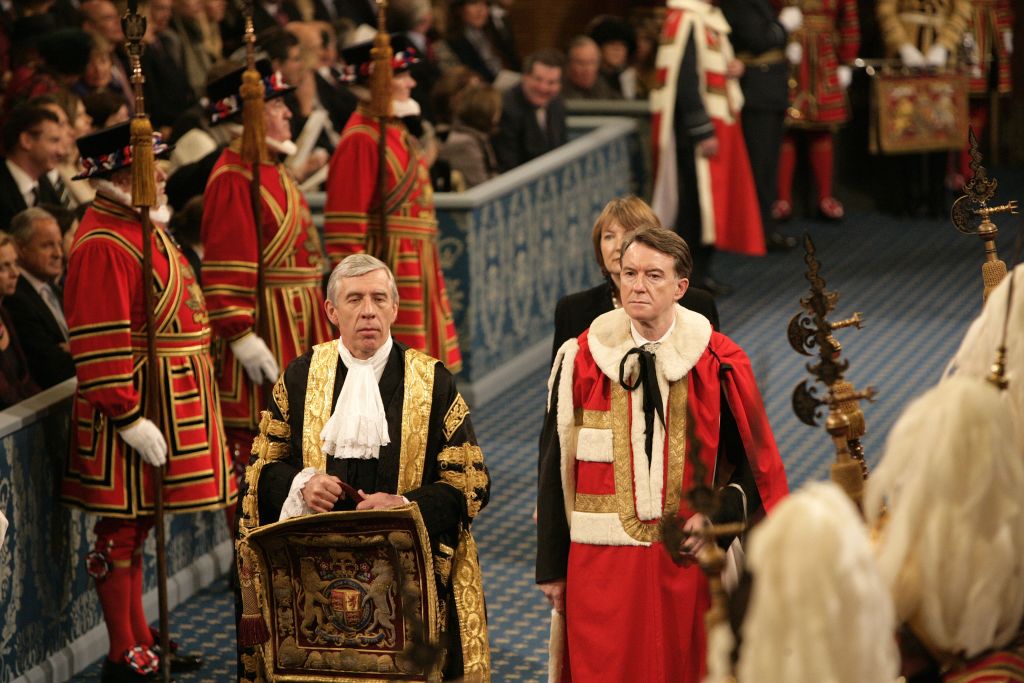
There is also the question of whether Mandelson should remain in the House of Lords and if his peerage might be removed. The Prime Minister has already said that Lord Mandelson should lose his title, having brought the House of Lords into disrepute.
Mandelson himself has already resigned his membership of the Labour party to avoid causing it ‘further embarrassment’. However, it is not yet clear whether he will take the further step of voluntarily leaving the Lords.

Assuming that Mandelson cannot be persuaded to relinquish his seat voluntarily, it is possible to suspend or expel a sitting peer in certain circumstances.
First, under the 2014 Act, a peer who is sentenced to a year or more in prison automatically ceases to be a member of the House. Secondly, a peer who breaches the House of Lords code of conduct may be expelled under the House of Lords (Expulsion and Suspension) Act 2015. This process is not automatic and would require an investigation by the Lords Commissioner for Standards and a recommendation by the Lords Conduct Committee. Any recommendation for suspension or expulsion must then be approved by a vote of the House.
Either process would take time, and it is important to recognise that it is far from clear whether Mandelson’s conduct crosses the threshold required for a criminal offence. As Joshua Rozenberg noted this morning, ‘securing a conviction for misconduct in a public office is far from straightforward’, which is one reason why MPs are in the process of replacing this common-law offence with a new statutory crime.
The Metropolitan Police has stated only that it may investigate the matter, noting that ‘the reports will all be reviewed to determine whether they meet the criminal threshold for investigation.’
A conduct investigation would also require an inquiry, although some peers who have been found to have committed serious breaches of the code of conduct have chosen to resign in advance of any vote in the House on their suspension or expulsion.
Further complications arise because Lord Mandelson’s title and his membership of the House of Lords are, in effect, two different matters. Mandelson is a life peer. Such titles are created under the Life Peerages Act 1958 and, as the name of the Act suggests, are granted for the duration of the holder’s lifetime.
The House of Lords Reform Act 2014 allows peers to resign as sitting members. But leaving the House of Lords does not mean relinquishing a peerage, and life peerages cannot be surrendered. This means that Mandelson would remain entitled to use his title. The House of Lords Library states that while it is theoretically possible to remove a peerage, once the Crown has granted one it is extremely difficult to do so.
The government has recently confirmed that legislation is required to remove a peerage once it has been conferred. According to the Lords Library, the most recent example occurred in 1917, when the Titles Deprivation Act was used to strip peerages from those who had, ‘during the present war, borne arms against His Majesty or His Allies, or who adhered to His Majesty’s enemies’.
It has been reported that the government may ask the Lords Conduct Committee to consider making recommendations on how peerages might be removed more easily. Any such review is unlikely to be of relevance to the present imbroglio.
It is a sad end to a significant political career. While he never held a great office of state, Peter Mandelson was, as Charles Moore argued yesterday, one of the leading figures in the modernisation of the Labour party in the 1980s and a key architect of its electoral victories from the 1990s onwards. Yet, despite his longevity in Labour politics, he appeared to grow older but never wiser. In many respects, he is his own worst enemy.
Lord Mandelson may well conclude that he should spare himself further difficulty and embarrassment by resigning his seat voluntarily, leaving the government to decide whether it has the energy or inclination to pursue the removal of his title. It is difficult to see what he would gain from attending the House again. Despite his previous, improbable, resurrections it is impossible to imagine the Prince of Darkness bouncing back from this disgrace.





Comments