Alexander Horne

Alexander Horne is a barrister and visiting professor at Durham University. He was previously a senior parliamentary lawyer.

How strong are the safeguards in the assisted dying bill?

From our UK edition

After a long wait, Kim Leadbeater’s assisted dying legislation – the Terminally Ill Adults (End of Life) Bill  – was published overnight, ahead of its second reading in the Commons on 29 November. The bill has already been subject to much debate in advance of its publication. Now its proponents and critics have the chance to engage with the detail – most critically the safeguards in the bill which are designed to stop abuses. Opponents of euthanasia and assisted dying frequently point to the ‘slippery slope’ which they suggest is inevitable once it is legalised, highlighting misuse in other jurisdictions such as Canada.

What Robert Jenrick gets wrong about the ECHR

From our UK edition

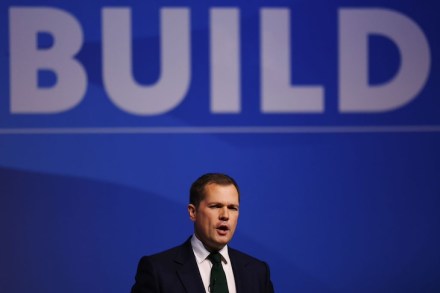
Last night, during his first debate with Kemi Badenoch, Robert Jenrick was keen to highlight his flagship policy on exiting the ECHR, using it as a dividing line to emphasise his anti-immigration credentials. He pitched the question as ‘leave or remain’.  This is an unfortunate move on two fronts. First, leaving the ECHR is unlikely to have the practical effect he hopes in stopping the small boats, or combatting illegal immigration. Second, it risks looking like he is merely chasing the Reform vote and is uninterested in reuniting his fractured party.

Has the UK Supreme Court been a success?

From our UK edition

Today marks the 15th anniversary of the UK Supreme Court. When it opened its doors in 2009, it was argued that separating the country’s top judges from their historical home in parliament was a defining moment in the constitutional history of the UK. Fifteen years later, it’s hard to see whether anything significant has really changed. The Supreme Court was proposed by the Blair Government in 2003, as part of a botched set of reforms to abolish the role of Lord Chancellor and reform judicial appointments. It came as a surprise, not only to the then-Lord Chancellor, Derry Irvine (who was replaced by Blair’s former flatmate, Charlie Falconer), but also to many senior judges and officials, who found out about the change on the news while at an away-day.

Owen Paterson must regret his appeal to the European Court of Human Rights

From our UK edition

The European Court of Human Rights has thrown out a challenge by former cabinet minister Owen Paterson. The ex-Tory MP, accused of breaking lobby rules, took the government to court in a bid to have a 2021 parliamentary investigation into his conduct declared unfair. That Paterson went to the Strasbourg Court in the first place might be considered a remarkable show of chutzpah (or perhaps simply rank hypocrisy) given that he had previously campaigned for the UK to leave the ECHR, prior to his own personal travails. Paterson’s claim to the European Court of Human Rights was always rather quixotic.

Starmer shouldn’t rush to copy Meloni’s Albania migrant plan

From our UK edition

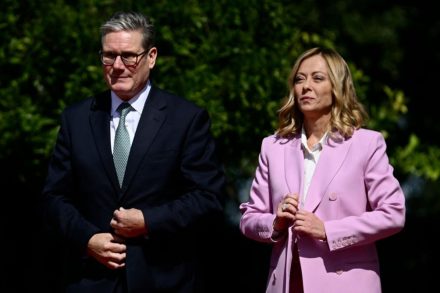
One of the first things Keir Starmer did on entering Downing Street in July was to abandon the previous government’s Rwanda asylum partnership. The Prime Minister said Rishi Sunak's flagship scheme was a costly gimmick. But it now appears the PM is considering an asylum processing scheme of his own, which could see migrants removed to Albania. Speaking ahead of a visit to Rome today to meet with the Italian prime minister Giorgia Meloni, Starmer said he was 'interested' to see how Italy's own migrant processing scheme with Albania might work. He revealed he had already had some discussions with Meloni on how the two can 'work together on irregular migration'.

The Apple case is a huge win for the European Commission

From our UK edition

Apple must pay €13 billion (£11 billion) in unpaid taxes, the European Court of Justice (ECJ) has ruled, bringing to an end a long-running dispute involving the tech company and the government of Ireland. The ruling by the EU’s top court is a huge win for the European Commission (and the outgoing Competition Commissioner Margrethe Vestager) against aggressive tax planning by large multinational companies. It is a major blow to the Irish government.  Following the publication of the judgment, the Irish government seemed positively disappointed The case has a long and convoluted history. In 2016, the Commission determined that subsidiary companies belonging to the Apple Group had, historically, received tax advantages that constituted state aid from Ireland.

What is the point of David Lammy’s partial arms embargo on Israel?

From our UK edition

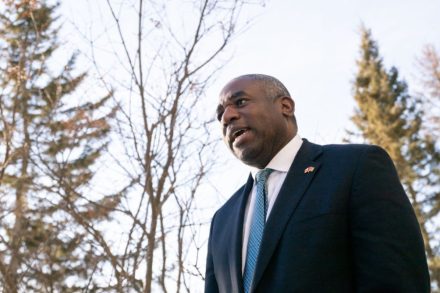
The government has suspended 30 (out of around 350) arms export licences to Israel. The Foreign Secretary, David Lammy, acknowledged that the ban will affect the sale of ‘important components that go into military aircraft, including fighter aircraft, helicopters and drones, as well as items that facilitate ground targeting.’  The UK restrictions do not seem a productive way of convincing Netanyahu and his more hawkish allies to end the war Lammy’s decision to suspend these arms exports licences under the Export Control Act 2002 did not come out of the blue and is not a huge surprise. During parliament’s summer recess, there were reports that Lammy might stop the sale of ‘offensive’ arms to Israel.

Should extreme misogyny be labelled terrorism?

From our UK edition

The Home Secretary Yvette Cooper has reportedly 'ordered a review' of Britain’s counter-extremism strategy. According to the Daily Telegraph, she was minded to treat ‘extreme misogyny’ as terrorism for the first time. It is suggested that the review would be completed later in the autumn, and that a new counter-extremism strategy would be launched early next year. When discussing this issue, it is tempting to use the terms ‘terrorism’ and ‘extremism’ interchangeably. In law, however, they are not identical and should not be conflated.

Israel needs to get out of the Gaza war

From our UK edition

As the war in Gaza drags on into its eleventh month, and the conflict risks expanding into a regional war involving both Iran and its Lebanese proxies, it is surely time to question what would be a successful outcome for Israel. Militarily, the IDF has inflicted enormous damage on Hamas. Yet around 115 hostages continue to languish in Gaza and, in public relations terms, Israel is clearly losing the propaganda war.  One of Israel’s problems is that it has simply lost control of the narrative The Jewish state is increasingly accused of war crimes and its allies are more likely to call for a ceasefire than issue a stalwart defence of its actions. Moreover, court cases in the international arena continue to ratchet pressure on Israel.

Labour’s plan for the Lords looks unwise

From our UK edition

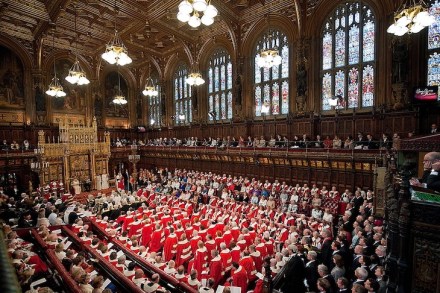
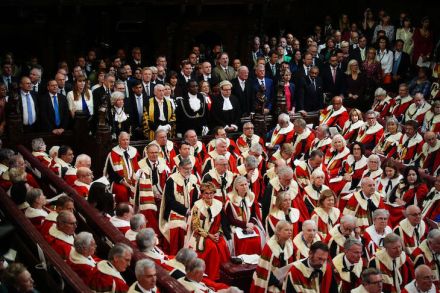
Labour’s plans for Lords reform, announced during the King’s Speech this morning, do not come as a great surprise. It promised measures to ‘modernise the constitution’ and ‘remove the right of hereditary peers’ to sit and vote in the Lords via a House of Lords (Hereditary Peers) Bill. These plans were heralded in the Labour party manifesto, which pledged ‘immediate reform of the House of Lords’. They are, nonetheless, both unambitious and in some respects unwise. These changes will not bring Labour much credit The reforms proposed in the manifesto included the removal of the remaining 92 hereditary peers; the introduction of a compulsory retirement age; a revised participation requirement and new powers to remove ‘disgraced Members’.

What would a Labour landslide mean for parliament?

From our UK edition

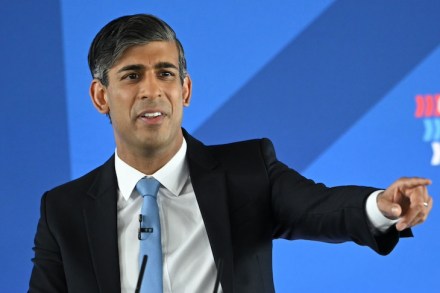
As Rishi Sunak faces electoral oblivion today, his final gambit before polling day is to threaten voters with the risk of a Labour ‘super-majority’. The term ‘super-majority’ is constitutionally meaningless in the UK: in our system of government a majority of one gives a party the same right to make and unmake laws as a majority in the hundreds. But voters should care about the impact of a large Labour lead. Arguably, a Labour landslide could have a practical impact on the way parliament works. Parliament’s two core functions are making legislation and holding the government to account. The most obvious concern is the effect a landslide would have on the quality of scrutiny.

Remainers are going to be disappointed in Labour

From our UK edition

Labour’s election manifesto has been criticised by many commentators for being too vague; like a 'choose your own adventure' book which would allow the party to do almost whatever it likes in government. This was highlighted today by Rachel Reeve’s remarks on Brexit. In an interview with the Financial Times, the shadow chancellor pointed out the need to improve elements of the UK’s trade deal with the EU and ‘reset’ Britain’s global image. This is said to mark a shift in tone (if not substance) from a party which previously did not want to focus on these issues.

Why Rishi Sunak can’t weaponise the ECHR

From our UK edition

One of the major themes of the current election campaign is the attempt by Rishi Sunak to draw a dividing line between the Tories and  Labour on the issue of immigration, particularly when it comes to the Rwanda scheme. Today, the Conservative party sought to highlight the issue in its manifesto.  The manifesto claims a Conservative government would: ‘stop the boats by removing illegal migrants to Rwanda’, ‘stop illegal migrants bringing spurious legal challenges’ and ‘work with other countries to rewrite asylum treaties’.

The ICJ’s Rafah ruling is unwelcome and unwise

From our UK edition

Yesterday afternoon, in a striking move, the International Court of Justice (ICJ), the UN’s top court, ordered Israel to stop military operations in Rafah and to immediately reopen the Rafah border crossing with Egypt for the unhindered provision of humanitarian aid. The ICJ also ordered Israel to allow the UN to investigate allegations of genocide. This dramatic step is the culmination of a bad month for the Israeli Government. Earlier in May, the International Criminal Court’s prosecutor said he was seeking the arrest of the Israeli Prime Minister, Benjamin Netanyahu, and Defence Minister, Yoav Gallant, for war crimes.

Could Northern Ireland become a migrant sanctuary?

From our UK edition

Yesterday, the High Court in Belfast dealt a blow to the government when it struck down several provisions in the Illegal Migration Act 2023, and declared that parts of the legislation were incompatible with the European Convention on Human Rights. The Illegal Migration Act is a key piece of legislation for the government’s Rwanda scheme. It obliges the Home Secretary to detain and remove individuals arriving in the UK without permission and prevents them from claiming asylum. The Act also allows the government to deport illegal migrants to a safe third country. While yesterday’s ruling only applies to individuals in Northern Ireland, there are concerns that it could affect the viability of the government’s Rwanda scheme as a whole.

Why a disabled pedestrian had her cyclist manslaughter conviction quashed

From our UK edition

A woman who shouted and waved at a cyclist, causing her to fall in front of a car, has had her manslaughter conviction overturned. Auriol Grey, who has cerebral palsy and is partially blind, was jailed for three years in 2023, following the incident in Huntingdon, Cambridgeshire. But yesterday, the court of appeal overturned the 50-year-old's conviction; her lawyers said she was a vulnerable pedestrian who 'should never have been charged'. Grey's family responded by saying 'we hope lessons will be learned.' This is a tragic case in which there are no winners This is a tragic case in which there are no winners. In October 2020, Grey was walking along a pavement when a 77-year-old cyclist, Celia Ward, attempted to pass her.

The Rwanda Bill won’t survive contact with reality

From our UK edition

After significant wrangling in parliament, the government has finally passed its Rwanda Bill – while managing to resist any significant new amendments from the Lords. It is reported that the Bill is likely to gain royal assent this week and that the government has already identified individuals for removal. Given the scheme appeared dead in the water last year, Rishi Sunak may see this as a triumph. He now has this hugely contentious legislation in place, can finally ratify his treaty with Kigali, and is in a position to carry out his Rwanda plan. All eyes will now turn to the courts, to see whether Sunak can actually get removal flights off the ground before the election.

What Strasbourg’s climate ruling means for Europe

From our UK edition

Today, the European Court of Human Rights ruled on an unprecedented trio of cases which claimed that European states have taken insufficient action to combat climate change. The outcome of the claims were mixed. But the judgments of the Strasbourg Court are likely to prove exceedingly contentious. The three cases involved claims against Switzerland, France and Portugal. They were heard by the Grand Chamber of the Strasbourg Court – essentially Europe’s top human rights court – with judges from 17 European states. In the Swiss claim, individuals and an association of older Swiss women claimed that they were at particular risk of illness because of climate induced heatwaves. The claim from France highlighted the risk of future flooding.

Should the UK impose an arms embargo on Israel?

From our UK edition

Yesterday, a letter from 600 legal experts, including four former Supreme Court judges, was published, arguing that the UK government should impose an arms embargo on Israel, impose sanctions on individuals and entities who had ‘made statements inciting genocide against Palestinians’, and suspend negotiations on a new bilateral trade agreement with Israel. It also demanded the UK review its current trade agreement with Israel and consider the imposition of sanctions more generally. Some might think, justifiably, that the lawyers’ letter is both one-sided and rather overstated The signatories believe an International Court of Justice (ICJ) ruling in January, imposing what are known as ‘provisional measures’, meant that there was a ‘plausible risk of genocide in Gaza’.

Why climate protestors lost the right to cause criminal damage

From our UK edition

Yesterday, the Lady Chief Justice, Lady Carr, delivered a judgment on protest law which may close a remarkable loophole which had been exploited by climate change protestors who engage in direct action to promote their cause. Protestors who have damaged property with paint or smashed windows have been cleared in recent years after telling juries they ‘honestly believed’ that property owners would have consented to the damage if they had known about the impact of climate change. Now, the Court of Appeal judgment should ensure that this defence is removed from many of those seeking to rely on their philosophical and political beliefs when engaging in destructive direct action. The judgment resulted from an intervention by the Attorney General, Victoria Prentis.