
Economics newsletter
What Labour should actually do to help entrepreneurs
The Resolution Foundation will have to scrap its plans for higher capital gains tax, the Institute for Fiscal Studies will have to redraft the arguments for an exit tax, and the Fabian Society will have to stop thinking about ways to tax dividends more heavily. The left-wing think tanks may have been hoping for a Budget that would be packed with all their pet schemes for raising more revenue from ‘the rich’, but it seems they will be disappointed. Apparently the Chancellor John Healey is planning a ‘budget for entrepreneurs’. After the hammering entrepreneurs have taken over the last decade that would not be very hard – the trouble is it does not seem very likely.
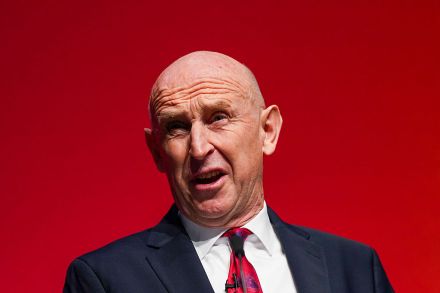
Andy Haldane hits out at the Bank of England
The Bank of England’s former chief economist Andy Haldane has accused the Bank of being too slow to tackle the latest wave of inflation and warned that five years of missed targets ‘does beg the question in the markets’ mind: are they serious?’ ‘More than five years of misses, does beg the question in the markets’ mind: are they serious?’ On this week’s episode of Reality Check, Haldane tells me the Bank ‘hasn’t learned its lesson’ from the inflation shock of 2021 and thinks that it ‘should have gone a bit sooner’ in raising interest rates. ‘The truth is, it’s a very self-serving comment,’ he said. ‘I left the Bank of England’s Monetary Policy Committee in June 2021. Inflation was bang on 2 per cent.

Is the jobs collapse finally starting to slow?
Has the jobs market bottomed out? Figures just released by the Office for National Statistics (ONS) show that, unexpectedly, the unemployment rate fell to 4.7 per cent, with the employment rate ticking up too. That said, more accurate HMRC estimates for payrolled employees fell by 111,000 in the year to August. But there were signs that this jobs collapse is finally starting to slow, with a previous 26,000 fall between July and August revised to an increase of 1,000. A ‘flash’ estimate for September also saw an increase of 13,000 from the month before. Forecasts had expected jobs to keep falling. There was no good news to be found in the vacancy figures, though, which show a fall in advertised jobs of 21,000 in the last three months.

Britain’s economy is growing – but Labour could soon stop that
Britain’s economy has surprised again. GDP grew 0.1 per cent in August, according to the Office for National Statistics (ONS). That’s obviously not much – but after 0.4 per cent growth in both June and July, pretty much every forecaster had expected a contraction. All of August’s growth came from production, which was up 0.8 per cent, while services were flat and construction continued its slump. Growth in AI, the ONS said, was driving things along with the legal and advertising sectors. Taken together, the surprisingly resilient growth figures – by the stagnant standards we’ve grown used to – we’ve had means that so far, at least, we are the fastest-growing economy in the G7.
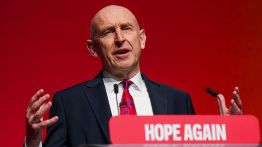
The IMF has faith in Britain. Should it?
Britain’s economy has come out near top of the class in the latest report from the International Monetary Fund. Overnight from the IMF’s meeting in Bangkok, its World Economic Outlook was published, finding that Britain’s economy will grow faster this year than it had expected. The new forecast put GDP growth this year at 1.3 per cent, up from the 1 per cent it had predicted in July. Next year it downgraded the pace of growth slightly from 1.3 per cent to 1.2 per cent. The new figures would make the UK the joint-second-fastest growing economy in the G7 after America. The upgrade for this year was thanks to the UK and world economies faring better against the Hormuz oil shock and the latest problems caused by the Houthi branch of just stop oil.
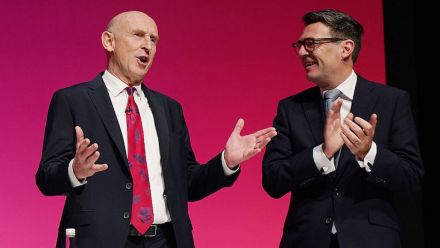

Should Britain have joined the Euro?
Critics of the Labour government looking for a stick to beat it with have hit on a novel line of attack. Britain, they point out, now pays more to borrow than Greece, which a decade and a half ago had to be rescued from national bankruptcy with three bailouts worth more than €250 billion (£211 billion), the largest in history. Greece pays around 4.5 per cent on its ten-year debt; Britain pays 5.4 per cent. Some have called the difference a “moron premium” – though it is not clear that any such premium is baked into British borrowing costs today, unlike during Liz Truss’s 49-day reign of financial terror. Brown was presiding over the greatest boom and bust in modern British history The real irony lies in the choice of Greece to embarrass Labour.

Burnham’s National Care Service is a Tory vote winner
Andy Burnham wants to thank the nation’s carers – except, possibly, the one he told us slipped his Granny Kitty’s engagement ring off her finger while she was in a care home a couple of decades ago. I don’t think the Prime Minister is ever quite going to eliminate light-fingered care workers, but he did confirm today that he wants to create a National Care Service which will be free at the point of delivery. This will come into being in the next parliament, assuming he wins it, and he assured us it will be fully-funded, not paid for through more borrowing.
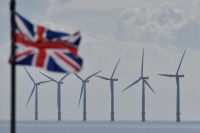
Andy Burnham’s Great British Grid is doomed
There was a very big hole in the Chancellor John Healey’s claim yesterday that he is going to generate a new age of industry. Why would anyone want to open a factory, or any other kind of industrial plant, in Britain when they would be paying far more for their energy than in other countries? UK non-domestic customers paid an average of 26.63 pence per kilowatt-hour for their electricity in 2024, more than any other member state of the International Energy Agency (IEA) and 60 per cent more than the IEA average. It is little wonder that our chemical plants, oil refineries and many other industries are rapidly leaving our shores in the search for cheaper power. But worry not, the government has a plan, or two plans.
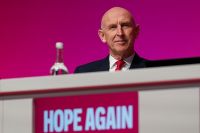
John Healey’s ‘new age of industrialisation’ is a fantasy
The first half of John Healey’s first Labour conference speech as Chancellor reminded me of old men in a bowls club reminiscing about the Korean war. For more than 15 minutes Healey set out his credentials as a Labour veteran. He’d gone from his constituency Labour party to the trade union movement and then to No. 11 (note, no mention of private business experience). He’s been around the block so long that Labour is ‘literally’ his family, he said, paying tribute to his wife. Once the thanks to the Mrs were out of the way, things moved to his true love: Gordon Brown. It felt, at times, like the Liverpool Convention Centre had been given over for a Brown memorial rather than the governing party’s conference.

Scrapping the pensions triple lock won’t pay for Burnham’s care service
Andy Burnham told the BBC's Laura Kuenssberg yesterday that he’s ready to ‘rip the plaster off’ and introduce a new social care service, free at the point of use, for everyone in England. ‘Everyone contributes, everyone’s covered,’ the Prime Minister said – but how exactly they will contribute is a question he’s left to Baroness Casey to answer and for voters to endorse at the next general election. The Health Foundation has estimated that the cost a care system like Burnham suggests could be £18.5 billion a year in 2035. (He says it’s ‘not that high’ – but he didn’t offer an alternative.