
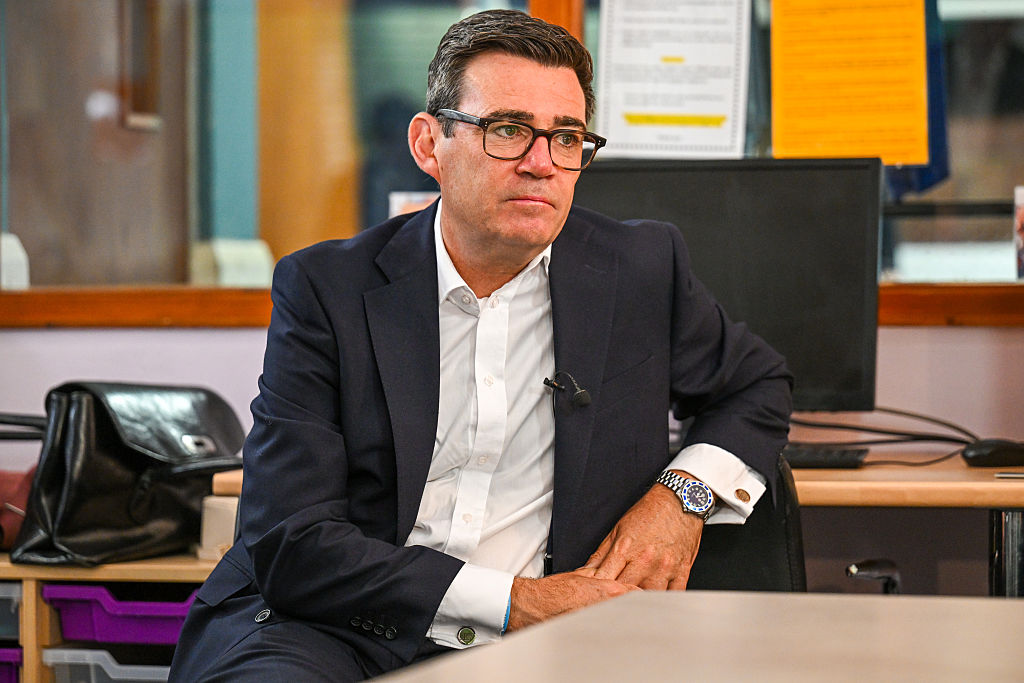
This week, Andy Burnham, in an article about how much he loves buses, declared that he will lead a ‘cost of living government’. Yet costs are going up, as confirmed by figures released by the Office for National Statistics (ONS), which show that inflation increased to 2.9 per cent in July – up from 2.6 per cent the month before.
The rise was driven mostly by the 13 per cent increase in the energy price cap, which saw gas prices increase at their fastest rate in nearly four years. Crude oil and petroleum prices fell for manufacturers but this was not enough to offset the energy costs faced by consumers.
The government might have hoped that Rachel Reeves’s Great British Summer of Savings scheme might have had an impact, but it perhaps did not realise that children’s meals and cinema tickets are not measured as part of the ONS’s inflation shopping basket
Worryingly, core inflation – which excludes more volatile items like energy and food – remained flat at 2.6 per cent. If this new uptick in the rate of price rises were just a Hormuz-induced energy issue, we’d expect to see core inflation slowing down.
All of this makes you wonder why Burnham’s advisers thought it was a good idea to lead so heavily on being a ‘cost of living government’ in the week when every single forecast and prediction had inflation increasing. What’s more, those same forecasts expect inflation to keep increasing as the year goes on as higher energy costs continue to feed through.
What does seem to be inflation immune at the moment though – a tad unexpectedly – is food prices. Producers don’t seem to be passing on their increased energy costs to shoppers yet, with the incredible efficiencies of British supermarkets helping to keep a lid on prices. Some analysts think food prices could even start to fall compared with a year ago. So while Burnham declares himself the champion of the cost of living it’s our often-maligned supermarkets that are actually doing the most to keep prices down.






Comments